
Deciding when to introduce a racing car baby walker involves looking closely at your child’s physical milestones rather than relying solely on the age recommendation printed on the packaging. While these vibrant, car-themed toys are highly appealing, their suitability depends entirely on your baby’s current stage of physical development and the specific design of the walker you choose.
A baby’s readiness is not determined by a calendar date but by specific mobility markers, such as the ability to sit upright without support or pull themselves up to a standing position. Introducing a wheeled toy too early can place unnecessary strain on developing muscles and joints, while introducing it at the right moment can offer engaging sensory play.
To make an informed decision, you must evaluate your baby’s physical strength, understand the structural differences between walker styles, and conduct a thorough safety audit of your home environment. Taking these steps ensures that play remains both supportive and safe for your little one.
Products mentioned in this guide
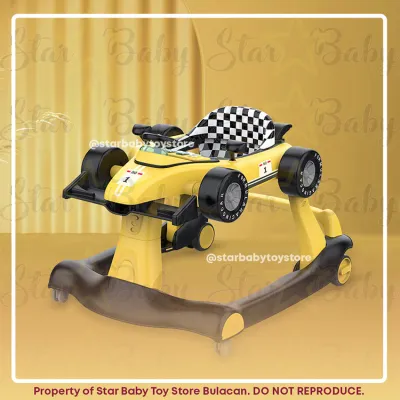
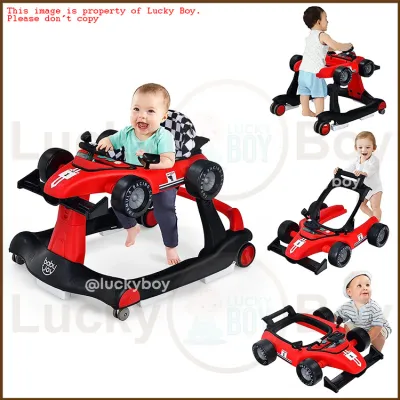
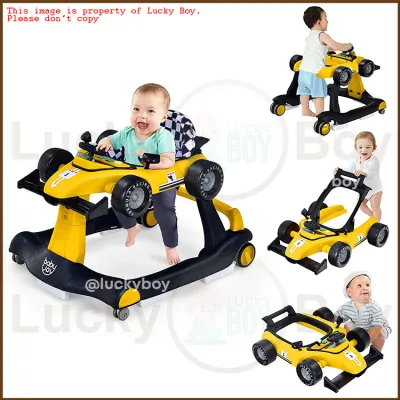
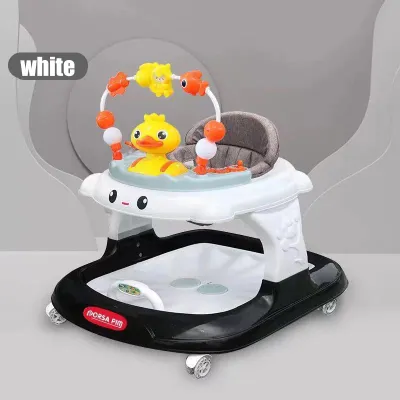
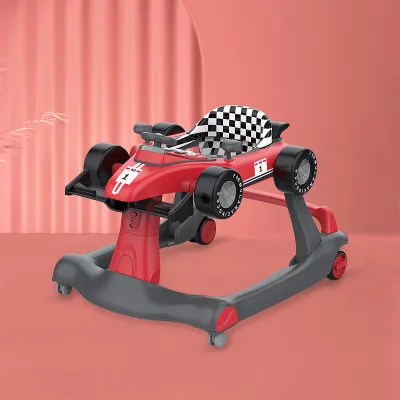
Prices are valid at publication and may change. Please refer to the product page for the latest price.
Choosing a Sit-In vs. Push Racing Car Baby Walker
When browsing online marketplaces or local baby boutiques, you will find that “racing car” designs generally fall into two distinct categories: sit-in models and push-along models. Although both feature playful steering wheels, gear shifters, and interactive sound buttons, they function in completely different ways and serve different developmental stages.
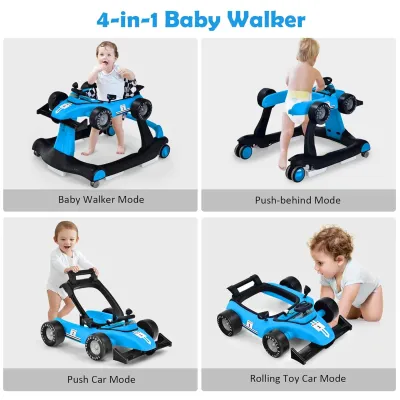
Sit-in racing car baby walkers feature a fabric seat suspended inside a rigid plastic frame, allowing a baby’s legs to dangle to the floor while their body is supported. These are typically marketed for babies who can sit unassisted but are not yet strong enough to stand or walk on their own. However, global pediatric organizations often advise caution or recommend against using sit-in models because they can alter natural leg alignment and allow babies to move rapidly before they have developed the cognitive reflexes to steer or stop.
In contrast, push-along racing car walkers are designed as sturdy, upright toys that a baby stands behind and pushes forward. These models do not support the baby’s body weight; instead, they require the child to actively balance, grip a handle, and take steps using their own leg strength. This design supports natural walking mechanics, encourages core stability, and helps refine balance as your baby transitions from cruising along furniture to taking independent steps.
Before purchasing either style, it is essential to check the manufacturer’s product manual and packaging to confirm the exact weight, height, and age limits. Never assume a walker is suitable simply because of its visual appeal or product name, as exceeding these physical limits can compromise the toy’s structural stability and safety features.
Developmental Readiness: Signs Your Baby is Ready
To determine if your baby is ready for a racing car baby walker, you must observe their physical milestones rather than relying strictly on the age guidelines printed on the box. Every child develops at their own unique pace, and forcing a baby into a physical position they cannot naturally maintain can lead to muscle strain or poor postural habits.

For sit-in models: The absolute minimum developmental milestone is the ability to hold the head up steadily and sit completely unassisted for extended periods without toppling over. If your baby still slouches, leans heavily to one side, or requires pillows for support, their core muscles are not yet strong enough to handle the upright posture of a sit-in walker. Placing a baby in a seat prematurely can place undue pressure on their developing spine and hips, which can interfere with their natural progression toward crawling.
For push models: The readiness signals are quite different and require a higher level of motor control. Your baby should be able to pull themselves up to a standing position using stable furniture, bear their full weight on their feet, and take lateral steps while holding on—a milestone commonly known as cruising. If your baby cannot yet stand independently or cruise, a push walker will likely roll away from them too quickly, leading to falls and frustration.
As you observe your baby, watch out for red flags that indicate they are not yet ready for a walker. In sit-in models, if your baby can only reach the floor with the tips of their toes or if their knees are excessively bent, the walker is not a proper fit and can encourage chronic toe-walking. Always cross-reference your observations with the manufacturer’s specific height and weight guidelines to ensure a safe, ergonomic fit. If you have any concerns about your baby’s physical development or posture, consult a qualified pediatrician or physical therapist before introducing any wheeled gear.
Safety and Environment Checks for Racing Car Designs
The sleek, aerodynamic design of a racing car baby walker is highly engaging, but it also introduces specific physical risks that require careful management. Because these toys are styled to look like fast vehicles, they often feature smooth-rolling wheels that can move much faster than a young baby’s reaction time allows.
To prevent accidental injuries, look for models equipped with speed-resistant wheels, adjustable wheel tension, or built-in friction pads on the bottom of the frame. These safety features help slow down the walker’s movement, especially on smooth surfaces, giving your baby better control over their speed. Without these mechanisms, a baby can easily lose their footing or gain too much momentum, leading to collisions with walls or furniture.
Another design characteristic to consider is the wide base typical of racing car models. These walkers often have a broad footprint to accommodate the wide plastic car body and the interactive toy dashboard. While a wider base provides stability against tipping, it also increases the risk of the walker getting wedged in standard doorways or catching on furniture corners. Measure your home’s doorways and hallways to ensure the walker has ample clearance to move freely without trapping your baby’s fingers or causing sudden stops.
Conducting a thorough home environment audit is crucial before letting your baby use any wheeled toy. In the Philippines, many homes feature smooth ceramic tile or polished concrete flooring to keep interiors cool in the tropical heat; however, these surfaces offer very little traction, causing walkers to slide rapidly. You must also secure any raised thresholds, loose rugs, and especially stairways, which represent the most severe hazard for walker users.
Regardless of the safety features built into the toy, no walker can ever replace active adult supervision. A caregiver must always remain within arm’s reach and keep a watchful eye on the baby at all times during play. Block off high-risk areas like kitchens, bathrooms, and outdoor steps with secure baby gates to prevent access to hot surfaces, water hazards, or steep drops.
When to Transition Away from the Walker
A baby walker is a temporary developmental tool, and knowing when to retire it is just as important as knowing when to introduce it. Keeping your baby in a walker past its developmental usefulness can hinder their transition to independent walking and increase the risk of injury as they grow stronger and more active.
Signs it is time to stop: The most obvious sign that it is time to stop using a sit-in walker is when your baby approaches or exceeds the manufacturer’s maximum weight or height limits. Additionally, if your baby has learned how to pull their knees up to climb out of the fabric seat, or if they can stand flat-footed with their knees bent even at the highest seat adjustment, the walker is no longer safe. For push-along models, once your baby can take several independent steps across a room without holding onto the handle, the toy has served its purpose.
Transitioning to independent walking: To encourage a smooth transition to independent walking, prioritize barefoot play on safe, clean indoor surfaces. Walking barefoot allows your baby’s toes to grip the floor naturally, which helps build the small muscles in their feet and ankles while providing crucial sensory feedback to their brain about balance and spatial awareness.
Alternative activities: You can also replace walker time with other developmentally beneficial activities that promote natural motor skills. Supervised floor time, crawling through play tunnels, and standing at a low, sturdy activity table are excellent ways to build core strength and coordination. These activities allow your baby to move dynamically in all directions, fostering the natural balance required for confident, unassisted walking.
Frequently Asked Questions (FAQ)
Do sit-in racing car walkers delay walking or cause bow legs?
While sit-in walkers do not directly cause structural conditions like bow legs, improper use or using them before a baby’s legs are ready to bear weight can negatively affect posture and hip development. Spending excessive time in a sit-in seat limits the valuable floor time your baby needs for crawling, rolling, and pulling up naturally. To support healthy physical development, always follow the manufacturer’s recommended daily time limits and ensure your baby has plenty of unstructured floor play.
How do I know if the walker is the right height for my baby?
For sit-in walkers, your baby’s feet must be able to rest flat on the floor with a slight, comfortable bend in their knees when they are upright. If only their toes can touch the ground, the seat is adjusted too high, which can encourage toe-walking and strain their calf muscles. For push-along walkers, the handle should align comfortably with your baby’s chest or lower rib cage when they stand upright, allowing them to push forward without hunching their shoulders or leaning dangerously far back.

Community discussion
Share your experience or ask a question. Comments are reviewed before publication.