
Choosing the right walker baby girl designs in the Philippines involves balancing appealing aesthetics with crucial safety and developmental considerations. While pastel pinks, floral motifs, and princess-themed designs are highly popular, a walker’s primary job is to support your child’s physical development safely. It is easy to get swept up in cute designs, but parents must prioritize how a walker interacts with a baby’s growing body and the home environment.
Before purchasing any mobility gear, it is vital to understand that a baby’s physiological readiness dictates when and how they should use a walker. Pediatricians and child development experts emphasize that mobility aids must encourage natural movement patterns rather than passive, assisted rolling. This guide will walk you through the structural differences between various walker types, critical safety features to inspect, and how to prepare your home for a newly mobile infant.
Why Safety and Development Matter More Than Cute Walker Baby Girl Designs
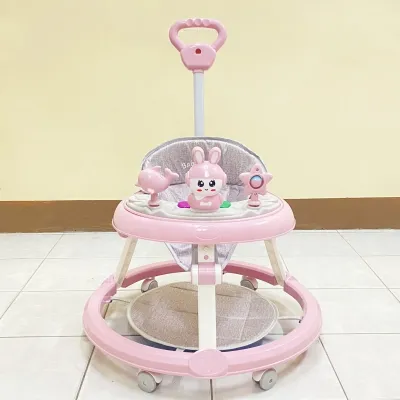
When browsing online marketplaces or local baby boutiques in the Philippines, you will find an abundance of options marketed specifically as a walker baby girl product. These models often feature vibrant pinks, lavender hues, toy trays with fairy tale themes, and matching soft seat cushions. While these designs are visually appealing and can complement your nursery decor, they should never be the primary reason for your purchase. A baby walker is a functional developmental tool, and its structural safety must always take precedence over its visual theme.
Products mentioned in this guide
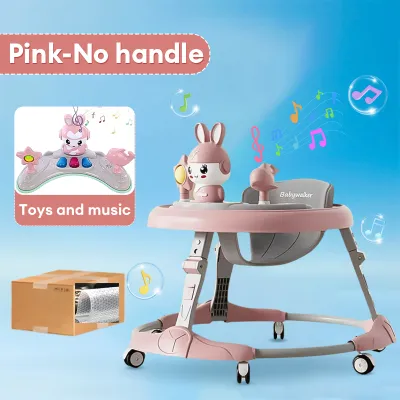
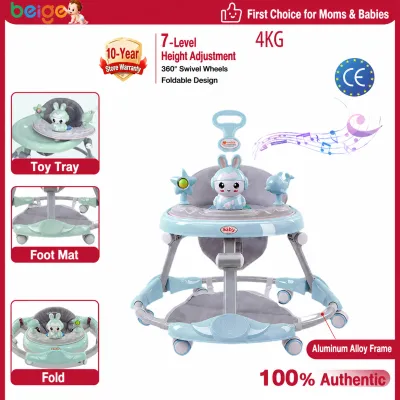
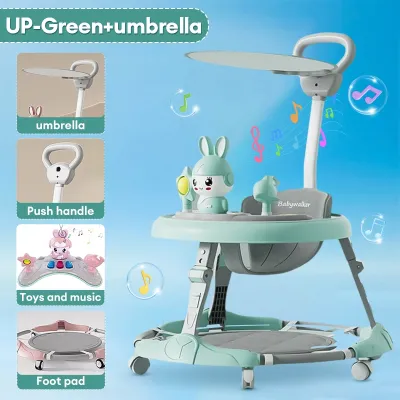
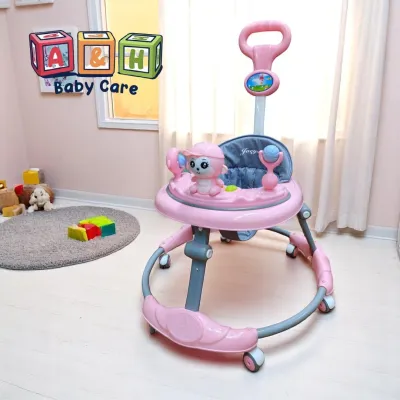
Prices are valid at publication and may change. Please refer to the product page for the latest price.
The general pediatric consensus leans heavily toward active, weight-bearing mobility aids rather than traditional sit-in models. When a baby is placed in a traditional seated walker, her hips are suspended, and she can propel herself with minimal effort. This passive rolling does not teach balance or core stability; instead, it can encourage abnormal walking patterns, such as walking on tiptoes. Push walkers, on the other hand, require the baby to actively stand, balance, and push her own weight, which aligns much better with natural motor development.
To ensure your baby’s safety, always consult the manufacturer’s documentation for specific age, weight, and developmental milestone recommendations. Never rely solely on a product’s name or aesthetic category to determine if it is suitable for your child. If a baby cannot sit upright independently or has not yet started pulling herself up to stand, she is not developmentally ready for any type of walking aid, regardless of what the product packaging suggests.
Types of Baby Walkers: Push, Sit-In, and Stationary Options
Understanding the distinct categories of walkers available in the Philippine market is the first step toward making an informed purchase. Each type serves a different developmental stage and comes with its own set of safety profiles and operational limitations.

Push Walkers (Walk-Behind Toys)
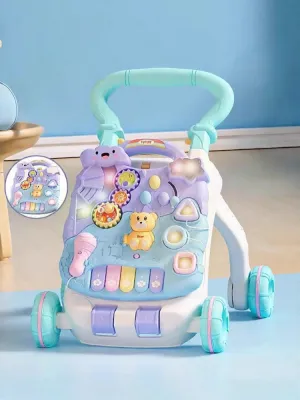
Push walkers, often referred to as walk-behind toys, are widely considered by pediatric specialists to be the most developmentally supportive option. These toys typically feature a sturdy handlebar attached to a wheeled frame, often decorated with interactive activity panels, blocks, or musical buttons on the front. The baby stands behind the toy, grips the handle, and pushes it forward to walk.
Because push walkers require the baby to bear her entire body weight, they actively promote core strength, hip stability, and balance. This setup encourages a natural heel-to-toe walking pattern, as the baby must plant her feet firmly on the ground to move forward. It also allows her to practice spatial awareness and navigation at her own natural pace.
When shopping for a push walker, look for a model with a wide, weighted base to prevent it from tipping backward when your baby pulls herself up using the handlebar. Additionally, check for speed-control wheels or adjustable tension on the wheel axles. On smooth Philippine flooring like ceramic tiles, a walker without speed control can roll away too quickly, causing the baby to lose her footing and fall forward. Note that these walkers are suitable only for babies who are already pulling themselves up to stand and can maintain their balance briefly.
Traditional Sit-In Walkers
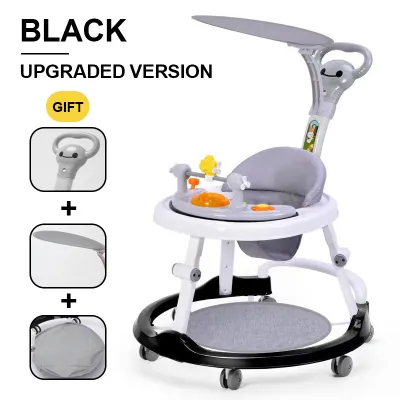
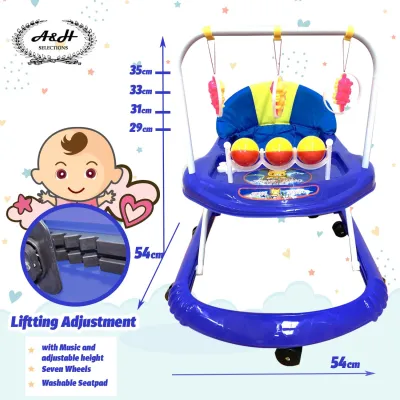
Traditional sit-in walkers consist of a fabric seat suspended inside a rigid plastic or metal frame equipped with wheels. These models allow babies who cannot yet stand on their own to move around the room by pushing off the floor with their feet. While they remain popular for keeping babies entertained, they come with significant safety caveats and require strict caregiver vigilance.
The primary risk associated with sit-in walkers is the rapid, unassisted mobility they provide. A baby in a seated walker can travel at surprising speeds, making it easy for them to roll toward hazards such as staircases, doorway thresholds, or hot appliances before an adult can intervene. Furthermore, if the seat height is not adjusted correctly, the baby may develop a habit of toe-walking, which can tighten the calf muscles and delay the development of a normal walking gait.
If you decide to purchase a sit-in walker, you must verify that the model includes robust safety features. Look for wide frames that cannot easily fit through standard doorways, wheel locks to keep the unit stationary, and stair-fall prevention mechanisms (such as friction strips on the underside of the base). Most importantly, sit-in walkers must never be used as a substitute for floor play, crawling, or tummy time, and they should only be used under direct, continuous adult supervision.
Stationary Activity Centers (Walker Alternatives)
Stationary activity centers are excellent alternatives for parents who want the convenience of a sit-in walker without the associated mobility risks. These products feature a suspended seat surrounded by a 360-degree tray of interactive toys, lights, and sounds, but they do not have wheels. Instead, the base is stationary, often featuring a spring-loaded platform that allows the baby to bounce gently.
These centers keep your baby securely in one place while allowing her to spin, stand, bounce, and reach for toys. This movement helps strengthen leg and core muscles and improves hand-eye coordination without any risk of rolling into dangerous areas.
For caregivers, stationary activity centers provide a safe, contained environment where the baby can play independently for short periods. This gives you a brief, reliable window to attend to nearby household tasks while keeping the baby within your line of sight.
Essential Safety and Comfort Features to Check Before Buying
When evaluating different walker models on e-commerce platforms or in physical baby stores, you should use a strict safety and comfort checklist. Do not let appealing colors or toy attachments distract you from these essential structural elements.
- Adjustability: For sit-in walkers, multiple height adjustment settings are absolutely critical. As your baby grows, you must adjust the seat so that her feet rest completely flat on the floor with her knees slightly bent. If only her toes touch the ground, she will develop improper walking habits. For push walkers, check if the handlebar can be adjusted to different heights. An ergonomic handle height ensures your baby does not have to slouch or strain her shoulders while pushing.
- Wheel Quality and Brakes: Inspect the wheels of the walker carefully. Many budget models use hard plastic wheels that slide easily on smooth surfaces, offering no traction and making the walker unstable. Look for wheels with rubberized treads or grip-enhancing strips that provide traction on slick floors. Additionally, ensure the walker has reliable locking mechanisms or brakes. This allows you to lock the wheels when the baby is playing with the toy tray or eating, turning the walker into a stable stationary station.
- Base Width and Design: A stable walker must feature a wide, low-slung base that is significantly wider than the upper tray or handlebar. A wide base lowers the center of gravity, making the walker highly resistant to tipping over, even when the baby leans heavily to one side. In sit-in models, a wide base also acts as a physical bumper, preventing the walker from passing through narrow doorways into hazardous areas like kitchens or bathrooms.
- Material Safety: Because babies explore their world with their mouths, material safety is paramount. Verify that all plastics used in the walker are certified BPA-free, phthalate-free, and non-toxic. Any paints, dyes, or finishes on the toys and frame must be lead-free and water-based, as your baby will inevitably chew on the tray or handlebar. Additionally, run your hands along the entire product to check for smooth, rounded edges, ensuring there are no sharp plastic seams or pinch points that could injure delicate skin.
- Standards and Recalls: Before finalizing your purchase, verify if the model complies with recognized international safety standards (such as EN 1273 for sit-in walkers or ASTM F977). Always perform a quick online check to ensure the specific model has not been subject to any recent product recalls.
Matching the Walker to Your Home Layout and Flooring
A walker that works perfectly in a spacious showroom might pose safety hazards or practical challenges in your actual living space. You must consider your home’s layout and flooring before making a final decision.
- Flooring Compatibility: In the Philippines, residential flooring commonly consists of smooth ceramic tiles, polished concrete, hardwood, or vinyl. Hard plastic wheels can slip easily on glossy ceramic tiles, preventing your baby from getting the grip she needs to push forward safely, or they can roll too quickly on polished wood. Look for rubberized wheels that offer good traction on these smooth surfaces. If your home has area rugs, foam play mats, or floor transitions, ensure the walker's wheels and base have enough clearance to roll over them without catching, which could cause a sudden stop and a forward tip-over.
- Space and Storage: If you live in a condominium, a compact apartment, or a multi-story house, space is a major consideration. Look for walkers that feature a flat-folding or collapsible design. A foldable walker can be easily slid under a bed, placed behind a door, or stored in a closet when not in use, keeping your living space tidy. It also makes the walker much easier to transport in a car trunk when visiting relatives or traveling.
- Hazard Mapping: Before introducing any mobile walker to your home, you must conduct a thorough safety sweep and baby-proofing routine. Block off all staircases, split-level steps, balconies, and exterior doors with secure, hardware-mounted safety gates. Secure all loose electrical cords, remove low-hanging tablecloths or table runners, and block access to the kitchen, laundry area, or any zone where hot liquids, chemicals, or sharp objects are present. Keep in mind that a walker elevates your baby, allowing her to reach items on coffee tables, low shelves, or countertop edges that were previously out of her reach.
Safe Usage Guidelines and When to Retire the Walker
Even the safest, most highly rated walker can become a hazard if used incorrectly. Establishing clear rules for daily use is essential to protect your baby’s physical development and overall safety.
- Time Limits: If you are using a sit-in walker, limit your baby's sessions to short intervals of 15 to 20 minutes, with a maximum of one or two sessions per day. Leaving a baby in a seated walker for extended periods can place unnatural stress on her developing spine, hips, and leg muscles. Ensure she spends the majority of her active hours on the floor, where she can crawl, roll, sit, and pull herself up naturally. These unrestricted movements are crucial for building the core strength required for independent walking.
- Supervision Rules: No walker is a substitute for adult supervision. You must always maintain a clear, unobstructed line of sight and remain within arm's reach of your baby while she is using a walker. Never leave the room, even for a moment, and do not rely on older siblings or pets to watch the baby. If you must leave the immediate area to attend to a task, remove the baby from the walker and place her in a safe, enclosed space like a playpen or a stationary activity center.
- Transitioning Out: Knowing when to stop using a walker is just as important as knowing when to start. You should retire the walker immediately if your baby exhibits any of the following signs:
- She can walk independently without holding onto furniture or the walker.
- She exceeds the manufacturer's maximum weight or height limits specified in the product manual.
- Her feet can no longer rest flat on the floor in a sit-in walker, or she attempts to climb out of the seat.
- She shows frustration or resists being placed in the walker, indicating she prefers unrestricted floor movement.
If your child experiences persistent developmental delays, unusual gait patterns (such as continuous tiptoe walking even outside of the walker), or signs of physical discomfort, stop using the walker immediately and consult a qualified pediatrician or pediatric physical therapist.
Frequently Asked Questions (FAQ)
At what age should a baby start using a push walker?
Push walkers are milestone-dependent rather than age-dependent. Most babies are ready to explore a push walker between 9 and 12 months, but the critical prerequisite is that your baby must be able to pull herself up to a standing position and bear her own weight on her legs independently. If she cannot stand or balance while holding onto furniture, introducing a push walker too early can lead to falls and frustration.
Can sit-in walkers cause bow legs or delay walking?
Sit-in walkers do not directly cause bow legs, but they can negatively affect motor development and posture if used incorrectly or excessively. If the seat height is not adjusted properly, the baby may push off with their toes, leading to tight calf muscles and a habit of toe-walking. Over-reliance on sit-in walkers reduces the essential floor time needed to strengthen the core, hips, and upper body through crawling, which can actually delay independent walking.
How do I clean and maintain the walker's wheels and fabrics?
Always consult the manufacturer’s care label before cleaning. In the humid tropical climate of the Philippines, regular cleaning is vital to prevent mold and mildew. Wipe down plastic trays and toy bars daily using a damp cloth and mild, baby-safe soap. Removable fabric seat pads should be machine-washed on a gentle cycle and thoroughly air-dried in a well-ventilated area. Regularly inspect the wheel axles to clear out accumulated hair, dust, and pet fur, which can clog the wheels and prevent them from rolling smoothly.
Community discussion
Share your experience or ask a question. Comments are reviewed before publication.