
Starting solids is an exciting milestone in your baby girl’s development, marking her transition from an all-liquid diet to exploring textures and flavors. To make this transition smooth and safe, the right feeding set should combine certified non-toxic materials, ergonomic shapes that fit small hands, and durable construction that can handle daily drops. While aesthetic choices like soft pastel pinks or vibrant floral patterns are popular for baby girls, safety, ease of cleaning, and developmental suitability must always come first. Choosing a set that matches her motor skills ensures she can learn to self-feed with minimal frustration, while giving you peace of mind during every meal.
Check Material Safety and Durability Standards
When selecting tableware for your baby’s first meals, verifying the safety and chemical composition of the materials is your absolute first priority. Look closely at the product packaging and manufacturer specifications to ensure all components are labeled as food-grade, BPA-free, phthalate-free, and non-toxic. Common safe materials include food-grade silicone, high-quality stainless steel, and properly treated natural bamboo. Because these items will come into direct contact with warm food and your baby’s mouth, verifying these material standards helps prevent chemical leaching.
Durability and heat resistance are equally critical, especially when considering the daily wear and tear of weaning. The feeding set must be robust enough to withstand being dropped from high chair height onto hard floors without cracking, chipping, or shattering. Furthermore, check the manufacturer’s temperature guidelines to ensure the materials can handle sterilization and heating. In tropical climates where high humidity can encourage microbial growth, being able to thoroughly sterilize feeding gear in boiling water, steam sterilizers, or UV sterilizers is essential for maintaining hygiene.
Products mentioned in this guide
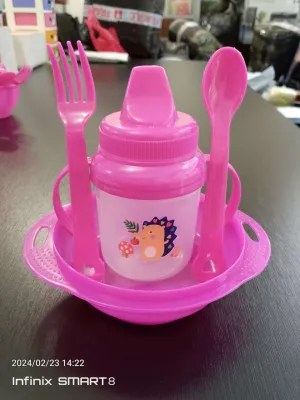
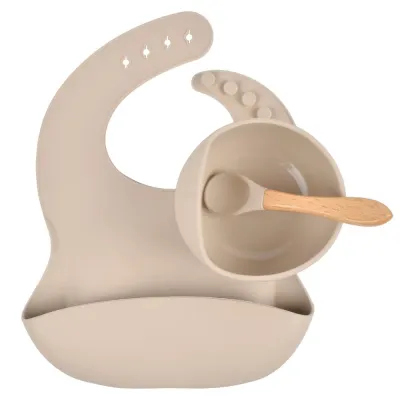
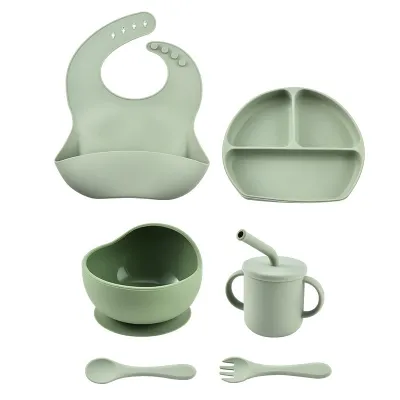
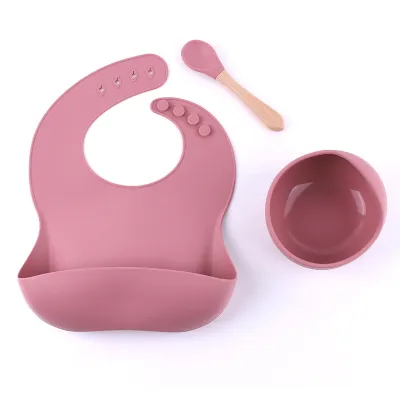

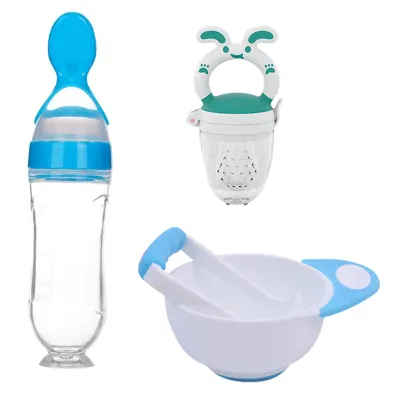
Prices are valid at publication and may change. Please refer to the product page for the latest price.
Finally, always cross-reference the product’s age recommendations with your baby’s current developmental stage. Manufacturers design utensils and dishes with specific age ranges in mind, tailoring the size, weight, and flexibility of the items to a baby’s growing physical capabilities. Using a set that is too advanced can frustrate your baby or present safety risks, so verify the recommended age label on the packaging before making a purchase. If you ever notice signs of material degradation, such as stickiness, discoloration, or cracking, stop using the item immediately and consult the manufacturer’s guidelines.
Evaluate Weaning-Friendly Bowl and Utensil Designs
A successful self-feeding journey relies heavily on the physical design of the tableware, which should support your baby’s developing fine motor skills. One of the most practical features to look for is a strong suction base on bowls and plates. A reliable suction mechanism keeps the dish firmly anchored to the high chair tray, preventing your baby from tipping, sliding, or throwing her food across the room. This stability allows her to focus on the mechanics of scooping food rather than chasing a moving bowl.

The design of the utensils is another crucial factor in encouraging independent eating. Traditional adult spoons are too long and narrow for a baby’s limited coordination. Instead, look for spoons and forks with short, chunky, and textured handles that are easy for tiny hands to grip using a palmar grasp. The spoon bowl should be shallow and made of a soft, flexible material like silicone to protect her sensitive, teething gums. For early weaning, forks should have rounded, blunt tines that can gently pierce soft foods without any risk of poking or scratching her mouth.
Divided plates and bowls with specialized contours also play a significant role in reducing mealtime mess. Plates with high, curved, or angled inner walls provide a surface for your baby to push food against, making it much easier to load onto her spoon. Additionally, divided sections allow you to serve a variety of food groups—such as purees, soft grains, and finger foods—without them mixing together. This separation is highly beneficial for babies who are sensitive to mixed textures, helping them identify and explore individual flavors at their own pace.
Assess Cleaning, Sterilization, and Daily Practicality
A feeding set might look perfect on paper, but its long-term value depends on how easily it fits into your daily cleaning and sterilization routine. Before buying, check the manufacturer’s care instructions to confirm whether the items are dishwasher-safe, microwave-safe, or compatible with your specific sterilizing equipment. In many households, the convenience of tossing silicone plates into a sterilizer or warming up a quick puree in a microwave-safe bowl is a major time-saver that reduces daily stress.
In warm, humid tropical environments, hygiene requires extra vigilance to prevent the growth of mold, mildew, and harmful bacteria. Carefully examine the physical structure of the feeding set, avoiding designs with deep crevices, hollow handles, or complex multi-piece valves where water and food particles can easily become trapped. Seamless, single-piece silicone items are highly recommended because they lack hidden joints, dry quickly, and are non-porous, making them exceptionally resistant to bacterial buildup.
Portability is another practical factor to consider, especially if your family frequently travels, dines out, or relies on daycare services. Lightweight, flexible silicone sets are highly packable because they can be bent or compressed into a diaper bag without losing their shape. Look for sets that include travel cases for spoons and forks to keep them clean before use and contain the mess after your baby is finished eating. Choosing a highly portable set ensures that your baby can maintain her feeding routine comfortably, no matter where you are.
Choose Aesthetics and Set Compositions Safely
While searching for a feeding set for your baby girl often leads to a wide array of beautiful pastel shades, floral patterns, and whimsical animal designs, aesthetic choices must never compromise safety. If you choose brightly colored or patterned tableware, verify that all dyes, pigments, and finishes are certified food-safe and integrated directly into the material. Avoid any products with painted-on designs that can chip, peel, or wear off over time, as these particles can easily be ingested during meals.
When deciding on the composition of the set, you can choose between a comprehensive all-in-one starter kit or purchasing individual, modular pieces. An all-in-one set typically includes a suction bowl, a divided plate, a silicone bib with a built-in food catcher, a spoon, a fork, and a training cup. These comprehensive sets offer excellent value and a cohesive look. However, if your baby has specific needs—such as requiring an ultra-soft spoon or a highly specific cup design—building your set piece-by-piece allows for greater customization.
Regardless of the aesthetic or set composition you prefer, safety must remain the absolute priority. Carefully inspect any potential purchase for small, detachable decorative parts, glued-on plastic characters, or raised 3D embellishments. These decorative additions can easily break off when dropped or chewed on, presenting a severe choking hazard. Stick to clean, streamlined designs where the visual appeal comes from the overall shape and solid, food-safe coloration of the material itself.
Finalize Your Shortlist and Verify Before Use
To make your final decision, compare your shortlisted feeding sets against your household’s specific needs, appliance compatibility, and budget. If you rely heavily on a microwave to warm up meals, eliminate any options containing metal or natural bamboo, which cannot be microwaved safely. Balance the price of the set in Philippine Pesos (₱) against its expected lifespan, keeping in mind that high-quality, durable materials like food-grade silicone often save money in the long run by outlasting cheaper, flimsy plastics.
Once you have purchased your chosen feeding set, read the included care and maintenance manual thoroughly before the first use. Ensure you have the appropriate cleaning tools on hand, such as soft sponges and mild, fragrance-free dish soaps. Avoid using abrasive scrubbing pads or harsh chemical cleaners, which can scratch plastic or silicone surfaces, creating microscopic grooves where bacteria and food residue can accumulate over time.
Before serving your baby’s very first meal, conduct a meticulous physical inspection of every item in the set. Run your fingers along the edges of the spoons, forks, plates, and bowls to check for any sharp manufacturing defects, rough plastic seams, or loose pieces. Test the suction base on your baby’s high chair tray to ensure it adheres firmly and cannot be easily pulled away. If you discover any defects, weak suction, or signs of damage, do not use the items; instead, contact the manufacturer or retailer for a replacement to ensure your baby’s weaning journey starts safely.
Frequently Asked Questions (FAQ)
When should I introduce a water cup alongside the feeding set?
You can introduce a training cup to your baby around six months of age, which typically coincides with the introduction of solid foods. At this early stage, the cup is used primarily for practice rather than significant hydration, helping your baby develop the oral motor skills needed for sipping and swallowing. Always check pediatric guidelines and the manufacturer’s age labels on training cups to ensure the design matches your baby’s developmental milestones, and supervise her closely during every use.
How do I know if a silicone suction bowl has lost its grip?
To test the suction of a silicone bowl, clean both the suction base and the surface of the high chair tray thoroughly, ensuring they are completely dry and free of oily food residue. Press the bowl down firmly from the center to force out all trapped air. If the bowl slides easily across the surface or lifts off without resistance, inspect the base for warping, cracks, or dust. If the silicone base has become permanently warped or torn from repeated washing, high-heat sterilization, or wear, it has lost its functional grip and should be replaced to prevent spills.

Community discussion
Share your experience or ask a question. Comments are reviewed before publication.