
At ten months old, your baby is undergoing rapid developmental changes, and their mouth is the center of exploration. This is the stage where primary teeth—usually the lower and upper central incisors—are actively emerging, bringing both teething discomfort and the need for a structured oral hygiene routine. Choosing a toothbrush for a 10-month-old baby requires looking for specific features: ultra-soft bristles that protect delicate gums, a compact brush head sized for a tiny mouth, a built-in choke guard to prevent accidental injury, and certified non-toxic, food-grade materials. Because infants at this age instinctively chew on everything they hold and lack the coordination to brush their own teeth, the toothbrush you select serves as both a cleaning tool and a safe teething object. Balancing these dual roles is essential for establishing healthy oral habits while keeping your little one completely safe.
Essential Brush Head and Bristle Features for Delicate Gums
The brushing surface is the most critical component of an infant toothbrush, as it directly contacts sensitive gum tissue and newly erupted teeth. For a ten-month-old baby, the bristles must be exceptionally gentle. Standard adult or even toddler toothbrushes are far too abrasive for an infant’s mouth. You should look for labels that explicitly state “ultra-soft” or “extra-soft.” These bristles are designed to sweep away milk residue and early plaque without scratching the delicate oral mucosa or causing the gums to bleed.
When evaluating bristle materials, you will generally choose between ultra-fine nylon and food-grade silicone. Nylon bristles are highly effective at sweeping away microscopic food particles and plaque from the surfaces of newly emerged teeth. However, they require gentle pressure to avoid irritating the gums. On the other hand, silicone bristles are molded directly into the brush head, offering a softer, more rubbery texture. While silicone may not sweep away fine plaque as thoroughly as nylon, it excels at massaging sore, inflamed gums during active teething phases. Many parents find it beneficial to have one of each type on hand, using the silicone brush for teething relief and the nylon brush for post-meal cleaning.
Products mentioned in this guide
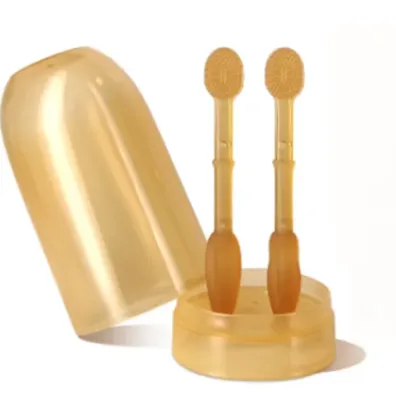
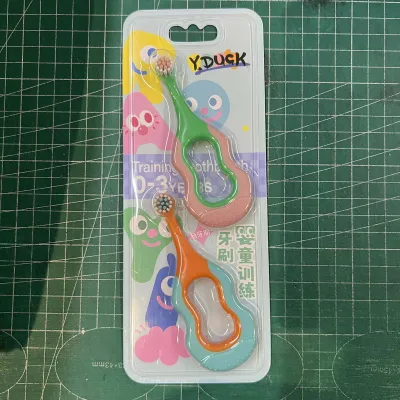
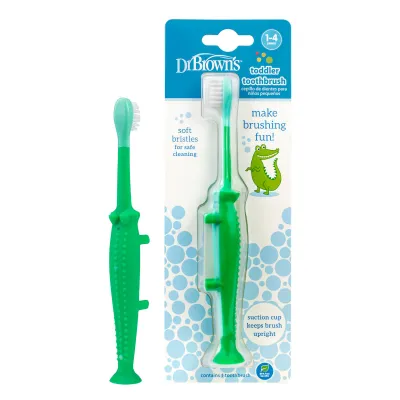
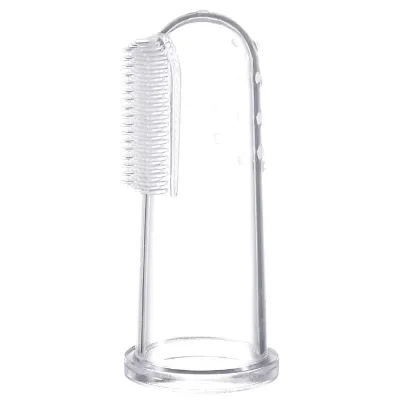
Prices are valid at publication and may change. Please refer to the product page for the latest price.
The size and shape of the brush head must match the physical dimensions of a ten-month-old’s oral cavity. A brush head that is too large will not only make brushing difficult but can also trigger a strong gag reflex, causing your baby to associate brushing with discomfort or fear. Ideally, the brush head should be no wider than the width of two of your baby’s lower incisors—typically around one centimeter or less. The shape should be smoothly rounded with no sharp edges or hard plastic corners that could scrape the inside of the cheeks or the roof of the mouth. This compact size allows you to navigate the tight spaces at the back of the mouth where future molars will eventually erupt.
Finally, pay close attention to the bristle density and trim. For infants, a flat or slightly rounded bristle profile is highly preferred over the multi-level, angled, or crisscross trims found on older children’s toothbrushes. A flat trim ensures even distribution of pressure across the teeth and gums, which is crucial when your baby is biting down unpredictably during a brushing session. High bristle density is also important, as closely packed bristles hold water and infant-safe toothpaste more effectively, preventing the liquid from running down the handle while you brush.
Handle Design: Preventing Choking and Assisting Parental Control
At ten months, babies are developing their fine motor skills and love to mimic adults by holding objects themselves. However, their hand-eye coordination is still rudimentary, and their natural instinct is to shove objects deep into their mouths. Therefore, the handle design of an infant toothbrush is a primary safety feature rather than just an ergonomic preference.

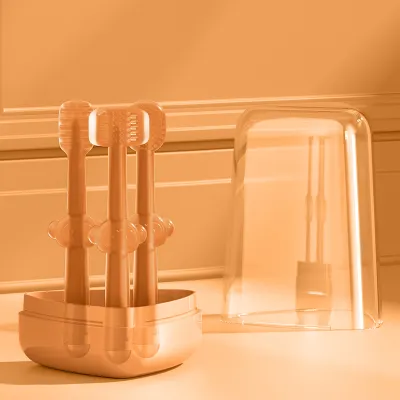
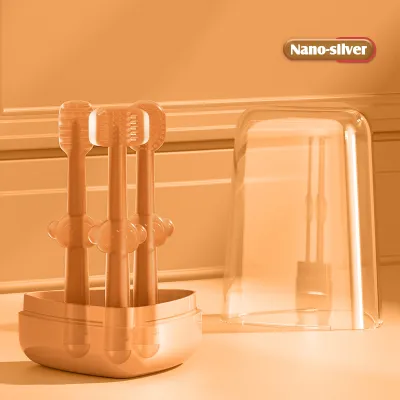
A robust choke-guard mechanism is a non-negotiable feature for any toothbrush a ten-month-old might handle. A choke guard is typically a wide, circular shield, a flared collar, or a broad animal-shaped base integrated into the handle just below the brush head. This physical barrier prevents the toothbrush from sliding too far back into the baby’s throat if they slip, fall, or push the brush too vigorously. When shopping, physically inspect this guard to ensure it is wide enough that it cannot fit past your baby’s lips. It should be made of a single, solid piece of material or securely fused to the handle so that it cannot slide off or become a choking hazard itself.
The length and thickness of the handle must accommodate two very different users: the baby who wants to explore, and the parent who must perform the actual cleaning. Short, thick, and rounded handles are ideal for a baby’s palmar grasp, allowing them to hold the brush securely without poking themselves. However, these short handles can make it difficult for parents to guide the brushing motion. To solve this, look for dual-handle designs or toothbrushes with elongated, ergonomically curved handles that feature a textured grip area at the end for parents and a wider, textured grip closer to the head for the baby. This allows you to guide the brush gently while your baby feels like they are in control.
In tropical climates like the Philippines, high humidity and warm temperatures mean that hands—both yours and your baby’s—can easily become sweaty and slippery. A smooth plastic handle is highly likely to slip out of your grasp, potentially causing the brush head to strike the baby’s gums painfully. Look for handles wrapped in textured, non-slip rubber or food-grade silicone. Ridges, raised dots, or embossed patterns on the handle provide the necessary friction to maintain a secure grip even when wet with water, saliva, or teething gel. These textured surfaces also double as excellent teething surfaces, encouraging your baby to chew safely on the handle under your close supervision.
Material Safety: What to Check on the Product Label
Because a ten-month-old baby will inevitably chew, bite, and suck on their toothbrush, the chemical composition of the materials must be completely safe and non-toxic. You cannot rely solely on attractive packaging or cute designs; you must actively read the product labels and verify the safety credentials of the manufacturer.
The core material requirements for any infant oral care product are clear: they must be entirely free from Bisphenol A (BPA), polyvinyl chloride (PVC), and phthalates. These chemicals, often used to harden plastics or make them flexible, are known endocrine disruptors that should never enter a baby’s mouth. Look for explicit “BPA-Free,” “PVC-Free,” and “Phthalate-Free” labels on the packaging. Additionally, ensure the materials are free from heavy metals and latex, which can trigger allergic reactions in sensitive infants.
When comparing materials, food-grade silicone and high-quality, medical-grade plastics are the gold standards. Food-grade silicone is highly resistant to bacterial growth, does not leach chemicals when exposed to warm water, and is incredibly durable against sharp baby teeth. If the toothbrush features plastic components, they should be made of polypropylene (PP), which is widely recognized as a safe, stable plastic for food and infant contact. Avoid toothbrushes that use cheap, brittle plastics that can crack under the pressure of a baby’s bite.
Reading product labels requires a critical eye. Look for recognized safety standards and certifications, such as compliance with international toy safety standards or local regulatory clearances. Be wary of generic marketing claims like “100% safe” or “natural” if they are not backed up by specific material listings on the back of the packaging. A reputable manufacturer will clearly list the materials used for both the handle and the bristles (for example, “Handle: 100% Food-Grade Silicone; Bristles: Nylon 6-12”).
Finally, evaluate the structural integrity of the toothbrush before purchasing. Inspect the joints where different materials meet, such as where the silicone grip joins the plastic handle, or where the bristles are embedded into the head. These joints must be seamless and incredibly strong. Any weak points could allow small pieces to break off under the force of your baby’s biting, creating an immediate choking hazard. Avoid toothbrushes with painted decorations, glued-on characters, or small detachable parts, as these can easily chip off or detach over time, especially in humid environments where adhesives can degrade.
Finger Brushes vs. Infant Toothbrushes: Making the Transition
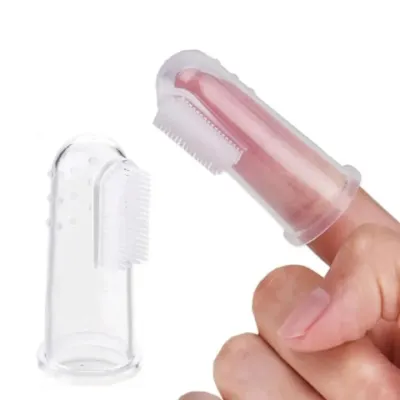
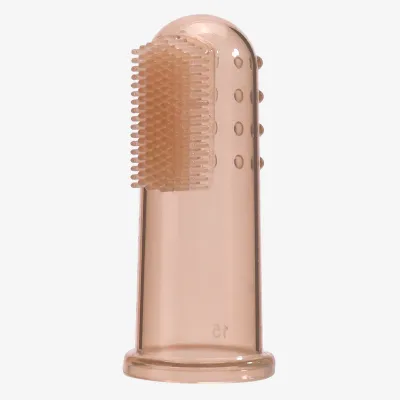
Many parents begin their baby’s oral care journey using a silicone finger brush—a small, thimble-like sleeve with soft silicone bumps that fits over an adult’s index finger. While finger brushes are excellent for newborns and early infants, a ten-month-old baby is rapidly outgrowing their utility, making a transition to a standalone infant toothbrush necessary.
Recognizing the signs of readiness is key to making this transition at the right time. By ten months, most babies have developed a strong biting reflex and may already have several sharp front teeth. If your baby has started biting down hard on your finger during brushing sessions, a finger brush quickly becomes painful and impractical for the caregiver. Furthermore, the emergence of actual teeth means that plaque can now accumulate in the crevices between the teeth and along the gumline, requiring a tool with greater cleaning efficacy than a simple silicone finger sleeve can provide.
A standalone infant toothbrush with fine bristles offers significantly better cleaning power than a finger brush. The individual bristles can penetrate the tiny gaps between emerging teeth to sweep away food debris and bacteria, whereas the thick, blunt bumps of a finger brush merely glide over the surface. Transitioning to a proper toothbrush also helps your baby get used to the sensation of bristles in their mouth, which is a crucial step in preparing them for lifelong oral hygiene habits.
During this transition, strict caregiver supervision is mandatory. A ten-month-old should never be left alone with a toothbrush, even one with a choke guard. The transition process should be gradual and positive. You can start by allowing your baby to hold and explore the standalone toothbrush during bath time or playtime, letting them chew on the soft bristles to familiarize themselves with the texture. Then, during actual brushing times, you can use a dual-tool approach: use a clean finger brush to gently massage and soothe sore gums in teething areas, and use the standalone infant toothbrush to clean the actual teeth. This combination ensures thorough cleaning while keeping the experience comfortable for your teething baby.
Your Pre-Purchase Checklist for Baby Oral Care
To make your shopping experience straightforward, whether you are browsing a local baby boutique in the Philippines or searching online marketplaces, use this quick pre-purchase checklist to verify that a toothbrush is safe and effective for your ten-month-old.
Must-Have Features:
- Bristles: Labeled as "ultra-soft" or "extra-soft," made of fine nylon or food-grade silicone.
- Brush Head: Compact and rounded, measuring less than one centimeter in width.
- Choke Guard: A wide, integrated shield or flared collar that cannot fit into the baby's mouth.
- Handle: Short, thick, and covered in a non-slip, textured grip.
- Materials: Certified BPA-free, PVC-free, phthalate-free, and latex-free.
Red Flags to Avoid:
- Long, thin handles without any choke-guard mechanism.
- Medium or hard bristles that can scratch delicate gums.
- Glued-on decorative elements, painted designs, or small detachable parts.
- Unclear packaging that lacks material specifications or age-grading.
- A strong chemical or plastic odor upon opening the packaging.
Packaging and Post-Purchase Checks: Before buying, verify that the packaging is completely sealed and clearly displays an age rating appropriate for a ten-month-old (such as “0-2 years” or “6-18 months”). It should also include clear manufacturer contact details. While prices can range from ₱100 to ₱400, prioritizing safety features over the lowest price is always the best approach. Once you bring the toothbrush home, perform a physical inspection before the first use. Firmly tug on the bristles to ensure they do not pull out easily, and flex the handle to check for any structural weakness or cracking. Wash the toothbrush thoroughly with warm water and a mild, baby-safe soap before placing it in your baby’s mouth.
Frequently Asked Questions (FAQ)
How often should I replace my 10-month-old's toothbrush?
You should generally replace your baby’s toothbrush every two to three months, but you must monitor it closely for physical wear. Because ten-month-olds tend to chew heavily on their toothbrushes, the bristles can fray, bend, or split much faster than those on an adult’s brush. Frayed bristles lose their cleaning effectiveness and can harbor bacteria. If you notice any splaying of the bristles, or if your baby has chewed the silicone handle to the point of tearing, replace the brush immediately to prevent choking hazards. Additionally, always replace the toothbrush after your baby has recovered from an illness, such as a cold or flu, to prevent reinfection. In humid tropical climates, inspect the brush daily for any signs of black mold or mildew, especially at the base of the bristles, and replace it immediately if any discoloration appears.
Do I need to use toothpaste with an infant toothbrush?
Yes, but the amount and type of toothpaste must be carefully managed. For a ten-month-old baby, dental professionals generally recommend using a tiny smear of toothpaste—no larger than a single grain of uncooked rice. At this age, babies cannot spit out excess toothpaste, so using too much can lead to them swallowing it. You can choose between a mild fluoride toothpaste or a fluoride-free training toothpaste. If you live in an area with fluoridated tap water, consult your pediatrician or a pediatric dentist to determine the best option for your baby. When applying the toothpaste, press the tiny smear firmly down into the bristles rather than letting it sit loosely on top. This ensures the toothpaste is distributed across the teeth during brushing rather than being immediately swallowed or licked off by your curious baby.

Community discussion
Share your experience or ask a question. Comments are reviewed before publication.