
Choosing the right Pigeon sterilizer with dryer in the Philippines requires balancing your daily feeding volume, kitchen counter space, and budget against the specific features of each model. Because tropical humidity can prolong natural drying times and encourage mold growth on damp bottles, a dedicated sterilizer with an integrated drying function is a highly practical investment for local households. By evaluating how many bottles your baby uses daily, checking the physical footprint of the appliance, and understanding the maintenance required to handle local hard water, you can select a model that keeps your feeding gear hygienic with minimal daily effort.
Understanding Your Family's Sterilization Needs
To find the ideal sterilizer, start by calculating your daily bottle-feeding volume and the overall routine of your household. A newborn baby typically feeds every two to three hours, which can translate to eight to twelve feeds in a single twenty-four-hour cycle. If you are exclusively bottle-feeding, this means a constant rotation of bottles, nipples, collars, and caps that need to be washed, sterilized, and dried.
If you are expressing breast milk, your daily sterilization load will also include breast pump flanges, valves, connectors, and collection bottles. These parts often have intricate shapes and small crevices that require thorough sterilization and complete drying to prevent moisture from lingering. If you have multiple children using bottles simultaneously, such as twins or a toddler and an infant, your daily volume of feeding gear will double, making capacity a primary consideration.
Products mentioned in this guide
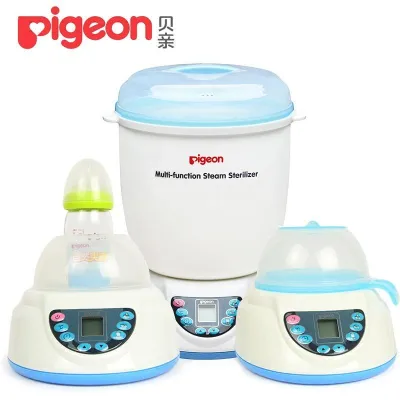
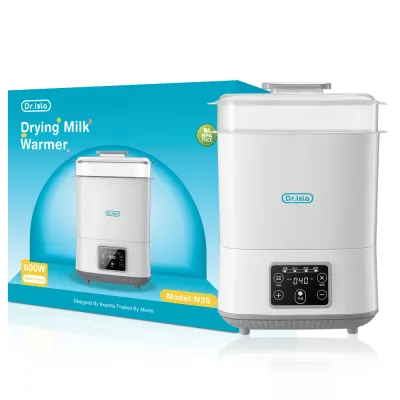
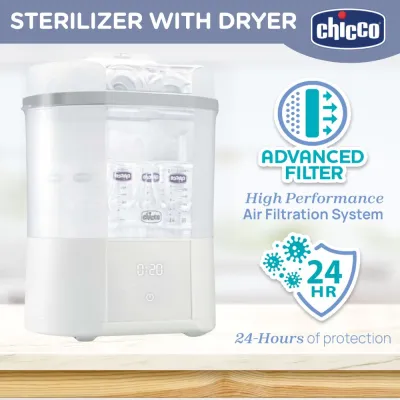
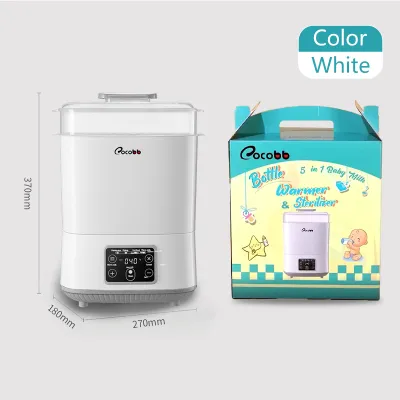
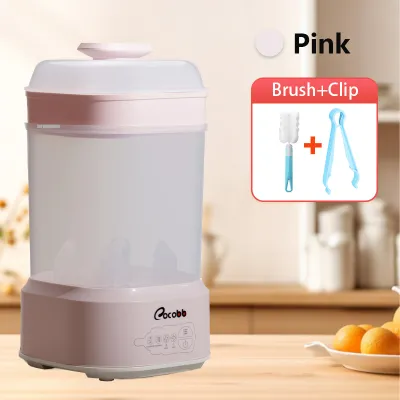
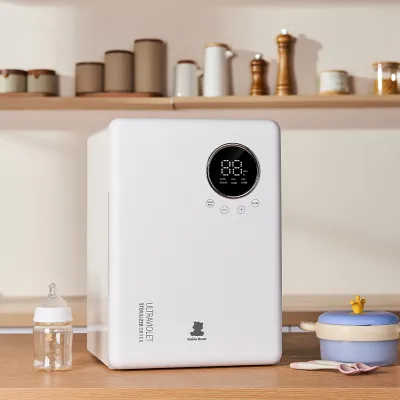
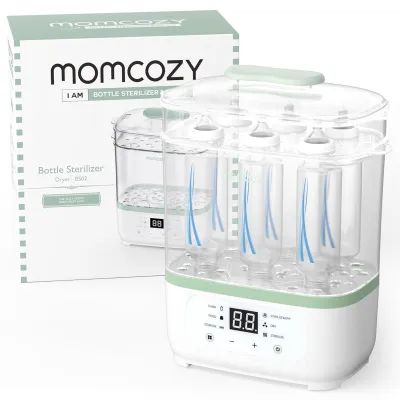
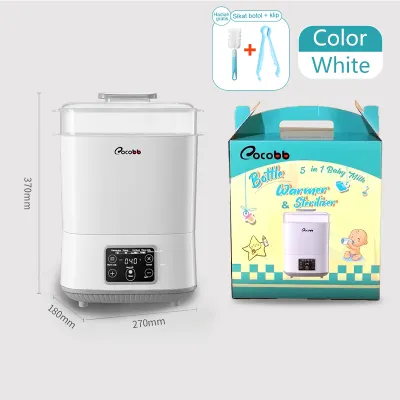
Prices are valid at publication and may change. Please refer to the product page for the latest price.
Your daily schedule will also dictate whether a single large daily batch or multiple smaller batches better fits your household routine. Some parents prefer to wash and sterilize bottles immediately after each feeding, which requires a smaller, faster unit that can be run multiple times a day. Other families find it more convenient to collect all used bottles and pump parts throughout the day, washing and sterilizing everything in one large batch in the evening. Choosing a model that aligns with these habits ensures you never run out of clean, dry bottles when your baby is hungry.
Key Features to Compare in Pigeon Sterilizers
When comparing different Pigeon sterilizer models, looking closely at the functional specifications on the product labels will help you identify the most efficient option for your home. The primary sterilization method used in these appliances is steam sterilization, which uses high-temperature steam to eliminate household bacteria on all exposed surfaces. However, the drying mechanism is where models often differ, typically utilizing a hot air drying system that blows heated air through the chamber to evaporate remaining water droplets.

It is essential to check the air filtration system integrated into the drying mechanism. High-quality models feature built-in air filters, such as HEPA or specialized dust filters, at the air intake vent. These filters ensure that the air drawn into the machine to dry your bottles is clean and free from airborne dust, pet dander, or pollen, preventing the re-contamination of freshly sterilized items.
Cycle duration and flexibility are also key factors to compare. Look for units that offer separate or combined modes, such as an “Auto” cycle that automatically transitions from steam sterilization to hot air drying, as well as standalone “Sterilize Only” or “Dry Only” options. Standalone modes are highly useful when you need to quickly dry items that were washed but do not require full sterilization, or when you need a rapid steam cycle without waiting for the drying phase.
Finally, verify the safety and convenience features of each model. An automatic shutoff feature is critical, as it cuts off power to the heating element once the water reservoir is empty, preventing overheating and potential electrical hazards. Clear digital displays, countdown timers, and indicator lights are also highly beneficial, allowing you to see at a glance how much time remains in the cycle so you can plan your feeding schedule accordingly.
Matching Capacity and Space to Your Kitchen
Balancing the internal capacity of a sterilizer with the physical footprint it occupies on your kitchen counter is crucial for maintaining an organized and functional cooking space. Manufacturer specifications typically state the maximum bottle capacity, often ranging from five to nine bottles. However, you must also consider the internal rack configurations, as wide-neck bottles, tall bottles, and bulky breast pump parts require different spacing than standard-neck bottles.
Look for models with adjustable or removable racks and accessory trays. A dedicated upper tray is highly useful for holding smaller items like nipples, pacifiers, collars, and breast pump valves, keeping them separate from the main bottle chamber and ensuring they receive optimal steam exposure and airflow. If you use wide-neck bottles, ensure the lower rack has sufficient spacing to prevent the bottles from touching, which can block steam and hot air from circulating effectively.
Before making a purchase, measure your available countertop space and compare it with the external dimensions of the sterilizer. In many Philippine homes, especially urban condominiums or apartments, counter space is at a premium. You must also consider vertical clearance; because steam sterilizers vent hot steam from the top of the unit, placing them directly under low-hanging wooden kitchen cabinets can cause moisture damage, warping, or mold growth over time.
Additionally, consider the practical layout of your kitchen. The sterilizer should be placed on a flat, stable, heat-resistant surface near a grounded electrical outlet, without the power cord being stretched or exposed to water spills. Ensure there is adequate ventilation space around the sides and back of the unit to allow heat to dissipate safely, and position it where water drainage or refilling the reservoir can be managed without creating a slipping hazard on your kitchen floor.
Evaluating Budget and Long-Term Value
When choosing a sterilizer, it is helpful to establish a decision framework that weighs the upfront purchase price against the long-term durability, energy efficiency, and multi-functional capabilities of the appliance. In the Philippines, baby appliances represent a significant investment, with prices generally scaling according to capacity, digital features, and the sophistication of the drying and filtration systems.
While a basic steam-only sterilizer may have a lower initial cost, a model with an integrated dryer offers substantial long-term value by saving you time and reducing the risk of contamination from air-drying bottles on open racks. When comparing price tiers in ₱, consider how long you plan to use the appliance. If you intend to have more children or use the unit for sterilizing toddler feeding gear and family tableware later on, investing in a larger, more durable model with advanced features can be more cost-effective over time.
You should also investigate the ongoing costs of ownership, specifically the availability and price of replacement parts. The air filters in the drying mechanism must be replaced periodically to maintain hygiene and drying efficiency, so check how easily these filters can be sourced from local distributors or online marketplaces. Similarly, factor in the cost of descaling agents or citric acid powder, which are necessary for regular maintenance.
Lastly, review the manufacturer’s warranty terms and the availability of local service support in the Philippines. Purchasing a model backed by an official local warranty ensures that you can easily access authorized repair centers, genuine replacement parts, and customer service assistance if you encounter any technical issues. This local support is invaluable for an appliance that you will rely on multiple times a day for several years.
Safety Checks and Manufacturer Guidelines
To ensure your sterilizer operates safely and effectively throughout its lifespan, establishing a regular maintenance routine based on manufacturer guidelines is essential. One of the most critical maintenance tasks is descaling the heating plate. Tap water in many regions of the Philippines contains high levels of dissolved minerals, commonly referred to as hard water. When this water is boiled to create steam, it leaves behind mineral deposits or limescale on the heating plate, appearing as white, brown, or grey spots.
If left untreated, limescale buildup acts as an insulating layer, reducing the heating efficiency of the plate, increasing cycle times, and potentially causing the heating element to overheat and fail. To prevent this, visually inspect the heating plate weekly and descale it using citric acid or a vinegar-and-water solution as directed in your user manual. Never use abrasive scrubbers or harsh chemical cleaners, as these can permanently damage the protective coating of the heating plate.
Maintaining the air intake filter is equally important for preserving drying efficiency and hygiene. Over time, the filter accumulates dust and airborne particles from your kitchen environment, which can restrict airflow and force the drying motor to work harder, potentially shortening its lifespan. Check the manufacturer’s instructions on how to clean or replace the filter, which typically involves rinsing it under clean water or replacing it entirely after a specified number of months.
Finally, always remain vigilant for stopping conditions that indicate the unit requires immediate attention. If you notice unusual burning odors, see error codes on the digital display, observe water leaking from the base of the unit, or find any physical damage to the power cord or plug, stop using the appliance immediately. Unplug the unit from the wall outlet and consult the manufacturer’s customer service or a qualified professional to inspect and repair the device before attempting to use it again.
Frequently Asked Questions (FAQ)
Can I sterilize items other than baby bottles in these units?
Yes, you can sterilize a variety of baby care items, but you must always verify the material heat tolerance first. Safe items typically include silicone pacifiers, teethers, breast pump components, and plastic weaning spoons made from heat-resistant materials like polypropylene (PP), polyethersulfone (PES), or polyphenylsulfone (PPSU), which can withstand temperatures of at least 100°C. Always check the manufacturer’s guidelines for each item before placing it in the sterilizer. Avoid sterilizing electronics, battery-operated toys, or any items containing latex or heat-sensitive plastics, as the intense steam heat can melt, warp, or damage them.
How often should I descale the heating plate?
You should generally descale the heating plate every one to two weeks, though the exact frequency depends on your local water hardness and how often you run the unit. Visually inspect the heating plate regularly; if you notice white or brown mineral spots forming on the surface, it is time to descale. Using distilled or purified water instead of tap water can significantly reduce mineral buildup, extending the time between required descaling sessions and helping to maintain optimal steam generation.
Is it safe to leave the sterilizer plugged in after the cycle ends?
While most modern sterilizers feature an automatic shutoff function that cuts power to the heating element at the end of a cycle, it is highly recommended to unplug the appliance when it is not in use. Leaving appliances plugged in exposes them to standby power consumption and potential damage from electrical power surges, which are common in many parts of the Philippines. Unplugging the unit after it has cooled down is a simple and effective practice to protect the internal electronics and ensure long-term safety.

Community discussion
Share your experience or ask a question. Comments are reviewed before publication.