
Choosing the right milk powder dispenser is a small decision that makes a massive difference in your daily parenting routine. During the weaning stage, your baby transitionally balances solid foods with precise formula feeds. A reliable dispenser eliminates the stress of measuring powder on the go, preventing messy spills and keeping formula dry. To make the best choice, you must evaluate how well a dispenser protects against moisture, fits your travel habits, and matches your baby’s growing appetite.
Core Features to Verify Before Buying
First, prioritize food-grade material verification. Always inspect the packaging or product listing for explicit “BPA-free” labels and food-safe plastic designations. Because these containers hold dry food that your baby consumes daily, verifying these material standards is a non-negotiable safety step.
Second, evaluate the airtight sealing mechanism. In warm, tropical climates where humidity levels are consistently high, moisture is the enemy of dry formula. If warm air enters the container, the powder will clump, lose its consistency, and potentially spoil. Look for dispensers that feature silicone gaskets along the rims or secure, deep-threaded screw lids that block air passage entirely.
Products mentioned in this guide
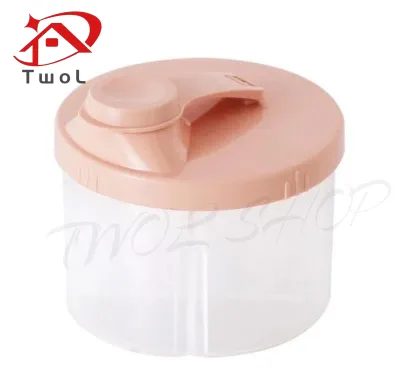
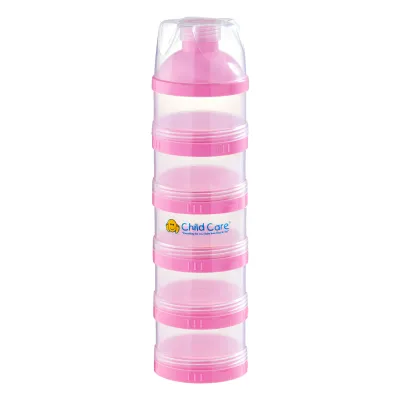
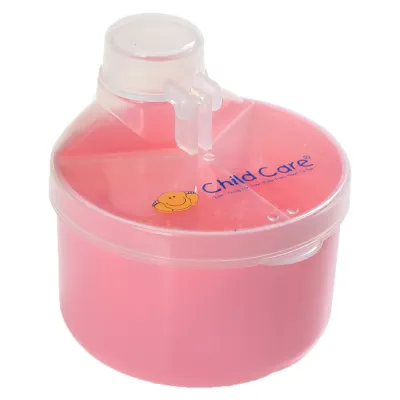
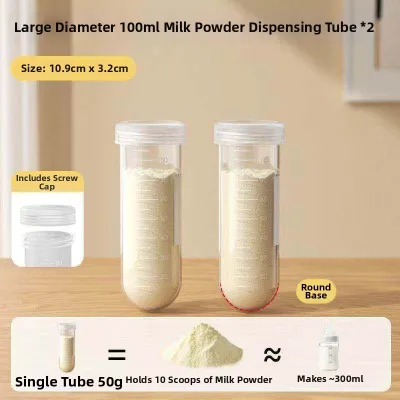
Prices are valid at publication and may change. Please refer to the product page for the latest price.
Third, align the container’s capacity with your baby’s current weaning stage. A newborn might only require small, frequent feeds, but a weaning baby often consumes larger volumes per bottle. Ensure the individual compartments are spacious enough to hold the exact number of scoops required for a single feed without needing to pack the powder down tightly.
Matching Capacity and Portability to Your Feeding Routine
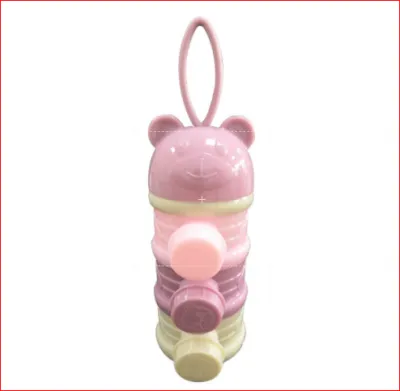
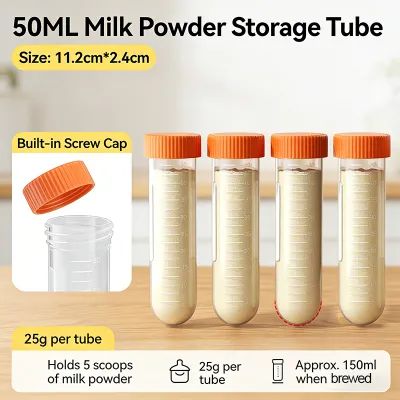
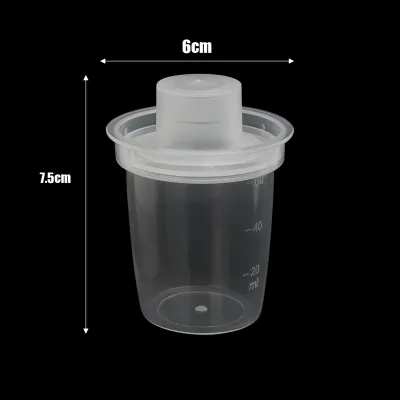
When selecting a dispenser, you must choose between single-serve containers and multi-compartment stacking designs. Stacking towers are excellent for extended day trips or weekend travel, as they allow you to stack three or four pre-measured portions into a single vertical column. Conversely, single-serve containers are highly portable and ideal for quick errands where you only need one backup feed.

Calculate your baby’s typical formula volume per feed before committing to a specific model. If your weaning baby currently drinks 8 ounces of formula per bottle, you will need a dispenser compartment that can comfortably hold four to five standard scoops of powder. Packing too much powder into a small compartment makes it incredibly difficult to pour out smoothly, often leaving a significant amount of residue behind.
Consider the physical trade-offs between a compact diaper bag footprint and ease of handling. A very slim, narrow dispenser slides easily into the side pockets of a backpack, but it may be difficult to grip securely. On the other hand, a wider, ergonomic shape might take up more space in your bag but is much easier to hold and operate with one hand while balancing your baby on your hip.
Verifying Material Safety and Hygiene Features
To ensure long-term safety, learn to read the plastic resin identification codes on the bottom of the dispenser. The most common safe materials for formula storage are Polypropylene (PP) and Polyphenylsulfone (PPSU). PP is lightweight, highly affordable, and widely available, with quality options ranging from ₱150 to ₱400. PPSU is a premium, medical-grade plastic known for its distinct honey-colored tint and exceptional resistance to high temperatures, often costing upwards of ₱800.
Do not rely solely on vague marketing claims like “eco-friendly” or “non-toxic.” Instead, look for independent safety marks or manufacturer compliance statements printed directly on the packaging. These marks indicate that the product has undergone standard quality testing to ensure it does not leach harmful chemicals into dry food.
Examine the physical structure of the dispenser for potential hygiene flaws. Avoid designs that feature complex internal ridges, deep crevices, or exposed screw threads inside the powder chamber. These structural elements easily trap fine powder particles and moisture, creating a perfect environment for mold and bacterial growth that is incredibly difficult to clean.
Evaluating Dispensing Mechanisms for Daily Use
The design of the pouring spout directly impacts how quickly and cleanly you can prepare a bottle, especially during middle-of-the-night feeds. Funnel-shaped spouts are highly recommended because they narrow down to fit precisely inside both standard and wide-neck baby bottles. Direct-pour openings, which lack a defined funnel, often lead to accidental spills and wasted formula on your counter.
Assess the lid opening mechanisms carefully, keeping one-handed operation in mind. Flip-top lids are incredibly convenient because you can pop them open with a single thumb press, but they must snap shut with a reassuring click to ensure they will not burst open inside your bag. Screw-on lids offer maximum security against leaks but require two hands to open, which can be challenging when managing a hungry, crying baby.
Check the smoothness of the inner compartment walls before making a purchase. High-quality dispensers feature highly polished, seamless interior walls that allow the powder to slide out effortlessly. If the plastic has a rough texture or prominent seams, static electricity will cause the fine formula powder to cling to the sides, forcing you to shake or tap the dispenser vigorously to get the full portion out.
Cleaning, Sterilization, and Replacement Signs
Maintaining strict hygiene requires a dispenser that can be completely disassembled. Before washing, separate every single component, including any removable silicone seals, lids, and stacking connectors. Always check the manufacturer’s instructions for specific sterilization limits, as some plastics can warp or degrade when exposed to the high temperatures of boiling water or UV sterilizers.
Establish a regular visual inspection routine to identify when it is time to replace the dispenser. Look closely for micro-scratches on the inner walls, which are often caused by stiff bottle brushes; these tiny grooves can harbor bacteria even after thorough washing. If you notice persistent cloudiness, discoloration, or a lingering sour milk odor that does not go away after washing, discard the container immediately.
Proper air-drying is critical to preventing mold growth, particularly in humid environments. After washing and sterilizing, place all disassembled parts on a clean, elevated drying rack in a well-ventilated area. Never reassemble the dispenser or fill it with dry powder if there is even a single droplet of moisture remaining inside, as this will instantly ruin the formula.
Building Your Shortlist Based on Feeding Scenarios
Scenario A: The Frequent Traveler
If you frequently take your baby on long road trips, family visits, or outdoor excursions, your priority should be high capacity and extreme durability. Look for multi-layer stacking towers made from impact-resistant PPSU or thick PP plastic. Ensure each compartment has its own individual mid-lid to prevent powder from sticking to the bottom of the container stacked above it, and verify that the outer connections lock together securely to withstand being tossed around in a packed diaper bag.
Scenario B: The Night-Feeder
For parents managing exhausting midnight feeds, speed and ease of use are paramount. Your ideal dispenser is a single-unit container with a rotating inner lid and a single, wide funnel spout. This design allows you to pre-measure multiple feeds in separate internal compartments, then simply rotate the lid to the next chamber and pour without having to open multiple lids or stack parts in the dark. Look for a quiet, soft-snap flip cap that will not wake a sleeping baby.
Scenario C: The Minimalist Commuter
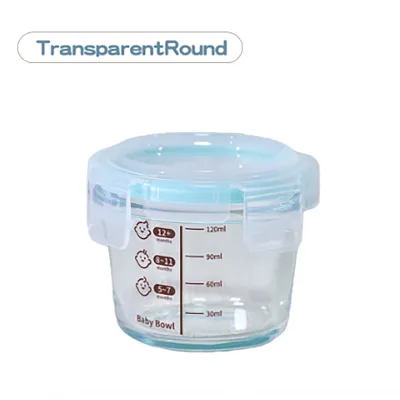
If your daily routine consists of short walks to the local park, quick grocery runs, or brief visits to nearby cafes, you do not need a bulky multi-tier tower. A space-conscious parent should look for ultra-compact, single-serve portable options or flexible, food-grade silicone pouches. These minimalist designs take up virtually no space in a small purse or stroller organizer, providing just enough formula for a single emergency feed while keeping your load as light as possible.
Frequently Asked Questions (FAQ)
Can I store prepared liquid formula in a milk powder dispenser?
No, milk powder dispensers are strictly designed for dry-storage use and are not engineered to hold liquids safely. They lack the thermal insulation required to keep prepared formula at a safe temperature, and their seals are generally not liquid-tight, which can lead to messy leaks in your bag. More importantly, storing prepared liquid formula at room temperature in a non-insulated container creates a high risk of rapid bacterial growth, which can make your baby sick. Always mix formula fresh at the time of feeding, or use dedicated insulated thermal bottles if you must transport warm water.
How long can milk powder safely sit in a dispenser before use?
While dry formula powder is shelf-stable in its original sealed tin, once it is transferred to a portable dispenser, it is exposed to air and ambient humidity. In warm, humid climates, it is best to use pre-portioned powder within 24 to 48 hours of transferring it to the dispenser. Always store the filled dispenser in a cool, dry place away from direct sunlight, such as inside an insulated compartment of your diaper bag. If you notice any clumping, color changes, or unusual odors when opening the dispenser, discard the powder immediately and do not feed it to your baby.
Are silicone dispensers better than plastic ones for weaning babies?
Both materials offer distinct practical advantages depending on your specific feeding routine. Food-grade silicone dispensers are highly flexible, virtually unbreakable when dropped, and allow you to gently squeeze the sides to release stubborn, static-cling powder. However, they lack the rigid, structured stackability of hard plastics like PP or PPSU, which can make them harder to organize in a crowded bag. Hard plastic dispensers are easier to stack and measure precisely, but they can crack if dropped on hard surfaces. Whichever material you choose, always verify that it carries certified food-grade labels and check the manufacturer’s instructions for sterilization temperature limits.

Community discussion
Share your experience or ask a question. Comments are reviewed before publication.