
Starting solid foods is a major milestone for families in the Philippines. As your baby reaches around six months of age and shows signs of readiness—such as sitting with minimal support and showing interest in your meals—introducing purees or soft finger foods becomes an exciting daily ritual. However, this transition often comes with a fair share of mess, from flying bowls of mashed squash to spoons dropped repeatedly onto the floor. Choosing the right baby plates and spoon set is not just about aesthetics; it is about finding tools that match your baby’s developmental stage, support their emerging motor skills, and fit seamlessly into your household’s daily routine.
Every baby develops at their own pace, meaning the ideal tableware for one family might not suit another. Some infants prefer grasping soft finger foods directly from a flat surface, while others do better with spoon-fed purees managed by a caregiver. By understanding the key features of modern baby tableware, you can make an informed purchase that minimizes mealtime stress, keeps food off the floor, and encourages your little one to build a healthy relationship with food from their very first bite.
Key Features to Evaluate for First-Solids Tableware
When browsing online marketplaces or local baby boutiques, material safety must be your primary filter. Do not rely on generic marketing buzzwords like “baby-safe” or “natural” printed on the front of the box. Instead, turn the product packaging over and actively verify that the manufacturer specifies 100% food-grade silicone, BPA-free, phthalate-free, and PVC-free materials. Food-grade silicone is highly favored for first tableware because it is flexible, does not shatter when dropped, and does not harbor bacteria easily in humid tropical climates. If you prefer plastic or bamboo composites, check the labels to ensure they are certified food-safe and do not contain harmful binders or melamine, which can degrade under heat.
Products mentioned in this guide
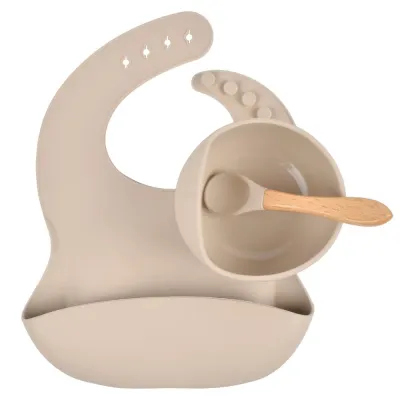
![[Same Day Ship] 3Pcs/Set Baby Dinnerware Anti-hot Wheat Training Plate Baby Feeding Bowl Set Tableware Plates with Spoon and Fork](https://img.lazcdn.com/g/p/ffad040f903247da887e501c5e884882.jpg_400x400q80.jpg_.webp)
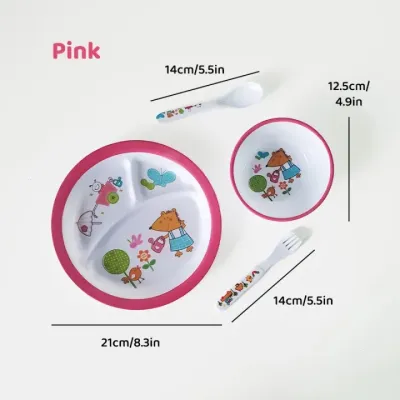
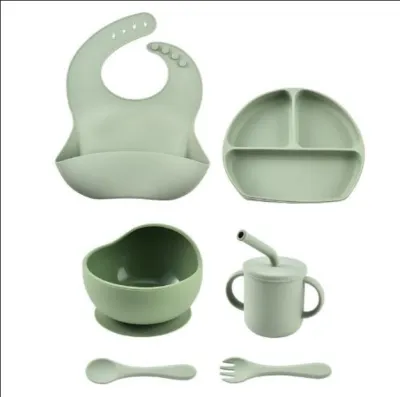
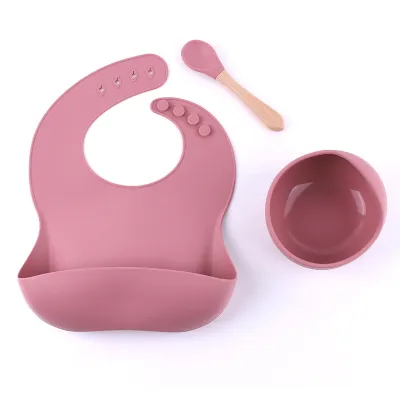
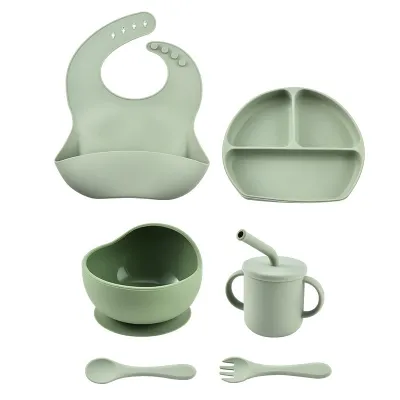
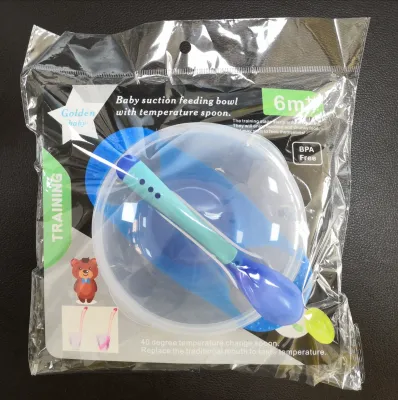
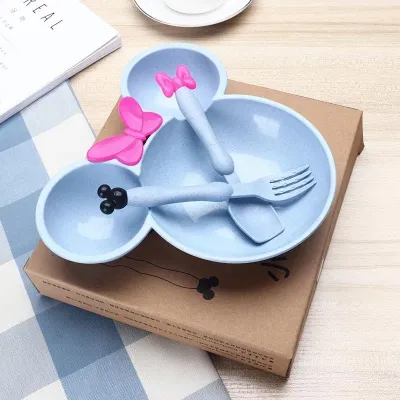
Prices are valid at publication and may change. Please refer to the product page for the latest price.
A plate or bowl is only as good as its ability to stay on the highchair tray. To evaluate the suction mechanism, look closely at the base design. A wide, flat, and continuous suction ring generally provides a more reliable hold than a small, central suction cup. However, the effectiveness of any suction base depends heavily on the surface it clings to. Suction relies on creating a vacuum, which requires a completely smooth, clean, and non-porous surface. Highchair trays made of smooth plastic or polished glass work beautifully, whereas textured plastic, matte finishes, or unsealed wooden trays will allow air to seep under the seal, causing the suction to fail almost instantly.
Spoons are not one-size-fits-all, and the right design depends on who is doing the feeding. If you are primarily feeding your baby purees, look for spoons with longer, slightly angled handles. These are designed for caregiver ergonomics, allowing you to scrape the bottom of deep jars or bowls comfortably and feed your baby from a natural angle. Conversely, if you are encouraging self-feeding, look for spoons with short, chunky, and textured grips. These are designed for a baby’s palmar grasp, making it easier for tiny hands to guide the spoon to their mouth without twisting their wrist.
Divided plates are highly beneficial during the early stages of solid food introduction. They allow you to serve small, manageable portions of different food groups—such as a spoonful of iron-rich meat puree, a soft piece of steamed broccoli, and a dollop of mashed sweet potato—without the textures and flavors running into one another. This separation helps babies identify distinct tastes and textures, which is crucial for sensory development. Additionally, divided sections serve as a visual guide for caregivers to balance macronutrients and avoid overfilling the plate, keeping mealtime manageable for a tiny tummy.
Condition-Based Shortlist: Matching Sets to Your Feeding Style
The ideal tableware set is not a universal standard; rather, it is a highly personalized choice that depends on your chosen feeding method and your baby’s physical coordination. By matching the design of the plate and spoon to your daily mealtime dynamics, you can minimize frustration and foster a more positive eating environment.

For Babies Who Frequently Toss Their Bowls
If your baby views mealtime as an experiment in gravity, your primary defense is a heavy-duty suction solution. Look for plates and bowls that feature a wide, reinforced suction base integrated directly into the body of the dish, rather than a separate suction ring that can easily detach. A crucial design feature to look for is a quick-release tab. This tab should be positioned facing away from the baby, allowing you to lift the plate easily while keeping it completely out of your baby’s line of sight and reach.
Before purchasing, measure your highchair tray and compare it to the dimensions of the suction base. Many parents buy beautiful, wide-rimmed suction plates only to find they do not fit within the curved borders of their specific highchair tray, rendering the suction useless. Additionally, check the manufacturer’s product specifications for any weight limits or suction hold ratings. Keep in mind that even the strongest suction will fail if the tray has grease, moisture, or dust on it, so always wipe both the tray and the suction cup with a damp cloth and dry them thoroughly before pressing the dish down firmly.
For Baby-Led Weaning (BLW) Beginners
Baby-Led Weaning encourages infants to feed themselves whole pieces of soft food from the very beginning. For this approach, look for plates with high, curved, or sloped interior walls. These vertical edges act as a backstop, allowing your baby to push food against the side of the plate to scoop it up with their fingers or a spoon, reducing the amount of food that ends up on the floor.
The spoons in a BLW set should be short, wide, and highly textured. Many BLW spoons feature a flat, collar-like guard near the neck to prevent the baby from inserting the spoon too far into their mouth and triggering a gag reflex. The tips should be made of soft, flexible silicone that is gentle on sensitive, teething gums. Furthermore, prioritize plates that have a substantial weight and a non-slip silicone bottom; even if you choose not to use the suction feature, a heavy, stable plate prevents the dish from sliding around as your baby practices pushing food around with their hands.
For Traditional Puree and Mashed Food Feeding
If you are starting with traditional spoon-feeding of smooth purees, a deep bowl with a curved interior base is far more practical than a flat plate. The rounded bottom allows you to easily gather every last drop of puree with the spoon, minimizing waste. Look for bowls that feature an ergonomic handle or a thumb grip on the side, which allows you to hold the bowl securely in one hand while feeding your baby with the other.
The accompanying spoons should have a long, sturdy handle to give you maximum control and reach. The bowl of the spoon should be shallow and narrow, matching the small size of a six-month-old’s mouth; a spoon that is too wide or deep will make it difficult for the baby to clear the food off with their upper lip. Some sets include heat-sensitive spoons that change color when exposed to high temperatures. While this is a helpful visual indicator, never rely on it entirely; always perform a manual temperature check by placing a small drop of food on the inside of your wrist before offering it to your baby.
Safety Checks and Maintenance for Baby Tableware
Before using any new tableware set for the first time, perform a thorough inspection. Wash all items in warm, soapy water according to the manufacturer’s initial preparation guidelines. Check the silicone for any manufacturing defects, such as rough edges, tiny tears, or chemical odors. Test the suction base on your highchair tray to ensure it forms a tight seal and does not have any warping that could let air in.
While many modern silicone plates are labeled as dishwasher and microwave safe, it is important to understand how high heat affects these materials over time. Frequent exposure to the intense heat of a dishwasher or steam sterilizer can gradually degrade the structural integrity of silicone, making it stiffer and reducing the flexibility of the suction base. If you use a microwave to warm up food, do so in short intervals and stir the food thoroughly to eliminate hot spots. For daily cleaning, hand-washing with a mild, fragrance-free baby dish soap and warm water is often the gentlest way to preserve the lifespan of the suction mechanism.
Regularly inspect your baby’s tableware for signs of wear and tear, especially once your baby starts developing teeth. Look closely for deep bite marks, scratches, peeling material, or discoloration. Over time, food oils can build up on silicone, leaving a soapy or white residue that can affect the taste of the food. If you notice any tears, cracks, or if the suction base becomes warped and no longer holds, discontinue use immediately to prevent choking hazards or messy spills.
Proper storage is essential for maintaining hygiene, particularly in the humid, tropical climate of the Philippines. After washing, ensure all pieces are completely dry before storing them in a closed cabinet to prevent mold or mildew growth. Keep silicone tableware away from direct sunlight, as prolonged UV exposure can cause the material to become sticky, discolored, or brittle. Additionally, store baby plates and spoons away from sharp kitchen utensils like knives or forks, which can easily puncture or slice through soft silicone.
Frequently Asked Questions (FAQ)
When should I transition from a suction bowl to a regular plate?
The transition from a suction bowl to a standard, non-suction plate depends entirely on your child’s individual motor skills and behavioral development rather than a specific age. You can begin introducing regular tableware when you observe that your child no longer tries to lift, flip, or throw their dish during meals. Other signs of readiness include a well-developed pincer grasp, controlled use of a spoon or fork, and an understanding of mealtime boundaries. Start by using non-suction plates during supervised snacks, and gradually transition to regular plates for main meals as their coordination and table manners improve.
Are silicone spoons safe for teething babies to chew on?
Food-grade silicone spoons are generally safe for babies to chew on, and many infants find the soft, textured material soothing on their sore, teething gums. However, a feeding spoon is not a dedicated teething toy and should not be used as one without close caregiver supervision. Always inspect the spoon before and after each meal for any signs of damage, such as deep teeth marks, tears, or loose pieces. If your baby has sharp emerging teeth, they can potentially bite off small pieces of silicone, which poses a serious choking hazard. If you notice any structural compromise, discard the spoon immediately and offer a dedicated, solid teething ring instead.

Community discussion
Share your experience or ask a question. Comments are reviewed before publication.