
Selecting the right automatic baby swing rocker is one of the most impactful decisions you can make when preparing for a fussy newborn. In the Philippines, where warm temperatures and high humidity are daily realities, finding a device that keeps your baby cool, comfortable, and calm requires careful consideration. An automatic baby swing rocker serves as a valuable tool for parents, offering a safe, hands-free space to soothe an infant who is overstimulated, colicky, or simply resisting rest. However, because newborns have unique physiological needs—including fragile necks, developing airways, and sensitive skin—not every swing on the market is suitable for the earliest weeks of life.
To make the best choice for your household, you must look beyond aesthetic designs and focus on the mechanics of soothing motion, structural safety baselines, and practical features that fit your living space. By understanding how different motions mimic parental comfort and how to verify safety certifications, you can confidently select a model that provides reliable relief. This guide outlines the essential factors to evaluate, helping you navigate local retail options and online marketplaces to find a high-quality, durable swing that supports your newborn’s development while giving you a much-needed break.
Understanding Soothing Motion for Fussy Newborns
To choose an effective automatic baby swing rocker, it helps to understand why rhythmic motion is so successful at calming a crying infant. In the womb, a fetus is constantly subjected to gentle, multi-directional movement as the mother walks, turns, and shifts positions. Once born, a fussy baby often craves these familiar sensations to help regulate their nervous system. Different swings attempt to replicate these movements in various ways, and understanding these mechanics will help you identify which style is most likely to soothe your newborn.
Products mentioned in this guide
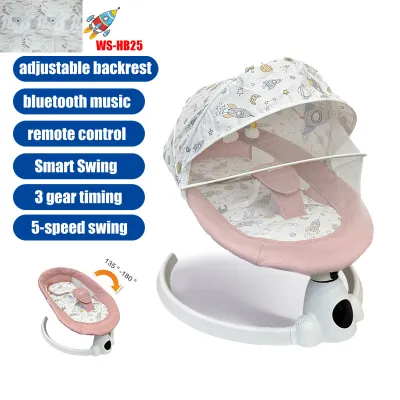
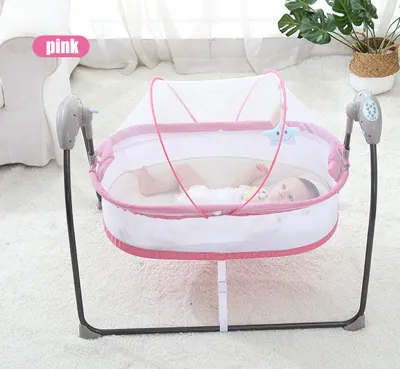
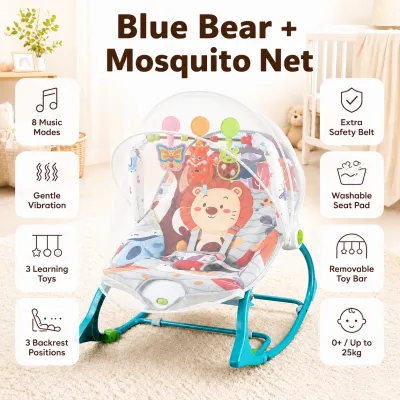
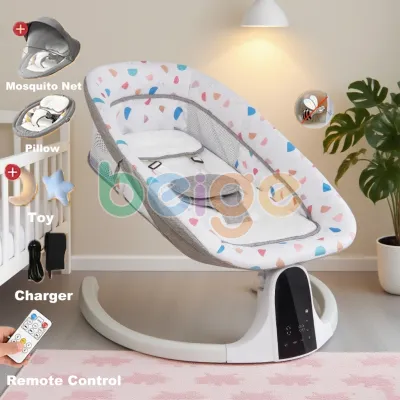
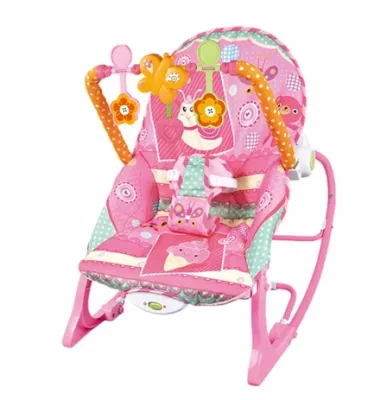
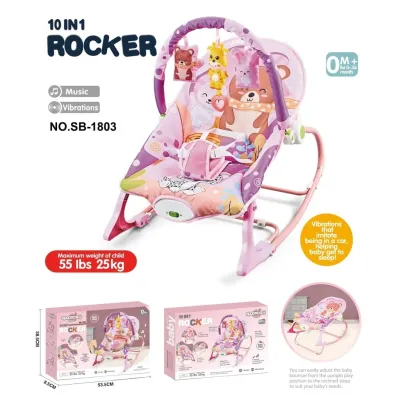
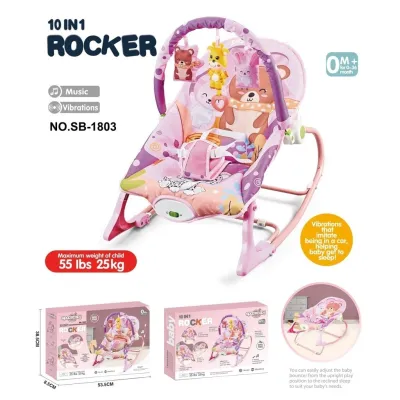
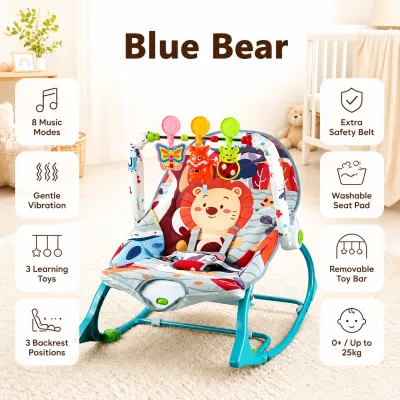
Prices are valid at publication and may change. Please refer to the product page for the latest price.
The most common motion profiles are side-to-side swaying, traditional front-to-back swinging, and multi-directional gliding. Side-to-side swaying mimics the gentle rocking motion of a parent holding a baby close to their chest and swaying from foot to foot. Many parents find this lateral motion highly effective for younger infants who are easily startled by sudden vertical movements. Front-to-back swinging, on the other hand, replicates the classic pendulum motion of a traditional swing. While some newborns find this comforting, others may find it too intense if the speed is not carefully regulated. Multi-directional models combine these paths, moving in circular, figure-eight, or wave-like patterns. These advanced motions closely simulate being cradled and bounced in a caregiver’s arms, making them highly versatile for babies with diverse preferences.
Adjustable speed settings are critical when selecting a swing for a newborn. A newborn’s vestibular system—the sensory system that detects motion and balance—is highly sensitive. During the first few weeks of life, babies typically respond best to very slow, gentle, and highly predictable rhythms. Faster speeds can easily overstimulate a newborn, leading to increased fussiness rather than calm. Look for a swing that offers a wide range of speed increments, starting with an ultra-low setting. This allows you to gradually test your baby’s response and adjust the pace as they grow and their sensory tolerance increases.
Many modern automatic swings also integrate complementary sensory tools to enhance their soothing effects. These features often include built-in sound machines that play white noise, gentle womb sounds, soft lullabies, or nature tracks like rainfall or ocean waves. Sound is a powerful tool for fussy newborns, as a constant, low-frequency hum mimics the continuous auditory environment of the womb and helps mask sudden household noises. Additionally, some models feature a gentle vibration function built directly into the seat frame. Vibration can help soothe colicky babies by providing a mild, comforting sensation against their tummies. When evaluating these features, ensure that the sound and vibration settings can be controlled independently of the swing’s motion, allowing you to customize the sensory experience to your baby’s immediate needs.
Essential Safety and Support Requirements for Newborns
While the primary goal of a swing is to soothe, safety must always be your absolute priority. Newborns are physically fragile; they lack the muscle strength to support their own heads, and their airways are narrow and easily compromised. Consequently, any seating device you introduce must meet strict structural and ergonomic standards to prevent injury or respiratory distress.

The most critical ergonomic feature for a newborn is a deep, adequately reclined seat. Because infants cannot hold their heads up, a seat that is too upright will cause the baby’s heavy head to slump forward onto their chest. This chin-to-chest position can easily compress their soft trachea, leading to positional asphyxiation—a silent and life-threatening condition where the baby’s airway is restricted. To prevent this, a newborn swing must allow for a highly reclined angle that keeps the baby’s head tilted slightly back, keeping the airway fully open. Additionally, look for robust, integrated head and neck support inserts. These contoured cushions help keep the baby’s head centered and prevent it from tilting sideways, ensuring they remain in a safe, neutral alignment.
A secure harness system is another non-negotiable safety requirement. Swings generally feature either a three-point or a five-point harness. For newborns, a five-point harness—which secures the baby over the shoulders, around the waist, and between the legs—is highly recommended. This system prevents the baby from slumping sideways, sliding downward, or shifting out of the optimal reclined position. Even if your newborn cannot yet roll or crawl, their natural squirming and the motion of the swing can cause them to migrate within the seat. Ensure the harness straps are fully adjustable, padded for comfort, and feature a buckle that is secure enough to resist accidental release but straightforward for a caregiver to operate.
Before purchasing any automatic baby swing rocker, you must carefully verify the manufacturer’s specifications, age recommendations, and weight limits. These details are typically printed on the product packaging, the law tag attached to the seat fabric, or within the instruction manual. Most newborn swings are rated for babies starting at approximately 5 to 6 pounds (around 2.3 to 2.7 kilograms) up to a maximum limit of 20 to 25 pounds (around 9 to 11 kilograms). However, weight is not the only developmental milestone to monitor. You must stop using a baby swing as soon as your infant attempts to sit up, roll over, or push themselves up on their hands and knees, regardless of whether they have reached the maximum weight limit. At this stage of development, the risk of the baby tipping the swing or climbing out increases dramatically.
Finally, it is vital to understand the golden rule of baby swing safety: supervised use only. An automatic baby swing is a waking activity device, not a safe sleep environment. Because of the inclined seating position, leaving a baby to sleep unattended in a swing carries significant risks. If your baby falls asleep while swinging, you should immediately transfer them to a flat, firm sleep surface, such as a crib, bassinet, or playard. Never leave your baby unattended in the swing, even for a few minutes, and always keep the device within your direct line of sight.
Key Features to Evaluate in an Automatic Baby Swing Rocker
When comparing different automatic baby swing rocker models, a structured evaluation of their functional features will help you determine which product offers the best long-term value and convenience for your daily routine.
First, consider the power source options. Automatic swings generally operate using either an AC plug-in adapter, standard alkaline batteries, or a hybrid system that supports both. Plug-in models are highly advantageous for daily, stationary use because they provide a consistent, uninterrupted flow of power, ensuring the swing maintains its set speed without slowing down as a battery drains. They also eliminate the ongoing cost and environmental waste of purchasing replacement batteries. On the other hand, battery-operated models offer excellent portability, allowing you to set up the swing in areas of your home without nearby outlets, or even outdoors on a shaded patio. For maximum flexibility, look for a hybrid model that allows you to plug the unit into a wall outlet when at home and switch to battery power when traveling or moving between rooms.
Next, evaluate the control interface and smart features. Basic models feature physical buttons or dials on the base of the frame to adjust speed, timer settings, and music. While reliable, these require you to physically bend over the swing to make adjustments, which can sometimes startle a baby who is on the verge of falling asleep. More advanced models include remote controls or Bluetooth connectivity, allowing you to adjust the swing’s settings directly from your smartphone. A remote control or mobile app is incredibly convenient, as it enables you to lower the speed, change the white noise track, or set a shut-off timer from across the room without interrupting your baby’s settling process.
Maintenance is another critical factor, particularly in the tropical climate of the Philippines. High humidity, combined with inevitable diaper blowouts, spit-up, and sweat, means the swing’s fabric will require frequent cleaning. Look for a model with a fully removable seat cover that is explicitly labeled as machine-washable. Avoid designs where the fabric is permanently attached to the frame or requires complex disassembly to clean. The frame itself should be constructed from smooth, non-porous materials like high-quality plastic or powder-coated metal, which can be easily wiped down with a damp cloth and mild baby-safe sanitizer to prevent the buildup of dust, mold, or bacteria.
Lastly, assess the physical footprint, weight, and foldability of the swing. Full-size automatic swings often feature a wide, flared base to ensure maximum stability while the motor is in motion. While highly secure, these models can occupy a substantial amount of floor space, making them less ideal for smaller apartments or crowded rooms. If space is limited, look for compact models or those designed with a folding frame. A folding mechanism allows you to collapse the swing flat when not in use, making it easy to slide behind a sofa, store in a closet, or pack into the trunk of a car for trips to visit family.
Matching the Swing to Your Space and Daily Routine
To ensure the swing integrates seamlessly into your home, you must plan around your specific living environment and daily habits. A swing that looks perfect in a spacious showroom may feel overwhelming or impractical once placed in a compact living room or bedroom.
Start by measuring the physical space where you plan to place the swing. Remember that you need to account not just for the static dimensions of the frame, but also for the dynamic clearance space required when the swing is in full motion. A side-to-side swaying swing, for example, needs clear space on both sides to prevent the seat from bumping into walls, coffee tables, or other furniture. If your home has limited floor space, a compact, low-profile automatic rocker or a multi-directional swing with a small, circular base may be a much better fit than a traditional, wide-frame pendulum swing.
Power outlet placement is another practical layout consideration. If you choose a plug-in model, you must position the swing close enough to an outlet so that the power cord lies flat against the wall or floor. Stretching a cord across a high-traffic walkway creates a serious tripping hazard for you, older siblings, or pets, and could result in the swing being violently yanked or tipped over. Additionally, ensure the cord is routed safely behind furniture and completely out of the reach of your baby and any curious toddlers.
The operational noise of the swing’s motor is also worth considering. While some motor hum is inevitable, a high-quality automatic swing should operate quietly, producing a soft, rhythmic sound that blends into the background like white noise. A motor that squeaks, clicks, or grinds can be highly disruptive, preventing a fussy baby from calming down and irritating other household members. If possible, read user reviews focusing on motor noise, or test the swing in a quiet environment before purchasing to ensure it will not disrupt your home’s peace.
Verifying Product Claims and Buying Safely in the Philippines
Navigating the baby gear market in the Philippines requires a discerning eye, especially when shopping on online marketplaces or from independent local retailers. With a wide variety of brands and price points available, parents must take active steps to verify product safety and authenticity.
To protect your newborn, prioritize purchasing from official brand stores, authorized local distributors, or well-established department stores. While unbranded or generic automatic swings imported from overseas may be highly affordable, they often lack rigorous quality control, reliable electrical wiring, or certified non-toxic materials. Counterfeit products or grey-market imports may also lack essential safety components, such as secure harness buckles or stable frame joints, and will not be covered by manufacturer warranties.
When evaluating a swing, look for physical proof of safety certifications rather than relying on vague marketing claims. Reputable manufacturers will display recognized certification marks directly on the product label, box, or user manual. These certifications indicate that the product has undergone independent testing to verify its structural stability, electrical safety, and chemical safety. Do not be swayed by phrases like ‘pediatrician recommended’ or ‘clinically proven to soothe’ unless the seller can point to specific, verifiable safety standards.
Finally, always review the retailer’s return policy and the availability of local warranty coverage before finalizing your purchase. A reliable warranty is essential for automatic swings, as they contain electronic motors and control boards that can occasionally malfunction. Verify whether the local distributor offers customer support within the Philippines and whether they stock replacement parts, such as power adapters, toy bars, or extra seat covers. Having access to local customer service ensures that if you encounter any issues with the motor or power supply, you can quickly secure a safe, authorized repair or replacement without having to discard the entire unit.
Frequently Asked Questions (FAQ)
Can a newborn sleep overnight in an automatic baby swing?
No, a newborn should never sleep overnight or for unsupervised, prolonged periods in an automatic baby swing. Pediatric health organizations worldwide strongly advise against using inclined seating devices for infant sleep. When a baby sleeps at an incline, their heavy head can easily fall forward, compressing their soft airway and leading to silent suffocation. Additionally, the soft, padded sides of a swing seat pose a suffocation risk if the baby turns their head. If your newborn falls asleep in the swing, always transfer them immediately to a flat, firm, and independent sleep surface, such as a crib or bassinet, with a tight-fitting sheet and no loose blankets, pillows, or toys.
How long can a baby safely use a swing rocker each day?
It is recommended to limit your baby’s time in an automatic swing to short intervals, typically no more than 30 minutes per session, and a maximum of one to two hours total per day. Overusing restrictive seating devices can contribute to ‘container baby syndrome,’ a term used to describe physical and developmental delays caused by spending too much time in swings, car seats, and bouncers. Prolonged time in these devices limits a baby’s ability to stretch, roll, and strengthen the muscles needed for crawling and sitting. To support healthy physical development, balance swing time with plenty of supervised tummy time, active floor play, and direct physical interaction with caregivers.
What should I do if the swing motor stops working or makes unusual noises?
If the swing’s motor stops working, begins to struggle, or starts making unusual grinding, clicking, or squeaking noises, you must take immediate action to ensure your baby’s safety. First, safely remove your baby from the swing and place them in a secure area, such as their crib. Next, immediately unplug the device from the wall outlet or remove the batteries to cut off all electrical power. Do not attempt to perform DIY repairs on the motor, wiring, or control board, as unauthorized modifications can compromise the device’s electrical safety, create fire hazards, or void your warranty. Instead, consult the troubleshooting section of the manufacturer’s manual, and contact the authorized local distributor or customer support team for professional assistance or repair options.

Community discussion
Share your experience or ask a question. Comments are reviewed before publication.