
Choosing between a baby rocking bed and a baby swing is one of the most common dilemmas for new parents preparing their nursery. Neither option is universally superior; instead, the ideal choice depends on whether your primary goal is facilitating sleep transitions or providing hands-free awake soothing, alongside your home’s layout and safety considerations. Understanding how each piece of gear functions and aligns with your daily routine is the first step toward making a practical, stress-free decision.
A baby rocking bed is typically designed to assist with sleep transitions, often featuring a compact, bedside-friendly frame and a gentle, linear gliding motion. In contrast, a baby swing is primarily engineered for awake soothing and entertainment, utilizing a larger footprint to deliver more dynamic, multi-directional motion patterns that mimic the swaying of a caregiver’s arms. By evaluating your newborn’s temperament and your household space, you can select the gear that offers the most meaningful support during those demanding early months.
Core Differences: Rocking Beds vs. Baby Swings
To make an informed choice, it is essential to look closely at the structural and functional differences between these two popular soothing tools. While both aim to calm a fussy newborn, they serve distinct roles in a baby’s daily rhythm.
Products mentioned in this guide
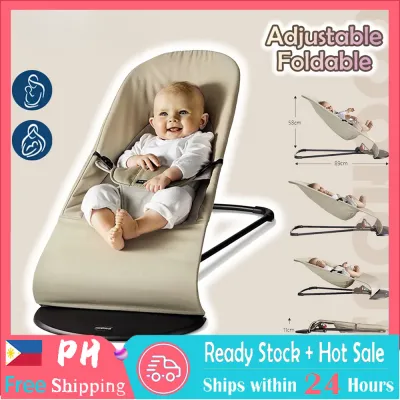
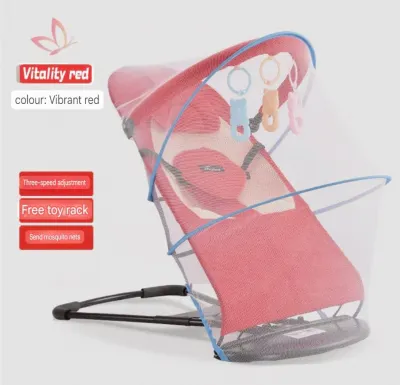
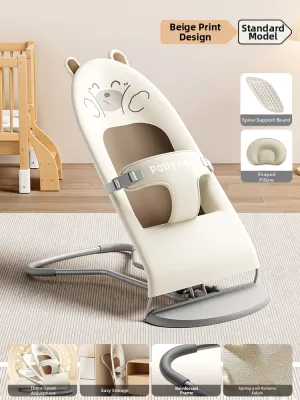
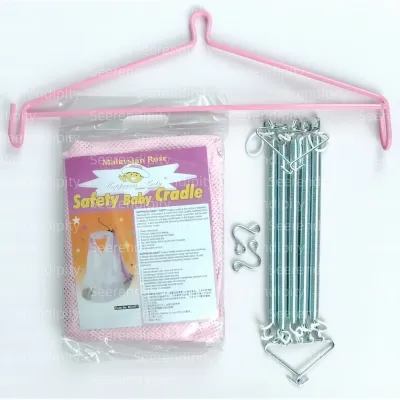
Prices are valid at publication and may change. Please refer to the product page for the latest price.
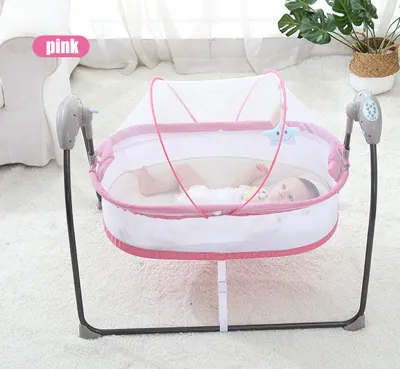
A baby rocking bed, often referred to as a gliding bassinet or rocking cradle, focuses on simplicity and close proximity. These units are designed to sit right next to your bed, allowing you to reach over and soothe your baby without leaving your own mattress. The motion is usually manual or gently automated, moving in a consistent, low-amplitude linear path. This subtle movement is intended to help a drowsy baby drift off to sleep or settle back down during minor nighttime awakenings. Because they are built with sleep transitions in mind, they often feature flat, firm mattress pads and breathable mesh sides that align with safe sleep recommendations, though parents must always verify the specific manufacturer’s certifications and instructions.
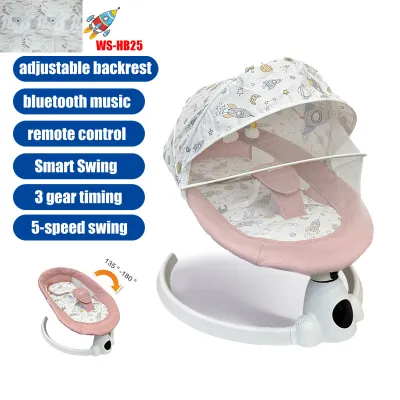
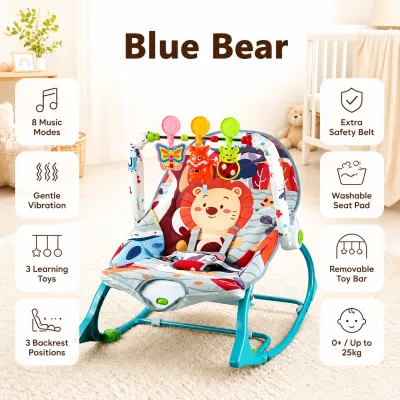
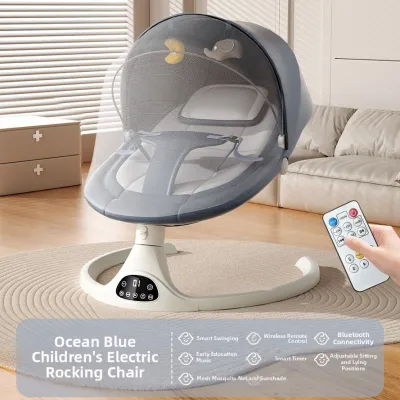
On the other hand, a baby swing is a more robust, feature-rich piece of equipment designed to keep an awake infant calm, engaged, and entertained. Swings typically hang from a sturdy overhead frame, allowing for a wider, more sweeping range of motion. Many modern swings offer multiple speed settings, varied motion paths (such as circular, figure-eight, or traditional head-to-toe swinging), and integrated toy bars or music players. Because the seat of a baby swing is usually reclined or contoured, it is not designed for unsupervised or overnight sleep. Instead, it serves as a safe, supervised spot to place your baby when you need your hands free to fold laundry, prepare a meal, or take a brief break.
How to Match the Gear to Your Baby and Home
Selecting the right gear requires a realistic assessment of your living environment and your baby’s unique personality. What works perfectly in a spacious suburban home may feel overwhelming in a compact urban apartment, and a motion that lulls one infant to sleep might leave another crying.

Space and footprint: In many homes, especially compact apartments or houses where space is at a premium, the physical footprint of baby gear is a major deciding factor. Baby swings generally require a significant amount of floor space. Because the seat swings outward, you must account for both the base dimensions and the clearance zone around the unit to prevent the swing from hitting walls or furniture. A baby rocking bed, by contrast, is designed to be space-efficient. Its vertical, compact frame fits easily into tight corners or right alongside a standard bed, making it highly suitable for shared bedrooms or smaller nurseries.
Portability and storage: Consider how often you will need to move the gear. If you want a soothing station that can transition from the bedroom to the living room or kitchen throughout the day, portability is key. Many rocking beds are lightweight and equipped with lockable wheels or simple folding mechanisms, allowing you to move them effortlessly. Swings, due to their heavy motor bases and wide frames, are often cumbersome to relocate and rarely fold down flat. Additionally, in warm, humid climates like the Philippines, storing unused gear in damp closets can lead to mold or mildew. Choosing a model that is easy to disassemble, wipe down, and store in a well-ventilated area is crucial for maintaining a hygienic environment.
Power and maintenance: Automated gear requires a reliable power source. Before purchasing, check whether the model relies on batteries, an AC adapter, or a hybrid power system. If you choose a battery-powered swing or rocker, factor in the ongoing cost and availability of replacement batteries. For plug-in models, you must plan placement near a safe electrical outlet, ensuring cords are kept entirely out of reach of children and pets. Maintenance is another daily reality; spit-ups, diaper leaks, and sweat from tropical humidity mean you will need to wash the fabric parts frequently. Look for gear with easily removable, machine-washable covers and water-resistant materials that can be quickly spot-cleaned.
Baby’s motion preference: Every newborn has a distinct sensory profile. Some babies are easily overstimulated and prefer the slow, predictable, linear glide of a rocking bed. Others crave more dynamic, varied movement and are only pacified by the sweeping, multi-directional sway of a motorized swing. If possible, observe how your baby responds to being rocked in your arms. Do they settle when you sway gently side-to-side, or do they prefer a more active, bouncing motion? Paying attention to these subtle cues can save you from investing in expensive gear your baby might reject.
Safety Standards and Usage Boundaries
No matter which product you choose, safety must remain your absolute priority. Infant gear is subject to strict usage guidelines, and understanding these boundaries is essential to protect your newborn from preventable injuries.
Safe sleep guidelines: The most critical distinction between these two products lies in their suitability for sleep. Pediatric health organizations worldwide emphasize that infants should sleep on a firm, flat, separate surface free of soft bedding, pillows, or toys. Many baby rocking beds are specifically designed and certified to meet these safe sleep standards, making them suitable for overnight use. However, you must always verify the specific manufacturer’s labels and documentation to confirm that the model is approved for unsupervised sleep. Conversely, baby swings feature reclined, contoured seats that can cause an infant’s head to slump forward, potentially compromising their airway. Therefore, swings are strictly for supervised, awake time and should never be used for overnight or unsupervised sleep.
Weight and developmental limits: All baby gear has strict physical limits that you must monitor continuously. Before placing your baby in a rocker or swing, locate the manufacturer’s documentation to identify the exact maximum weight capacity. Equally important are developmental milestones. For instance, many rocking beds must be retired the moment your baby shows signs of rolling over, pushing up on their hands and knees, or sitting unassisted. For swings, use must stop as soon as the baby attempts to climb out or reaches the maximum weight limit. Never assume a product is safe based on the baby’s age alone; physical development and weight are the only reliable indicators.
Supervision requirements: When your baby is in a swing, active caregiver supervision is required at all times. If your baby falls asleep while in a swing, safe sleep guidelines dictate that you should immediately transfer them to a firm, flat sleep surface, such as a crib or an approved bassinet. Leaving a sleeping baby in a swing, even for a short nap, increases safety risks. Keep the swing in the same room where you are working or resting so you can maintain a direct line of sight.
Harness and structural checks: Always secure your baby using the built-in safety harness, whether they are in a swing or a rocking bed. Most swings utilize a five-point or three-point harness to prevent the baby from sliding down or tipping over. Ensure the straps are adjusted snugly according to the manufacturer’s instructions. Additionally, perform routine structural checks. Inspect the frame, joints, and locking mechanisms weekly to ensure no screws have loosened and there are no signs of plastic fatigue or structural wear.
Decision Framework: Which Should You Choose?
To help you make the final decision for your household, consider this practical framework based on your primary needs, living space, and lifestyle.
Choose a rocking bed if:
- Your primary goal is to facilitate smooth sleep transitions and establish a secure bedside sleeping arrangement.
- You have limited floor space and need a compact unit that fits easily next to your own bed.
- You prefer a quiet, low-profile soothing tool that can be easily wheeled from room to room.
- You want a product that is certified for unsupervised, overnight sleep (always verify this in the product manual).
Choose a baby swing if:
- Your main priority is finding a hands-free, awake soothing tool to keep your baby calm and entertained while you attend to household tasks.
- You have ample, flat floor space in your living area to accommodate a wide, stable base and the necessary swing clearance.
- Your baby responds well to dynamic, multi-directional, or faster motion patterns.
- You are prepared to supervise your baby actively whenever they are using the device.
Neither may fit if:
- Your baby consistently rejects artificial motion and only settles with direct human contact or babywearing.
- Your home lacks a flat, stable floor surface, or you cannot establish a secure, hazard-free clearance zone around a swing.
- You cannot find a model that fits your specific space constraints without blocking walkways or emergency exits.
Verify first if:
- You are considering a second-hand or handed-down unit. In this case, you must thoroughly inspect the item for missing parts, structural wear, and fabric damage.
- You need to check the manufacturer's expiration date or search for any active product recalls. If the original manual is missing, look up the model number online to verify all safety guidelines and weight limits before placing your newborn inside.
Frequently Asked Questions (FAQ)
Can a baby sleep in a swing overnight?
No, a baby should never sleep in a swing overnight or unsupervised. The reclined, semi-upright position of a baby swing is not safe for prolonged sleep. If an infant falls asleep in a swing, their heavy head can tilt forward onto their chest, potentially blocking their airway and causing positional asphyxiation. Always follow pediatric safe sleep guidelines, which recommend a firm, flat, and level surface for all sleep. If your baby drifts off while swinging, gently transfer them to an approved bassinet, crib, or flat rocking bed as soon as possible.
When should I stop using the rocking bed or swing?
You must stop using this gear as soon as your baby reaches the manufacturer’s specified weight limit or hits key developmental milestones, whichever comes first. For rocking beds, you should transition your baby to a crib once they can roll over, push up on their hands and knees, or sit up unassisted, as they could tip the unit or fall out. For baby swings, stop use immediately if your baby attempts to climb out, can sit up unassisted, or exceeds the maximum weight capacity detailed in the product manual.
Are manual rockers better than automated ones?
Neither is inherently better; they offer different trade-offs depending on your lifestyle. Manual rockers give you complete control over the speed and rhythm, operate silently without motors, and do not require proximity to electrical outlets or constant battery replacements. They are often lighter and more portable. Automated options, however, provide hands-free convenience, allowing the motion to continue consistently while you attend to other tasks. When choosing an automated model, always check the power requirements, battery life expectations, and motor noise levels to ensure they fit your home environment.
Community discussion
Share your experience or ask a question. Comments are reviewed before publication.