
Choosing the right changing table mat for your baby in the Philippines involves more than finding an attractive design. In a tropical climate with high humidity, your choice must prioritize materials that resist mold, prevent sweat buildup, and withstand frequent sanitization. A proper changing mat serves as the primary workstation for thousands of diaper changes, making safety, dimensional compatibility, and robust waterproofing non-negotiable. By focusing on verifiable specifications rather than generic marketing claims, caregivers can establish a secure, hygienic, and comfortable space that protects their baby from accidental falls and skin irritation.
To make an informed decision, you must evaluate how a changing mat integrates with your existing nursery furniture. A mismatched mat that slides across a table surface or lacks physical barriers poses a direct safety risk to an active, rolling infant. Similarly, a mat that absorbs moisture rather than repelling it will quickly become a breeding ground for bacteria and mildew in humid conditions. Understanding the structural differences between various mat designs, verifying material safety certifications, and knowing how to navigate online product listings will ensure you select a durable product that meets the highest standards of safety and convenience.
Verifying Safety Features and Table Fit
The physical compatibility between your changing mat and the changing table is the foundation of nursery safety. Before browsing online marketplaces, you must use a reliable measuring tape to determine the exact length, width, and depth of the changing table’s flat surface. A changing mat must fit flush within the designated changing area, leaving no significant gaps along the sides or ends. Gaps wider than an inch are hazardous, as an infant’s limbs can easily become trapped, or the mat itself could shift abruptly when the baby wiggles. Conversely, an oversized mat that overhangs the edges of the table is highly unstable and can tip over under the baby’s weight.
Products mentioned in this guide
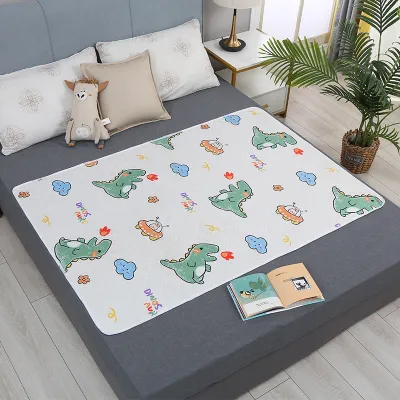
Prices are valid at publication and may change. Please refer to the product page for the latest price.
Restraint systems are another critical safety component to inspect when evaluating changing mats. Look for mats equipped with adjustable safety straps, preferably featuring a secure two-point or three-point harness with a durable buckle. It is essential to verify how these straps are anchored; they should be securely embedded into the structural core of the mat or designed to screw directly into the wooden frame of the changing table itself. While a safety strap is an excellent secondary defense against sudden movements, it should never replace the active supervision of a caregiver. Always keep one hand on your baby during diaper changes, regardless of how secure the harness appears.
Anti-slip features on the underside of the mat are vital for preventing dangerous sliding on smooth wooden, laminate, or metal furniture surfaces. High-quality changing mats typically feature a textured, rubberized, or silicone-dotted bottom surface that grips the table. Some models include additional security straps attached to the bottom of the mat, which wrap around the back or underside of the changing table and buckle tightly to lock the mat in place. If you plan to place the mat on a highly polished dresser, look for designs that include metal mounting brackets or adhesive hook-and-loop strips to provide a semi-permanent, immovable bond between the mat and the furniture.
Edge support designs, particularly contoured or raised edges, provide a physical barrier that helps keep your baby centered on the mat. Contoured mats generally feature a curved design, with the two long sides raised significantly higher than the center, creating a shallow protective valley. Some premium designs offer a four-sided contour, which encloses the baby on all sides to prevent sliding upward or downward. When reviewing product specifications, check the actual height of these raised edges; a minimum contour height of three inches is generally recommended to provide an effective physical barrier against accidental rolling as your baby becomes more active and mobile.
Evaluating Waterproofing and Material Safety
In the tropical climate of the Philippines, waterproofing is not just about convenience; it is a fundamental hygienic requirement. You must distinguish between surface-level water-resistant coatings and fully waterproof, non-porous materials. Water-resistant fabrics, such as treated polyester, may withstand minor splashes but can eventually saturate under pressure or after repeated washings. A truly waterproof mat utilizes a non-porous outer shell, such as food-grade polyurethane (PU) or heavy-duty vinyl, which completely blocks liquids from reaching the internal cushioning. This ensures that urine, water, and liquid messes remain on the surface, where they can be easily wiped away without soaking into the core.

The internal cushioning material requires equal scrutiny, as it must maintain its structural integrity even if moisture somehow bypasses the outer barrier. High-density polyurethane foam or soybean-based foam cores are common choices that offer excellent support and resilience. When checking material specifications, look for manufacturer declarations confirming that the foam is free from harmful chemical flame retardants, heavy metals, and formaldehyde. Because your baby’s sensitive skin will have frequent contact with the mat, prioritize outer covers that are certified phthalate-free, lead-free, and non-toxic. Avoid products that emit a strong, pungent chemical odor upon opening, as this often indicates high levels of volatile organic compounds (VOCs) that can irritate a newborn’s respiratory system.
Seam construction is a frequently overlooked detail that directly impacts the longevity and hygiene of a changing mat. Stitched seams, while common, create tiny needle punctures along the edges of the mat. Over time, liquids can seep through these microscopic holes and penetrate the inner foam, where the warm, humid tropical air will rapidly promote the growth of mold, mildew, and odor-causing bacteria. To prevent this, look for changing mats with heat-sealed or welded seams. This manufacturing process fuses the outer material together without needles, creating a completely seamless, impervious barrier that prevents any liquid penetration and makes the entire perimeter of the mat easy to sanitize.
The durability of the outer waterproof layer is essential for maintaining a safe environment over several years of daily use. Babies frequently kick, scratch, and play with toys during diaper changes, and their fingernails or sharp objects can easily puncture thin, low-quality plastic covers. Once the outer waterproof barrier is compromised, the mat loses its hygienic value and must be replaced. Look for mats that specify a tear-resistant or reinforced outer cover. Additionally, check that the material is formulated to resist cracking and peeling, which can occur when plasticizers degrade due to heat, humidity, and exposure to alcohol-based baby wipes or sanitizing sprays.
Comparing Design Features for Daily Convenience
When deciding on the overall design of your changing mat, you must weigh the benefits of a fixed, semi-permanent changing pad against those of a portable, foldable alternative. A fixed, contoured changing pad is ideal if you have a dedicated nursery room with a sturdy changing table or dresser. These pads offer superior cushioning, robust safety straps, and high contoured edges, providing maximum comfort and security for daily home use. However, if you live in a multi-story home, travel frequently, or have limited space, a portable or foldable changing mat is a highly practical addition. Portable mats are lightweight, can be rolled or folded into a compact size, and easily fit into a diaper bag, allowing you to create a clean changing surface on beds, floors, or public changing stations.
Cleaning convenience is a major factor in daily nursery management, and different mats require different maintenance routines. Some changing mats feature a completely smooth, non-porous surface designed to be wiped down directly with a damp cloth and a mild, baby-safe disinfectant spray. This design is incredibly efficient, as it eliminates the need for extra laundry and can be sanitized in seconds. Other models utilize a removable, machine-washable fabric cover over a waterproof inner pad. While fabric covers feel softer and warmer against a baby’s skin, they require regular washing and can accumulate a backlog of laundry. If you choose a mat that requires a cover, ensure you purchase at least two or three spare covers so you always have a clean one available during diaper emergencies.
The density and thickness of the internal padding directly affect your baby’s comfort during diaper changes. A mat that is too thin or soft will compress completely under the baby’s weight, leaving them resting against the hard wooden or metal surface of the changing table. Look for mats with a minimum thickness of one to two inches of high-density foam, which provides firm yet comfortable support for the baby’s head, spine, and hips. Firmness is also a safety factor; a changing surface that is too soft can pose a suffocation hazard if an infant manages to roll over onto their stomach, so the mat should feel supportive rather than plush.
Practical design additions, such as built-in storage pockets or integrated toy loops, can streamline your diaper-changing routine but must be evaluated carefully. Some portable changing mats feature fold-out wings with mesh pockets designed to hold a small pack of wipes, a few diapers, and a tube of diaper rash cream. This keeps all your essentials within arm’s reach, which is crucial for maintaining a safe grip on your baby. However, ensure that these storage compartments are positioned well away from the main changing area. Pockets filled with bulky items should not crowd the baby’s space or create uneven surfaces that could cause the baby to roll or slide off the mat.
How to Shortlist and Evaluate Options Online
Finding the right changing table mat on online marketplaces or ecommerce platforms requires a systematic filtering process to avoid low-quality or poorly fitting products. Start by setting precise search filters using your measured table dimensions and mandatory safety keywords, such as “contoured changing pad,” “waterproof changing mat,” or “changing pad with safety straps.” This initial step immediately eliminates products that are too large, too small, or lack basic safety features. Avoid searching for generic terms like “mat for baby,” which will return thousands of irrelevant results, including play mats, crawl mats, and decorative rugs that are not designed for changing tables.
Once you have a narrowed pool of candidates, cross-reference the detailed product specification sheets provided by the sellers. Do not rely solely on marketing images, which can be digitally altered or show mats on non-standard furniture that makes them appear larger or more secure than they actually are. Look for explicit listings of the mat’s exact dimensions (length, width, and thickness in centimeters or inches), the specific materials used for the outer cover and inner core, and the presence of safety certifications. If a seller does not provide these technical details, use the platform’s chat feature to ask for clarification, or move on to a more transparent listing.
Analyzing verified buyer reviews is one of the most effective ways to gauge the real-world performance and durability of a changing mat. When reading reviews, look past the initial five-star ratings and focus on detailed feedback from parents who have used the product for several months. Pay close attention to comments regarding the effectiveness of the anti-slip bottom, whether the safety straps are long and sturdy enough, and if the outer waterproof material begins to crack, peel, or develop a musty smell after repeated cleanings. In the Philippines, reviews that mention how the mat performs in warm, humid weather or whether it is easy to wipe clean without staining are particularly valuable.
Finalizing your purchase requires confirming the seller’s return, exchange, and warranty policies. Even with careful measuring, there is always a slight chance that a changing mat may not align perfectly with your specific changing table or dresser top due to manufacturing tolerances. Ensure the seller offers a straightforward return process for unused items in their original packaging. Additionally, check for warranties against manufacturing defects, such as broken buckles, torn seams, or defective zippers, which will give you peace of mind that you are investing in a high-quality, durable product that will keep your baby safe and comfortable.
Frequently Asked Questions (FAQ)
Do I really need a contoured changing mat, or is a flat one safe?
A contoured changing mat is highly recommended for elevated changing tables because its raised sides provide a physical barrier that helps prevent an active baby from rolling off the edge. Flat changing mats do not offer this built-in lateral protection, meaning they rely entirely on the constant physical contact of the caregiver and the strict use of a safety harness. While a flat mat can be perfectly safe when used on the floor or a low, wide surface where a fall is not a risk, an elevated changing table demands the extra security of a contoured design. As infants grow more mobile and learn to roll, the physical barrier of a contoured mat provides an essential layer of safety, though it must still be paired with undivided caregiver attention.
How do I clean and maintain a waterproof changing mat to prevent mold?
To prevent mold and bacterial growth, especially in humid tropical climates, you must establish a regular cleaning routine. After every diaper change, wipe the surface of the mat with a damp cloth and a mild, baby-safe soap or a specialized non-alcohol sanitizing spray. Avoid using harsh chemical bleach, highly concentrated alcohol, or abrasive scrubbing pads, as these can degrade the waterproof polyurethane or vinyl coating over time, leading to cracks where moisture can hide. If your mat has a removable fabric cover, wash it weekly in warm water with a hypoallergenic detergent and ensure it is completely dry before putting it back on. Periodically inspect the seams and underside of the mat for any punctures, tears, or signs of moisture penetration; if the inner foam becomes damp or shows black mold spots, the mat must be discarded immediately to protect your baby’s health.
Can I use a regular crib mattress as a changing pad?
Using a standard crib mattress as a changing pad on an elevated changing table is not recommended due to significant safety and functional mismatches. Crib mattresses are much larger and thicker than dedicated changing pads, meaning they will not fit securely within the safety rails of a standard changing table, creating a severe tipping and falling hazard. Furthermore, crib mattresses lack the contoured edges, non-slip bottom surfaces, and integrated safety straps that are specifically engineered to keep an infant secure during diaper changes. If you must use a crib mattress for changing diapers temporarily, do so only while the mattress is placed flat on the floor, ensuring there is no risk of a fall, and always place a clean, waterproof barrier underneath the baby to protect the mattress surface from stains and moisture.

Community discussion
Share your experience or ask a question. Comments are reviewed before publication.