
Choosing the right spoon and fork for kids set for your baby’s first solid foods involves finding utensils that match their developmental stage, oral motor skills, and physical coordination. During this transition, your baby is not just learning to swallow new textures but is also developing the fine motor control required to grip, scoop, and guide food to their mouth. The ideal starter set should feature soft, gentle materials that protect sensitive gums, shallow bowls that allow easy food clearance, and ergonomic handles designed for tiny hands. By focusing on observable design features, material safety certifications, and age-appropriate shapes, you can select a set that supports self-feeding while keeping mealtime safe and stress-free.
Essential Design Features for Early Self-Feeding
Adult utensils are designed for mature oral structures and advanced coordination, making them entirely unsuitable for a baby’s delicate mouth. When evaluating a spoon and fork for kids set, you must inspect the physical geometry of each piece to ensure it matches your child’s current physical capabilities. A baby’s mouth is small, and their gag reflex is positioned further forward on the tongue than an adult’s, meaning oversized or deep utensils can cause discomfort or resistance to feeding.
Before making a purchase, perform a visual and physical inspection of the utensil’s proportions. Look for a compact design where the functional end is scaled down to fit comfortably inside a small mouth without touching the back of the throat. The edges of both the spoon and fork must be completely smooth, with no sharp seams or manufacturing defects that could scratch your baby’s lips or gums.
Products mentioned in this guide
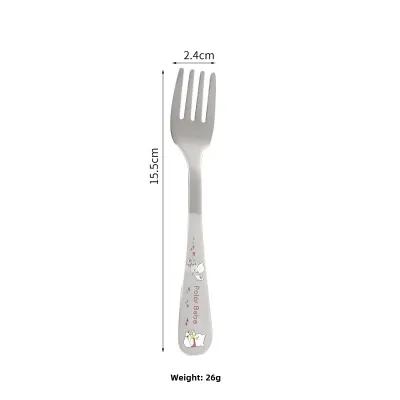
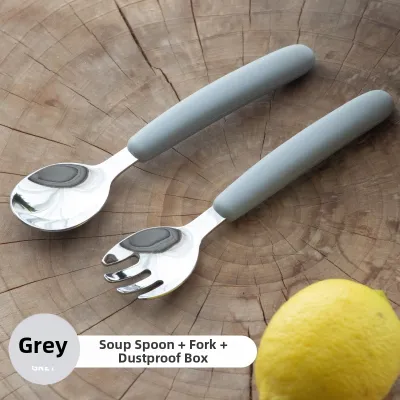
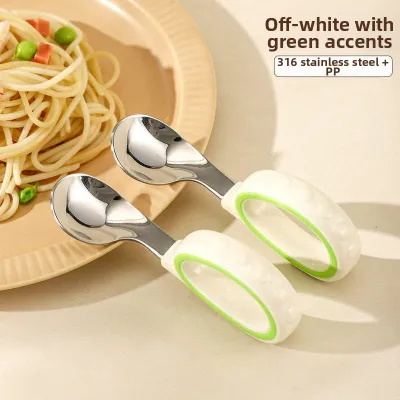
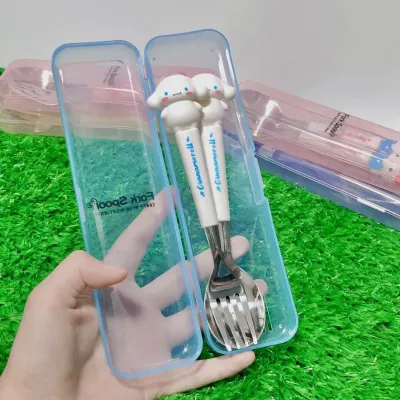
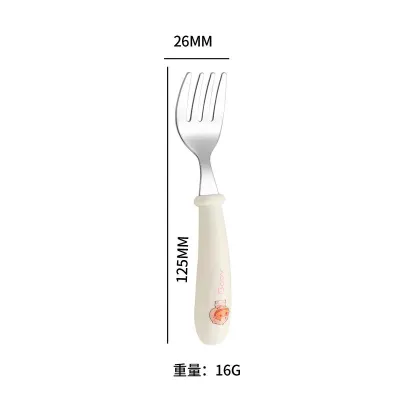
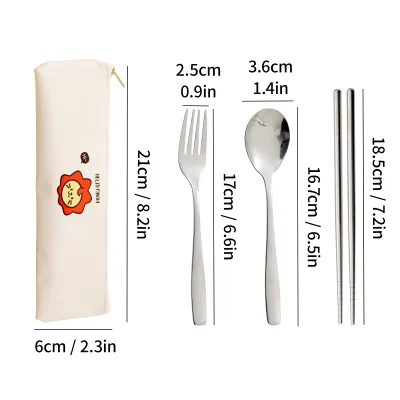
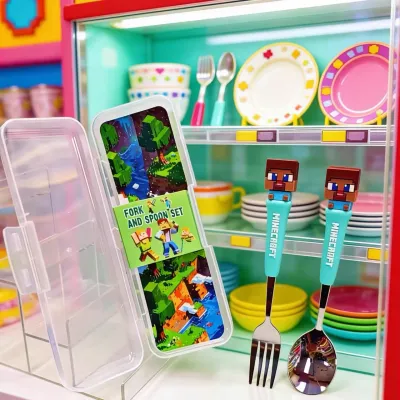

Prices are valid at publication and may change. Please refer to the product page for the latest price.
Spoon Bowl Depth and Soft Tips
The depth of the spoon bowl is a critical factor in how easily your baby can transition to solid foods. Deep spoon bowls require a high level of lip coordination to clear food, which can frustrate a beginner who is still mastering the basic scraping motion. A shallow, relatively flat spoon bowl allows your baby to easily clear the puree or mash using their upper lip, promoting a natural swallowing pattern.
In addition to bowl depth, the flexibility and softness of the spoon tip are vital for protecting emerging teeth and tender gums. Babies often bite down hard on utensils as a natural reflex or to soothe teething discomfort. A soft, flexible tip made of food-grade silicone or compliant elastomer bends under pressure, absorbing the force of sudden bites and preventing painful bruising.
To evaluate these features before buying, check the manufacturer’s product specifications for terms like “soft-tip” or “flexible rim.” You can also perform a physical check if buying in a physical store by gently pressing the tip of the spoon against your thumb; it should bend easily without requiring significant force. If the tip feels rigid or has sharp plastic edges, it may be better suited for an older toddler rather than a beginner.
Fork Tine Bluntness and Piercing Ability
Introducing a fork requires a careful balance between safety and functional design. A baby’s first fork must have blunt, rounded tines to prevent accidental punctures to the eyes, cheeks, or gums during erratic hand movements. However, if the tines are too thick or completely flat, the fork will fail to pierce soft foods, leading to frustration and a reliance on fingers.
When inspecting a fork for kids set, look for tines that are rounded at the tips but tapered enough to slide into soft-cooked vegetables or fruits. The spacing between the tines is also important; they should be wide enough to prevent food particles from getting tightly wedged, which can create a choking hazard or make cleaning difficult, yet narrow enough to hold food securely.
Always consult the manufacturer’s age recommendations and safety warnings before introducing a fork to your baby. Many brands design starter sets where the spoon is intended for immediate use at six months, while the fork is rated for older babies who have developed better hand-eye coordination. Verify these age-grade markings on the packaging to ensure you are introducing the fork at a developmentally appropriate time.
Handle Ergonomics and Grip Development
A baby’s ability to hold a utensil evolves rapidly during their first year of solids, moving from a primitive grasp to a more refined hold. In the early stages of self-feeding, babies use a palmar grasp, wrapping their entire fist around the handle. Utensils with short, chunky, and rounded handles are ideal for this stage, as they fill the small palm and require less finger coordination to control.

As your baby’s fine motor skills progress, they will begin to transition toward a pincer grasp, using their thumb and index finger to hold objects. For this stage, longer, slightly slimmer handles with contoured shapes help guide their fingers into a mature holding position. Some advanced starter sets feature angled handles, which reduce the need for wrist rotation, allowing babies to guide food directly into their mouths with less spilling.
When building your shortlist, evaluate the handle’s weight, balance, and slip resistance. A handle that is too heavy can cause hand fatigue, while a handle that is too light or poorly balanced may tip over easily when loaded with food. Look for textured grips, raised ridges, or non-slip rubberized coatings that prevent the utensil from sliding out of soapy, food-covered hands. A secure grip builds confidence, encouraging your baby to practice self-feeding more frequently during family meals.
Material Safety and Durability Checks
The materials used in your baby’s spoon and fork set directly impact safety, hygiene, and durability, especially in warm, humid tropical climates like the Philippines. Food-grade silicone is highly popular for beginners because it is soft, heat-resistant, and gentle on gums, though it can sometimes retain food odors or oil residues if not washed thoroughly. Stainless steel is exceptionally durable, hygienic, and easy to clean, but it is rigid and conducts temperature quickly, making it better suited for older babies who have learned not to bite down hard. BPA-free plastics are lightweight and affordable, but they can scratch easily over time, creating tiny crevices where bacteria can thrive.
To ensure material safety, never rely solely on marketing buzzwords. Instead, carefully inspect the product packaging and manufacturer documentation for specific safety certifications, such as compliance with international food contact standards or local regulatory guidelines. Look for explicit labels indicating the product is free from Bisphenol A (BPA), phthalates, lead, and PVC.
Furthermore, verify the dishwasher safety and heat tolerance limits strictly based on the manufacturer’s official care instructions. Some silicone and plastic utensils can withstand high-temperature sterilization, while others may warp, degrade, or release chemical compounds when exposed to boiling water or steam sterilizers. Always follow the specified temperature limits to preserve the structural integrity of the utensils and protect your baby’s health.
Building Your Shortlist by Feeding Stage
To create a practical purchasing plan, it is helpful to map utensil features directly to your baby’s developmental milestones. During Stage 1, which typically covers the introduction of purees and smooth mashes, the caregiver does most of the feeding. For this stage, look for spoons with long, slender handles that allow you to scrape the bottom of baby food jars easily, paired with very soft, shallow tips that protect your baby’s sensitive gums as they learn to swallow from a spoon.
Stage 2 begins when your baby shows a strong desire to grab the spoon and feed themselves, usually characterized by a palmar grasp. At this point, transition to utensils with short, bulbous handles that are easy for small fists to hold. The spoon bowl should remain shallow, and any fork introduced should have highly rounded, soft tines designed more for dipping into thick purees or mashed foods rather than piercing hard solids.
Stage 3 involves advanced self-feeding, where your baby starts mastering the pincer grasp and attempts to spear soft solids. This is the ideal time to introduce slightly longer, contoured handles and functional forks with firmer, tapered tines. Angled designs can also be highly beneficial during this stage to help your baby navigate the transition from scooping to direct mouth delivery without spilling.
When deciding whether to buy a comprehensive multi-stage set or individual pieces, consider your daily routine and washing frequency. In busy households, having multiple individual spoons of the same style can be more practical than a single multi-piece set, ensuring you always have a clean utensil ready during hectic meal prep times.
Cleaning, Maintenance, and Replacement Signals
Maintaining strict hygiene is essential to protect your baby’s developing immune system, particularly in warm environments where bacteria can multiply rapidly on damp surfaces. Establish a consistent cleaning routine immediately after meals by washing the utensils in warm, soapy water using a mild, baby-safe detergent. If the manufacturer’s instructions permit, you can place them in the top rack of the dishwasher, but avoid high-heat dry cycles which can degrade soft silicone or plastic components over time.
Regularly inspect each spoon and fork for visible signs of wear and tear. Over time, constant biting, washing, and sterilization can cause materials to degrade. Look closely for deep scratches, discoloration, peeling coatings, or rough edges along the rims and tines. If you notice any structural damage, discard the utensil immediately, as these damaged areas can harbor harmful bacteria or break off entirely, posing a severe choking hazard.
Always adhere strictly to the manufacturer’s care guidelines regarding sterilization limits. While some materials can be boiled or steam-sterilized daily, others may only require standard hand washing. Over-sterilizing utensils can accelerate material breakdown, leading to premature wear and voiding any manufacturer warranties.
Frequently Asked Questions (FAQ)
When should I introduce a fork alongside the spoon?
Introducing a fork typically occurs when your baby has transitioned from smooth purees to soft, solid finger foods and has developed the hand-eye coordination required to spear food. This milestone is often reached around 10 to 12 months of age, though every child develops at their own pace. Before introducing a fork, observe your baby’s ability to grasp small objects with their fingers and guide them accurately to their mouth. It is always best to consult your pediatrician or a pediatric feeding specialist to assess your baby’s developmental readiness and ensure they can safely handle soft, easily pierceable foods without risk.
Are silicone utensils better than plastic or stainless steel for beginners?
No single material is universally superior, as each offers distinct advantages depending on your baby’s feeding stage and sensory preferences. Silicone is highly recommended for absolute beginners because its soft, flexible texture is exceptionally gentle on tender, teething gums and provides an easy, non-slip grip. Plastic utensils are lightweight and highly affordable, making them convenient for travel, but they tend to scratch and wear out faster. Stainless steel is the most durable and hygienic option, but because it is rigid and conducts temperature, it is best reserved for older babies who have mastered the basic mechanics of self-feeding and no longer bite down reflexively on their utensils. Always verify food-grade certifications and age recommendations on the product packaging before making your choice.

Community discussion
Share your experience or ask a question. Comments are reviewed before publication.