
Choosing the right gear to support your baby’s first steps is an exciting milestone, but it requires careful attention to safety and physical development. To choose a safe and suitable baby walker, you must prioritize models that match your child’s current motor skills, feature robust physical safety designs—such as a wide, stable base and adjustable wheel resistance—and carry verified safety certifications. Understanding the physical differences between walker types and knowing how to configure the fit will help you protect your child while supporting their natural mobility.
While these toys are popular for keeping babies upright and entertained, not all models are created equal. Making an informed decision involves evaluating how a walker affects your baby’s posture, checking the physical environment of your home, and understanding when it is time to transition away from assistive gear altogether.
Seated vs. Push Walkers: Understanding Safety and Development Differences
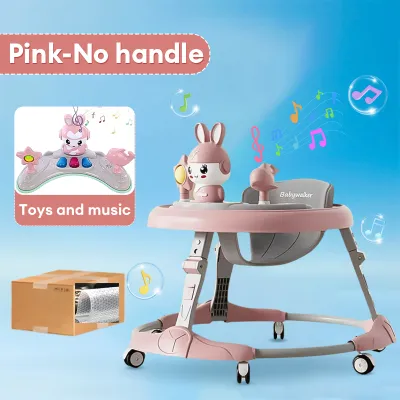
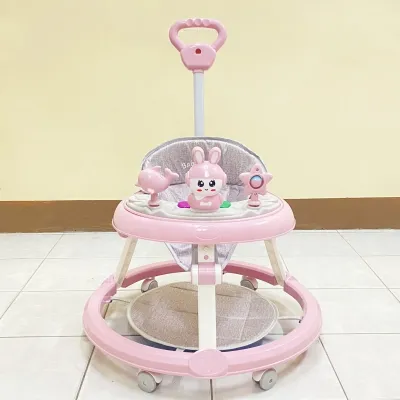
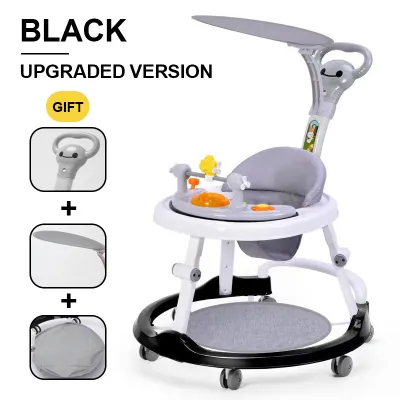
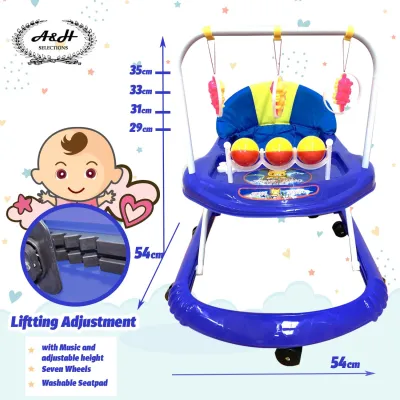
Before purchasing a walker, you must understand the two primary categories available on the market: traditional seated walkers and push-behind walkers. A seated walker consists of a fabric seat suspended inside a rigid plastic or metal frame supported by wheels, allowing a baby who cannot yet walk to move across the floor. In contrast, a push walker is a walk-behind toy with a handle and wheels that a standing baby grips and pushes forward, relying entirely on their own strength to stay upright.
Products mentioned in this guide
![[Easy To Walke] Bobbi Baby Walker walker for baby boy baby walker for girl SuitableFor 6-18 Months Infant Foldable walker for baby with Wheel Toddler Walk Learning Anti Rollove walker baby girl walker for baby With Music and Handle](https://img.lazcdn.com/g/p/fccee499d29a7bf50ee21c4b22facbed.jpg_400x400q80.jpg_.webp)
Prices are valid at publication and may change. Please refer to the product page for the latest price.
From a developmental perspective, these two types affect your baby’s motor skills in fundamentally different ways. Seated models often encourage “toe-walking,” where a baby pushes off the floor using only their tiptoes. This position can tighten the Achilles tendons and alter natural calf muscle development. Furthermore, because the seat supports the baby’s weight, they do not have to practice balancing their own torso or engaging their hip and thigh muscles naturally.
Push walkers, on the other hand, require your baby to bear their full weight and actively balance their body as they step. This action strengthens the legs, hips, and core, fostering a more natural heel-to-toe walking progression. Because the baby must actively stand and push, they develop a better sense of equilibrium and spatial awareness.
Many pediatric and child safety organizations worldwide strongly advise against the use of traditional seated walkers. The physical design of a seated model allows a baby to reach high speeds and access hazards that would otherwise be out of reach, such as hot liquids, electrical cords, or household chemicals. They also carry a high risk of tipping over thresholds or falling down stairs. Consequently, push walkers are widely recommended by developmental experts as the safer, more active alternative.
Before deciding which type of gear is appropriate for your home, consult your pediatrician. They can assess your baby’s specific muscle tone, joint alignment, and overall motor milestones to ensure that introducing a walking aid will not interfere with their natural physical progression.
Essential Physical Safety Features to Inspect Before Buying
If you decide to purchase a walking aid, you must carefully inspect its physical construction. Do not rely solely on product photos; examine the structural elements in person or verify the detailed specifications provided by the manufacturer.

- Wide Base Design: For seated models, look for a frame with a broad, flared, and heavy base. The base should be significantly wider than the top tray to keep the baby's fingers from getting pinched against walls and to prevent the unit from tipping over if the baby leans heavily to one side.
- Stair-Fall Prevention: Inspect the underside of a seated walker for safety features like rubber friction strips, grip pads, or automatic edge brakes. These components are designed to grab the floor and halt the wheels instantly if the walker moves over an edge or a sudden drop-off. Keep in mind that no mechanical brake replaces active adult supervision.
- Wheel Locks and Resistance: For push walkers, look for wheels equipped with adjustable tension screws or locking mechanisms. Beginners need high resistance so the toy does not slide out from under them on smooth surfaces like polished tile or laminate floors. As your baby's balance improves, you can gradually loosen the resistance.
- Pinch Points and Small Parts: Carefully examine all folding hinges, height-adjustment joints, and toy trays. Ensure there are no gaps between 1mm and 5mm where tiny fingers or toes could easily get trapped. Check that all attached toys, mirrors, and buttons are securely fastened and cannot break off to become choking hazards.
- Seat Support: If evaluating a seated model, check that the fabric seat is thick, durable, and provides high back support to keep your baby's spine aligned. The crotch strap must be wide, securely stitched, and made of non-slip material to prevent the baby from slipping through the leg openings.
How to Read Product Labels and Verify Safety Standards
When shopping for a walker, look past marketing buzzwords like “pediatrician-approved” or “ultra-safe” and focus instead on verifying physical safety labels and official certifications.
In the Philippines, you must verify that the product carries legitimate safety compliance markers. Look for the Import Commodity Clearance (ICC) sticker or the Philippine Standard (PS) quality mark on the packaging or the product itself. For imported models, check for recognized international safety standards, such as ASTM F977 for infant walkers or EN 1273 for baby walking frames.
Always adhere strictly to the manufacturer’s stated height, weight, and age limits. These parameters are not mere suggestions; they represent the structural boundaries within which the product was safety-tested. Exceeding these limits can cause the frame to buckle, the seat to tear, or the center of gravity to shift dangerously, increasing the risk of a serious fall.
Take the time to read the warning labels printed directly on the walker’s frame or fabric. Standard safety warnings will outline prohibited environments—such as wet surfaces, sloped driveways, and areas near stoves or heaters—and will explicitly state that a caregiver must maintain continuous supervision.
Before finalizing your purchase, perform a quick search on official consumer protection websites or the manufacturer’s official portal. Verify that the specific model and batch number have not been subject to any active safety recalls or manufacturing notices due to defects.
Checking the Fit: Height, Posture, and Weight Limits
Even a highly rated walker can cause physical strain if it does not fit your baby’s body correctly. You must regularly evaluate how your baby sits or stands in the gear to ensure proper ergonomic alignment.
For seated walkers, your baby’s feet must rest completely flat on the floor when they stand naturally in the seat. If only their tiptoes touch the ground, the seat is adjusted too high, which strains the calf muscles and reinforces an unnatural gait. If their knees are bent outward or excessively flexed, the seat is too low, putting unnecessary pressure on their developing hip and knee joints.
Choose a model that features multiple, secure height-adjustment settings. The locking pins or clips must click firmly into place, and you should test them by pressing down heavily on the tray to ensure the mechanism does not collapse under sudden pressure.
Observe your baby’s posture while they interact with the activity tray. The tray should sit roughly at mid-chest height. If the tray is too high, it forces your baby’s shoulders up toward their ears, causing neck fatigue; if it is too low, it encourages slouching and forces them to lean forward at an awkward angle.
For push-behind walkers, check the handle height relative to your standing baby. The handle should be positioned near their waist or lower chest, allowing them to push with a relatively straight spine and a slight bend in their elbows. If they have to hunch over or reach too high, the walker is not a proper fit.
Establish a strict “outgrowing” rule for your household. Stop using the walker immediately if your baby’s thighs rub tightly against the plastic frame, if they can easily climb out of the seat unassisted, or if they reach the maximum weight limit specified by the manufacturer.
Creating a Safe Environment and Knowing When to Stop
Using a walking aid requires you to thoroughly adapt your living space to prevent accidents. Because babies in walkers can move remarkably fast, you must secure the area before placing your child in the device.
- Hazard-Proofing the Zone: Install hardware-mounted safety gates at the top and bottom of all staircases and split-level steps. Remove loose area rugs, door mats, and exposed electrical cords that could catch on the wheels. Block access to high-risk zones like kitchens, bathrooms, laundry areas, and outdoor terraces.
- The Supervision Rule: Never use a walker as a substitute for a playpen or a babysitter. A caregiver must remain within arm's reach and maintain direct, uninterrupted line-of-sight at all times. A baby in a wheeled device can travel across a room in seconds, leaving no time for a distant adult to react.
- Time Limits: Limit your baby's walker sessions to short intervals of 15 to 20 minutes, once or twice a day. Restricting their time in the device ensures they still spend plenty of time on the floor crawling, rolling, and pulling themselves up, which are essential activities for building bilateral coordination and core strength.
Knowing when to retire the walker is just as important as knowing how to choose one. You should stop using the walker entirely once your baby can stand independently for several seconds, begins taking their first unassisted steps, or shows frustration with the physical constraints of the device. At this stage, free floor play and natural exploration are the best ways to support their developing independence.
Frequently Asked Questions (FAQ)
At what age can a baby start using a walker?
Readiness for a walker is determined by physical milestones rather than a specific calendar age. Your baby must be able to sit up completely unassisted, maintain steady head control, and show a clear interest in bearing weight on their legs when held upright. Always consult the manufacturer’s documentation to verify the minimum age and weight requirements, which typically start around six months.
Do baby walkers delay walking milestones?
Yes, excessive use of traditional seated walkers can delay independent walking. Because the seat supports the baby’s weight and the wheels make movement effortless, the baby does not develop the core strength, balance, and hip stability required to walk on their own. Additionally, it reduces the amount of time they spend crawling, which is a vital phase for cross-lateral brain and muscle development.
Are push walkers safer than seated walkers?
Push walkers are generally considered safer and more developmentally appropriate than seated walkers. Because they do not suspend the baby in an artificial position, they require the child to actively support their own weight, practice balance, and navigate space naturally. They also do not carry the same high risk of tipping over, falling down stairs, or giving the baby sudden, elevated access to household hazards.

Community discussion
Share your experience or ask a question. Comments are reviewed before publication.