
Choosing a safe walker for baby requires a careful balance of structural evaluation, developmental timing, and strict environmental control. While these devices can offer infants an engaging way to explore their surroundings, selecting the wrong model or using it incorrectly can expose your child to significant physical risks. To make an informed decision, parents must look beyond colorful toy attachments and focus on the engineering of the base, the security of the seat harness, and verifiable safety certifications. By prioritizing these critical design features, you can ensure your child remains secure while developing their motor skills.
Understand the Safety Debate and Developmental Readiness
Mobile baby walkers—those equipped with wheels—have been the subject of intensive discussion among pediatricians worldwide. Many prominent medical organizations, including global pediatric associations and local specialists in the Philippines, strongly advise against using mobile walkers. The primary concern is that these devices allow infants to move at speeds of up to one meter per second, far faster than a caregiver’s reaction time, which significantly increases the risk of falls, tipping, and access to household hazards. In contrast, stationary activity centers, which allow babies to bounce, spin, and play without moving across the floor, offer a much safer alternative by eliminating the risks associated with mobility.
Walking is a complex developmental milestone that requires the brain to coordinate the left and right sides of the body, balance the torso, and strengthen the muscles in the feet, calves, and thighs. When an infant is placed in a wheeled walker, the device supports their weight, allowing them to move without engaging these core balancing muscles. This can lead to a false sense of balance and can actually delay the onset of independent walking, as the baby does not learn how to support their own weight or balance their torso naturally.
Products mentioned in this guide
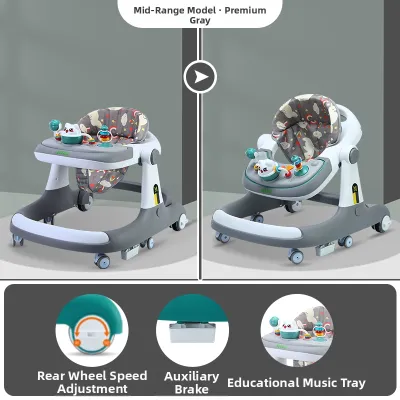
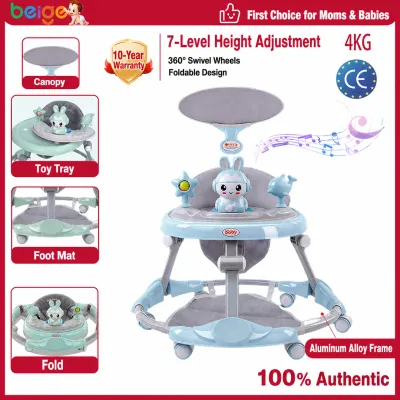
![[Easy To Walke] Bobbi Baby Walker walker for baby boy baby walker for girl SuitableFor 6-18 Months Infant Foldable walker for baby with Wheel Toddler Walk Learning Anti Rollove walker baby girl walker for baby With Music and Handle](https://img.lazcdn.com/g/p/fccee499d29a7bf50ee21c4b22facbed.jpg_400x400q80.jpg_.webp)
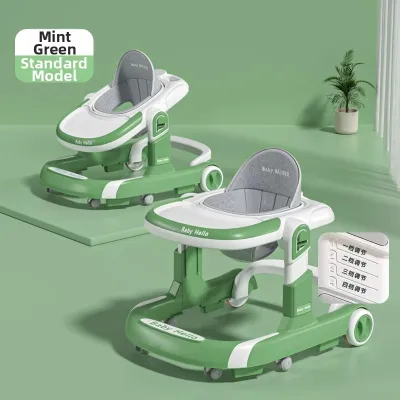
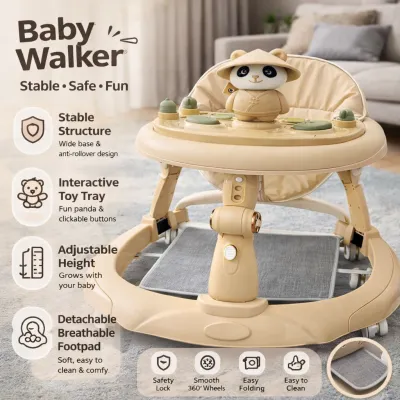
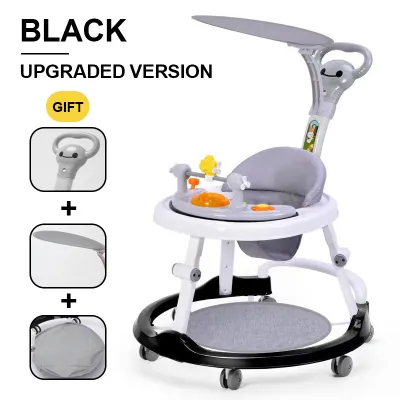
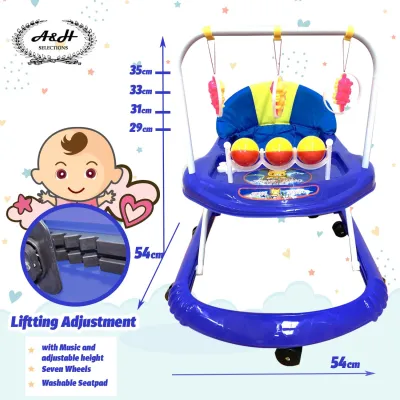
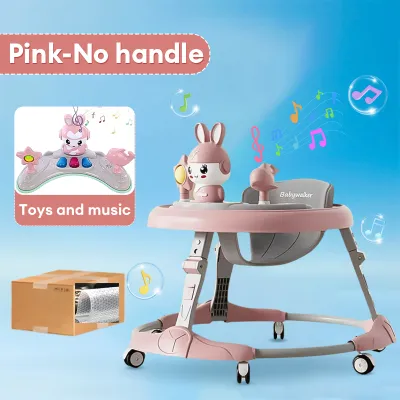
Prices are valid at publication and may change. Please refer to the product page for the latest price.
Many local pediatric clinics in the Philippines display warnings from pediatric societies regarding the hazards of wheeled walkers. These warnings emphasize that walkers do not teach babies how to walk; instead, they often teach babies to push with their toes, which can lead to tight calf muscles and a persistent toe-walking gait. Discussing these factors with your pediatrician can help you weigh the benefits of a stationary activity center over a traditional wheeled walker.
Before introducing any walker for baby, it is essential to consult your pediatrician to discuss your child’s specific developmental timeline. Do not rely solely on chronological age estimates, as every infant develops at their own pace. Instead, look for clear physical readiness signs that indicate your baby’s musculoskeletal system is strong enough to handle the upright position. Your baby must be able to sit up completely unassisted, hold their head up steadily without any wobbling, and demonstrate strong neck and trunk control before they are placed in any type of walker.
Additionally, always check the manufacturer’s product label for specific weight, height, and age limits rather than relying on general guidelines. These limits are established based on structural testing and are critical for maintaining the walker’s balance. If your baby is too small, they risk slipping through the leg openings; if they are too heavy or tall, they can easily destabilize the frame, leading to a dangerous tip-over. If your baby’s measurements fall outside the specified ranges, do not use the product.
Evaluate the Base and Wheel Design for Stability
The base of a walker is its primary defense against tipping, making its physical structure a critical safety point. When evaluating a walker for baby, look for a wide, heavy, and rigid base that extends significantly beyond the perimeter of the upper tray and seat. A broad base lowers the center of gravity and acts as a physical bumper, preventing the baby from getting close enough to walls, doorways, or furniture to tip themselves over. The wider the base is relative to the height of the walker, the more stable the unit will be during sudden movements.

Stair-fall prevention is another non-negotiable safety feature to inspect. Many modern walkers are equipped with friction strips, rubber grip pads, or automatic braking systems on the underside of the base. These safety mechanisms are designed to immediately grip the floor or lock the wheels if a wheel drops off an edge, such as a step or a threshold between rooms. In Philippine homes, where tiled floors, raised door sills, and step-downs to laundry areas or dirty kitchens are common, these braking strips are indispensable for preventing catastrophic falls.
In many Philippine homes, flooring materials vary from room to room, often transitioning from smooth ceramic tiles in the living room to rougher concrete or outdoor tiles in patio areas. Wheels made of cheap, hard plastic tend to slide uncontrollably on smooth tiles, reducing the effectiveness of the walker’s built-in braking strips. Look for wheels with rubberized treads or polyurethane coatings, which provide better traction and more predictable rolling speeds on slippery surfaces.
Over time, dust, pet hair, and floor debris can accumulate in the wheel axles, causing them to stick or lock up. This uneven resistance can cause the walker to pull to one side or tip over when the baby tries to move forward. Parents should regularly inspect the wheels, clean out any debris, and ensure they spin freely to maintain optimal stability. In tropical climates where humidity can affect materials, ensure the wheel axles are made of rust-resistant materials and that the wheels rotate smoothly without binding.
Before finalizing your purchase, perform a simple physical stability test in the store or upon unboxing. Place the empty walker on a flat surface and gently push it from various angles, both high on the tray and low on the frame. It should resist tipping and slide smoothly rather than lifting off the ground. If the walker wobbles, lifts easily, or feels top-heavy during this test, it lacks the necessary weight distribution to keep an active baby safe.
Check the Seat, Harness, and Height Adjustability
The seat of the walker must provide excellent postural support to protect your baby’s developing spine and hips. Look for a deeply padded seat with a high, rigid backrest that prevents your baby from slouching or leaning dangerously to one side. The crotch post—the fabric strip between the leg openings—must be wide and securely stitched to prevent the baby from slipping downward or sliding out of the walker entirely.
The seat of a walker is a high-contact area that is prone to sweating, drool, and diaper accidents. In the tropical climate of the Philippines, high humidity can promote the growth of mold and bacteria in damp fabrics. Look for a seat cover that is fully removable and machine-washable. The fabric should be quick-drying and hypoallergenic to protect your baby’s sensitive skin from irritation and rashes.
A reliable harness system adds an extra layer of security. Even though the baby is seated within a protective frame, a secure waist strap or multi-point harness helps keep their torso properly aligned. This prevents them from twisting awkwardly or leaning too far over the edge of the tray, which can shift the center of gravity and lead to a fall. Ensure the harness buckles are easy for you to secure but impossible for small hands to undo.
Height adjustability is crucial for ensuring the correct physical alignment of your baby’s legs. The walker should offer multiple height settings so you can adjust it as your baby grows. When your baby is in the walker, their feet must rest flat on the floor, allowing them to push off using their whole foot. If only their tiptoes touch the ground, it can strain their calf muscles and Achilles tendons, potentially leading to toe-walking habits or developmental issues.
When a walker is adjusted too low, the baby’s knees are bent excessively, forcing them to bear weight on their joints in an unnatural position. This can lead to hip strain and joint discomfort. Conversely, if the walker is too high and only the tips of the toes touch the floor, the baby will push off with their toes, which can cause the calf muscles to tighten and shorten over time. Regularly check the height adjustment as your baby grows, ensuring their feet remain flat on the floor. If you cannot adjust the walker to a height where your baby’s feet are flat and their legs are slightly bent, discontinue use immediately.
Inspect Build Quality and Safety Certifications
A safe walker for baby must be constructed from durable, high-quality materials that can withstand daily wear and tear. Inspect the plastic tray and frame to ensure there are no sharp edges, rough seams, or exposed metal parts that could scratch your baby’s delicate skin. Any toys or activity bars attached to the tray must be firmly secured. Check that there are no small, detachable parts that could pose a choking hazard, especially if your baby is in the teething phase and prone to putting everything in their mouth.
Do not rely on vague marketing claims of safety. Instead, look for recognized safety standard labels on the packaging or the product itself, such as ASTM (American Society for Testing and Materials) or EN (European Standards) marks. In the Philippines, look for the Import Commodity Clearance (ICC) or Philippine Standard (PS) marks, which indicate compliance with national safety regulations. Always verify these certifications by checking the manufacturer’s official website or official regulatory databases rather than taking retail stickers at face value.
If the walker is designed to fold for easy storage, carefully examine the folding mechanism. It must feature a secure, redundant locking system, such as a secondary locking pin or latch, that prevents the frame from collapsing accidentally while your baby is inside. A single-latch system can easily fail if bumped or if the baby bounces vigorously.
While testing the folding and adjustment mechanisms, pay close attention to the joints and sliders. Check for any potential pinch points where your baby’s fingers or toes could get caught. The frame should have protective guards over all folding joints to ensure that even if a curious hand reaches down, there is no risk of injury.
Set Up a Safe Environment and Know When to Stop
Even the most securely engineered walker for baby is only as safe as the environment in which it is used. Before placing your child in a walker, you must thoroughly prepare the room. Block off all stairways, steps, and raised thresholds using sturdy, hardware-mounted safety gates. Remove all loose rugs, electrical cords, and clutter from the floor that could catch the wheels and cause a tip-over.
Keep in mind that a walker raises your baby’s height and increases their mobility, allowing them to reach items that were previously out of bounds. Secure all heavy furniture, pull cords for curtains or blinds, electrical outlets, and toxic household substances. Ensure that hot liquids, sharp objects, and electrical appliances (such as fans or irons) are kept far out of your baby’s expanded reach.
In Philippine homes, particular attention should be paid to open-air kitchens, laundry areas, and pedestal fans. A baby in a walker can move surprisingly fast, giving caregivers very little time to react if they head toward a hazard. Active, hands-on supervision is non-negotiable. Never leave your baby unattended in a walker, even for a single second. It takes only a moment for a baby to gain momentum and roll toward a hazard. Do not rely on older siblings or pets to watch the baby; an adult must remain in the same room and keep a watchful eye at all times.
Knowing when to stop using the walker is just as important as knowing how to choose one. You must discontinue use immediately if your baby can walk independently, if they exceed the manufacturer’s maximum weight or height limits, or if they show any signs of trying to climb out of the seat. Additionally, limit walker sessions to short intervals of 15 to 20 minutes a day. This ensures your baby spends plenty of time on the floor crawling, rolling, and playing, which are essential activities for natural motor skill and muscle development.
Frequently Asked Questions (FAQ)
Are stationary activity centers safer than mobile baby walkers?
Stationary activity centers are generally considered much safer than mobile baby walkers. Because they lack wheels, they eliminate the primary risks associated with mobile walkers, such as rolling down stairs, tipping over thresholds, or allowing the baby to quickly reach hot surfaces, electrical cords, and other household hazards. However, parents must still supervise their baby closely, ensure the device is adjusted to the correct height, and strictly follow the manufacturer’s weight and height limits.
How long should a baby use a walker in a single session?
A baby should use a walker for no more than 15 to 20 minutes per session. Keeping sessions short prevents physical overexertion and ensures your baby gets plenty of unassisted floor time. Crawling, pulling up, and rolling on the floor are critical for developing the core strength and coordination needed for natural walking. Always consult the product’s user manual for specific usage guidelines and safety recommendations.

Community discussion
Share your experience or ask a question. Comments are reviewed before publication.