
Selecting the ideal wooden baby walker in the Philippines involves balancing aesthetic preferences with rigorous safety standards and developmental suitability. As parents seek sustainable, durable alternatives to plastic toys, wooden walkers have surged in popularity. These classic toys do more than just assist with early steps; they serve as interactive play stations that support cognitive and fine motor development. However, because wood is a natural, heavy material, choosing the right model requires a clear understanding of structural design, finish safety, and how your child’s physical milestones align with the walker’s features.
In Philippine households, where flooring often ranges from smooth ceramic tiles to polished hardwood, the physical characteristics of a walker play a critical role in how safely it operates. A well-designed wooden walker provides the necessary resistance and weight to prevent rapid acceleration, giving a learning toddler the stability they need. For parents balancing remote work, finding a sturdy “office walker wood” design allows them to keep an eye on their child’s mobility practice within a shared home office or living space, provided the environment is thoroughly baby-proofed.
Identifying the Right Type of Wooden Walker for Your Baby
When exploring the market, you will primarily encounter two structural designs: push walkers and sit-in or ride-on models. Understanding the distinction between these designs is the first step in making a safe purchase. Push walkers are designed for babies who are already attempting to stand and take forward steps. These models typically feature a sturdy handlebar, a heavy wooden base, and often an integrated activity center or toy chest at the front. The forward-facing design encourages a natural walking posture, allowing the child to push the toy while maintaining their own balance.
Products mentioned in this guide

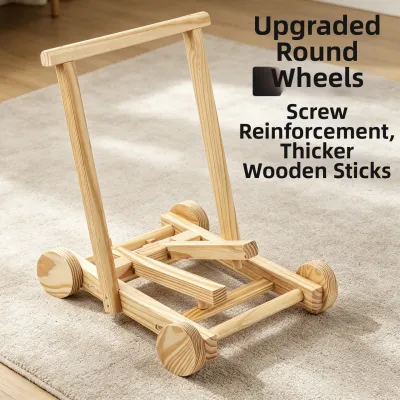
Prices are valid at publication and may change. Please refer to the product page for the latest price.
In contrast, sit-in walkers suspend the baby inside a fabric seat surrounded by a frame, allowing their feet to touch the ground. It is important to note that many pediatric associations and local safety guidelines advise against the use of traditional sit-in wheeled walkers due to the risk of falls and improper hip development. If you are considering a multi-functional model that transitions from a sit-in toy to a push walker, you must strictly verify that the design complies with modern safety standards and consult your pediatrician before use. Ride-on models, which allow toddlers to sit on top of the vehicle and push with their feet, are generally suited for older toddlers who have already mastered independent walking and balance.
The inherent weight and density of wood are major advantages when compared to lighter plastic alternatives. Wood provides a natural ballast, lowering the toy’s center of gravity and making it far less likely to tip over when a baby pulls themselves up using the handlebar. However, this weight also means that the walker requires more effort to push. When evaluating different wood types, such as rubberwood, beech, or pine, consider how the weight of the unit matches your baby’s strength. A walker that is too heavy may frustrate a younger baby, while one that is too light might slide away too quickly on polished floors.
To ensure you are selecting a model appropriate for your child’s current physical stage, always check the manufacturer’s detailed specifications rather than relying solely on product titles or marketing descriptions. A product labeled as a “baby walker” might actually be designed as a toy cart for older toddlers who already possess advanced balance. Verifying the recommended age, weight limits, and physical prerequisites specified by the manufacturer will help you avoid purchasing a toy that is either too advanced or structurally unsuited for your baby’s current needs.
Evaluating Safety, Stability, and Material Quality
Because babies frequently explore their environment with their mouths, verifying the chemical safety of a wooden walker’s finish is paramount. Visual inspection alone cannot confirm whether the paints, lacquers, or dyes used on a wooden toy are safe. Parents should actively look for product labels indicating compliance with international toy safety standards, such as EN71 (Europe) or ASTM F963 (United States), which certify that the materials are free from lead, heavy metals, and harmful phthalates. In the humid tropical climate of the Philippines, wood finishes must also be robust enough to resist peeling or cracking under moisture, which could otherwise expose raw wood or create ingestion hazards.

Stability is the cornerstone of a safe push walker. When examining a model, look for a wide wheelbase where the wheels extend slightly beyond the main frame of the walker. This configuration distributes weight more evenly and prevents the unit from tipping sideways when the baby leans against the outer edges. Additionally, high-quality wooden walkers often feature adjustable wheel resistance. This mechanism allows parents to tighten the wheels to create friction, slowing down the walker’s rolling speed on smooth surfaces like ceramic tiles. As your baby gains confidence and leg strength, you can gradually loosen the wheels to allow smoother movement. Anti-tip rear stoppers—small blocks or extensions near the back wheels—are another critical safety feature that prevents the walker from flipping backward if the baby pulls down hard on the handlebar.
The physical construction of the wood must be flawless to prevent injuries. Run your hands along every surface, corner, and edge of the walker to check for smooth, splinter-free sanding. Natural wood can react to changes in humidity by expanding, contracting, or occasionally splitting, so a thorough tactile inspection is necessary both before purchase and during regular use. All hardware, including screws, bolts, and dowels, must be deeply recessed or flush with the wood surface. Loose or protruding metal parts not only pose a scratch hazard but can also back out over time, presenting a severe choking risk if swallowed.
Finally, consider the wheels themselves. Wooden wheels without any protective coating can slip easily on tiled or polished wooden floors, causing the walker to slide out from under a baby. Look for models featuring wheels lined with rubber or thermoplastic rubber (TPR) strips. These rubber bands provide essential traction, dampen noise, and protect your home’s flooring from scratches, ensuring a safer and more controlled walking experience.
Aligning Walker Use With Your Baby’s Developmental Milestones
Introducing a wooden walker should be guided by your baby’s observable physical milestones rather than a rigid chronological age. Before a baby can safely interact with a push walker, they must demonstrate specific motor skills. The most critical prerequisite is the ability to pull themselves up to a standing position independently using furniture. They should also be able to bear their full weight on both legs and show signs of “cruising”—walking sideways while holding onto couches or tables for support. These actions indicate that the baby’s core, hips, and leg muscles are sufficiently developed to begin practicing forward steps with a mobile support.
Prematurely placing a baby behind a push walker can lead to safety hazards and developmental setbacks. If a baby cannot yet stand steadily on their own, they may rely on the walker to support their entire body weight, leading to a forward-leaning posture that increases the risk of face-forward falls. Furthermore, pushing a walker before the legs are ready can encourage toe-walking or improper foot alignment, which can delay natural gait development. Remember that manufacturer age recommendations, such as “12 months and up,” are general guidelines based on average developmental timelines; your child’s unique physical readiness should always be the deciding factor.
Even when a baby meets all physical milestones, continuous and direct adult supervision is non-negotiable during walker use. A wooden walker allows a baby to move much faster than they can crawl, significantly expanding their reach and access to potential hazards. Before letting your baby practice, you must meticulously prepare the environment. Clear the room of loose rugs, electrical cords, and low-lying obstacles that could catch the wheels and cause a tip-over.
In many Philippine homes, open-plan layouts and transitions between different floor levels or tiled thresholds are common. It is vital to block off access to stairs, balconies, kitchens, and outdoor areas using secure baby gates. Ensure that heavy furniture is anchored to the walls, as a baby using a walker may attempt to transition from the toy to a bookshelf or television stand, risking a tip-over accident.
Final Checks and Specifications to Verify Before Buying
Before finalizing your purchase of a wooden baby walker, you must cross-reference the manufacturer’s technical specifications with your child’s current physical measurements. Check the maximum weight capacity and the height of the handlebar. The handlebar should ideally align with your baby’s lower chest or waist level when they are standing upright. If the handlebar is too high, the baby will have to reach upward, compromising their balance; if it is too low, they will hunch forward, putting unnecessary strain on their developing spine. Ensuring a proper fit guarantees that the walker supports ergonomic posture and remains useful as your child grows.
It is also highly recommended to check official consumer protection databases, safety commission websites, or the manufacturer’s official portal for any active product recalls or safety notices. Because wooden toys are often produced by boutique brands or imported through various distributors, verifying that the specific model and batch have not been flagged for structural failures, paint toxicity, or choking hazards is a crucial step in protecting your child. Do not rely solely on the seller’s assurances; independent verification provides the highest level of safety confidence.
Once the walker is in your home, its safety depends on regular, proactive maintenance. The tropical climate of the Philippines, characterized by high humidity and seasonal temperature shifts, can cause wood to absorb moisture and swell, which may loosen joints or cause the wood to crack over time. Establish a weekly routine to inspect the walker thoroughly. Use a manual screwdriver to gently tighten any loose screws or bolts; avoid using power tools, which can easily strip the wooden threads or crack the frame.
During your weekly check, inspect the wooden panels for any signs of splintering, cracking, or mold growth, particularly in damp environments. Wipe the walker down with a slightly damp cloth and mild, baby-safe soap, then dry it completely with a clean towel to prevent moisture from seeping into the wood grain. Finally, check the wheel axles to ensure they are free of hair, dust, and debris, which can clog the mechanism and cause the wheels to lock up unexpectedly, creating a sudden tripping hazard for your little one.
Frequently Asked Questions (FAQ)
Are wooden baby walkers inherently safer than plastic ones?
No material is inherently safer than another; safety depends entirely on structural design, manufacturing quality, and proper supervision. Wooden walkers do offer a distinct physical advantage because their heavier weight provides a lower center of gravity, making them less prone to tipping over when a baby pulls up to stand. However, a poorly constructed wooden walker with rough edges, loose hardware, or toxic finishes can pose greater risks than a well-designed, certified plastic walker. When choosing, prioritize safety certifications, stable wheelbases, and smooth finishes over the base material alone.
At what exact age should a baby start using a wooden push walker?
There is no universal chronological age at which a baby should start using a wooden push walker, as physical development varies widely. Instead of focusing on age, look for key developmental milestones: your baby should be able to pull themselves up to stand independently, bear weight on their legs, and cruise along furniture. For many babies, this stage occurs between 9 and 14 months. If you are unsure whether your baby’s muscle strength and balance are ready for a push walker, consult your pediatrician for personalized developmental guidance.

Community discussion
Share your experience or ask a question. Comments are reviewed before publication.