
Finding the right baby walker for your baby girl in the Philippines involves balancing engaging, colorful designs with strict safety standards and long-term value. While it is tempting to focus solely on cute aesthetics, pastel pinks, or interactive toy trays, parents must prioritize developmental readiness, structural stability, and home safety. In a tropical environment where home layouts often feature tiled floors, steps, and open spaces, selecting the right gear requires a careful look at product specifications and physical design. By focusing on verifiable safety features and durable materials, you can choose a walker that supports your baby’s curiosity while keeping her secure.
Prioritizing Safety and Developmental Readiness
Before purchasing a baby walker, you must determine if your baby is physically ready to use one. Chronological age is a secondary factor compared to developmental milestones. Your baby must be able to hold her head up steadily without support and sit upright completely unassisted. If she cannot yet support her own body weight or sit up independently, placing her in a walker can strain her developing spine and muscles. Always consult your pediatrician if you are unsure whether your baby has reached the necessary physical milestones.
In addition to physical readiness, you must verify the manufacturer’s specific age, weight, and height limits printed on the product packaging. Never rely on a product’s name or marketing category to determine suitability. A walker designed for older infants can pose a safety hazard if used by a smaller, younger baby who can slip through the leg openings.
Products mentioned in this guide
![[Easy To Walke] Bobbi Baby Walker walker for baby boy baby walker for girl SuitableFor 6-18 Months Infant Foldable walker for baby with Wheel Toddler Walk Learning Anti Rollove walker baby girl walker for baby With Music and Handle](https://img.lazcdn.com/g/p/e556e95d1e84b3034168d74ed603b3ce.jpg_400x400q80.jpg_.webp)
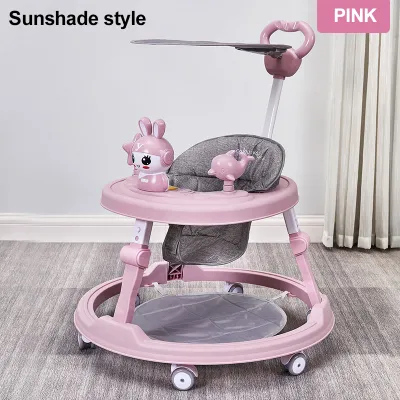
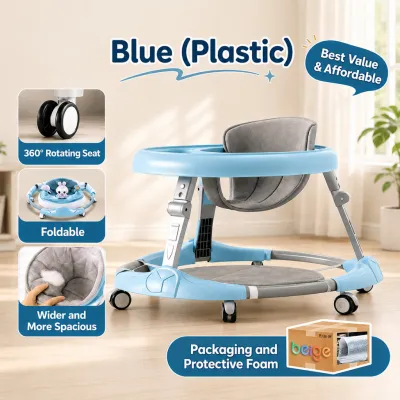
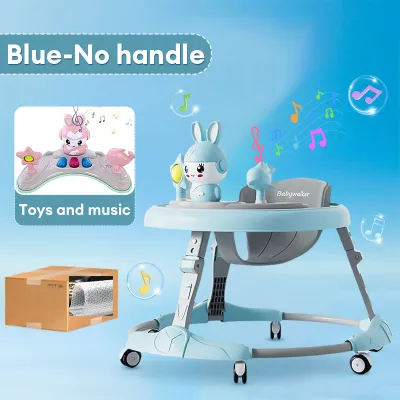
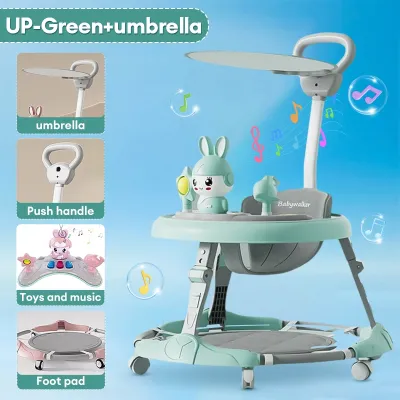
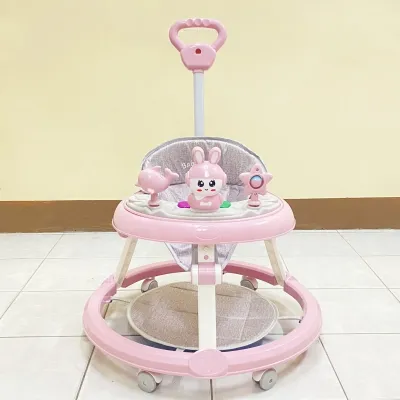
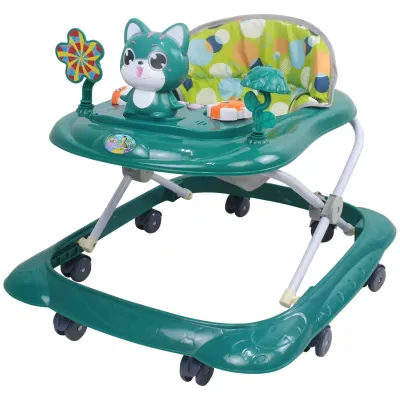
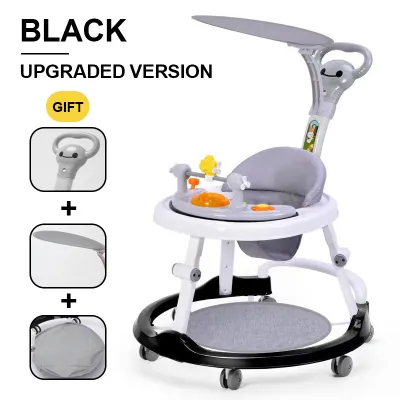
Prices are valid at publication and may change. Please refer to the product page for the latest price.
When shopping, look for physical evidence of safety compliance on the packaging or the product itself. Verify the presence of recognized safety certification marks, such as the Import Commodity Clearance (ICC) sticker or the Philippine Standard (PS) mark, which indicate the product has undergone local quality checks. International standards, such as ASTM (American Society for Testing and Materials) or EN (European Standards), also serve as reliable indicators of rigorous safety testing.
Inspect the walker’s physical frame for potential design flaws. A safe walker must have a wide, stable base that is significantly larger than the top tray. This wide footprint prevents the walker from tipping over when the baby leans or bumps into furniture. Furthermore, the base should be wide enough to prevent the walker from fitting through standard doorways, helping you restrict your baby’s movement to designated safe zones. Look for models equipped with built-in friction strips or rubber stoppers on the underside of the base, which are designed to grip the floor and stop the walker if it encounters an edge or a step.
Evaluating Design and Entertainment Features
Many parents look for girl-themed baby walkers featuring bright pinks, floral patterns, or licensed cartoon characters. While these designs can be highly engaging, you must ensure that the materials used are safe for your baby. Check the product specifications to confirm that the plastic is BPA-free and that any paint or decorative finishes are certified non-toxic. Babies frequently chew on the walker’s tray or toys, making material safety a top priority.

The interactive toy tray is often the main attraction for a baby. Evaluate these modules carefully before buying. If the toy tray features electronic lights and music, check the battery compartment to ensure it is secured with a screw that a child cannot open. Look for models that offer volume control or an off switch, as loud, repetitive sounds can be overstimulating for a baby and disruptive in a busy household. Ensure that all toys attached to the tray are securely fastened and do not have small, detachable parts that could present a choking hazard.
As your baby girl grows, her walker must adapt to her changing height. Look for a walker with an adjustable seat that offers multiple height positions. When she is in the walker, her feet should rest flat on the floor with her knees slightly bent, allowing her to push off safely. If only her toes touch the floor, or if her knees are bent too deeply, it can affect her posture and leg development.
Hygiene is another critical factor when evaluating design. Look for a walker with a removable toy tray that reveals a flat, solid surface underneath. This allows the walker to double as a snack tray and makes cleaning up spills much easier. The fabric seat should also be easily detachable for washing, as crumbs, drool, and spills are inevitable during daily use.
Assessing Build Quality and Long-Term Value
To ensure you get the best value for your money, inspect the overall build quality of the walker. The frame should feel sturdy and rigid, with no loose joints or flimsy plastic parts that bend under pressure. Check the manufacturer’s listed weight capacity to ensure the walker can safely support your baby as she grows. A well-constructed walker should feel stable and balanced, even when your baby moves quickly or leans over the side.
The type of wheels on the walker plays a significant role in how well it performs on your home’s flooring. Many homes in the Philippines feature hard, smooth surfaces like ceramic tiles, marble, or polished concrete to keep the interior cool. Hard plastic wheels can slide too quickly on these surfaces, making it difficult for the baby to control her speed, and they can be very noisy. Rubberized or soft-grip wheels provide better traction, offer a smoother and quieter ride, and protect delicate wooden floors from scratches.
Convertible features can significantly extend the useful lifespan of a baby walker, providing better long-term value. Some models are designed to transition from a traditional sit-in walker to a walk-behind push toy as your baby grows. Others can be converted into a stationary activity center or a small play table. Investing in a multi-functional model means you will not need to purchase separate toys for different developmental stages, saving both money and storage space in your home.
When comparing prices in Philippine Pesos (₱), weigh the cost against the expected duration of use and the features provided. A basic, single-function walker may cost less initially, but a convertible model that grows with your child often offers better value over time. Additionally, check the warranty terms and verify if the manufacturer or local distributor offers replacement parts, such as extra seat fabrics or replacement wheels, which can extend the product’s life if components wear out.
Creating a Safe Environment for Walker Use
Even the safest baby walker requires a carefully prepared environment to prevent accidents. Before placing your baby in the walker, you must make essential home modifications. Install secure safety gates at the top and bottom of all staircases and step-downs, which are common in split-level homes. Ensure these gates are securely anchored to the wall or door frame so they cannot be pushed over by the force of a moving walker.
Clear the floor of all potential hazards along the walker’s path. Remove loose rugs, mats, and electrical cords that could catch on the walker’s wheels and cause it to tip. Keep heavy furniture, tablecloths, and appliance cords out of reach, as a baby in a walker can quickly move to a table and pull heavy objects down onto herself. In tropical households, pay special attention to indoor potted plants; ensure they are placed on high stands out of reach, as some common decorative plants can be toxic if chewed.
Establish strict rules for walker use within your household. A baby walker is not a babysitter or a substitute for adult supervision. Continuous, active adult supervision is mandatory at all times when your baby is in the walker. Keep the baby within arm’s reach so you can react quickly if she moves toward a hazard. Limit walker sessions to short intervals, such as 15 to 20 minutes per day, to encourage her to spend time crawling and playing on the floor, which are crucial for her physical development.
Know when to stop using the walker. Discontinue use immediately once your baby reaches the manufacturer’s maximum height or weight limit, or as soon as she can walk independently. If you notice any signs of damage, such as cracked plastic, loose screws, or worn-out wheels, stop using the walker right away to prevent injuries.
Exploring Push-Walker Alternatives
If you are hesitant about using a traditional sit-in walker, a push-along walker is an excellent developmental alternative. Unlike sit-in models, which support the baby’s weight and can encourage her to walk on her toes, push-walkers require the baby to bear her own weight fully. This active weight-bearing helps strengthen her leg muscles, ankles, and core, promoting natural balance and coordination as she prepares for independent walking.
When selecting a push-walker, stability is the most critical factor to check. Look for models with a wide, heavy base that resists tipping forward when the baby pulls herself up to a standing position. Some push-walkers feature adjustable wheel resistance or speed-control tensioners, which allow you to slow down the wheels to match your baby’s walking pace, preventing the walker from rolling away too quickly on smooth tiled floors.
Many push-walkers are designed to transition alongside your baby’s development. They often feature interactive front panels with buttons, gears, and sorting toys that can be detached for floor play while your baby is still crawling. As she begins to pull herself up and cruise along furniture, you can reattach the panel to the wheeled frame, providing a familiar and engaging toy that supports her first steps.
Frequently Asked Questions (FAQ)
At what age should a baby start using a walker?
Most manufacturers recommend baby walkers for infants between 6 and 12 months of age. However, developmental milestones are far more important than chronological age. Your baby must be able to sit up completely unassisted and have strong, steady head control before using a walker. If you are unsure about your baby’s physical readiness, consult your pediatrician for guidance.
Do baby walkers delay walking milestones?
Pediatric experts suggest that excessive use of sit-in baby walkers can delay independent walking. Sit-in models support the baby’s pelvis and allow her to move without developing the core strength and balance required for natural walking. To support healthy motor development, limit walker time and prioritize supervised floor play, crawling, and tummy time.
How do I clean the fabric seat of a baby walker?
Always check the care label attached to the fabric seat for specific washing instructions. Most fabric seats are removable and can be hand-washed or machine-washed on a gentle cycle using a mild, baby-safe detergent. Avoid using harsh bleach or strong chemicals. Ensure the fabric is completely dry before reattaching it to the frame to prevent mold and mildew, which can easily grow in humid tropical climates.
Community discussion
Share your experience or ask a question. Comments are reviewed before publication.