
Selecting a baby walker with a push handle is an exciting milestone in your child’s developmental journey. Unlike traditional sit-in models, a push walker encourages active balance, core engagement, and a natural walking posture. To make the right choice for your home, you must evaluate structural stability, adjustable wheel resistance, ergonomic handle heights, and floor compatibility. In the Philippines, where homes often feature polished tile, smooth marble, or hardwood floors, selecting a walker that offers adequate traction and safety controls is essential for preventing slips and falls. By focusing on these key design elements, you can find a supportive tool that matches your baby’s physical readiness and your household environment.
Assessing Your Baby's Readiness for a Push Walker
Before purchasing a push walker, it is essential to observe your baby’s physical milestones to ensure they are developmentally ready for this type of activity gear. A push walker requires a higher level of motor control and balance than a traditional sit-in model. Look for clear signs of readiness, such as your baby consistently pulling themselves up to a standing position using furniture, cruising along the edges of tables or sofas, and standing independently for a few seconds without support. If your baby cannot yet bear weight on their legs or maintain an upright posture when assisted, introducing a push walker too early may lead to frustration or frequent falls.
Understanding the developmental differences between push walkers and traditional sit-in walkers is crucial for making an informed decision. Sit-in walkers suspend the baby in a fabric seat, which can sometimes encourage an unnatural forward lean and tiptoe walking. This suspension can limit the natural development of hip and thigh muscles. In contrast, a push walker requires the baby to support their own body weight fully, engage their core, and practice a natural heel-to-toe walking gait. Because the baby is actively balancing behind or over the walker, they develop a more realistic sense of gravity and spatial awareness.
Products mentioned in this guide
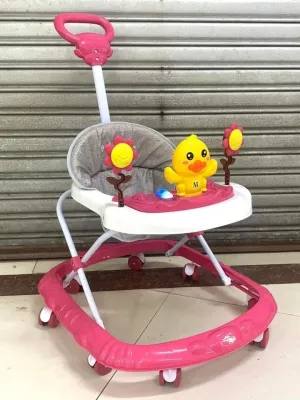
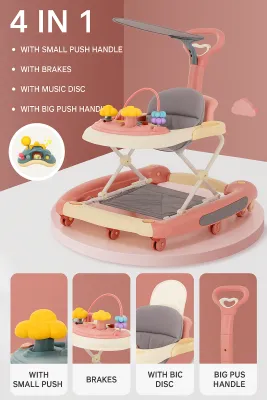
![[BABY WALKER] Training Walker for Babies 5-14 months old with Push Control Bar.. Music and Light-201](https://img.lazcdn.com/g/p/2a64f203adafdd05d3f71f178b85853c.jpg_400x400q80.jpg_.webp)
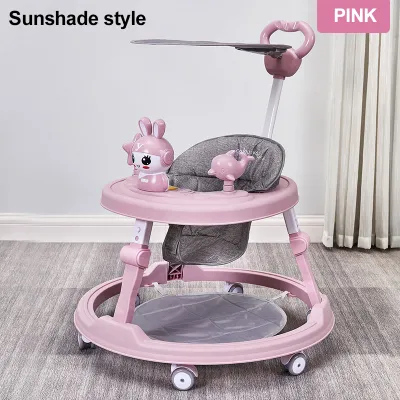
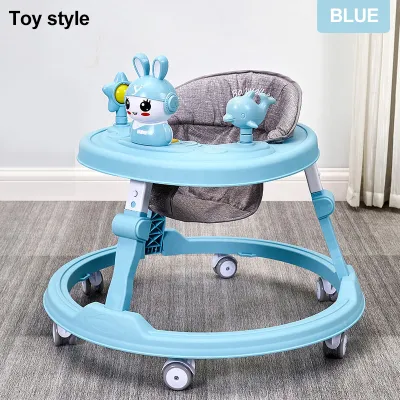
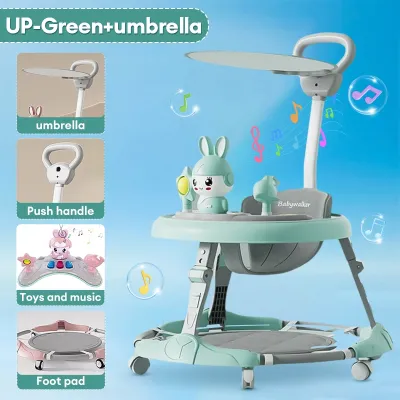
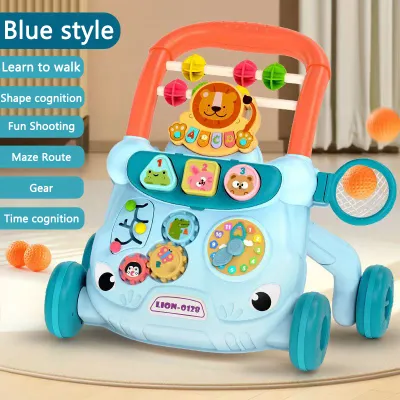
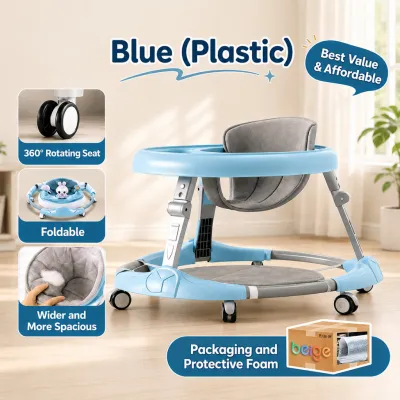
Prices are valid at publication and may change. Please refer to the product page for the latest price.
When shopping, always locate and interpret the manufacturer’s weight and height limits, which are typically printed on the product packaging or detailed in the user manual. These specifications are not mere suggestions; they are calculated based on the structural integrity and center of gravity of the specific model. A baby who exceeds the weight limit may cause the frame to bend or buckle, while a baby who is too tall or short for the handle height may struggle with posture. Check these limits carefully against your baby’s current measurements before making a purchase, and plan to re-evaluate these measurements regularly as your child grows.
Essential Safety Features and Stability Checks
Structural stability is the most critical factor when evaluating any push walker. To prevent tip-overs, inspect the physical design of the walker’s base. A high-quality push walker should feature a wide, stable base that is significantly wider than the upper handle frame. This design lowers the center of gravity, making it much harder for the walker to tip backward or sideways when your baby leans their full weight against the handle. Wooden models often provide a heavier, more grounded base, while plastic models should have weighted compartments or a broad wheel track to ensure they remain firmly planted on the floor during sudden movements.

Wheel locking mechanisms and adjustable rolling resistance are vital safety features that prevent the walker from rolling away from a learning toddler. On smooth surfaces like ceramic tiles or polished wood, a lightweight walker can easily shoot forward, causing the baby to lose their footing. Look for models equipped with tension adjusters or friction strips on the wheels. These mechanisms allow you to increase rolling resistance, slowing down the wheels so the walker moves at a manageable pace for a beginner. As your baby’s strength and coordination improve, you can gradually loosen the tension to allow freer movement.
Before finalizing your purchase, verify that the product carries recognized safety certification labels and clear age warnings. In the Philippines, look for official import clearance or product standard marks on the packaging, which indicate the item has undergone rigorous physical and mechanical testing. Avoid purchasing unbranded or unlabeled gear from unregulated online marketplaces, as these products may use substandard plastics, toxic paints, or weak joints that fail under pressure. Checking for these safety marks ensures the materials are non-toxic and the structure is free from sharp edges or small parts that pose choking hazards.
Ergonomic Design and Floor Compatibility
An ergonomic design is essential for supporting your baby’s developing posture and skeletal alignment. The handle of the push walker should be at a height that allows your baby to stand upright with a slight, comfortable bend in their elbows. If the handle is too high, your baby may have to reach upward, which can cause them to walk on their tiptoes and strain their shoulders. If the handle is too low, it can lead to slouching and an unnatural forward lean. Look for models with adjustable handle heights that can be raised as your baby grows, ensuring they maintain a healthy, upright posture throughout their walking journey.
Floor compatibility is another key consideration that directly affects both safety and usability. Different wheel materials perform uniquely on various household surfaces. Hard plastic wheels are common but can slide unpredictably on smooth ceramic tiles or polished marble, which are highly prevalent in tropical homes. Rubberized wheels or wheels with silicone traction strips offer much better grip on slippery floors, preventing runaway rolling. If your home has carpeted areas, ensure the wheels are large enough and have enough clearance to roll smoothly without getting stuck or causing the baby to trip over a sudden halt.
Many push walkers feature integrated activity panels on the front, complete with buttons, gears, and sorting toys. While these panels offer excellent sensory stimulation, you must evaluate how their placement affects your baby’s balance. The activity panel should be positioned low enough on the frame so that it does not make the walker top-heavy. Additionally, consider whether the toys encourage your baby to stand and play from the front rather than pushing from behind. A well-designed walker ensures that when the baby is in walking mode, the front panel does not distract them from looking forward at their path, helping them avoid obstacles.
Building Your Shortlist: Matching the Walker to Your Home
To build a practical shortlist, start by matching the walker’s physical specifications to your specific household layout. If your home features a mix of smooth tiles and delicate hardwood, prioritize wheels that offer excellent traction without leaving scuff marks or scratches. The overall weight of the walker should also match your flooring; a heavier wooden walker provides excellent stability on flat tiles but might be difficult for a smaller baby to push across thick rugs. Conversely, a lightweight plastic model is easy to maneuver but may require added weight or high-resistance wheel settings to remain stable on slick surfaces.
Next, evaluate the storage footprint and portability of each model on your shortlist. In many homes, space can be limited, making a bulky, non-folding walker difficult to store when not in use. Look for push walkers that feature a folding mechanism or a compact frame that can easily slide under a crib or fit into a closet. If you plan to move the walker between different rooms or take it along on family visits, a lightweight, collapsible design with a built-in carrying handle will make transport much more convenient. Ensure that any folding joints lock securely into place during use to prevent accidental collapsing.
Finally, balance your budget with the durability and multi-stage convertibility of the walker. Prices for push walkers in the Philippines can range from around ₱1,500 for basic plastic models to upwards of ₱5,000 for premium wooden or multi-functional convertible designs. While it may be tempting to opt for the cheapest option, investing in a durable, well-constructed walker often provides better long-term value. Look for multi-stage models that convert from a sit-and-play toy to a push walker, and eventually into a toy shopping cart or doll stroller. This convertibility extends the product’s lifespan, ensuring you get the most utility out of your investment.
Safe Setup and Active Supervision Rules
Once you have selected and assembled your baby’s push walker, preparing a safe environment is crucial before letting your child take their first steps. Begin by thoroughly baby-proofing the designated walking path. Secure any loose area rugs or floor mats with non-slip underlays, as these can easily bunch up and cause the walker to tip. Block off access to stairways, steps, and balconies using secure, hardware-mounted safety gates. Additionally, cover sharp corners on low tables, television stands, and cabinets, and ensure that all electrical cords, fragile items, and hot liquids are kept well out of your baby’s reach.
Even in a fully baby-proofed room, active and continuous adult supervision is non-negotiable. A push walker allows your baby to move much faster than they can crawl, meaning they can reach potential hazards in a matter of seconds. Never leave your baby unattended in or near the walker, even for a brief moment. Keep your eyes on your child at all times and remain within arm’s reach so you can quickly intervene if they lose their balance, encounter an obstacle, or attempt to pull themselves up on an unstable object.
As your baby gains confidence, observe their movements to determine when it is time to transition away from the push walker. Signs that your baby is ready to graduate to independent walking include pushing the walker aside to take steps on their own, carrying toys while walking without holding onto furniture, and demonstrating excellent balance and steering control. Once your child can walk independently across a room without relying on the walker for support, it is time to retire the push handle function and transition them to active, unassisted floor play to continue strengthening their natural gait.
Frequently Asked Questions (FAQ)
Can a push walker delay my baby's independent walking?
No, when used correctly and in moderation, a push walker does not delay independent walking. Unlike traditional sit-in walkers, which can encourage poor posture and unnatural leg movements, a push walker allows your baby to practice natural weight-bearing, balance, and coordination. To support healthy development, balance walker time with plenty of barefoot floor play. Walking barefoot helps strengthen the muscles in your baby’s feet and ankles, improves sensory feedback from the floor, and promotes a natural walking gait.
How do I clean and maintain the walker's wheels and activity panels?
Regular maintenance keeps the walker hygienic and safe. Wipe down plastic and wooden surfaces using a damp cloth and a mild, baby-safe detergent, taking care not to soak any electronic components or battery compartments. Inspect the wheels weekly for trapped hair, dust, or carpet fibers, which can clog the axles and affect rolling resistance. Keeping the wheels clean ensures they spin smoothly and maintain consistent traction on your floors, preventing sudden stops or slips.

Community discussion
Share your experience or ask a question. Comments are reviewed before publication.