
Choosing a baby walker for your daughter requires prioritizing structural safety, physical development, and ergonomic support over aesthetic appeal. While vibrant colors and interactive toy trays are engaging, the primary focus must always be on how the device protects your child and supports her growing body. A well-designed walker must feature a wide, tip-resistant base, reliable braking mechanisms, and an adjustable seat that promotes natural hip alignment. By carefully evaluating these technical specifications and verifying manufacturer certifications, you can select a secure and supportive environment for your baby’s active play.
In many homes, flooring consists of smooth ceramic tiles, polished concrete, or wooden planks. These surfaces affect how wheels glide and how friction pads grip. Understanding your home’s layout and flooring is the first step in determining which walker features are necessary to keep your daughter safe. A walker that moves too quickly on polished tile can lead to accidental collisions or loss of balance, making speed control and friction pads essential considerations.
It is also vital to remember that a baby walker is an activity tool, not a replacement for floor time or direct adult supervision. Caregivers must remain within arm’s reach at all times while the baby is in the walker. This guide provides a structured framework to evaluate safety labels, ergonomic designs, and adjustability features so you can make an informed purchase that supports your daughter’s developmental journey.
Products mentioned in this guide
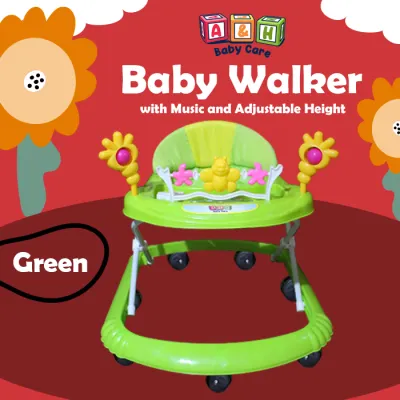
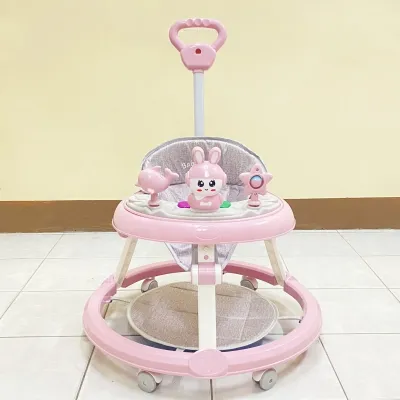
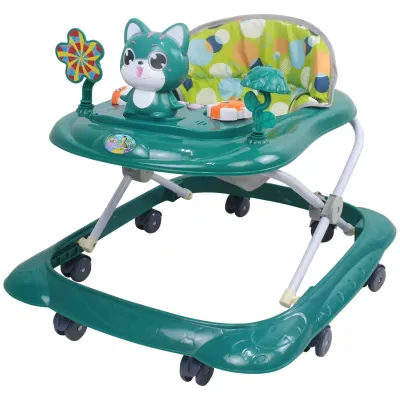
![[Easy To Walke] Bobbi Baby Walker walker for baby boy baby walker for girl SuitableFor 6-18 Months Infant Foldable walker for baby with Wheel Toddler Walk Learning Anti Rollove walker baby girl walker for baby With Music and Handle](https://img.lazcdn.com/g/p/e556e95d1e84b3034168d74ed603b3ce.jpg_400x400q80.jpg_.webp)
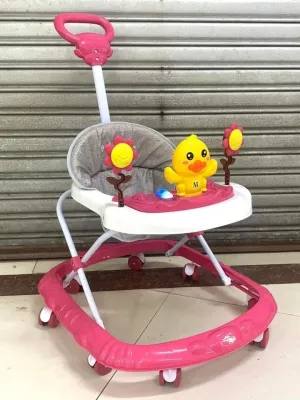
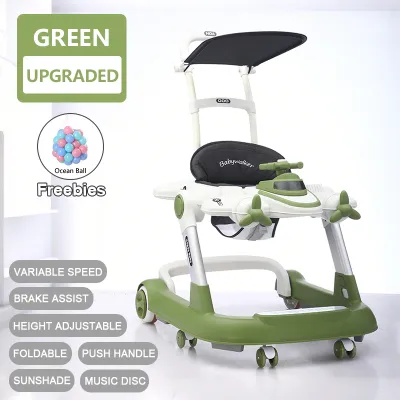
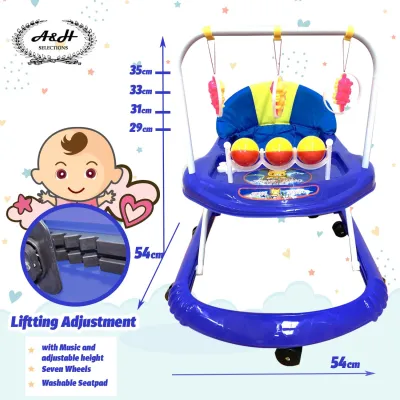
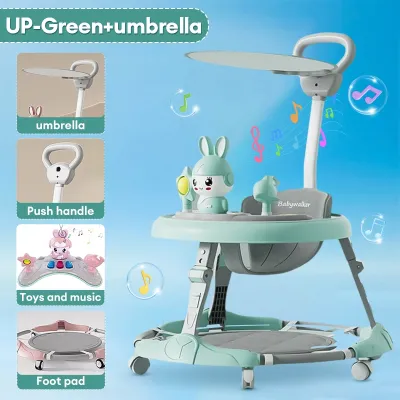
Prices are valid at publication and may change. Please refer to the product page for the latest price.
Essential Safety Features to Verify Before Buying
When evaluating a baby walker, safety mechanisms must be your top priority. The most critical safety features to look for are stair-fall prevention mechanisms, wheel friction pads, and grip rings. These components are designed to stop the walker instantly if it encounters an uneven surface or a step. Friction pads, usually made of rubber or slip-resistant material, are located on the underside of the walker’s base. If a wheel slips over an edge, these pads grip the floor, halting forward momentum. When browsing product listings or inspecting a walker in a physical store, check the product label and manufacturer specifications to ensure these safety grips are integrated into the design.
Another essential safety aspect is the base width and weight distribution of the walker. A safe baby walker must have a wide, stable base that is significantly wider than the top frame. This pyramidal design lowers the center of gravity and prevents the walker from tipping over when your daughter leans sideways or reaches for toys on the floor. If the base is too narrow, the risk of tipping increases dramatically, especially when the baby transitions from a gentle roll to a more forceful push. Look for models that specify a wide-base design and check the product dimensions to verify that the base provides a generous footprint.
Wheel design and mobility controls also play a major role in preventing accidents. Look for walkers with multi-directional front wheels that allow for smooth steering, combined with straight-tracking rear wheels. Some models feature adjustable wheel resistance or locking mechanisms. These controls are highly beneficial for babies who are just learning to stand, as they prevent the walker from rolling away too quickly on smooth surfaces. If your home has tiled or polished concrete floors, adjustable wheel friction is a key feature to verify, as it helps regulate the walker’s speed and prevents slips.
Finally, you must verify compliance with current safety standards by checking official manufacturer documentation rather than assuming certification based on marketing claims. Look for recognized safety standards, such as ASTM F977 or EN 1273, printed directly on the product packaging or the walker’s permanent labels. Do not rely on vague online descriptions that claim a product is “certified safe” without providing the specific standard code. If you are purchasing from an online marketplace, ask the seller for a photo of the safety label or consult the manufacturer’s official website to confirm the product’s compliance.
Developmental and Ergonomic Considerations
Beyond immediate physical safety, you must consider how a baby walker affects your daughter’s physical development and posture. The design of the seat is crucial for supporting her hips and spine. Look for a seat with a wide, padded crotch strap and a supportive, high backrest. The seat should support her pelvis in a natural, neutral position, allowing her hips to align properly. A seat that is too narrow or lacks structural support can force her legs into an unnatural dangling position, putting excessive strain on her developing hip joints and potentially increasing the risk of hip dysplasia.

Foot placement and floor contact are equally important for proper muscle development. When your daughter is in the walker, her feet must be able to rest flat on the floor, or at least have the balls of her feet make firm, flat contact with the ground. If the walker is too high and only her tiptoes touch the floor, she may develop a habit of toe-walking. This can lead to tight calf muscles and alter her natural walking gait. Ensure the walker’s height can be adjusted so that she can push off with her feet flat, which encourages proper weight-bearing and strengthens her leg muscles correctly.
It is also important to recognize the physical signs that indicate when to limit walker use or transition to alternative activity gear. Pediatricians and pediatric physical therapists often recommend limiting the time spent in a walker because it can bypass the natural progression of motor skills. In a walker, a baby does not need to balance her torso or engage her core muscles in the same way she would when crawling or standing independently. If your daughter shows signs of low muscle tone, persistent toe-walking, or developmental delays, it is best to consult a qualified healthcare professional before introducing a walker, and prioritize floor play, tummy time, and stationary activity centers instead.
Adjustability and Longevity for Growing Babies
To ensure the walker remains safe and ergonomic as your daughter grows, you must evaluate its adjustability features. Look for a walker that offers multiple height settings, typically three or more. This allows you to customize the seat height to match her growing legs. To determine the correct setting, measure your daughter’s inseam from her crotch to the bottom of her heel, and compare this measurement to the manufacturer’s seat-to-floor height specifications. The adjustment mechanism itself must be secure, featuring a locking system that requires a two-step process to change, preventing the walker from collapsing accidentally while in use.
Maximum weight limits and structural integrity checks are also vital as your child becomes more active and forceful. Most baby walkers have a weight limit ranging from 11 to 15 kilograms, which you must verify in the product documentation. As your daughter grows, she will not only get heavier but also much stronger. She will push against the walker with greater force, test its boundaries, and potentially try to climb out. Regularly inspect the frame for any signs of wear, loose screws, or plastic fatigue, and ensure the seat fabric remains securely attached to the frame without tearing.
Transitioning out of the walker should be guided by physical milestones rather than relying solely on age or weight metrics. Even if your daughter is still within the weight limit, she should stop using the walker once she achieves certain developmental milestones. These milestones include the ability to sit up completely unassisted, pull herself up to a standing position, or attempt to climb out of the walker’s seat. Once she can stand or cruise along furniture independently, the walker has served its purpose, and continuing to use it can hinder her transition to independent walking.
Activity Tray and Engagement Features
The activity tray is a key feature that keeps your daughter engaged, but it must be evaluated for safety and developmental value. Look for sensory toys and mechanical features that encourage fine motor skills, such as spinning beads, sliding gears, mirrors, and textured surfaces. Ensure that all toys are securely attached to the tray and cannot be easily pulled off. Inspect the tray for any small parts, loose buttons, or battery compartment covers that could pose a choking hazard. All materials should be non-toxic, BPA-free, and smooth to the touch.
A removable toy tray is highly beneficial for maintaining hygiene, especially in warm and humid tropical climates. Sweat, drool, and food crumbs can easily get trapped in the small crevices of an interactive toy tray, creating a breeding ground for mold and bacteria. A walker with a removable toy section allows you to take the toys to the sink for a thorough washing. Once the toy tray is removed, it typically reveals a clean, flat plastic surface underneath. This dual-function design converts the walker into a stationary table that is perfect for snack time or for playing with other toys.
When choosing engagement features, consider the benefits of avoiding overly complex electronic toys. Walkers with loud music, flashing lights, and battery-operated sounds can easily overstimulate a young baby. Overstimulation can distract your daughter from the physical feedback her body receives while moving, such as learning how her feet touch the floor and how her balance shifts. Simple, mechanical toys encourage active exploration and problem-solving, allowing her to focus on developing her spatial awareness and motor coordination in a calm, focused manner.
Building Your Shortlist: A Pre-Purchase Evaluation Checklist
Before making a final purchase on an e-commerce platform or at a local baby store, it is essential to build a structured shortlist. Start by cross-referencing key specifications on product pages. Create a list that includes the exact base dimensions, the weight of the walker, the number of height adjustments, and the presence of wheel locks. Ensure the materials used are durable and easy to clean. A heavier walker often provides more stability, but it must not be so heavy that your daughter struggles to move it.
Next, read user reviews critically to identify potential red flags. Look past the generic five-star ratings and focus on detailed reviews from parents who have used the walker for several months. Search for comments regarding stability issues, wheels that jam or scratch floors, and seat fabric that tears after washing. Pay close attention to reviews that mention how the walker performs on flooring similar to yours. If multiple reviews mention that the walker tips easily or that the height adjustment slips, remove that model from your shortlist.
Finally, compare the price-to-feature ratios in Philippine Pesos (₱) and verify the seller’s policies. Prices for reliable baby walkers can vary widely, typically ranging from ₱1,500 to ₱4,000 or more, depending on the features and brand. Ensure that the online marketplace seller or local retailer offers a clear return policy and a warranty against manufacturing defects. A good warranty provides peace of mind that the structural integrity of the walker is backed by the manufacturer, ensuring a safe and reliable product for your daughter.
Frequently Asked Questions (FAQ)
At what age is it safe to start using a baby walker?
A baby should only be placed in a walker once she has achieved the necessary developmental milestones, specifically strong head, neck, and core control. This means she must be able to sit up completely unassisted for extended periods. While this typically occurs between six and eight months of age, you must always verify the manufacturer’s minimum age, weight, and height requirements on the product label before use.
Do baby walkers with pink or floral designs offer different safety standards?
No, aesthetic designs such as pink colors, floral patterns, or gender-targeted themes are purely cosmetic and do not affect the structural safety of the walker. When shopping, ignore the visual design and focus entirely on the physical build quality, base width, friction pads, and official safety certifications. A safe walker is defined by its engineering, not its color.
How long should a baby spend in a walker each day?
To support healthy motor development, limit your daughter’s time in a walker to short sessions of 15 to 20 minutes, with a maximum of 30 minutes total per day. Prolonged use can lead to muscle fatigue, strain on developing joints, and a reduction in the essential floor play—such as crawling and cruising—that she needs to build natural strength and balance.

Community discussion
Share your experience or ask a question. Comments are reviewed before publication.