
Selecting the right baby spoon and fork set with a case is a milestone decision for parents transitioning their infants to solid foods. In the Philippines, where family outings, visits to relatives, and dining out are central to daily life, having a portable, hygienic utensil set is essential. A reliable set not only supports your baby’s developmental milestones—such as self-feeding and hand-eye coordination—but also ensures that their utensils remain clean and protected from environmental contaminants while on the move. By focusing on material safety, ergonomic design, and the practical features of the storage case, you can make an informed purchase that fits your lifestyle and budget.
Core Evaluation Criteria for Baby Utensils
When evaluating baby utensils, material safety must always be your primary consideration. Because babies frequently chew on their spoons and forks to soothe teething gums, the materials must be entirely non-toxic and durable. Look for products explicitly labeled as BPA-free, phthalate-free, and PVC-free on the packaging. If you opt for silicone utensils, ensure they are made from 100% food-grade silicone, which is naturally resistant to bacteria and can withstand high temperatures during sterilization. For stainless steel options, verify that the manufacturer uses food-grade alloys, such as 304 or 316 stainless steel, to prevent rust and ensure long-term durability through countless wash cycles.
The ergonomic design of the handles plays a crucial role in how easily your baby learns to navigate self-feeding. For infants starting with baby-led weaning (BLW), short, chunky handles are highly recommended. These handles are designed to fit a baby’s natural palmar grasp, allowing them to hold the utensil securely without needing advanced fine motor skills. Many modern designs incorporate textured silicone grips or non-slip ridges to prevent the utensil from slipping out of wet, food-covered hands. Conversely, if you are practicing parent-led feeding with purees, longer and more slender handles are preferable, as they allow you to reach the bottom of deep jars and feed your baby from a comfortable distance.
Products mentioned in this guide
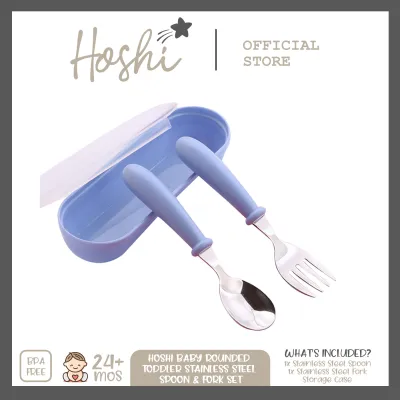
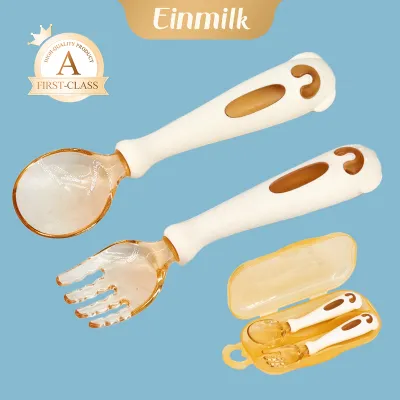
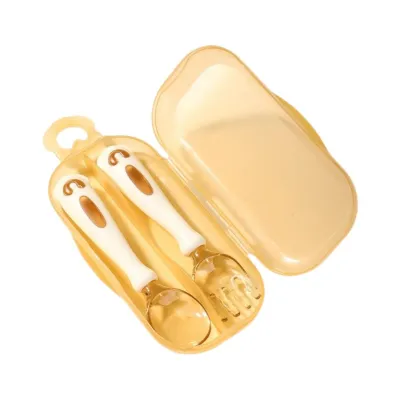
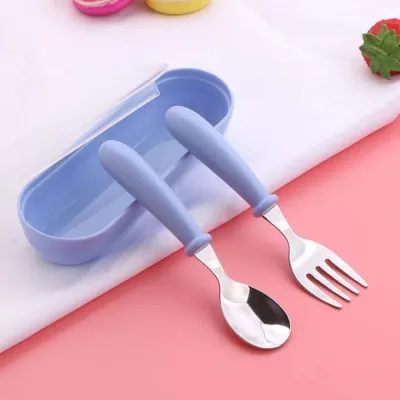
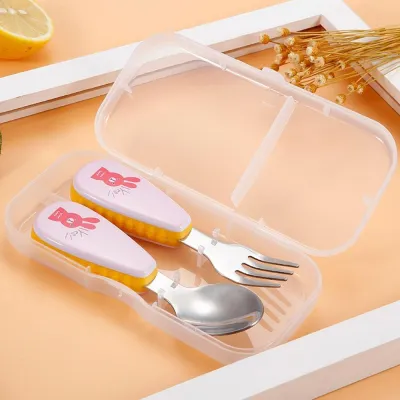
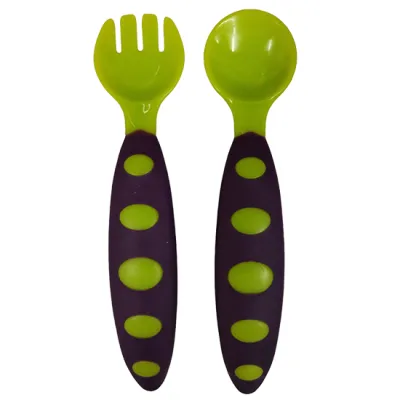
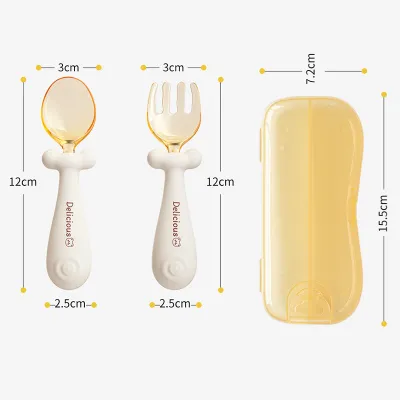
Prices are valid at publication and may change. Please refer to the product page for the latest price.
The shape and depth of the spoon bowl, as well as the design of the fork tines, must match your baby’s developmental stage. A spoon bowl that is too deep can make it difficult for a beginner to clear food using their upper lip, leading to frustration and messy feedings. Shallow, narrow spoon bowls are ideal for early stages, as they hold just the right amount of puree for a small mouth. For the fork, safety is paramount; the tines must be blunt and rounded to prevent accidental punctures to your baby’s delicate gums or tongue. However, they should still possess enough structure to pierce soft foods like steamed vegetables or ripe fruits, helping your child practice the stabbing motion successfully.
Choosing the Right Storage Case for Your Lifestyle
A storage case is not just an accessory; it is a vital tool for maintaining hygiene when you are away from home. When choosing between a hard-shell plastic case and a soft-pouch case, consider your daily routine and travel habits. Hard-shell cases provide excellent crush protection, preventing the utensils from bending or becoming contaminated when packed tightly inside a crowded diaper bag. They also keep dirty utensils securely contained after a meal, preventing food residue from staining your bag. Soft pouches, while more flexible and space-saving, may not offer the same level of physical protection and can be more challenging to clean if food spills inside them.

In the tropical and highly humid climate of the Philippines, ventilation is a critical feature to look for in a storage case. A completely sealed, airtight case containing even a tiny amount of residual moisture can quickly become a breeding ground for mold and bacteria. To prevent this, look for cases designed with built-in ventilation slots or drainage holes that allow air to circulate. This design ensures that if you must pack away damp utensils after a quick wipe-down at a restaurant, the moisture can evaporate, keeping the utensils sanitary until you can wash them properly at home.
Ease of cleaning is another essential factor when evaluating a storage case. Look for cases with seamless interiors, rounded corners, and no deep crevices where food particles or moisture can get trapped. A case that is difficult to clean will quickly become unhygienic, defeating its primary purpose. Verify whether the case is dishwasher-safe or heat-resistant, as this allows you to sterilize it alongside the utensils. If the case is made of a plastic that cannot tolerate high heat, ensure it can be easily washed with warm, soapy water and sanitized with baby-safe disinfectant wipes.
Matching Utensil Sets to Feeding Stages and Budgets
As your baby grows, their feeding style and motor skills will evolve, requiring different types of utensils. During Stage 1, which typically involves purees and parent-led feeding around six months of age, your primary focus should be on soft, flexible silicone spoons. These spoons are gentle on sensitive, teething gums and help babies learn the basic mechanics of swallowing. At this early stage, a fork is unnecessary, so you can look for simple, budget-friendly sets that feature a single spoon with a basic protective cap or a compact travel sleeve.
By Stage 2, which usually begins around nine to twelve months, babies start experimenting with self-feeding and baby-led weaning. This stage requires a complete spoon and fork set with shorter, wider handles that encourage a proper grip. The fork tines should be sturdy enough to pierce soft foods, and the spoon should have a slightly larger bowl to accommodate thicker textures. Because self-feeding often involves more mess and frequent dining on the go, investing in a set with a durable, ventilated hard-shell case is highly beneficial during this transition.
When budgeting for baby utensils in the Philippines, you will find options across various price points. Entry-level plastic or basic silicone sets are widely available for ₱100 to ₱300. While these are highly affordable, they may wear out quickly, scratch easily, or warp when exposed to high sterilization temperatures, requiring more frequent replacement. Mid-range sets, priced between ₱300 and ₱600, often offer better durability, featuring high-quality food-grade silicone and sturdier cases. Premium sets, ranging from ₱600 to ₱900 or more, typically feature medical-grade silicone or 316 stainless steel with highly durable, ventilated travel cases. Investing in a premium set can often save money over time, as these materials resist degradation and can be sterilized repeatedly without losing their shape or safety properties.
Building Your Purchase Shortlist and Verification Checklist
With numerous options available on online marketplaces, building a reliable shortlist requires careful verification of product claims. Always read the manufacturer’s specifications on the packaging or product listing to confirm the recommended age range. Some sets are specifically designed for infants aged six months, while others are intended for toddlers over eighteen months. Using a utensil set that does not match your child’s developmental stage can hinder their learning process or present safety hazards, such as choking risks from detachable parts.
Be vigilant for red flags when browsing e-commerce platforms. Avoid listings that use vague terms like “eco-friendly plastic” or “safe materials” without providing specific certifications or material grades. A reputable manufacturer will clearly state if their products are BPA-free, FDA-approved, or made from 304/316 stainless steel. Be cautious of unbranded, extremely cheap sets that lack clear instructions for cleaning, sterilization, and temperature limits. If a listing does not provide detailed photos of the storage case, including its interior and ventilation features, it is best to look for alternative options.
To help you make the final decision, use this step-by-step verification checklist when comparing different baby spoon and fork sets:
- Material Safety: Are the utensils certified BPA-free, phthalate-free, and made of 100% food-grade silicone or 304/316 stainless steel?
- Ergonomics: Do the handle shapes and textures match your baby's current developmental stage and feeding style?
- Case Functionality: Does the storage case feature ventilation holes to prevent mold growth in humid conditions?
- Maintenance: Are both the utensils and the case easy to clean, dishwasher-safe, or compatible with your home sterilization method?
- Durability: Can the materials withstand frequent sterilization and daily wear without scratching, tearing, or rusting?
Frequently Asked Questions (FAQ)
How often should I replace my baby's spoon and fork set?
You should inspect your baby’s utensils regularly and replace them immediately if you notice any visible signs of wear and tear. For silicone utensils, look for tears, bite marks, or a sticky surface, which indicates the material is breaking down. For plastic items, watch for deep scratches, cloudiness, or rough edges where bacteria can easily multiply. If you are using stainless steel utensils, replace them if the metal components become loose from the plastic handles or if you detect any signs of rust.
Can I sterilize the utensils and the case in boiling water?
Whether you can sterilize the utensils and the case in boiling water depends entirely on the manufacturer’s temperature guidelines. High-grade silicone and stainless steel can generally withstand boiling temperatures without any issues. However, many plastic handles and storage cases have lower heat resistance and may warp, melt, or leach chemicals if boiled. Always check the product packaging for specific temperature limits before exposing any component to boiling water, steam, or UV sterilizers.
Are silicone or stainless steel utensils better for beginners?
Silicone utensils are highly recommended for absolute beginners who are just starting solids around six months of age. The soft, flexible material is gentle on sensitive, teething gums and prevents babies from hurting themselves as they learn to guide the spoon to their mouths. Stainless steel utensils are better suited for older babies and toddlers who have developed better control and are transitioning to denser family foods, as the sturdy metal tines and bowls make scooping and piercing much easier.

Community discussion
Share your experience or ask a question. Comments are reviewed before publication.