
Choosing the right infant formula for your newborn is a highly individualized decision that depends on your baby’s digestive tolerance, your pediatrician’s guidance, and your family’s logistical needs. While HiPP Organic is widely recognized for its organic certification, mainstream brands like NAN, Nido, and Enfagrow offer conventional alternatives with varying availability in the Philippines. There is no single “best” formula for every infant; instead, the right choice requires verifying age-appropriate stage labels, understanding ingredient profiles, and closely monitoring your baby’s physical response. This guide provides a structured framework to compare these options safely and effectively.
Verifying Age Appropriateness and Stage Labels
To protect your baby’s health, you must first verify that any formula you consider is explicitly designed for newborns. Infant formulas are meticulously balanced to match the nutritional needs and digestive capacities of specific developmental stages. For a baby aged 0 to 6 months, you must look for “Stage 1” or “0-6 months” clearly printed on the front of the packaging. Feeding an infant a formula designed for older babies or toddlers can lead to nutritional imbalances or place an unsafe strain on their immature kidneys and digestive tract.
When comparing these specific brands, brand architecture can be confusing for parents in the Philippines. For instance, while HiPP Organic offers a dedicated Stage 1 infant formula, the brand name Nido is primarily associated with toddler milk, such as Nido 1+ or Nido 3+, which are formulated for children over one year old. There is no standard “Nido” formula for infants aged 0 to 6 months; instead, parents looking for options from the same manufacturer often turn to the NAN line, such as NAN Optipro 1. Similarly, while Enfagrow is a popular toddler milk brand, its manufacturer produces the Enfamil line specifically for infants from birth to six months. Always read the fine print on the label rather than relying on a familiar brand family name.
Products mentioned in this guide
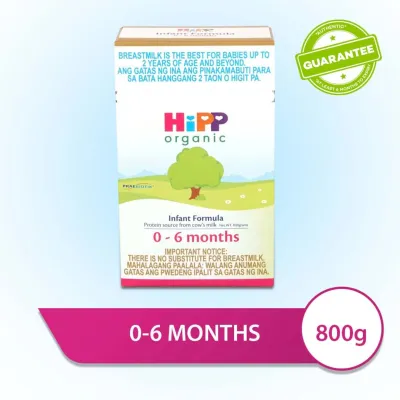
Prices are valid at publication and may change. Please refer to the product page for the latest price.
Once you have identified the correct stage, you must carefully review the manufacturer’s preparation instructions. Infant formulas require precise water-to-powder ratios to ensure your baby receives the correct concentration of nutrients and hydration. Altering these ratios by adding too much or too little water can lead to dehydration or malnutrition. Always check the scoop size provided in the specific tin you purchase, as scoop volumes can vary between brands and even between different batches of the same brand.
Comparing Formula Types and Ingredient Profiles
Understanding the differences between organic and conventional formulas requires a close inspection of the ingredient list and packaging certifications. HiPP Organic is distinguished by its organic certification, which indicates that the ingredients are sourced from farms adhering to strict organic agricultural standards. To verify this, look for official organic certification logos, such as the European Union organic leaf or other recognized organic seals, on the packaging. Conventional formulas like NAN and Enfamil do not carry these organic certifications but are manufactured under rigorous food safety and nutritional standards to ensure they meet infant dietary requirements.

When reading the ingredient labels, you will find various functional ingredients such as docosahexaenoic acid (DHA), arachidonic acid (ARA), prebiotics, and probiotics. These components are often highlighted in product marketing, but their presence and concentrations can vary. DHA and ARA are fatty acids naturally found in breast milk, while prebiotics and probiotics are included to support gut health. Rather than assuming one brand’s formulation is superior based on marketing claims, you should compare the nutrient declaration panels on the back of the tins to see the exact amounts per 100 kilocalories or 100 milliliters of prepared formula.
Another critical factor is the protein composition, specifically the ratio of whey to casein. Newborn digestive systems generally tolerate a higher whey-to-casein ratio more easily, as it closely mirrors the protein profile of early breast milk. Some formulas are specifically modified to adjust this ratio or partially hydrolyze the proteins to aid digestion. Because these variations can significantly impact how your baby tolerates the formula, you should evaluate these ingredient profiles under the guidance of your pediatrician rather than relying on general product descriptions.
Assessing Digestibility and Baby’s Tolerance
Every infant’s digestive system is unique, meaning a formula that works perfectly for one baby might cause discomfort for another. To assess how well your newborn is tolerating a specific formula, you must closely monitor their daily physical responses. Key indicators of good tolerance include a relatively consistent feeding schedule, steady weight gain, and comfortable bowel movements. It is normal for formula-fed babies to have firmer stools than breastfed infants, but the stools should still be soft and easy to pass.
You should keep a close eye on signs of digestive discomfort, such as excessive gassiness, persistent fussiness after feeding, or frequent spit-ups. While mild spit-up is common as a baby’s digestive tract matures, severe symptoms require immediate attention. Red flags that necessitate stopping the formula and consulting your pediatrician immediately include projectile vomiting, severe skin rashes or hives, persistent diarrhea, constipation accompanied by hard, pellet-like stools, or any trace of blood or mucus in the stool. These symptoms could indicate an underlying sensitivity or a cow’s milk protein allergy.
If you and your pediatrician decide that a formula change is necessary, the transition should be managed carefully. Abruptly switching from one brand to another can upset a newborn’s sensitive stomach. Your pediatrician will typically recommend a gradual transition plan, which involves slowly mixing increasing amounts of the new formula with the old formula over several days, or transitioning bottle by bottle, allowing your baby’s digestive enzymes and gut flora time to adapt to the new ingredient profile.
Availability, Pricing, and Sourcing in the Philippines
Practical logistics play a major role in choosing an infant formula, as maintaining a consistent supply is vital for your baby’s feeding routine. Conventional brands like NAN and Enfamil enjoy widespread availability across the Philippines. You can easily find them on the shelves of local supermarkets, neighborhood drugstores, and major pharmacy chains in both urban and provincial areas. In contrast, imported organic options like HiPP Organic may have more limited distribution, often requiring you to visit specialized baby stores, high-end supermarkets, or authorized online distributors.
Feeding costs can accumulate rapidly during the first six months, making it essential to calculate your monthly budget realistically. To estimate your expenses, look at the tin sizes available (typically ranging from 400 grams to 900 grams) and calculate the cost per gram. Consider your baby’s average daily intake—which increases as they grow—and use the manufacturer’s feeding table to determine how many scoops are required per feed. By multiplying the daily scoop requirement by the weight of each scoop, you can estimate how many days a single tin will last and project your monthly expenditure in Philippine Pesos (₱). Organic formulas generally carry a premium price tag compared to conventional options, so you must ensure your chosen brand fits comfortably within your long-term budget.
Sourcing safety is another critical consideration, especially when purchasing formula online. Counterfeit or improperly stored infant formula poses severe health risks to newborns. When buying from e-commerce platforms or online marketplaces, only purchase from official brand stores or authorized distributors. Always inspect the physical packaging immediately upon delivery. Ensure the safety seals are completely intact, the tin is free of dents or punctures, and the expiration date is clearly printed and well into the future. If you notice any signs of tampering or if the powder has an unusual odor or color, do not feed it to your baby.
Decision Framework: Which Formula Fits Your Baby?
To choose the right formula, you must balance your baby’s specific physiological needs with your family’s lifestyle and financial realities. If your primary goal is to feed your baby certified organic ingredients and you have both the budget and a reliable, uninterrupted supply chain to source it, HiPP Organic Stage 1 is a strong candidate. This option is particularly suitable for families who prefer agricultural ingredients produced without synthetic pesticides or chemical fertilizers.
On the other hand, if you prioritize convenience, immediate local availability, and a long-standing track record of standard pediatric formulations, conventional options like NAN Optipro 1 or Enfamil are highly practical choices. These brands are readily accessible even during travel or unexpected supply disruptions, ensuring you never run out of your baby’s essential food source. They also offer specialized lines designed for specific digestive needs, which can be beneficial if your baby requires a tailored formulation.
Before making any final decision, you must verify if your baby has a family history of food allergies, asthma, or eczema, as this can influence their likelihood of developing sensitivities. Never switch brands or start a new formula based solely on peer recommendations or marketing advertisements. Always consult your pediatrician, who can evaluate your baby’s growth chart, assess their digestive health, and provide a personalized recommendation that ensures safe and optimal nutrition.
Frequently Asked Questions (FAQ)
Can I mix different formula brands for my 0-6 month old?
No, you should not mix different formula brands or stages in the same bottle. Each manufacturer designs their formula with a precise balance of nutrients, vitamins, and minerals, along with a specific osmolarity (concentration) that is safe for an infant’s kidneys and digestive system. Mixing different powders can disrupt this delicate balance, potentially leading to nutrient deficiencies, dehydration, or severe digestive distress. If you need to transition your baby to a new brand, consult your pediatrician for a safe, step-by-step transition schedule rather than combining the powders in a single feed.
How do I know if my baby is allergic to a specific formula?
An allergic reaction is different from mild digestive adjustments like occasional gas or spit-up. True allergic reactions, such as a cow’s milk protein allergy, typically manifest with more severe symptoms. Watch for observable signs such as hives, sudden facial swelling, wheezing, persistent vomiting, severe eczema, or blood in the stool. Mild lactose sensitivity or reflux may cause fussiness and gas, but a true allergy involves the immune system and requires immediate medical evaluation. If you suspect your baby is experiencing an allergic reaction, stop using the formula immediately and seek professional medical care.

Community discussion
Share your experience or ask a question. Comments are reviewed before publication.