
Finding the right Large diaper for your baby involves looking past marketing claims and examining how each brand’s physical design matches your baby’s unique shape and movement. In the Philippines, where high tropical humidity and heat can quickly exacerbate skin irritation, choosing between Happy Dry Large, Pampers, Equator, and Huggies requires a systematic comparison of their sizing, core construction, and elastic fit. Because a diaper’s performance is highly dependent on your baby’s weight, body shape, and activity level, there is no single brand that works perfectly for every infant. Instead, the ideal choice comes down to identifying specific design elements—such as waistband stretch, leg cuff height, and core distribution—and matching them to your baby’s daily routine and physical build.
Understanding "Large" Sizing Standards Across Brands
When comparing Happy Dry Large to alternatives from Pampers, Equator, and Huggies, the first critical step is recognizing that diaper sizes are not standardized across manufacturers. A “Large” diaper in one brand may have a completely different physical cut, elastic tension, and weight recommendation than a “Large” in another. Caregivers must carefully check the manufacturer’s stated weight range on each brand’s packaging to ensure their baby falls comfortably within the recommended limits. Relying solely on the letter “L” can lead to purchasing diapers that are either too tight, causing painful red marks, or too loose, resulting in messy leaks.
To get an accurate comparison, lay the unfastened diapers flat next to each other on a clean surface. Measure and compare their physical dimensions, paying close attention to the overall length (the rise) and the width across the crotch. A diaper with a longer rise is generally better suited for taller babies or those with longer torsos, as it provides higher coverage at the back to prevent blowouts. Conversely, a wider crotch area offers a larger surface area for absorption but may bunch up uncomfortably between the legs of a slimmer baby, restricting their natural movement.
Products mentioned in this guide
![HAPPY DRY [LARGE] 30 PCS](https://img.lazcdn.com/g/p/d3672978ad4d4856222b9f56a6aedc4a.png_400x400q80.png_.webp)
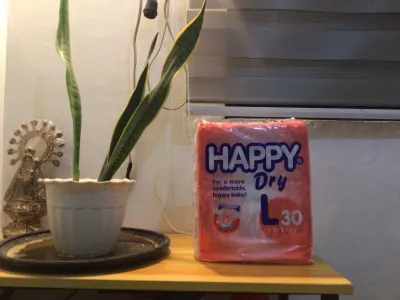
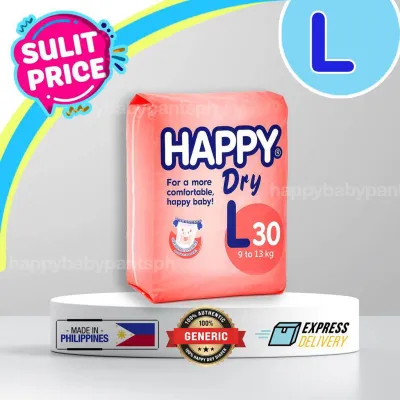
Prices are valid at publication and may change. Please refer to the product page for the latest price.
Additionally, you must account for sizing variations that exist between different product lines or premium tiers within the same brand. For example, a brand’s premium line might feature a slimmer, more contoured cut with highly flexible elastics, while their economy line might have a wider, boxier shape with stiffer materials. When evaluating Happy Dry, Pampers, Equator, or Huggies, always verify which specific product tier you are purchasing, as the fit can vary significantly even within the same brand’s Large size category.
Evaluating Absorbency Features and Core Design
A diaper’s ability to keep your baby dry depends heavily on its internal structure and how it distributes liquid. To evaluate this without relying on unverified marketing claims, you can physically inspect the absorbent core of each brand. Gently feel the inside of the dry diaper to determine the distribution of the superabsorbent polymer (SAP) and pulp. Some diapers feature targeted padding, concentrating more absorbent material in the front for boys or in the middle and back for girls, while others utilize a uniform full-coverage core. If your baby is a tummy sleeper, a diaper with front-loaded padding may perform better, whereas back sleepers benefit from a more balanced distribution.

Another practical feature to check is the placement and design of the wetness indicator. Look for a clear, external strip that runs down the center of the diaper. A reliable wetness indicator changes color distinctly when exposed to moisture, allowing you to monitor saturation levels at a glance. In the humid climate of the Philippines, where minimizing diaper changes helps prevent exposing the baby’s skin to warm, moist air, a highly visible indicator is an invaluable tool for maintaining optimal skin hygiene.
The top sheet material—the layer in direct contact with your baby’s skin—also plays a crucial role in comfort. Inspect this layer for textured, embossed, or 3D patterns, which are designed to channel liquid away rapidly and keep loose stools from spreading. A breathable, textured top sheet helps maintain a dry microclimate next to the skin, reducing the risk of diaper rash. If the top sheet feels completely flat or plastic-like, it may trap heat and moisture more easily during hot afternoons.
Finally, monitor real-world performance by observing the diaper after several hours of use. Check for common issues such as core sagging, clumping, or gel leakage. A well-constructed core should hold its shape even when fully saturated. If you notice the absorbent material breaking apart into heavy lumps between your baby’s legs, or if you find tiny, clear gel beads on their skin during changes, the diaper’s core integrity may not be sufficient for your baby’s active movements or liquid output.
Assessing Fit, Elasticity, and Leak Protection
Even the most absorbent diaper will leak if it does not conform properly to your baby’s body. To assess the fit of Happy Dry, Pampers, Equator, and Huggies, start by examining the waistband elasticity and the fastening tabs. Stretch the back waistband to evaluate its flexibility and recovery. A highly elastic waistband is essential for preventing blowouts, especially when your baby is sitting or crawling. Next, inspect the fastening tabs to see if they are stretchable and refastenable. Stretchable tabs allow you to customize the snugness around the waist, accommodating your baby’s belly as it expands after feeding, while rigid tabs offer less flexibility and can dig into the skin.
The leg cuffs and gathers serve as the primary barrier against side leaks and must be inspected carefully. Run your fingers along the inner and outer leg elastics of each brand to check their height and flexibility. High, double-layered leg gathers provide a secure, hydrophobic seal around the thighs without restricting circulation. In tropical conditions, these cuffs must be soft and breathable; stiff or overly tight elastics can trap sweat and cause painful chafing or heat rash (bungang-araw) around the groin.
After your baby has worn a diaper, look for physical signs of a poor fit. When you remove the diaper, check for deep red marks or indentations on their waist or thighs. These marks are a clear warning that the diaper is too tight, the elastics are too stiff, or the tabs were fastened with too much tension. On the other hand, if you notice visible gaps between the leg cuffs and your baby’s skin, or if the diaper sags significantly even when dry, the fit is too loose, and leaks are highly likely to occur.
Decision Framework: Matching Diaper Features to Your Baby's Needs
To choose the right diaper from Happy Dry, Pampers, Equator, or Huggies, you must match their physical characteristics to your baby’s specific body shape and daily routine. If your baby has chunky thighs or a broader, sturdier build, prioritize brands that feature a wider cut, generous leg openings, and highly stretchable side panels. This prevents the diaper from pinching the skin and ensures comfortable coverage during movement.
For highly active babies who are crawling, cruising, or walking, a slimmer profile diaper with targeted core padding is often the better choice. A bulky diaper can bunch up between the thighs, restricting mobility and causing discomfort. A streamlined design allows your baby to move freely while still providing reliable absorption where it is needed most.
If you find that your baby is currently between sizes, neither a standard Large nor a Medium may fit perfectly. If you are consistently experiencing leaks, blowouts, or tight red marks despite adjusting the fastening tabs, verify the next size up (Extra Large) rather than trying to force a tight fit. A slightly larger diaper fastened securely is always more effective than a diaper that is too small.
Lastly, if your baby has highly sensitive skin, always verify the packaging for specific safety and ingredient labels. Look for fragrance-free, hypoallergenic, and dermatologically tested certifications. Avoid diapers with heavy synthetic scents or dyes, as these can easily trigger allergic contact dermatitis in hot, humid weather. If skin irritation or diaper rash persists despite proper sizing and frequent changes, stop using the product and consult a qualified pediatrician or healthcare professional.
Frequently Asked Questions (FAQ)
How do I know if a Large diaper is too small or too big for my baby?
You can determine if a Large diaper is the wrong size by looking for specific physical signs on your baby’s body. If the diaper is too small, you will notice deep red marks or chafing around the thighs and waist, the waistband will sit far below the belly button, and you will experience frequent leaks or blowouts. If the diaper is too big, you will see visible gaps between the leg cuffs and your baby’s skin, the fastening tabs will overlap completely at the center of the waist, and the diaper may sag or slip down as your baby moves.
Can I mix different diaper brands for daytime and nighttime use?
Yes, mixing diaper brands is an excellent way to balance cost, comfort, and performance. For daytime use, when you change diapers more frequently and your baby is active, you can choose a slimmer, highly breathable diaper that maximizes mobility and keeps your baby cool in the tropical heat. For nighttime use, you can switch to a brand with a higher-capacity absorbent core and wider leak guards to ensure your baby stays dry and sleeps comfortably through the night. Always verify that both brands fit your baby’s current physical dimensions properly to prevent leaks during transitions.

Community discussion
Share your experience or ask a question. Comments are reviewed before publication.