
Selecting the right bottle sterilizer is a critical decision for any parent managing a daily feeding routine. In a tropical climate like the Philippines, where high humidity can encourage the rapid growth of mold and bacteria on damp surfaces, finding an efficient way to sanitize and dry your baby’s feeding gear is essential. A Dowell bottle sterilizer offers various configurations to streamline this chore, but the ideal model for your home depends on your daily feeding volume, the types of bottles you use, and the physical limits of your kitchen counter. By evaluating these factors systematically, you can choose a unit that fits seamlessly into your workflow without cluttering your living space.
Assessing Your Daily Feeding Volume and Kitchen Space
Before browsing specific models, you must first calculate your household’s daily bottle turnover. A newborn baby may feed up to eight to twelve times in a twenty-four-hour period, requiring a constant supply of clean, sterile bottles. If you are exclusively bottle-feeding, your daily volume will be significantly higher than if you are combining breastfeeding with occasional bottle use. Estimating this number helps you determine whether you need a high-capacity sterilizer that can process a large batch at once or a smaller unit that you run multiple times throughout the day.
Kitchen layout and physical constraints are equally important when selecting an appliance. Take a moment to measure your available counter space, keeping in mind that these units require adequate clearance on all sides for ventilation. You must also locate a grounded power outlet nearby to ensure safe electrical operation, avoiding the use of extension cords in wet kitchen areas. Placing the sterilizer on a flat, stable surface away from the edge of the counter reduces the risk of accidental spills or tipping.
Products mentioned in this guide
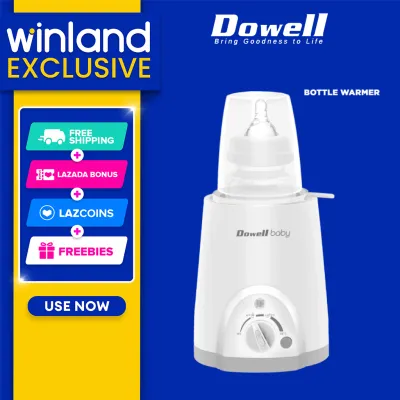
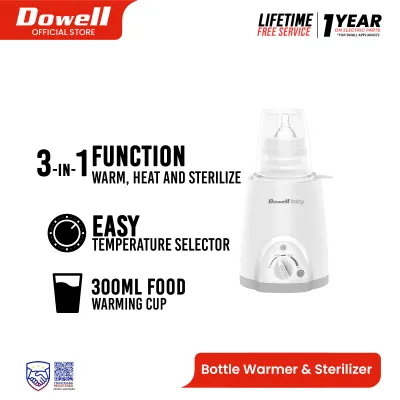
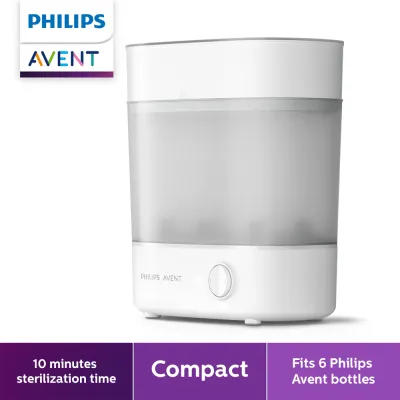
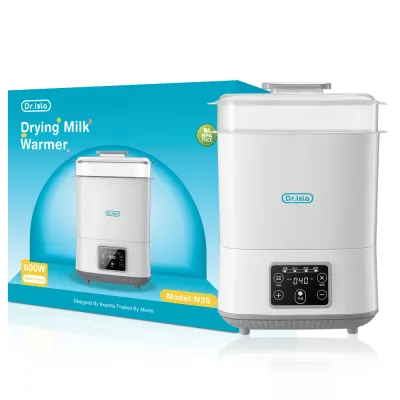
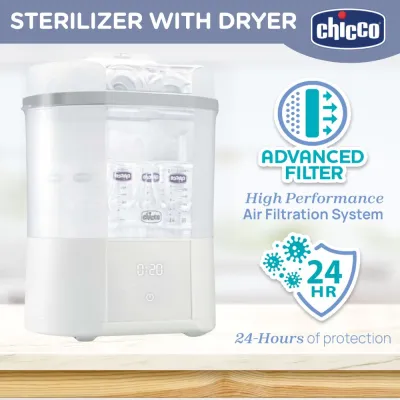
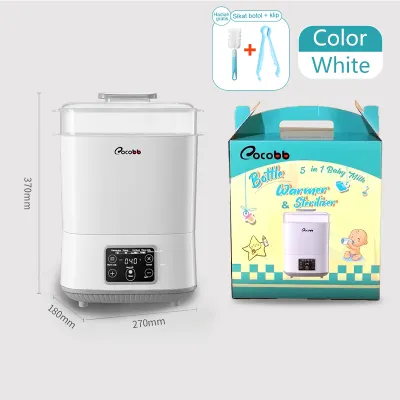
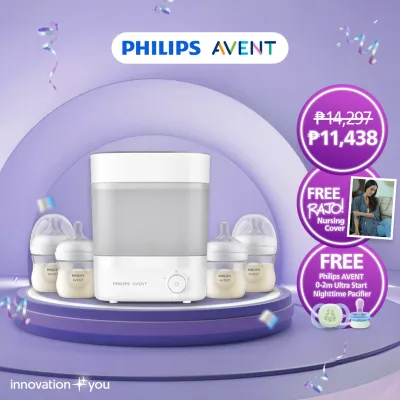
Prices are valid at publication and may change. Please refer to the product page for the latest price.
Additionally, consider the variety of items that will pass through the sterilizer daily. Beyond standard baby bottles, you may need to sanitize breast pump flanges, silicone valves, pacifiers, and teethers. These accessories often have irregular shapes and varying sizes, which means you need to look at the internal configuration of the sterilizer rather than just the nominal bottle capacity. Ensuring the unit can accommodate your specific mix of feeding gear will save you from running multiple consecutive cycles.
Core Specifications to Compare Across Dowell Models
When comparing different Dowell bottle sterilizer models, understanding the core specifications will help you make an informed choice. The primary distinction lies in the sterilization method, which typically involves either steam-based heating or ultraviolet (UV) light. Steam sterilizers use high temperatures to eliminate microorganisms, making them highly effective for heat-resistant glass and polypropylene bottles. UV sterilizers, on the other hand, use specialized light bulbs to sanitize items at lower temperatures, which is highly beneficial for delicate silicone components and electronic accessories that cannot tolerate intense heat.

Capacity tiers are another critical specification to analyze on product labels. Manufacturers often state capacity in terms of standard slim-neck bottles, but wide-neck bottles or bulky breast pump parts will take up significantly more space. When evaluating a model, look for the internal dimensions and the layout of the racks rather than relying solely on the advertised bottle count. A model with adjustable or removable trays offers the flexibility needed to arrange wide-neck bottles and small accessories efficiently.
Cycle options also play a major role in your daily convenience. Basic models may only offer a sterilization cycle, leaving the bottles wet and requiring you to air-dry them on a separate rack, which exposes them to ambient humidity. Advanced models feature integrated drying functions that use warm, filtered air to dry the items immediately after sanitizing them. Choosing a model with a combined sterilize-and-dry cycle helps maintain a hygienic environment inside the unit and eliminates the extra step of manual drying.
Matching Sterilizer Profiles to Your Household Setup
To simplify your decision, it is helpful to match your specific household dynamics with the corresponding sterilizer profiles. Different family sizes, kitchen spaces, and feeding methods require distinct appliance features to maximize efficiency. By identifying which profile best describes your current living situation, you can narrow down the available Dowell options to the most practical choices.
High-Capacity Units for Large Families or Multiples
For households with multiple babies or those managing a high volume of daily feedings, a high-capacity sterilizer is often the most practical choice. These units typically feature multi-tier racks that allow you to separate bottles from smaller accessories like nipples and collars. A larger base footprint ensures that you can sterilize a full day’s worth of feeding gear in a single cycle, saving you time and reducing the repetitive chore of loading and unloading the machine.
However, larger appliances generally consume more electricity, so it is wise to check the power consumption ratings on the product label. Compare the wattage and the cycle duration of high-capacity models to understand how they might impact your monthly household utility bills. Running one large, efficient cycle is often more economical than running multiple smaller cycles throughout the day, provided the unit is fully loaded each time.
You must also verify the structural stability and weight limits of a high-capacity unit. When fully loaded with wet bottles and accessories, the trays must remain secure without sagging or tipping. Look for models with sturdy, interlocking racks and a wide, slip-resistant base that keeps the appliance firmly in place on your kitchen counter, even when operating at maximum capacity.
Compact and Multi-Function Units for Limited Spaces
If you are working with a compact kitchen, living in an apartment, or setting up a secondary sterilization station in a nursery, space-saving designs are paramount. Compact models focus on a vertical footprint, utilizing height rather than counter width to accommodate bottles. This design allows you to preserve valuable workspace on your kitchen counters while still ensuring your baby’s feeding gear is thoroughly sanitized.
To make the most of a smaller unit, look for modular or removable racks that can be configured in multiple ways. Some models allow you to remove the upper accessory tray entirely when you need to sterilize taller bottles or larger breast pump parts. This adaptability ensures that a compact unit remains highly functional, even if it cannot hold as many items simultaneously as a full-sized model.
Operating a sterilizer in a confined space also requires you to consider noise levels and heat dissipation. Steam-based units release hot vapor during operation, so they must not be placed directly under low-hanging wooden cabinets, which can warp over time from the moisture. Ensure there is sufficient overhead clearance and that the unit operates quietly enough not to disturb a sleeping baby if placed in or near a bedroom.
Safety Checks, Maintenance, and Operational Limits
Ensuring the safe operation of your bottle sterilizer requires strict adherence to manufacturer guidelines and material limits. Before placing any item inside the sterilizer, always check the manufacturer’s label on the bottle, nipple, or pump part to verify its heat tolerance. Some plastics and low-grade silicones can warp, degrade, or release unwanted chemicals if subjected to temperatures beyond their specified limits, particularly in steam sterilizers.
Routine maintenance is essential to keep the appliance functioning correctly and to prevent the buildup of mineral deposits. In many regions of the Philippines, tap water contains high levels of minerals that can leave a white or chalky residue on the heating plate over time. This scale buildup acts as an insulating layer, reducing heating efficiency and potentially causing the unit to overheat. Refer to your Dowell user manual for the recommended descaling frequency and approved cleaning agents, such as food-grade citric acid or white vinegar solutions.
Modern sterilizers often include built-in safety features, such as automatic shut-off mechanisms that turn off the heating element once the water has completely evaporated. However, you should establish a strict household rule to stop using the appliance immediately if you notice any signs of physical damage, frayed cords, or if the unit displays persistent error codes. In such cases, consult the manufacturer’s customer service or a qualified professional rather than attempting to repair the electrical components yourself.
Purchasing Verification and Warranty Considerations
To guarantee that you receive an authentic product with reliable local support, always purchase your sterilizer from authorized online retailers, official brand stores, or reputable department stores. Buying from unauthorized sellers on online marketplaces carries the risk of acquiring counterfeit goods or units intended for foreign markets that do not meet local safety standards. Authentic products come with official warranty coverage, giving you access to genuine replacement parts and professional repair services if needed.
Before finalizing your purchase, verify that the unit’s plug type and voltage specifications are compatible with the local power grid. In the Philippines, the standard electrical supply is 220V at 60Hz, and using an appliance designed for a different voltage without a proper transformer can permanently damage the motor or heating element. Checking these technical details on the packaging or product description page prevents costly electrical mishaps.
Finally, compare prices in ₱ across authorized retail channels to find the best value for your budget. When comparing prices online, remember to factor in shipping fees, delivery times, and the seller’s return policy. Investing in a model with a comprehensive warranty and accessible local service centers provides long-term peace of mind, ensuring that you can quickly resolve any operational issues without disrupting your baby’s feeding schedule.
Frequently Asked Questions (FAQ)
Can I sterilize silicone and plastic bottles together in a Dowell sterilizer?
Yes, you can sterilize silicone and plastic bottles together, provided that both materials are rated for the temperatures generated by your specific sterilizer model. Always check the heat tolerance labels on each individual item before loading them. To ensure effective sterilization, place heavier plastic bottles on the lower rack and lighter silicone nipples or valves on the upper accessory tray, making sure no items overlap or block the flow of steam or UV light.
How often should I descale the heating plate?
You should descale the heating plate of your steam sterilizer every one to two weeks, depending on the hardness of your local water supply and how frequently you use the appliance. Refer to your specific Dowell user manual for the exact recommended intervals and approved descaling methods. If you notice white or brown mineral spots forming on the heating plate, or if the cycle takes longer than usual to complete, perform a descaling cycle immediately to maintain optimal performance.

Community discussion
Share your experience or ask a question. Comments are reviewed before publication.