
Finding the right baby push walker for your little girl in the Philippines involves balancing engaging, colorful designs with robust safety features that support her physical development. While many parents search for specific pink, pastel, or whimsical themes, the most critical decision factors lie in the structural integrity, speed control, and ergonomic design of the walker. By focusing on how a walker performs on typical local flooring—such as smooth ceramic tiles or polished wood—and verifying its safety certifications, you can select a toy that is both delightful and developmentally supportive.
Why Push Walkers Are Recommended Over Sit-In Walkers
Traditional sit-in walkers suspend a baby in a seat, allowing them to propel themselves on their toes without bearing their full weight naturally. This position can alter muscle development and encourage an unnatural walking gait. In contrast, push walkers require your baby to stand upright, engage her core, and bear her own weight fully through her feet. This active engagement strengthens the leg muscles and promotes a natural heel-to-toe walking pattern.
Modern pediatric guidelines globally and locally strongly favor push walkers over traditional sit-in models due to these developmental benefits and reduced safety risks. Sit-in walkers can allow babies to reach dangerous heights or move too quickly, whereas push walkers move only as fast as the baby can push them, keeping them at a more natural developmental pace.
Products mentioned in this guide
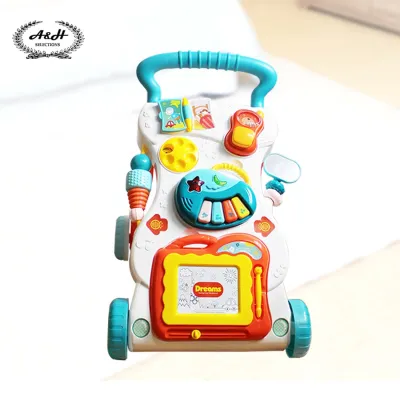
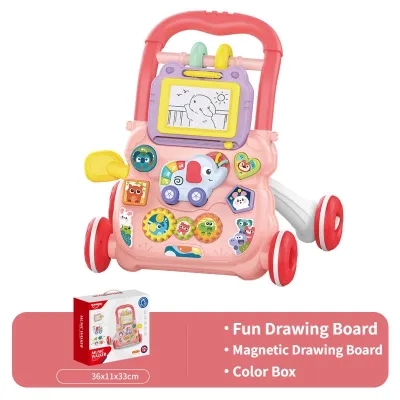
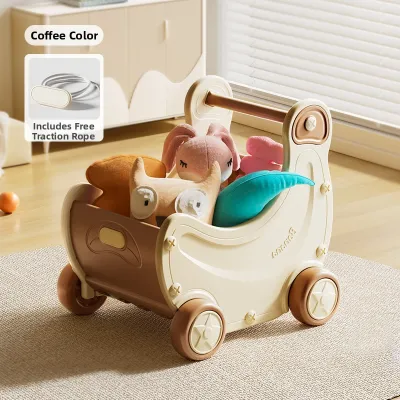
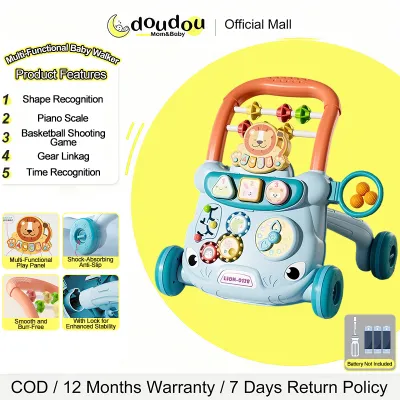
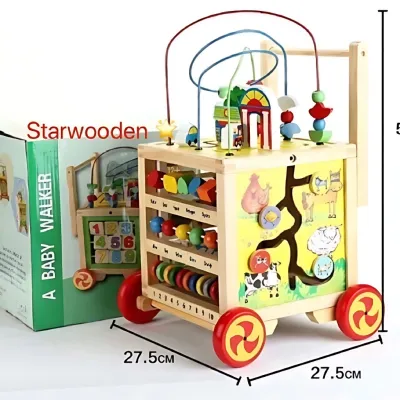
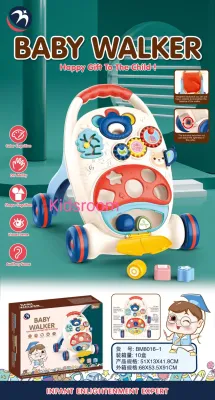
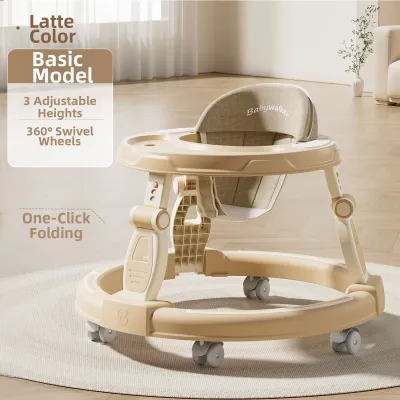
Prices are valid at publication and may change. Please refer to the product page for the latest price.
The transition phase from crawling to cruising is a crucial milestone in your baby’s first year. As she begins pulling herself up on furniture, she is building the balance and coordination needed for independent steps. A push walker serves as a dynamic bridge during this phase, offering just enough support to build her confidence while allowing her to control her own balance and direction.
Design and Aesthetic Considerations for Girls
When searching for a push walker tailored for a baby girl, aesthetic appeal often plays a significant role in keeping her engaged. Popular designs frequently feature soft pastel palettes, vibrant floral patterns, or whimsical animal themes like unicorns, kittens, and butterflies. These visually stimulating elements, combined with interactive activity panels featuring gears, bead mazes, and shape sorters, turn a simple mobility aid into an exciting sensory play station.

However, it is essential to balance these cute aesthetics with practical daily maintenance and high-visibility safety features. In the tropical climate of the Philippines, high humidity can make toys prone to dust accumulation and moisture buildup. Look for designs with smooth, non-porous surfaces that are easy to wipe down with a damp cloth and mild baby-safe sanitizer. Ensure that any colorful paint or finish is explicitly labeled as non-toxic and lead-free, as babies frequently explore their toys with their mouths.
Additionally, be cautious of overly elaborate decorative attachments. Large, heavy figures or bulky front-loaded toys can shift the walker’s center of gravity forward or to one side. This imbalance increases the risk of the walker tipping over when your baby attempts to turn or pull herself up. Opt for streamlined designs where the interactive elements are integrated flat against the main panel rather than protruding excessively.
Essential Safety and Stability Features to Verify
The physical safety of a push walker depends heavily on its structural design and wheel mechanics. One of the most critical features to verify is adjustable wheel resistance or speed control. On smooth indoor surfaces like polished tiles or laminate flooring, a standard free-rolling wheel can easily slip away from a learning baby, leading to sudden falls. Look for models equipped with adjustable tension screws or rubber traction strips on the wheels to help regulate the rolling speed.
The physical footprint of the walker is another key safety indicator. A wide, stable base with a low center of gravity prevents the unit from tipping sideways or backward when your baby pulls herself up to a standing position. When inspecting a walker, check that the rear wheels are set wide apart and extend slightly beyond the handle’s vertical line, which provides a solid counterweight to your baby’s forward pushing force.
Material safety is paramount, especially for toys that undergo heavy daily use. Verify that the product carries recognized safety standards and labels indicating the use of BPA-free plastics and non-toxic, water-based finishes. Run your hands along all edges, corners, and joints to ensure there are no sharp plastic flashing lines, rough wooden splinters, or exposed metal screws that could scratch delicate skin.
Finally, carefully inspect the activity panel for small detachable parts. Many interactive walkers include shape sorters, play phones, or loose pegs. Ensure these accessories are large enough to pass a standard choke-tube test and cannot be easily broken into smaller fragments. If a walker includes small parts that cause concern, it is best to store those specific pieces away until your child reaches an older developmental stage.
Adjustability and Ergonomics for Growing Babies
Babies grow at rapid and unpredictable rates, making adjustability a vital feature for any long-term baby gear investment. Look for push walkers that offer adjustable handle heights or customizable handle angles. If the handle is too low, your baby will be forced to hunch forward, which can negatively impact her posture and balance. Conversely, a handle that is too high makes it difficult for her to exert downward force, causing the walker to slide away.
The ergonomics of the handlebar itself deserve close attention. The grip should be designed for small hands, featuring a comfortable thickness and a textured, non-slip surface. Foam grips can sometimes degrade or be bitten off by teething babies, so high-quality, textured plastic or smooth, rounded wood is often a more durable and hygienic choice for tropical environments.
The overall weight of the walker must be carefully balanced. A walker that is too light can easily lift off the ground or slide sideways when a baby leans on it for support. On the other hand, an excessively heavy wooden or plastic walker can frustrate a baby who lacks the leg strength to push it forward or steer it around corners. Aim for a medium-weight model that feels solid to your touch but remains manageable for a cruising infant.
Building Your Shortlist: Matching Walkers to Your Needs
To find the perfect match for your home and lifestyle, it helps to categorize potential push walkers into distinct design types. Activity-focused plastic walkers are highly popular due to their multi-functional nature. These models are packed with electronic sounds, lights, and mechanical toys that keep your baby entertained even when she is not walking. They are ideal for stationary sensory play and slow, supervised cruising in smaller indoor spaces.
Minimalist wooden push walkers appeal to parents who prefer a classic, natural aesthetic that blends seamlessly with modern home decor. Wooden models generally offer a heavier, more stable base, making them excellent for babies who need extra physical support when pulling themselves up. They perform exceptionally well on hard, flat floors, though they typically lack the flashy electronic features of their plastic counterparts, focusing instead on simple, open-ended physical play.
Convertible models offer excellent long-term value by adapting to your child’s changing developmental stages. These versatile units can often be transformed from a traditional push walker into a stationary activity table, a ride-on toy, or even a small toy cart. While convertible models may require a slightly higher initial investment, their ability to grow with your child over several years makes them a highly practical choice for many Filipino families.
Purchasing and Verification in the Philippines
When shopping for a baby push walker in the Philippines, verifying the authenticity of the seller is crucial to ensuring you receive a genuine, safe product. Prioritize official brand storefronts on major e-commerce platforms or reputable local baby specialty boutiques. Be cautious of listings with unusually low prices, missing brand labels, or vague product descriptions, as these can be indicators of counterfeit or substandard goods that do not meet safety regulations.
Before finalizing your purchase, review the seller’s local warranty terms and return policies. Ensure there is a clear process for returning the item if it arrives with missing parts, structural defects, or shipping damage. Some reputable brands also offer replacement parts, which can be incredibly helpful if a wheel or an interactive accessory gets lost or damaged over time.
Once your package arrives, perform a thorough physical inspection before letting your baby near the walker. Assemble the unit on a clean surface and check that all joints lock securely into place. Tighten any screws completely, verify that the wheel resistance mechanisms function correctly, and ensure that all protective plastic caps are firmly attached. Taking these few extra minutes guarantees a safe and joyful start to your baby’s walking journey.
Frequently Asked Questions (FAQ)
At what age should a baby start using a push walker?
Most babies are ready to explore a push walker between nine and twelve months of age, though development varies. Rather than relying strictly on age, look for specific physical milestones. Your baby should be able to pull herself up to a standing position independently, bear her full weight on her legs while holding onto furniture, and show an active interest in cruising sideways. Introducing a walker before her leg muscles and core stability are ready can lead to poor posture and unnecessary falls.
How can I slow down the wheels on a slippery floor?
If your home has polished ceramic tiles or smooth wooden floors, the walker may roll too quickly. You can slow it down by adjusting the built-in wheel resistance dials if your model has them. For models without adjustable wheels, applying manufacturer-approved rubber grip strips or non-slip tape to the wheel rims can increase traction. Alternatively, you can restrict the walker’s use to low-pile area rugs or play mats during the initial learning phase to provide natural resistance.
Are wooden push walkers safer than plastic ones?
Neither material is universally safer; instead, they offer different structural benefits that suit different needs. Wooden walkers are typically heavier, providing a sturdier base that is less likely to tip over when a baby pulls herself up. However, they require regular inspection for splinters, loose joints, or cracked wood, especially in humid tropical climates. Plastic walkers are lighter, easier to sanitize, and often feature rounded, seamless edges, but they require careful weight distribution and wheel speed checks to prevent slipping.

Community discussion
Share your experience or ask a question. Comments are reviewed before publication.