
Living in a compact urban home, such as a studio condominium or a cozy apartment in Metro Manila, requires careful planning for every piece of furniture you bring through the door. When preparing for a new baby, finding a safe, comfortable place for them to sleep can feel like a spatial puzzle. Standard wooden cribs often have a large, rigid footprint that can quickly overwhelm a small bedroom, leaving little room for you to move around comfortably.
A portable bassinet offers a practical solution to this spatial challenge. These compact sleep spaces are designed to keep your newborn close during those crucial first months while taking up a fraction of the floor space required by a traditional crib. Because they are lightweight and often foldable, they allow you to maximize your living area during the day and keep your baby nearby at night.
However, choosing the right portable bassinet for a small apartment involves more than just picking an attractive design. You must carefully evaluate how the unit fits into your daily routine, your room’s physical layout, and your storage options. By focusing on precise measurements, structural safety, and ease of mobility, you can select a bassinet that keeps your baby secure without compromising your home’s functionality.
Products mentioned in this guide
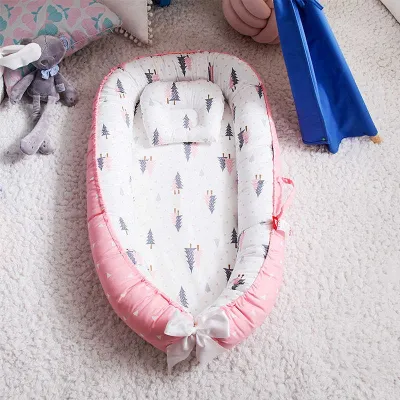

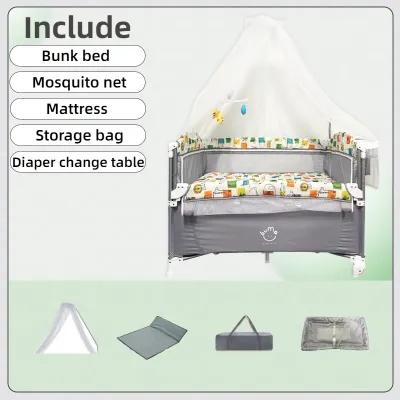
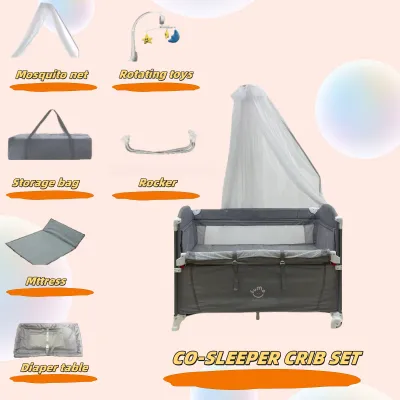

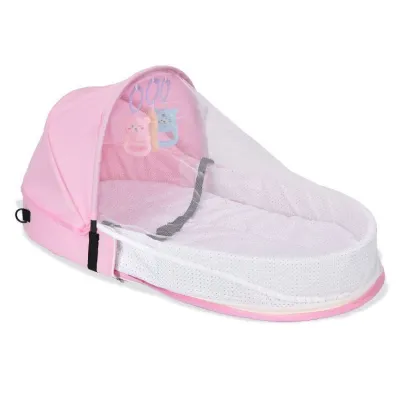
Prices are valid at publication and may change. Please refer to the product page for the latest price.
Evaluating Space-Saving Dimensions and Layout Fit
In a compact apartment, floor space is premium real estate. Before you begin browsing online marketplaces or visiting local baby boutiques, you need to map out the exact physical dimensions of your living space. Start by measuring the area directly next to your bed where the bassinet will most likely sit during the night. You must ensure there is enough clearance for you to get out of bed safely without bumping into the frame.
Do not forget to account for the layout of the rest of the room. Consider how the bassinet’s footprint will affect daily traffic paths, closet access, and door swings. A bassinet that fits perfectly when your wardrobe doors are closed might completely block them when you need to reach for clothes or baby supplies. If your bedroom has a tight layout, look for a bassinet with a streamlined, vertical frame rather than wide, splayed legs that can easily become tripping hazards in the dark.
If you plan to move the bassinet between rooms during the day—such as from the bedroom to the living room or kitchen—you must measure your doorways and hallways. Many older apartments and standard condominium units in the Philippines feature narrow door frames. Check the manufacturer’s outer width specifications to ensure the bassinet can pass through these openings without needing to be tilted or partially disassembled.
For homes where space is exceptionally tight, the folded dimensions of the bassinet are just as important as its open footprint. If you live in a studio apartment, you may want to collapse the bassinet and store it away during the day to reclaim your living area. Review the product specifications to see how flat the unit folds and whether it can easily slide under your bed, fit inside a closet, or stand upright in a narrow utility gap.
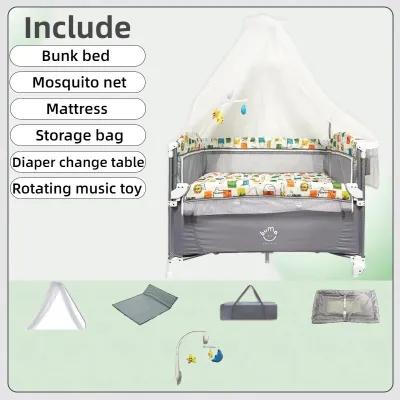
You will also need to decide between a standalone minimal frame and a multi-functional design. Some portable bassinets come equipped with integrated diaper changing tables, lower storage shelves, or side pockets for baby essentials. While these multi-functional units can save you from buying separate pieces of furniture, they often have a larger overall footprint and a heavier frame. If you already have dedicated storage solutions, a minimal, lightweight frame is usually the more space-efficient choice for a small apartment.
Verifying Sleep Safety and Structural Stability
While space-saving features are highly desirable, your baby’s sleep safety must always remain your absolute priority. When evaluating different portable bassinets, you should look past marketing claims and focus on verifiable safety standards. Inspect the product labels, packaging, and digital user manuals for compliance with recognized international safety standards, such as those established by ASTM International or European safety regulations. These certifications indicate that the product has undergone rigorous testing for stability, structural strength, and material safety.

One of the most critical safety checks you can perform is assessing the firmness and fit of the mattress pad. A baby’s sleep surface must be remarkably firm to reduce the risk of suffocation. When you press your hand down on the mattress, it should not conform easily to your hand or leave a lasting indentation. Avoid adding aftermarket mattresses, extra padding, or soft blankets to the bassinet, as these can create dangerous sleep environments.
The mattress must also fit snugly within the bassinet frame with no gaps along the edges. You can test this by attempting to slide two fingers between the edge of the mattress and the fabric side walls of the bassinet. If you can easily fit more than two fingers in this space, the mattress is too small for the frame, creating a hazard where a baby could become wedged or trapped. Always use the exact mattress pad provided by the manufacturer for that specific model.
Given the warm and humid tropical climate of the Philippines, proper ventilation is essential for your baby’s comfort and safety. Look for portable bassinets that feature full mesh side walls. Mesh fabric allows for continuous airflow, which helps regulate your baby’s body temperature and reduces the risk of overheating in rooms that may rely on fans or localized air conditioning. Additionally, mesh sides provide clear visibility, allowing you to easily check on your baby from across the room or from your own bed.
Finally, always verify the manufacturer’s weight and developmental limits before making a purchase. Bassinets are temporary sleep spaces designed only for young infants who cannot yet sit up or roll over. Locate these limits in the product manual and keep them in mind as your baby grows. Once your baby reaches the specified weight limit or begins to show signs of rolling, you must transition them to a larger, deeper sleep space, regardless of how well the bassinet fits your apartment layout.
Assessing True Portability and Daily Mobility
A portable bassinet should make your daily routine easier, not more physically demanding. To assess true portability, you must look closely at the frame’s weight and the materials used in its construction. A lightweight frame, often made of high-grade aluminum, is much easier to lift and carry around your home than a heavy steel or solid wood frame. This is particularly important if you live in a multi-story townhouse or need to lift the bassinet over rugs and door thresholds.
The wheel configuration plays a major role in how easily you can move the bassinet from room to room. Some models feature lockable caster wheels on all four legs, allowing you to glide the unit smoothly across tiled or wood laminate floors. Other models may only have wheels on one side, requiring you to tilt the bassinet slightly to roll it, while some have no wheels at all. If you plan to move the bassinet frequently throughout the day to keep your baby nearby while you work or do chores, a model with four high-quality, lockable wheels offers the greatest convenience. Always ensure the wheel locks are robust and easy to engage to prevent the bassinet from shifting unexpectedly.
You should also carefully evaluate the folding mechanism of any bassinet you are considering. A practical portable bassinet should fold down quickly and intuitively without requiring specialized tools or complex, frustrating steps. Look for designs that feature a one-hand fold or a simple two-step release system. If the folding process is too difficult, you are unlikely to use it daily, defeating the purpose of buying a collapsible model for a small space.
If you plan to travel with the bassinet—such as taking it to a relative’s house for the weekend or moving it between different residences—consider whether it includes a dedicated travel bag or ergonomic carry handles. A sturdy travel bag not only makes transport easier but also protects the bassinet’s fabric from dust, dirt, and moisture during transit. In a humid environment, keeping the fabric clean and dry when stored is crucial for preventing mold and mildew growth.
Building Your Shortlist: A Pre-Purchase Checklist
When you are ready to start shopping, creating a structured pre-purchase checklist will help you filter out unsuitable options and focus on the models that best fit your apartment and lifestyle. This systematic approach ensures you do not overlook critical details in the excitement of preparing for your baby’s arrival.
First, cross-reference online product descriptions with the official, downloadable user manuals. Online listings on ecommerce platforms can sometimes contain typographical errors regarding dimensions, weight limits, or material compositions. The manufacturer’s official manual is the most reliable source for accurate technical specifications. Verify the exact open footprint, folded dimensions, and maximum weight capacity to confirm the bassinet will fit your physical space and accommodate your baby safely.
Second, pay close attention to the materials and maintenance instructions. Look for bassinets with removable, machine-washable fabric covers and mattress sheets. In the Philippines, the combination of high humidity and daily baby messes means you will need to wash the bassinet fabrics frequently. Fabrics that are difficult to remove or require professional dry cleaning can quickly become a major inconvenience in a busy household.
Third, investigate the return policies and warranty terms offered by the retailer or online marketplace. Because you are purchasing an essential piece of nursery furniture, you want to ensure you are protected if the product arrives with manufacturing defects, missing hardware, or transit damage. Look for sellers that offer clear return windows and responsive customer support to handle any issues quickly.
Fourth, if you have the opportunity to visit a physical store, perform a hands-on inspection of your top candidates. Test the stability of the frame by giving it a gentle shake; it should feel solid and secure, with no excessive wobbling or loose joints. Press down on the locking mechanisms for the folding frame and the wheels to ensure they click firmly into place and do not slip under pressure. Feel the mattress pad yourself to confirm its firmness and check how tightly it fits against the side walls.
Finally, plan your budget realistically. Since a bassinet is a short-term sleeping solution that your baby will likely outgrow within four to six months, you want to find a model that balances cost with safety and space-saving utility. By focusing on the essential features—compact size, safety certifications, and ease of movement—you can find a high-quality portable bassinet that fits both your small apartment and your family’s budget.
Frequently Asked Questions (FAQ)
Can a portable bassinet serve as a primary sleep space long-term?
A portable bassinet can serve as your baby’s primary sleep space during their first few months of life, but it is not designed for long-term use. Bassinets are specifically engineered for newborns and young infants who have limited mobility. As your baby grows, they will quickly outgrow the physical dimensions and structural limits of a bassinet.
You must stop using the bassinet as soon as your baby reaches the manufacturer’s maximum weight limit or begins to hit key developmental milestones. These milestones include rolling over, pushing up on their hands and knees, or sitting up unassisted. Once your baby can perform any of these movements, the shallow walls of a bassinet no longer provide adequate protection against falls, and you must transition them to a deeper, full-sized crib or a portable playard. Always consult your product’s manual for the exact weight and developmental limits.
What should I check before using a bedside sleeper attachment in a tight room?
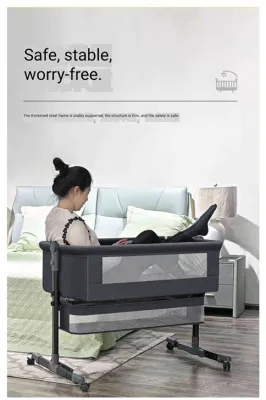
Before using a bedside sleeper attachment in a compact bedroom, you must verify that the bassinet is fully compatible with your specific adult bed frame and mattress. Bedside sleepers must attach securely to the adult bed using specialized straps or anchors provided by the manufacturer. You must measure your adult bed’s height and mattress thickness to ensure the bassinet can align perfectly according to the manual’s instructions, as an improper height alignment can create dangerous uneven surfaces.
It is critical to check that there are absolutely no gaps between the bedside sleeper mattress and your adult mattress. Any gap, even a small one, poses a severe risk of entrapment or suffocation for your baby. Ensure the attachment straps are pulled tight and locked securely, and inspect them daily to confirm they have not loosened. Additionally, make sure your tight room layout still allows you to easily access the attachment mechanisms and safely walk around the bed without disturbing the secure connection.

Community discussion
Share your experience or ask a question. Comments are reviewed before publication.