
Choosing a safe toys storage organizer for a nursery requires balancing physical stability, material safety, and hazard-free design. As infants grow into toddlers, they naturally transition from crawling to pulling themselves up, turning ordinary nursery furniture into active physical supports. To protect your child during this highly active developmental stage, a storage unit must offer more than just aesthetic appeal. Parents must look for robust physical construction, verified non-toxic materials, and a design that eliminates common hazards like finger pinching, choking, and entrapment.
While a storage unit might look secure on a retail showroom floor or in an online listing, its real-world safety depends on how it is built, anchored, and maintained. By understanding the critical engineering and chemical safety features to look for, you can select an organizer that keeps your baby’s play space both tidy and secure.
Preventing Tip-Overs and Physical Injuries
Physical stability is the single most crucial factor when selecting any furniture for a baby’s room. Because infants and toddlers frequently use shelves, ledges, and bin frames to support their weight when learning to stand, any freestanding unit poses a severe tip-over risk if it is not properly engineered and secured.
Products mentioned in this guide
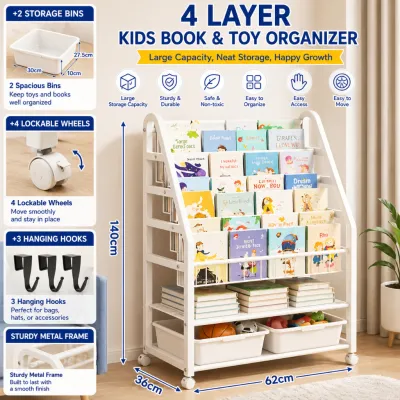
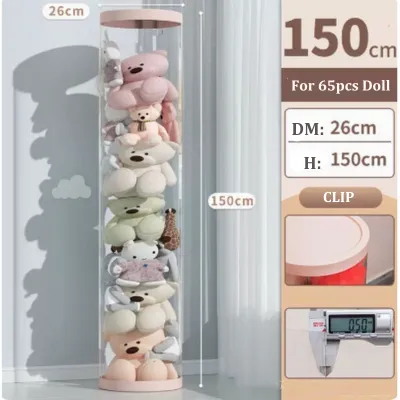
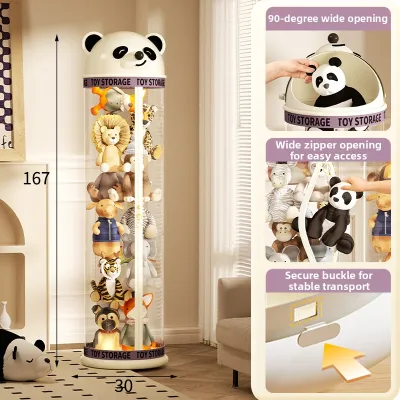
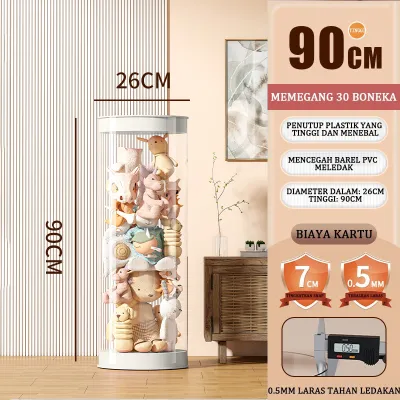
Prices are valid at publication and may change. Please refer to the product page for the latest price.
Anti-Tip Mechanisms Every tall, multi-tier, or top-heavy toys storage organizer must be anchored securely to the wall. When purchasing an organizer, verify that the manufacturer includes a dedicated wall-anchoring kit. In the Philippines, nursery walls are often constructed from concrete or hollow blocks rather than drywall. Securing an anchor into masonry requires specialized plastic wall plugs (tox screws) or expansion bolts, whereas drywall installations require locating wooden studs or using heavy-duty toggle bolts. Never rely on double-sided adhesive tape or small finishing nails, as these cannot withstand the sudden downward force of a climbing child.
Edge and Corner Design Active play inevitably leads to occasional stumbles and falls. To minimize the risk of lacerations or bruising, look for organizers with rounded, chamfered, or softened edges. Wooden frames should have smoothly sanded corners, while plastic units should feature molded, curved edges. If you find an otherwise perfect wooden organizer that has sharp 90-degree corners, plan to install high-density foam corner guards before placing the unit in the nursery.
Moving Parts and Hinges Traditional toy chests with heavy, free-falling lids present a major hazard for small hands. If a heavy lid is left open, a gust of wind or a gentle nudge can cause it to slam down, trapping or crushing a child’s fingers or head. If you prefer an enclosed chest, ensure it is equipped with safety lid supports or soft-close pneumatic hinges that hold the lid open at any angle and lower it slowly. Alternatively, opt for completely lidless open-bin designs, which eliminate pinch points entirely and make it easier for young children to reach their toys safely.
Verifying Non-Toxic Materials and Safe Finishes
Babies interact with their environment through touch and taste, often chewing on the edges of low-lying shelves and bins when teething. Consequently, the chemical composition of your nursery storage is just as important as its structural integrity.

Material Types Nursery organizers are typically constructed from solid wood, engineered wood, or plastic. Solid wood (such as sustainably sourced rubberwood, pine, or beech) is highly durable but often represents a higher price tier, generally ranging from ₱3,500 to over ₱8,000. Engineered woods, like medium-density fiberboard (MDF) or particleboard, are highly popular budget options but are often manufactured using adhesives that contain formaldehyde. In the warm, highly humid tropical climate of the Philippines, heat and moisture can accelerate the off-gassing of volatile organic compounds (VOCs) from cheap engineered woods. If you select MDF or particleboard, verify that the product meets low-emission standards, such as CARB Phase 2 or E1/E0 ratings. High-quality, BPA-free, and phthalate-free plastics are excellent alternative options for bins because they do not splinter, rust, or off-gas, and they can be easily washed with mild soap and water.
Finishes and Paints Always check the product specifications to ensure that all paints, varnishes, lacquers, and protective coatings are water-based, lead-free, and non-toxic. Lead poisoning remains a serious hazard in low-quality imported furniture finishes. If a product listing does not explicitly state that the finishes are lead-free and safe for children’s products, avoid purchasing it for a nursery environment.
Verification Steps Do not rely solely on marketing buzzwords like “eco-friendly,” “all-natural,” or “baby-safe,” as these terms are not legally regulated and can be highly misleading. Instead, look for independent, third-party safety certifications on the packaging or the manufacturer’s official website. Look for certifications such as Greenguard Gold (which limits chemical emissions), EN71 (the European standard for toy safety), or ASTM F963 (the standard consumer safety specification for toy safety). If these certifications are missing, contact the manufacturer directly to request their safety data sheets before making a purchase.
Avoiding Hidden Design Hazards Like Suffocation and Choking
Some safety hazards are not immediately obvious when looking at a fully assembled organizer. Parents must carefully inspect the physical dimensions and structural details of the unit to identify potential choking, suffocation, or entrapment risks.
Suffocation Risks Large, deep, enclosed toy chests can become dangerous entrapment hazards if a curious toddler decides to climb inside during a game of hide-and-seek. If a chest features a lid, it must have built-in ventilation slots or a generous gap between the lid and the front panel to ensure air can circulate freely even when the chest is fully closed. Additionally, the lid should be lightweight and easy to push open from the inside. For maximum safety, consider replacing deep chest designs with shallow, open-front plastic or fabric bins that slide out of a sturdy frame.
Choking Hazards Inspect the hardware of the organizer before and after assembly. Avoid units that feature small, easily detachable decorative parts, plastic screw-cap covers, or weak wooden knobs that can be twisted off by a determined child. If these small parts loosen and fall off, they immediately become severe choking hazards. Opt for organizers that feature integrated cut-out handles or flush-mounted pulls rather than protruding knobs or handles that can be pulled loose.
Entrapment and Spacing Check the spacing between vertical slats, shelves, and frame gaps. If a child can slide their body or head through a gap but cannot easily pull it back out, they risk head, neck, or limb entrapment. As a general safety rule, gaps should either be smaller than 6 centimeters (to prevent a child’s limbs or head from entering) or larger than 23 centimeters (to ensure they can easily withdraw their head if they do reach through). Ensure that the gaps between sliding plastic bins and the main frame do not create tight scissor-like pinch points when the bins are pushed back into place.
Inspecting and Maintaining Your Toy Storage Safely
Safety does not end once the organizer is assembled and placed in the nursery. Ongoing maintenance and proper usage are essential to ensure the unit remains secure as your child grows.
Assembly and Hardware When assembling the organizer, follow the manufacturer’s instruction manual precisely. Use every single screw, dowel, and bracket provided in the packaging. Never skip steps or use makeshift hardware replacements if a piece is missing. If you discover a missing or damaged component during assembly, contact the manufacturer’s customer service for an official replacement part rather than attempting a temporary DIY fix.
Routine Maintenance Checks Set a recurring reminder on your calendar to inspect the nursery furniture every few months. The high relative humidity in the Philippines can cause wooden frames to swell, warp, or contract, which can gradually loosen screws and joints. Check that the wall-anchoring straps remain tight and firmly attached to both the wall and the furniture. Run your hands along the shelves, corners, and bins to check for splinters, cracked plastic edges, or sharp metal burrs that may have developed from daily wear and tear. If you identify any structural damage, split wood, or cracked plastic bins that cannot be safely repaired, stop using the affected parts immediately.
Weight Distribution Always distribute the weight of the toys evenly across the organizer. Place heavy items—such as thick board books, wooden building blocks, and heavy activity sets—in the lowest bins or bottom shelves. Keep lightweight items, such as plush stuffed animals and soft fabric toys, on the upper tiers. This deliberate loading strategy lowers the overall center of gravity of the unit, making it much more stable and significantly reducing the risk of a tip-over if a child pulls on the upper frame. Always respect the manufacturer’s stated maximum load limits for each individual shelf and bin.
Frequently Asked Questions (FAQ)
Are fabric toy bins safe for a nursery?
Yes, fabric toy bins are generally very safe for a nursery because they are lightweight, soft, and completely free of sharp edges or heavy lids, eliminating the risk of impact or pinch injuries. However, they do not provide any structural support. If a child attempts to stand or climb on a fabric bin, it will collapse under their weight. Additionally, parents should periodically inspect fabric bins to ensure that internal cardboard stiffeners or metal wire support frames have not broken through the fabric, as exposed wires can create sharp points or choking hazards.
When can a child safely use a toy storage organizer independently?
Children can typically begin accessing low, open-front bins at floor level independently around 12 to 18 months of age, provided they are under active adult supervision. At this stage, they can easily reach and return toys without needing to climb or pull on the frame. However, any multi-tier or vertical toys storage organizer requires constant adult supervision until the child is older and understands how to use the unit safely. Regardless of the child’s age, coordination level, or independent play skills, physical wall anchoring remains mandatory for all vertical storage units to prevent accidental tip-over injuries.

Community discussion
Share your experience or ask a question. Comments are reviewed before publication.