
Selecting a baby changer for your newborn requires prioritizing structural stability, secure barriers, and non-toxic materials over aesthetics. A safe changing station acts as a secure platform for the thousands of diaper changes you will perform during your baby’s first year. In tropical climates like the Philippines, where high humidity can affect wood, adhesives, and fabrics, choosing a changer with a robust build and moisture-resistant surfaces is essential. By focusing on key safety features such as high guardrails, a wide non-tip base, and a firm contoured pad, you can create a secure environment that minimizes the risk of falls and structural failures.
Core Structural Safety Features to Inspect
Before purchasing any baby changer, a thorough physical inspection of its structural integrity is paramount. A wide, solid base is critical because it lowers the center of gravity, making the unit much less likely to tip over when a baby wiggles. Look for furniture constructed from solid wood or heavy-duty metal rather than thin, lightweight plastics or low-grade particle board that can warp under humid conditions. Inspect all joints, brackets, and screws to ensure they fit together tightly without any gaps, and verify that all hardware is made of durable, rust-resistant metal. Additionally, check that the protective barriers around the changing surface are integrated directly into the frame rather than loosely attached, as these barriers serve as the primary physical defense against accidental rolls.
Guardrails and Contoured Edges
Guardrails are among the most critical fall-prevention features on any elevated baby changer. When evaluating a changing table, look for protective barriers or guardrails on all four sides, or at least on the two longer sides and the back. These rails should stand at a safe height—ideally at least two inches above the compressed changing pad—to prevent an active infant from rolling over the edge. A flat surface offers very little lateral support, which is why a contoured changing pad is highly recommended. Contoured pads feature raised curved sides that naturally guide your newborn toward the center of the changing area, reducing lateral movement. However, a contoured pad is only safe if it remains firmly in place. Always check for secure attachment mechanisms, such as heavy-duty nylon straps with screws that anchor the pad directly to the back of the wooden table, or high-friction non-slip undersides that prevent the pad from sliding during a diaper change.
Products mentioned in this guide
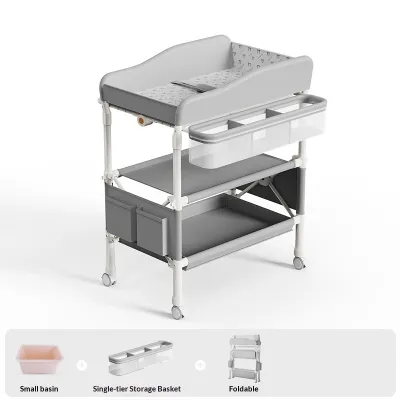
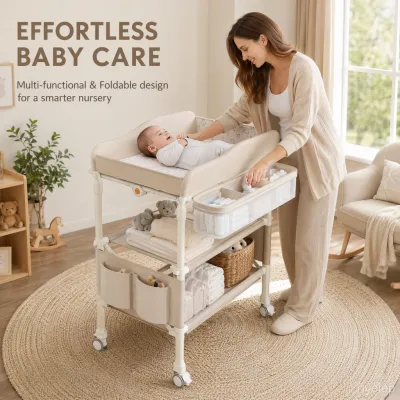
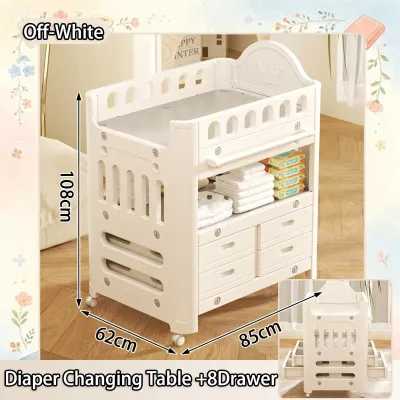
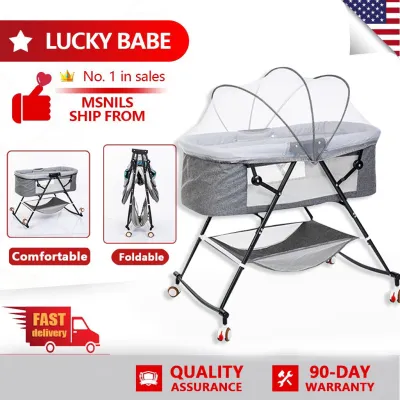
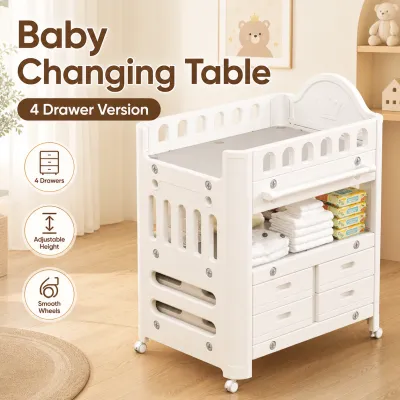
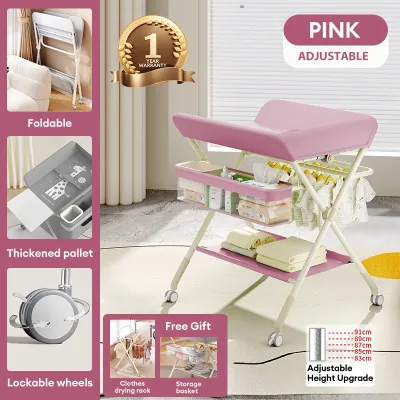
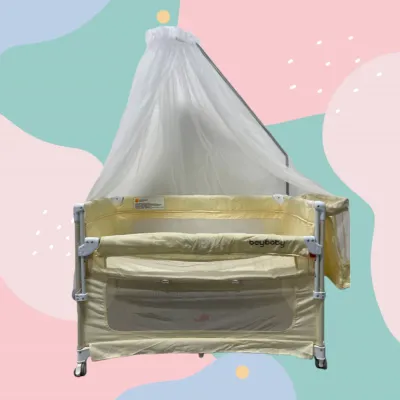
Prices are valid at publication and may change. Please refer to the product page for the latest price.
Base Stability and Anti-Tip Mechanisms
A changing table must remain completely stationary during use, meaning it should not wobble, slide, or sway when lateral force is applied. When shopping, examine the footprint of the changer; models with legs that flare slightly outward often provide superior stability compared to those with perfectly vertical, narrow legs. Because homes may have slightly uneven tile or wooden floors, testing the unit for wobble in the store or upon assembly is a vital safety step. If the baby changer features wheels or casters for mobility, verify that at least two of these wheels have reliable, heavy-duty locking mechanisms that engage fully and prevent any rolling. Furthermore, because toddlers may eventually try to climb the furniture, look for manufacturers that include anti-tip wall-anchoring kits. Anchoring the changer securely to the wall prevents catastrophic tipping accidents, offering peace of mind as your baby grows more active.
Surface, Padding, and Material Safety
The materials that come into direct contact with your newborn must be selected with both physical safety and hygiene in mind. While it is tempting to choose plush, soft fabrics for comfort, a baby changer requires a firm, supportive surface to protect the infant’s developing spine and eliminate suffocation hazards. In warm, humid environments, diaper changes frequently involve moisture, making waterproof and easy-to-clean covers indispensable. Materials that absorb liquids can quickly become breeding grounds for bacteria, mold, and mildew, which pose health risks to a newborn’s sensitive respiratory system and skin. Therefore, prioritize wipeable, non-porous surfaces that can be sanitized quickly with mild soap and water. Additionally, because babies often touch the surfaces around them and put their hands in their mouths, you must carefully verify the chemical safety of all paints, varnishes, and foam materials used in the changer’s construction.

Firm Padding and Non-Slip Surfaces
An overly soft or thick changing pad might look comfortable, but it poses significant safety risks for a newborn. If a pad is too soft, a baby’s face can sink into the material if they accidentally roll onto their side, creating a suffocation hazard. A firm pad ensures that the baby’s head and torso remain fully supported on top of the surface, which also makes it much easier for you to clean up messes. To prevent the pad from shifting while you are cleaning your baby, the underside of the pad should feature a high-grip, non-slip texture or integrated safety straps that wrap around the table frame. Seamless covers are highly preferable to those with deep stitched seams, as seams can trap moisture, fecal matter, and urine, making thorough disinfection difficult. Opt for heat-sealed or high-quality waterproof barriers that can be wiped dry instantly, keeping the changing environment sanitary and safe.
Non-Toxic Finishes and Material Labels
Newborns are highly vulnerable to airborne chemicals and toxins, making it essential to inspect the material labels of any baby changer before bringing it into your home. Look closely at the manufacturer’s product specifications to confirm that all paints, stains, and finishes are lead-free, non-toxic, and low in volatile organic compounds (VOCs). High-VOC finishes can off-gas harmful chemicals into your nursery’s air, which can irritate a baby’s developing lungs. When purchasing nursery furniture, look for recognized safety certifications on the packaging or product labels, which indicate that the item has been tested by an independent laboratory to meet strict safety standards. Avoid products that lack clear labeling regarding their material composition, and be cautious of cheap, unbranded furniture from online marketplaces that does not explicitly state compliance with international or local safety regulations.
Understanding Weight Limits and Age Restrictions
Every baby changer is engineered to support a specific maximum weight, and exceeding this limit can lead to structural failure or tipping. Before purchasing, locate the manufacturer’s stated weight and age limits, which are typically found on a warning label affixed to the frame or inside the user manual. While many changing tables are rated for babies up to 30 pounds (approximately 13.6 kilograms), your baby’s physical development is often a more critical indicator of safety than their weight alone. As newborns grow, they reach milestones such as rolling over, pushing up on their hands and knees, or sitting up independently. Once your baby begins to show signs of rolling or pushing up, the elevated barriers of a changing table lose their effectiveness, drastically increasing the risk of a fall. When these developmental milestones are reached, or when your baby approaches the manufacturer’s weight limit, it is time to transition to floor-level changing. Changing your baby on a clean mat on the floor completely eliminates the risk of falls, ensuring continued safety as your child becomes more active.
Daily Safety Checks and Supervision Best Practices
Even the most technologically advanced baby changer with every safety feature cannot replace active adult supervision. The absolute, non-negotiable rule of diaper changing is to keep at least one hand on your baby at all times, even if the changer is equipped with safety straps or high guardrails. Babies can move with surprising speed, and a sudden roll can happen in a fraction of a second. To maintain this continuous physical contact, you must organize your changing station so that all essential supplies—such as diapers, wipes, diaper rash creams, and change clothes—are within arm’s reach before you place your baby on the table. Never turn your back on your baby or walk away, even for a moment, to grab a forgotten item; if you must leave the room, take your baby with you. In addition to active supervision, establish a weekly routine to inspect the changer itself. Check that all screws remain tight, the joints are secure, the safety straps are undamaged, and the locking wheels are fully engaged, as regular use and humidity can gradually loosen hardware over time.
Frequently Asked Questions (FAQ)
Can I use a regular dresser as a baby changer?
Yes, you can repurpose a regular dresser as a baby changer, provided you implement specific safety modifications. First, the dresser must be structurally stable, level, and securely anchored to the wall using anti-tip hardware to prevent it from falling forward when drawers are opened. Second, you must use a contoured changing pad equipped with a non-slip base and secure attachment straps. These straps must be screwed directly into the back of the dresser to prevent the pad from sliding off the smooth wooden surface. Finally, ensure the dresser is at a comfortable height that allows you to maintain full control and keep one hand on your baby without straining.
Are wall-mounted baby changers safe for newborns?
Wall-mounted baby changers can be safe for newborns, but their safety depends entirely on proper installation and strict adherence to weight limits. Because these units fold down and project outward, they exert significant leverage on the wall. You must never rely on simple drywall anchors; instead, the mounting brackets must be screwed directly into solid wooden or metal wall studs using heavy-duty hardware specified by the manufacturer. Regularly inspect the mounting points to ensure the screws are not pulling away from the wall, and always verify the maximum weight capacity, keeping in mind that the limit includes both the baby and any diapering supplies placed on the unit.

Community discussion
Share your experience or ask a question. Comments are reviewed before publication.