
When your baby transitions from crawling to taking their first tentative steps, a wooden push walker can be an excellent developmental tool. Unlike traditional sit-in walkers, which are discouraged by pediatricians due to safety risks and developmental delays, push-behind walkers encourage natural gait, balance, and muscle strengthening. However, because wooden toys are heavier and more rigid than plastic alternatives, choosing the right model requires a keen eye for specific safety features. Parents must prioritize structural stability, non-toxic materials, speed-controlling mechanisms, and age-appropriate designs to ensure their child’s safety.
Many parents who work from home look for an office walker wooden model to keep their little ones safely entertained within arm’s reach of their desk. While these toys serve as excellent interactive stations, safety must always come first. Whether you are budgeting ₱2,000 or ₱5,000 for a high-quality wooden walker, understanding what makes a design safe will help you make an informed purchase that protects your child from common hazards like tipping, pinching, and chemical exposure.
Structural Stability and Fall Prevention
The physical geometry of a wooden baby walker is the first line of defense against falls. Because babies use the handlebar of the walker to pull themselves up from a sitting position, the toy must be heavy and stable enough to resist tipping backward. A walker with a wide, trapezoidal or rectangular wheelbase provides a much broader support base than a narrow, square design, significantly reducing the risk of sideways tipping when the child turns or leans.
Products mentioned in this guide
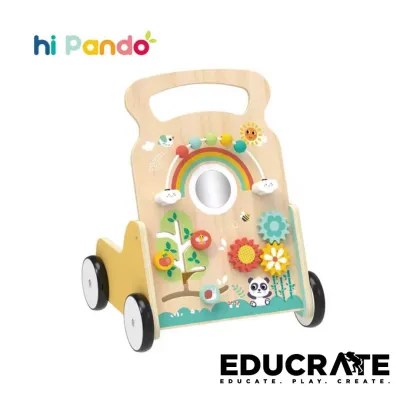
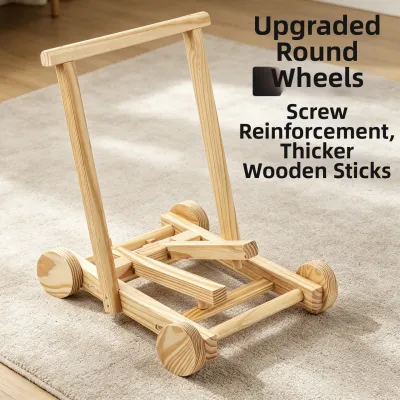
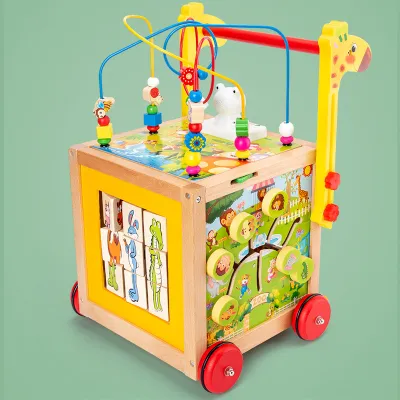
Prices are valid at publication and may change. Please refer to the product page for the latest price.
To evaluate the stability of a walker before buying, look for a design with a low center of gravity. The bulk of the walker’s weight should be concentrated near the bottom, close to the wheels, rather than near the handlebar. Some high-quality wooden walkers feature a heavy bottom shelf or a built-in toy chest that naturally keeps the weight low. This design ensures that even if a child leans their full weight on the handlebar, the front wheels remain firmly planted on the ground.
Parents can perform a simple physical check to test weight distribution. Place the walker on the floor, grab the handlebar, and pull upward and backward at a 45-degree angle. If the front wheels lift off the ground with minimal effort, the walker is prone to tipping and may not be safe for a baby who is still learning to stand. Additionally, check for built-in anti-tip mechanisms, such as extended rear wooden frames or physical stoppers near the back wheels, which act as brakes if the walker is tilted backward.
Material Safety and Non-Toxic Finishes
Wooden toys are celebrated for their durability and natural feel, but they require careful inspection to ensure they are safe for a baby’s sensitive skin and tendency to mouth objects. In the humid tropical climate of the Philippines, wood can expand, contract, or degrade if it is not properly treated and sealed. Parents should look for walkers made from solid hardwoods, such as beech, rubberwood, or birch, which are less likely to splinter or crack compared to cheap softwoods or low-grade composite materials.

Because babies often chew on the handlebar of their walker when teething, the finish must be completely non-toxic. Inspect the product packaging or online specifications for clear labels indicating the use of water-based, lead-free, and food-grade paints or varnishes. Avoid products that have a strong chemical odor out of the box, as this can indicate the off-gassing of volatile organic compounds (VOCs) or unsafe chemical treatments.
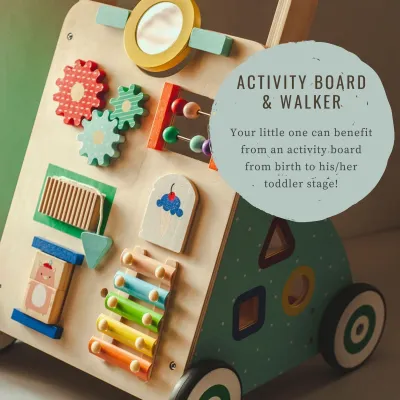
Before letting your baby use the walker, run your hands thoroughly over every surface, corner, and edge. The wood should be sanded perfectly smooth, with rounded corners to prevent bruising during accidental bumps. Examine the joints to ensure they are secured with recessed screws or wooden dowels. Avoid any walker with exposed nails, staples, or sharp metal brackets that could rust in humid conditions or scratch your baby’s skin. Finally, perform a “pinch and pull” test on any attached wooden toys, beads, or gears to ensure they are securely fastened and cannot break off to become choking hazards.
Moving Parts, Brakes, and Pinch Points
A wooden walker that rolls too quickly can easily get away from a baby who is still developing their balance, leading to forward falls. To prevent this, look for walkers equipped with adjustable wheel resistance or built-in braking systems. Many premium wooden walkers feature tension screws on the axles that allow parents to tighten or loosen the wheels. By tightening these screws, you can create friction that slows down the rolling speed, matching the walker’s movement to your baby’s current physical capabilities.
In addition to speed control, the design of the wheels themselves plays a major role in safety. Wheels with rubber or silicone traction strips are highly recommended, especially for homes with smooth tiled or polished hardwood floors. These rubber strips provide necessary grip, preventing the walker from sliding sideways or rolling out from under the baby on slick surfaces. They also protect your home’s flooring from scratches and reduce noise during play.
Mechanical safety also extends to the gaps and hinges of the walker. Carefully inspect any moving parts, such as folding frames, storage lids, or sliding activity panels. Ensure there are no narrow gaps or exposed hinges where tiny fingers could get pinched. Safe designs feature enclosed hinges or clearances wide enough to prevent a finger from being trapped if a lid slams shut or a joint flexes during use.
Age, Weight Limits, and Safe Usage Boundaries
Using a wooden baby walker safely requires matching the toy to your child’s specific developmental stage. Push walkers are not intended for infants who cannot sit up or stand independently. Introducing a walker too early can strain a baby’s developing spine and hips. A child is generally ready for a push walker when they can pull themselves up to a standing position using furniture and are beginning to “cruise” or take assisted steps.
Always consult the manufacturer’s guidelines printed on the packaging or instruction manual for the recommended age, height, and weight limits. Even the sturdiest wooden walker has a maximum weight capacity, and exceeding this limit can compromise the structural integrity of the frame, leading to sudden breakage or tipping. Keep in mind that these limits are safety thresholds, not suggestions.
Regardless of how safe a wooden walker’s design is, it can never replace active adult supervision. A parent or caregiver must always remain within arm’s reach of the child during use. Before play begins, prepare a safe environment by blocking off access to stairs, steps, raised door thresholds, and outdoor drop-offs. Ensure the floor is clear of loose rugs, electrical cords, and small toys that could catch the wheels and cause a sudden stop. Establish clear stop-use conditions: once your child can walk confidently without support, or if they begin trying to climb onto the walker’s tray or frame, the toy should be retired or transitioned into a stationary toy chest.
Frequently Asked Questions (FAQ)
Are wooden baby walkers safer than plastic ones?
Wooden baby walkers generally offer superior structural stability compared to lightweight plastic models. Because wood is naturally heavier, it provides a lower center of gravity and a sturdier base, making it much harder for a baby to tip over when pulling themselves up. Plastic walkers are often very light, which can cause them to slide away too quickly on smooth floors. From a chemical perspective, high-quality wooden walkers finished with water-based, non-toxic paints avoid the risks of BPA, phthalates, and other synthetic chemicals often found in low-grade plastics. However, parents must still verify that the wood is splinter-free and that the finishes are certified non-toxic.
How do I know if the wheels are safe for my floors?
To determine if a wooden walker’s wheels are safe for your floors, check the wheel material and tread design. Walkers with bare wooden wheels or hard plastic wheels can slip easily on smooth surfaces like ceramic tiles or polished hardwood, which increases the risk of falls and can scratch your flooring. Look for wheels that feature a thick rubber or silicone band around the outer edge. This rubber strip provides excellent traction, slows down the walker on slick indoor surfaces, and cushions the impact to protect your floors from scuffs and scratches.
When should I stop using the wooden baby walker?
You should stop using the wooden baby walker when your child reaches the manufacturer’s maximum weight or height limit, or when they exhibit certain behavioral and physical milestones. Specifically, once your baby can walk independently and confidently without holding onto the handlebar for balance, the walker is no longer serving its developmental purpose. Additionally, if your child begins using the walker as a step stool to climb onto furniture, or if they try to stand inside the toy tray, you should remove the walker immediately to prevent serious fall injuries.

Community discussion
Share your experience or ask a question. Comments are reviewed before publication.