
Choosing the right storage for your baby’s nursery requires balancing convenience, aesthetics, and, above all, safety. A wheeled doll storage unit offers excellent flexibility, allowing you to roll toys from the play corner to the crib side and keep the room tidy. However, because this furniture is mobile and will be placed in an environment where infants and toddlers sleep and play, you must evaluate its design features with extreme care.
In a tropical climate like the Philippines, where high humidity and seasonal dust can affect both wooden furniture and plush toys, your choice of storage also impacts hygiene. The ideal wheeled unit must not only move smoothly but also resist moisture buildup, remain completely stable when stationary, and pose zero physical hazards to a curious child.
To find a unit that serves your family safely from infancy through the toddler years, you need to look for robust wheel locks, certified non-toxic finishes, tip-resistant structures, and accessible heights. This guide outlines the essential specifications, physical checks, and practical considerations you should verify before adding any mobile storage unit to your nursery shortlist.
Products mentioned in this guide
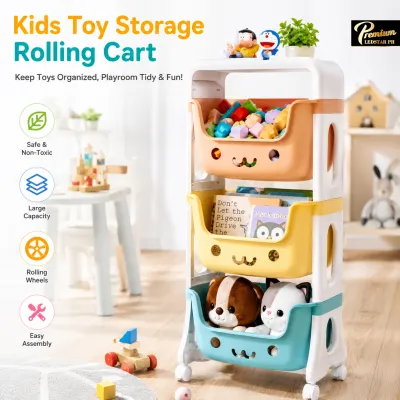
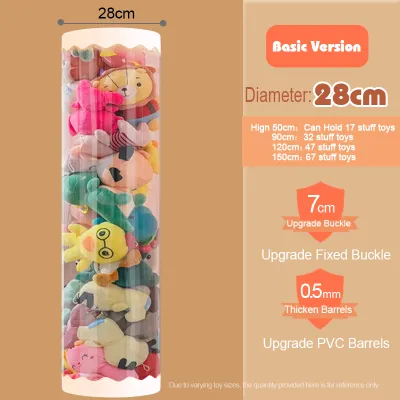
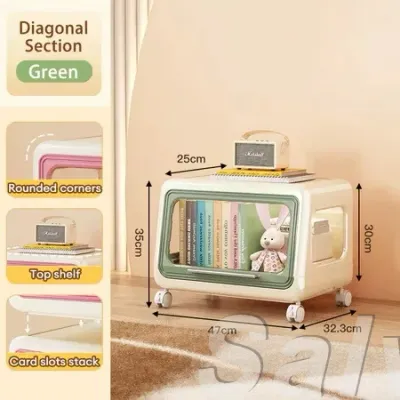
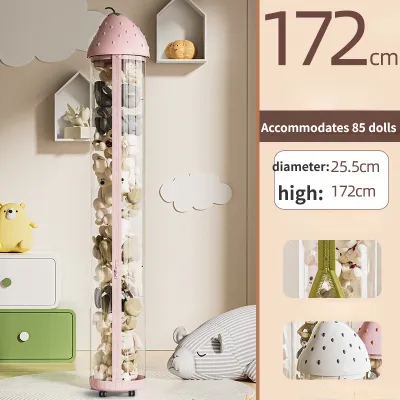
Prices are valid at publication and may change. Please refer to the product page for the latest price.
Safety and Stability Features to Verify
Before focusing on aesthetics or storage capacity, safety must be your absolute priority. Mobile furniture in a nursery introduces unique risks, particularly as babies transition from crawling to pulling themselves up on nearby objects.
First, inspect the wheel locking mechanisms. A reliable wheeled doll storage unit must feature high-quality brakes on at least two, and preferably all four, wheels. These locks must be robust enough to prevent the unit from sliding when a child bumps into it or attempts to use it for support. When reading product manuals or specifications, check if the manufacturer explicitly details the locking mechanism’s design and whether it requires manual engagement that a toddler cannot easily release.
Anti-tip design specifications are equally critical. Because wheeled units sit on casters, their center of gravity is naturally higher than standard floor-bound furniture. Look for units designed with a wide, low-slung base that keeps the weight concentrated near the bottom. Some manufacturers provide safety tethers or wall-anchoring hardware; however, because this is a mobile unit, you must verify how the unit behaves when free-standing. Avoid top-heavy designs or units with narrow bases that can easily tip over if a child pulls on the top edge.
Material safety is another non-negotiable factor. Babies frequently touch, lick, or chew on nursery furniture, especially when teething. You must verify non-toxic material claims by checking official product labels and manufacturer documentation. Look for certifications indicating low chemical emissions and lead-free finishes. Do not rely solely on vague marketing terms like “baby-safe” or “eco-friendly.” Instead, look for specific compliance standards listed in the product specifications.
Finally, conduct a thorough physical hazard check. Examine the unit’s construction for potential pinch points, especially around folding joints, hinges, or the wheel attachment areas. Ensure all edges and corners are rounded and smooth to prevent cuts or bruises during active play. Additionally, inspect the unit for small detachable parts, such as decorative caps, loose screws, or poorly secured wooden pegs, which could easily become choking hazards if they fall off.
Size, Capacity, and Space Efficiency
A wheeled storage unit should optimize your nursery layout, not clutter it. Before purchasing, you must carefully measure your available space and match the unit’s dimensions to your daily routine.

Start by measuring the physical footprint of the area where you plan to park the unit. Keep in mind that because this unit is mobile, you need to ensure adequate clearance along its entire travel path. Measure the width of your nursery doorway, the space between the crib and the changing table, and any narrow hallways the unit might pass through. A unit that is too wide will become a frustrating obstacle rather than a convenient storage solution.
Next, evaluate whether a vertical or horizontal storage configuration best suits your nursery layout. Horizontal units are generally more stable and keep toys at a toddler’s eye level, making them excellent for encouraging independent play. However, they occupy more floor space. Vertical units save valuable floor area but require extra vigilance regarding stability and weight distribution. If you choose a vertical design, ensure the heaviest items are always stored in the bottom compartments to maintain a low center of gravity.
You must also check the manufacturer’s stated weight limits and load distribution guidelines. Overloading a wheeled unit can strain the casters, making it difficult to steer and increasing the risk of structural failure. Consider the types of dolls and toys you plan to store. While plush dolls are lightweight, wooden dollhouses, heavy plastic accessories, and books can quickly exceed the unit’s weight capacity. Always distribute the weight evenly across all compartments, placing the heaviest items at the bottom.
Mobility and Wheel Design for Nursery Floors
The performance of a wheeled storage unit depends heavily on the design and quality of its wheels. The right wheels ensure smooth, quiet movement while protecting your nursery floors from damage.
When comparing wheel types, you will generally choose between swivel casters and fixed wheels. Swivel casters rotate 360 degrees, offering maximum maneuverability in tight spaces and allowing you to easily guide the unit around corners. Fixed wheels only move forward and backward, which limits maneuverability but provides greater tracking stability. For most nurseries, a combination of two swivel casters and two fixed wheels, or four high-quality locking swivel casters, offers the best balance of movement and control.
Wheel material is another crucial specification to verify. Hard plastic or metal wheels can easily scratch, scuff, or dent hardwood and tiled floors, which are common in many homes. For nursery environments, look for wheels made of soft, non-marking materials such as polyurethane, rubber, or thermoplastic elastomer. These materials glide quietly across hard surfaces and provide better traction on smooth tiles, reducing the risk of sudden slips. If your nursery has a play mat or a low-pile rug, ensure the wheel diameter is large enough to roll over the edges without getting stuck.
Additionally, verify the design and accessibility of the brake pedals. The brakes should be positioned so that an adult can easily engage and disengage them with a foot press, without needing to bend down or strain. However, the pedal mechanism should be stiff enough or positioned in a way that prevents a curious toddler from easily unlocking it. Check the manufacturer’s instructions to see if the brakes lock both the wheel rotation and the swivel motion, as dual-locking brakes provide the highest level of stability.
Accessibility and Organization for Toddlers
As your baby grows into a toddler, their nursery storage should transition from a parent-only utility to an interactive tool that promotes independence and organizational skills.
Evaluate the choice between open bins and closed drawers. Open bins are highly recommended for toddlers because they allow for immediate visual recognition. A child can easily see their favorite dolls, which encourages self-directed play and makes clean-up time much simpler. Closed drawers, while excellent for keeping dust off toys, can be difficult for small hands to open safely and can lead to pinched fingers if they lack soft-close mechanisms or safety stops.
The height of the compartments and handles is another vital factor. To ensure safe access, the top shelf or handle of the storage unit should be within your toddler’s safe reaching zone. If a child has to stretch, stand on tiptoes, or climb the unit to reach a doll, the risk of a tipping accident increases dramatically. Refer to standard toddler height charts and compare them with the unit’s dimensions to ensure your child can easily reach every storage section while keeping both feet flat on the floor.
Finally, assess the flexibility of the internal storage compartments. A growing child’s toy collection changes rapidly. Look for units that feature adjustable dividers, removable fabric baskets, or modular bins. This adaptability allows you to reconfigure the storage space as your child transitions from large plush dolls to smaller action figures or doll accessories, ensuring the unit remains useful for years to come.
Durability and Easy Maintenance
Nursery furniture must be built to withstand the rigors of daily toddler life, including spills, sticky fingers, and occasional rough handling.
In the Philippines, the tropical climate brings high humidity, which can accelerate the wear of certain materials. When checking surface material specifications, prioritize materials that are highly wipeable and resistant to moisture and stains. Sealed solid wood, high-quality MDF with non-toxic laminate, and durable, BPA-free plastics are excellent choices. Avoid unfinished wood or porous materials that can absorb moisture, as these can easily warp, harbor mold, or trap dust mites in humid conditions.
Evaluate the joint construction and hardware quality indicators. Look for units assembled with sturdy metal-to-metal connections, dowels, or reinforced joints rather than simple wood screws or glue. High-quality hardware ensures the unit remains structurally sound even after repeated rolling and heavy use. If the unit requires self-assembly, carefully review the provided hardware list to ensure all components are robust and that clear assembly instructions are provided.
To maintain safety and performance, plan for routine inspection steps. Over time, the vibrations from rolling can loosen screws and wheel axles. Make a habit of checking the unit every few weeks. Tighten any loose hardware, inspect the wheels for hair or fiber buildup that could jam the axles, and check the overall frame for any signs of cracking or wobbling. If you notice any structural damage or malfunctioning brakes, stop using the unit immediately until it can be repaired or replaced.
How to Build Your Shortlist of Doll Storage with Wheels
Finding the perfect wheeled doll storage unit involves filtering through numerous online options to find a product that meets all your safety and functional criteria.
When searching e-commerce platforms or online marketplaces, use specific feature keywords and dimension filters to narrow down your options. Instead of searching for broad terms, use precise phrases like “wooden toy storage with locking wheels” or “low-profile doll cart with rubber casters.” Input your maximum width and height requirements into the search filters to immediately eliminate units that are too large for your nursery layout.
Once you have a list of potential products, cross-reference the product descriptions with user reviews. Pay close attention to what other parents say about wheel durability, stability, and actual dimensions. Look for feedback regarding how easily the unit rolls on different flooring types and whether the brakes hold securely over time. If multiple reviews mention that the unit wobbles, has a strong chemical odor, or is difficult to assemble, consider removing it from your list.
Before proceeding to checkout, create a final pre-purchase checklist to verify all critical details. Ensure the product listing or manual explicitly states the weight limits, safety certifications, and material composition. Double-check the seller’s return policy and warranty terms, especially regarding damaged parts or missing hardware. Taking these extra verification steps ensures you invest in a safe, durable, and highly functional piece of furniture for your baby’s nursery.
Frequently Asked Questions (FAQ)
Are wheeled storage units safe for toddlers to pull up on?
No, wheeled storage units are not safe for toddlers to use as support when pulling themselves up or learning to stand. Even when the wheel brakes are fully engaged, mobile furniture does not have the same stability as anchored, stationary wall units. A toddler pulling on the edge of a wheeled cart can easily cause the unit to slide, roll, or tip over, leading to serious injury.
To prevent accidents, always keep wheeled storage units locked and positioned away from the crib, playpen, or active play areas where an unsupervised child might attempt to climb them. If your child is in the pulling-up stage, consider temporarily removing the wheels to keep the unit flat on the floor, or store it in a closet or restricted area until your child can stand and walk independently.
How do I prevent the wheels from scratching hardwood or tiled floors?
To protect your floors from scratches and scuffs, always verify the wheel material before purchasing. Opt for soft-tread wheels made of polyurethane, rubber, or thermoplastic elastomer rather than hard nylon or cheap plastic. Additionally, regularly inspect the wheel axles and treads for embedded debris, such as small pebbles, grit, or hair, which can act like sandpaper against your floors when the unit is rolled.
If your nursery flooring is particularly sensitive, you can place a low-profile, non-slip protective play mat or a durable rug along the unit’s primary rolling path. Always follow the manufacturer’s care instructions, and avoid dragging the unit sideways if the swivel casters are locked or jammed.

Community discussion
Share your experience or ask a question. Comments are reviewed before publication.