
Choosing the right XXXL diaper for your growing toddler is a highly individualized decision that depends on your child’s unique build, skin sensitivity, and daily activity levels. While EQ, Pampers, and Huggies are household names that offer extra-extra-extra-large (XXXL) options, there is no single brand that works perfectly for every toddler. Instead, the best choice depends on how each brand’s specific cut, core technology, and material composition align with your toddler’s physical development and your family’s budget. By evaluating these key factors, you can find a diaper that keeps your toddler dry, comfortable, and free to move throughout the day and night.
Decoding XXXL Sizing and Fit Across Brands
When transitioning to the largest standard diaper sizes, relying solely on the size label can lead to unexpected leaks or discomfort. Always verify the recommended weight range and usage instructions on the specific product packaging, as these guidelines are designed to ensure safety and proper fit. Sizing thresholds for XXXL diapers vary significantly by brand and are not universally standardized across the industry. One brand’s XXXL might target toddlers starting at 18 kilograms, while another might be designed for children weighing 22 kilograms or more, making it essential to check the manufacturer’s documentation before purchasing.
Active toddlers require a secure fit around the waist and thighs to prevent leaks during play, which makes leg cuff and waistband elasticity critical evaluation points. Observe how the elastic bands stretch and recover when you put the diaper on your toddler. If your child has thicker thighs, a tight or rigid elastic band can leave painful red marks, indicating that you may need a brand with a more generous stretch or a wider leg opening. Conversely, a waistband that is too loose can sag under the weight of a wet diaper, leading to gaps and subsequent leaks.
Products mentioned in this guide
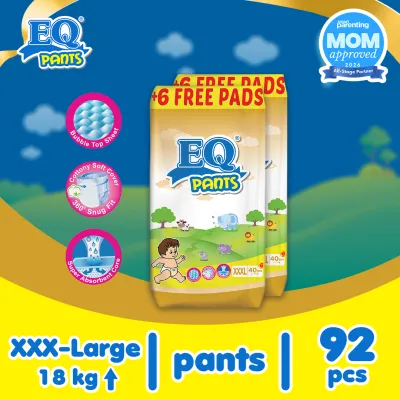
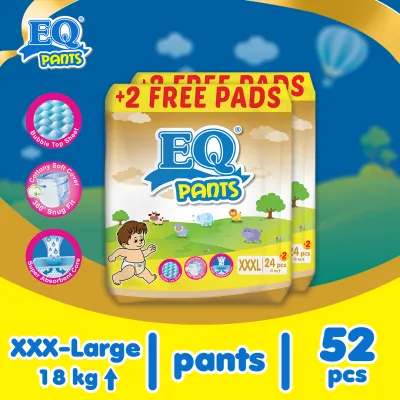
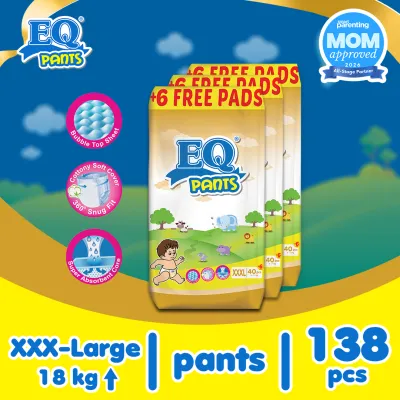
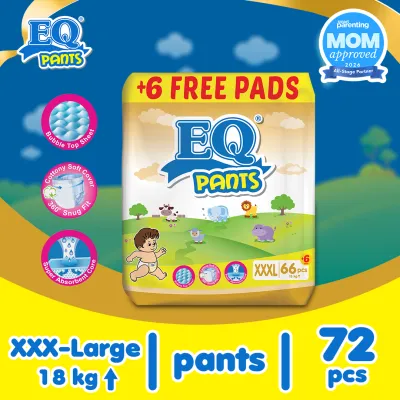
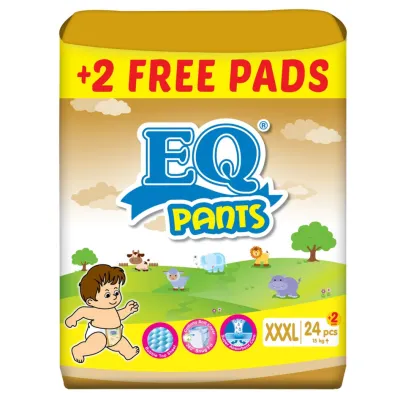
![EQ Pants Big Pack XXXL (15kg up) - 24 pcs x 8 packs (192 pcs) - Diaper Pants [Case]](https://img.lazcdn.com/g/p/22f4e17753cb93d89d5dea63f92c0c8f.png_400x400q80.png_.webp)
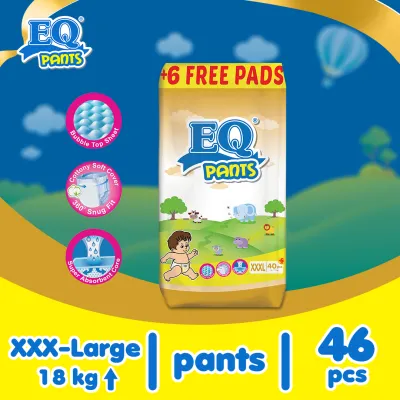
![EQ Pants Jumbo Pack XXXL (15kg up) - 40 pcs x 6 packs (240 pcs) - Diaper Pants [Case]](https://img.lazcdn.com/g/p/ec26b8ba82cb92d8c04b5a4de578bc63.png_400x400q80.png_.webp)
Prices are valid at publication and may change. Please refer to the product page for the latest price.
The structural cut of the diaper also plays a major role in how well it fits your toddler’s specific body shape and mobility level. Diapers generally feature either a narrower crotch design that facilitates easy walking and running, or a wider, more traditional cut that offers maximum coverage. A toddler who is constantly on the move might benefit from a slimmer, contoured design that reduces bulk between the legs, whereas a child with a sturdier build might require the extra coverage of a wider cut to prevent side gaps. Matching the diaper’s physical shape to your toddler’s natural build is key to ensuring both comfort and leak protection.
Matching Absorbency to Day and Night Needs
Modern disposable diapers utilize various core designs, such as superabsorbent polymer (SAP) channels, multi-layer distribution sheets, and moisture-wicking top sheets, to manage liquid effectively. When browsing options, look for packaging claims that highlight rapid absorption and dryness indicators. These features help draw liquid away from your toddler’s skin quickly, reducing the risk of irritation during long wear times. Caregivers should independently verify any absorbency or safety certifications listed on the packaging, as these standards can change over time.

Daytime diapers prioritize flexibility and a thin profile so your toddler can move without restriction. In contrast, overnight diapers require a higher capacity to handle multiple wettings over ten to twelve hours of sleep. If you notice that a thin daytime diaper regularly leaks before morning, you may need to reserve a thicker, high-capacity option specifically for bedtime, even if it feels slightly bulkier. Balancing the trade-off between ultra-thin, flexible daytime designs and thicker, high-capacity options is essential for maintaining uninterrupted overnight sleep.
Regardless of the manufacturer’s claims, the true test of absorbency is how the diaper behaves when wet. Monitor the diaper for excessive sagging, which can pull the waistband down and cause leaks. Additionally, check for the presence of gel beads on your toddler’s skin after heavy wetting, as this can indicate that the outer lining has ruptured or that the core’s capacity has been exceeded. If you consistently observe surface dampness or gel leakage, it may be time to evaluate a different brand or transition to a diaper with a more robust core design.
Evaluating Comfort and Skin Sensitivity
Toddler skin is delicate, and prolonged exposure to moisture and friction can easily lead to diaper rash. When selecting a brand, verify the packaging for hypoallergenic labels, fragrance-free formulations, and chlorine-free bleaching processes. These designations suggest a lower likelihood of chemical irritation, though they do not guarantee absolute safety for every individual child. Caregivers should carefully inspect the ingredient list and product warnings on the packaging to ensure compatibility with their toddler’s skin.
In warm, humid environments like the Philippines, heat and moisture can quickly build up inside a diaper, creating a breeding ground for bacteria and yeast. Look for diapers featuring micro-porous back sheets and breathable outer covers that allow air to circulate. A highly breathable diaper helps keep the skin cool and dry, which is essential for preventing heat rashes during active outdoor play. Checking the texture of both the inner lining and the outer cover can help you assess whether the material feels soft enough to prevent friction-induced chafing.
Regularly inspect your toddler’s skin during diaper changes for any signs of redness, chafing, or localized irritation. Pay close attention to the areas where the elastic bands contact the waist and thighs, as friction in these spots can cause micro-tears in the skin. If persistent redness or a rash develops, stop using the current brand immediately and consult a qualified pediatrician or healthcare professional for guidance. Never attempt to self-diagnose severe skin conditions or rely solely on diaper changes to resolve persistent dermatological issues.
Calculating True Cost and Purchasing Value
Comparing overall pack prices can be misleading because diaper counts vary significantly between brands and packaging sizes. To find the true value, divide the total price of the pack in ₱ by the number of diapers inside to calculate the cost per piece. This simple calculation allows you to make an accurate, head-to-head financial comparison between budget-friendly options and premium brands, ensuring you get the most value for your household budget.
While purchasing large economy boxes or multi-packs usually offers a lower cost per piece, it carries certain risks for toddlers in the XXXL size range. Toddlers at this stage can grow rapidly or suddenly transition to potty training, leaving you with a large surplus of unused diapers. It is often wiser to buy medium-sized packs until your toddler’s growth rate and potty-training schedule stabilize, preventing unnecessary financial waste.
Consider where and how you purchase your diapers to maximize convenience and savings. Local physical supermarkets offer the convenience of immediate availability, which is crucial when you run out unexpectedly. On the other hand, online marketplaces and official brand stores frequently offer bundle deals, subscription discounts, and home delivery, which can save both money and effort if you plan your purchases in advance. Be sure to factor in shipping costs and delivery times when comparing online prices to local retail options.
Making the Final Decision for Your Toddler
Choosing the right XXXL diaper involves matching your toddler’s physical profile and your household’s priorities to the specific strengths of each brand. If your primary goal is finding a highly economical option for everyday, frequent daytime changes, EQ is a strong candidate. Its straightforward design and reliable standard absorbency make it a practical choice for budget-conscious households that prefer to change diapers frequently to maintain freshness.
If your toddler is exceptionally active, constantly running, climbing, and exploring, Pampers offers a slim, highly flexible fit that minimizes bulk. This design moves seamlessly with your child’s body, reducing the likelihood of sagging and keeping the diaper securely in place during high-energy play. It is particularly suitable for daytime wear when maximum mobility is required.
For toddlers with a sturdier build or thicker thighs, Huggies provides a snug, secure waistband and robust leg cuff design. This structure is particularly effective at hugging your child’s natural curves, offering excellent containment and preventing side leaks when your toddler is sitting, crawling, or sleeping. It is an excellent option for parents who prioritize a secure, leak-proof seal around the legs.
Before committing to a large bulk purchase of any new brand, always buy a small trial pack first. This allows you to observe how the specific cut fits your toddler’s body and how their skin reacts to the materials over a few days under direct caregiver supervision. Testing a small quantity first ensures you do not waste money on a product that causes discomfort or leaks, allowing you to make a confident, evidence-based decision for your toddler’s comfort.
Frequently Asked Questions (FAQ)
When should I transition my toddler to XXXL diapers?
You should consider sizing up to XXXL when you notice consistent leaks in your current XXL diapers, even if your toddler’s weight is still within the recommended range. Other clear physical indicators include deep, red elastic marks on your toddler’s thighs or waist, or the waistband sitting too far below the belly button. If the diaper feels difficult to fasten or does not fully cover your toddler’s backside, it is time to transition to the next size. Always consult the manufacturer’s weight guidelines on the packaging as a starting point for your decision.
What should I do if the XXXL diaper still leaks?
If your toddler is experiencing leaks in an XXXL diaper, first check that the leg cuffs are fully pulled out and not tucked inward, as folded cuffs are a primary cause of side leaks. Next, evaluate whether the leaks occur primarily at night, which may indicate that your toddler’s output is simply exceeding the diaper’s absorbency capacity. In such cases, you can try limiting fluids right before bedtime, switching to a dedicated overnight diaper, or consulting a pediatrician if you suspect an underlying issue. If the diaper is saturated quickly, increasing the frequency of changes or trying a brand with a different core design may resolve the issue.

Community discussion
Share your experience or ask a question. Comments are reviewed before publication.