
Selecting the right XXL pants diaper for an active toddler in the Philippines involves balancing absorption capacity, structural fit, and skin breathability. Because every child has a unique body shape, skin sensitivity level, and urination pattern, there is no single diaper brand that performs perfectly for every household. Instead of relying on generic marketing claims or crowd-sourced rankings, parents must evaluate the physical design elements of major options like EQ, Pampers, and Huggies in their XXL pants configurations. This guide establishes a practical, hands-on framework to help you assess these brands based on observable features, ensuring your toddler stays dry and comfortable throughout the day and night.
Understanding XXL Diaper Sizing and Weight Guidelines
Before comparing the specific performance of EQ, Pampers, and Huggies XXL pants, you must verify whether your toddler is in the correct size category. Diaper packaging typically displays a recommended weight range, which for XXL sizes generally accommodates toddlers weighing anywhere from 15 to 25 kilograms, depending on the brand. However, these weight ranges are broad guidelines rather than absolute rules, and significant overlaps exist between XL and XXL sizes across different manufacturers.
Relying solely on the weight printed on the pack can lead to fit issues if your toddler has a particularly unique build. For instance, a child with a rounder tummy or thicker thighs may need to transition to XXL pants earlier than a leaner child of the same weight. To determine if it is time to size up, look for physical indicators during daily wear. Persistent red marks or deep elastic indentations around your toddler’s thighs and waist are clear signs that the current diaper is too tight and restricting circulation or causing friction.
Products mentioned in this guide
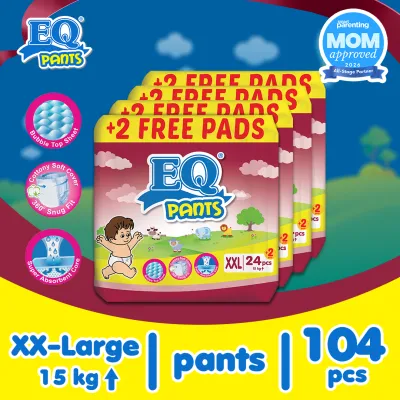
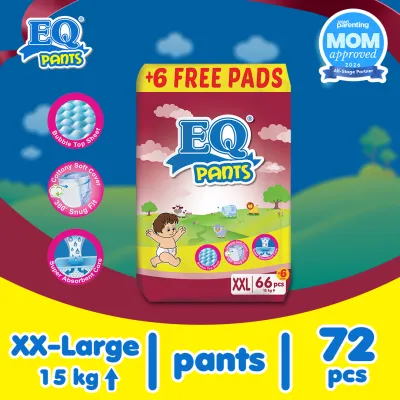
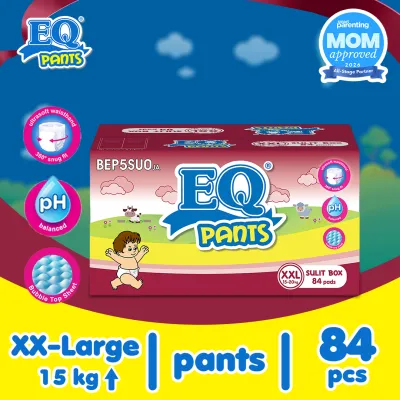
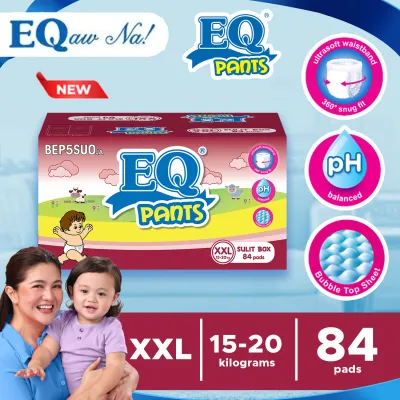
Prices are valid at publication and may change. Please refer to the product page for the latest price.
Frequent leaks, especially around the waistband or leg cuffs during active play, also suggest that the diaper’s volume capacity or physical coverage is no longer sufficient. If the waistband consistently rides down below the hips or if the rise of the diaper is too low to cover the backside fully, the diaper is too small. Sizing up to an XXL pants diaper provides the necessary rise, wider elastic bands, and a larger absorbent core to handle the increased urine volume of older toddlers.
Comparing Absorption Features and Leak Protection
Absorption is the core function of any disposable diaper, and evaluating this feature requires looking closely at the internal construction and materials of the diaper pants. Most modern XXL pants utilize a blend of cellulose wood pulp and Superabsorbent Polymer (SAP) particles to lock away moisture. When comparing EQ, Pampers, and Huggies, examine the packaging or product specifications for details on how this absorbent core is distributed. Some designs feature a centralized channel system that distributes liquid evenly to prevent sagging, while others concentrate the absorbent material in the center or front, which can be highly beneficial depending on your toddler’s sleeping position or gender.

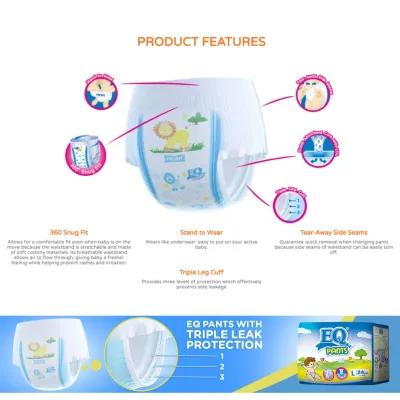
Beyond the core itself, the physical structure of the leg cuffs plays a critical role in preventing leaks. Inspect the standing leak guards, which are the inner elasticized barriers running along the leg openings. A high-quality XXL pants diaper should feature double-layered, flexible leak guards that stand upright when the diaper is opened. These guards act as a physical dam to contain sudden, heavy flows before the liquid has time to absorb into the core, making them essential for active toddlers who run, climb, and jump.
Wetness indicators are another valuable feature to look for when evaluating different brands. These color-changing lines on the outer shell of the diaper allow you to monitor saturation levels at a glance without needing to pull the waistband open or disturb a sleeping toddler. While a wetness indicator is highly convenient, you should also assess how dry the inner sheet feels to the touch after several hours of use. A dry topsheet indicates that the diaper successfully draws moisture away from the skin, which is vital for preventing diaper dermatitis in warm, humid environments.
Evaluating Fit, Elasticity, and Comfort
In the tropical climate of the Philippines, high humidity and heat make the fit and breathability of an XXL pants diaper just as important as its absorption capacity. A diaper that fits poorly or traps heat can quickly lead to chafing, sweat rashes, and general discomfort. When evaluating the waistband of EQ, Pampers, and Huggies XXL pants, look for a 360-degree elastic stretch that conforms gently to your toddler’s waist. The elastic should be soft and highly pliable, allowing the waistband to expand and contract as your toddler breathes, eats, and moves, without digging into the skin.
The leg openings require a similar balance of security and gentleness. The outer leg cuffs should flare outward slightly to prevent the elastic from rubbing directly against the delicate skin of the inner thighs. If your toddler has chunky thighs, look for brands that utilize multi-strand elastic fibers in the leg cuffs, as these distribute the holding pressure more evenly and reduce the likelihood of leaving red marks.
Breathability is heavily influenced by the materials used in the outer backsheet of the diaper. Many brands advertise micro-pore or breathable outer covers designed to let air circulate while keeping moisture locked inside. To assess this claim, feel the outer texture of the diaper; a soft, cloth-like backsheet is generally more breathable and less prone to trapping heat than a stiff, plastic-feeling material. Additionally, always ensure that the front and back panels are properly aligned when pulling the pants up, as misalignment can distort the elastic tension and cause the absorbent core to shift out of place.
Condition-Based Decision Framework: Which Brand to Try First?
To help you decide which brand of XXL pants diaper to trial first, it is helpful to match your toddler’s specific physical traits and daily routines to the structural characteristics of each diaper. Because individual product lines undergo frequent updates, always verify the latest weight limits, material disclosures, and dermatological testing labels on the physical packaging before making a bulk purchase.
Consider starting with a brand that emphasizes a highly flexible, wide waistband design if your toddler has a prominent, rounded tummy and is extremely active during the day. A wide waistband distributes pressure across a larger surface area, preventing the diaper from rolling down or digging into the abdomen when the child sits or bends over. This style of diaper is particularly well-suited for daytime wear when maximum mobility and a secure, non-slip fit are the primary priorities.
If your toddler has exceptionally chunky thighs and frequently experiences leaks around the legs, prioritize a brand known for its highly elastic, double-layered leg cuffs. Look for a design where the standing leak guards are tall and soft, providing a gentle yet secure seal that conforms to the contours of the thighs without causing friction. This configuration helps prevent gaps from forming when your toddler runs or climbs, ensuring that liquid is contained long enough for the core to absorb it.
For overnight use or long periods between changes, focus on a brand that features a thicker, high-capacity absorbent core with a dedicated liquid-distribution layer. A diaper designed specifically for heavy wetting will prioritize maximum SAP density and a dry-touch topsheet to keep moisture away from the skin for up to twelve hours. While these diapers may feel slightly bulkier than their daytime counterparts, the added absorption capacity is crucial for preventing sleep disruptions and morning leaks.
How to Test and Monitor Diaper Performance at Home
Once you have selected an XXL pants diaper brand to test, conduct a systematic home trial to evaluate its real-world performance. Use the chosen brand consistently for at least three to five days rather than judging it based on a single diaper change. This multi-day trial accounts for natural variations in your toddler’s daily fluid intake, activity levels, and stool consistency, giving you a more accurate picture of how the diaper performs under different conditions.
Each time you remove a diaper, perform a quick “finger check” by sliding two fingers under the waistband and leg cuffs. The diaper should feel snug but not tight; if you find deep, persistent red indentations that do not fade within fifteen minutes of removal, the elastic tension is too high or the size is too small. Conversely, if you can easily pull the diaper away from the skin with no resistance, the fit is too loose, which will inevitably lead to leaks.
Pay close attention to where any leaks occur to diagnose the underlying issue. Leaks originating from the waistband typically point to insufficient absorption speed, a saturated core, or a diaper that sits too low on the hips. Leaks from the leg openings, on the other hand, usually indicate a poor fit, incorrect positioning of the leak guards, or leg cuffs that are too loose for your toddler’s thigh shape.
Regardless of any breathability or hypoallergenic claims printed on the packaging, your toddler’s skin is the ultimate indicator of compatibility. If you notice persistent redness, diaper rash, or signs of skin irritation that do not resolve with standard barrier creams, stop using the product immediately. Consult a pediatrician to address the skin irritation and to discuss alternative materials or brands that may be better suited for your child’s sensitive skin.
Frequently Asked Questions (FAQ)
How do I know if my toddler needs to switch from pants to tape diapers in XXL?
While pants diapers offer excellent convenience for active toddlers who resist lying down during changes, tape diapers provide a highly customizable fit. If your toddler has unique body proportions, such as a very narrow waist combined with exceptionally chunky thighs, tape diapers allow you to adjust the fastening tabs asymmetrically to achieve a perfect seal. You may also want to consider tape diapers if your toddler has outgrown the maximum stretch of XXL pants, or if you frequently need to change the diaper in public restrooms where pulling pants over shoes and trousers is impractical.
Can I mix different diaper brands for daytime and nighttime use?
Mixing different diaper brands or styles throughout a 24-hour cycle is a highly practical and cost-effective strategy used by many parents in the Philippines. You can utilize a thinner, highly flexible, and budget-friendly XXL pants diaper during the day when changes are frequent and mobility is the priority. For nighttime, you can switch to a high-capacity, premium brand that focuses on maximum absorption and moisture-wicking to ensure your toddler enjoys uninterrupted sleep. Keeping a simple log of which brand is used and noting any leaks or skin reactions will help you optimize this hybrid approach over time.

Community discussion
Share your experience or ask a question. Comments are reviewed before publication.