
Choosing the right XL pants diaper for an active toddler requires balancing absorbency, physical fit, and daily costs. While EQ, Pampers, and Huggies are popular choices, the ideal brand depends entirely on your toddler’s unique body shape, skin sensitivity, and your household budget. This guide provides a practical framework to compare these three brands across key performance dimensions, helping you evaluate their real-world fit and value without relying on generic marketing claims.
Understanding the Contenders: EQ, Pampers, and Huggies XL Pants
In the Philippines, the tropical climate and high humidity add an extra layer of complexity to choosing the right diaper. Active toddlers sweat as they explore, making breathability and a secure fit essential to prevent discomfort and skin irritation. EQ, Pampers, and Huggies are household names, each offering distinct design philosophies to address these challenges. EQ is widely recognized for providing practical, budget-friendly options for everyday use. Pampers often focuses on lightweight, thin materials designed for a minimalist feel, while Huggies is known for its robust construction and secure elastic barriers.
When shopping for XL pants diapers, the packaging serves as your first source of information. Manufacturers typically design XL sizes for toddlers within a specific weight range, often starting around twelve kilograms and extending up to seventeen kilograms. However, these numbers are general guidelines rather than absolute rules. You should also look for packaging indicators regarding stretchability, material softness, and breathability channels.
Products mentioned in this guide
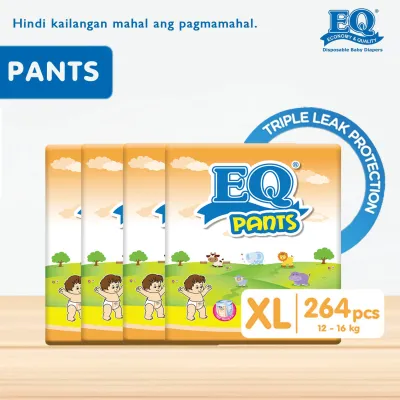
![EQ Pants XL (12-16 kg) - 26 pcs x 8 packs (208 pcs) - Diaper Pants [Case]](https://img.lazcdn.com/g/p/0ab3ab6dd43dd0239945552c6ba5f65e.jpg_400x400q80.jpg_.webp)
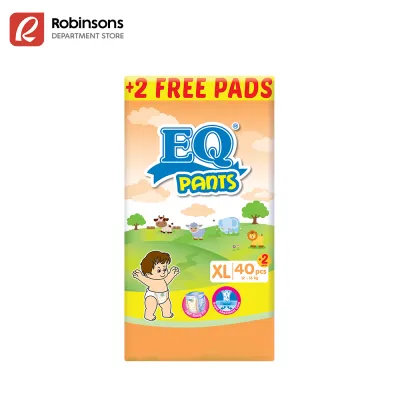
![EQ Pants Jumbo Pack Baby Diaper [XL] 40 PCS](https://img.lazcdn.com/g/p/0c4c03dd5023448972ed7f563c3e65f1.png_400x400q80.png_.webp)
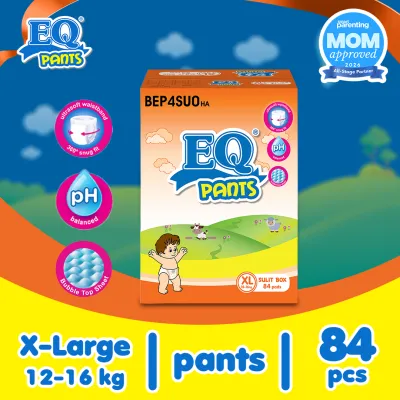
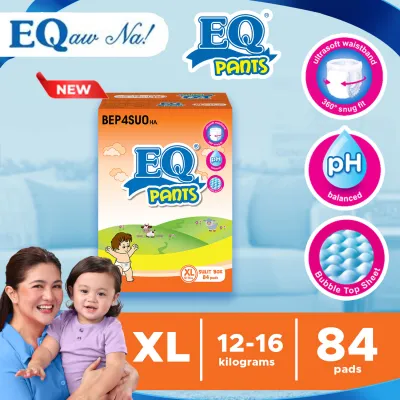
Prices are valid at publication and may change. Please refer to the product page for the latest price.
It is crucial to remember that manufacturer weight guidelines are merely starting points. Two toddlers weighing exactly fourteen kilograms can have completely different body shapes; one may have a rounder belly and chunky thighs, while the other might be taller and more slender. Therefore, the actual fit must be verified on your toddler through active daily wear rather than relying solely on the printed weight chart.
Comparing Fit and Comfort for Active Toddlers
As toddlers transition from crawling to walking and running, their physical movements put diaper elastics to the test. A diaper that fits perfectly while the child is lying down may sag, gap, or pinch once they begin climbing and playing. To evaluate the fit of EQ, Pampers, or Huggies, you must closely observe how the waistband and leg cuffs behave during movement.

Start by checking the waistband and leg cuff elasticity after your toddler has been active for an hour. Gently slide two fingers under the elastic bands; they should feel snug but comfortable. If you notice deep red marks or indentations on your toddler’s skin after removing the diaper, the elastic is too tight, indicating that the cut is too small or the brand’s shape does not suit your child’s build.
Observe the overall cut of each brand during daily play. Some brands feature a narrower crotch area and a trimmer overall profile, which can be excellent for slender toddlers who need less bulk between their legs. Other brands offer a wider, more generous cut that provides fuller coverage across the bottom and hips, making them highly suitable for rounder toddlers but potentially too loose for leaner children.
Identify clear signs of a poor fit during crawling, walking, or playing. If the diaper sags significantly in the back even when it is completely dry, the waistband may be too loose or the rise too high. Gaping at the leg openings when your toddler bends over is a major red flag, as this space allows moisture to escape easily. Similarly, if the diaper constantly rides too low on the waist, it lacks the coverage needed to contain active movements.
Evaluating Absorption and Leak Protection
Absorbency and leak protection are paramount, especially during long naps or overnight sleep when diaper changes are less frequent. In a warm, humid environment, a diaper must not only hold liquid but also lock it away quickly to keep the skin dry and cool. When comparing EQ, Pampers, and Huggies, you will encounter various packaging claims regarding core technology, wetness indicators, and breathable outer covers.
Treat these packaging claims as features to verify through observation rather than guaranteed outcomes. Terms like “magic gel,” “absorbent channels,” or “breathable layers” describe the design intent, but their real-world performance depends on your toddler’s wetting patterns and movement. A wetness indicator is a convenient tool, but your primary focus should be on how dry the inner lining feels against your child’s skin.
To assess performance, conduct simple at-home observations during periods of heavy wetting. After your toddler wakes up from a nap, gently touch the inner lining of the wet diaper to check for surface dampness or pooling. Inspect the outer clothing, particularly around the thighs and waist, for any signs of dampness or side leaks. A high-performing diaper should distribute liquid evenly across the core, preventing heavy sagging in a single spot and keeping the surface relatively dry to the touch.
Skin health is the ultimate indicator of diaper performance. If a specific brand consistently fails to keep your toddler’s skin dry, or if you experience frequent side leaks and blowouts, it is time to stop using that brand. Persistent moisture against the skin can quickly lead to diaper rash and discomfort. If your toddler develops skin irritation or redness that does not improve with frequent changes and proper hygiene, consult a pediatrician or dermatologist for professional guidance.
Price and Value: Calculating the True Cost per Diaper
Managing household expenses requires a structured approach to diaper shopping. Because pack sizes and prices vary widely between brands and retailers, comparing the total price of a package can be misleading. To find the true value, you must calculate the exact cost per piece.
To calculate the cost per piece, take the total price of the diaper pack in ₱ and divide it by the number of pants inside. For example, if a pack costs ₱600 and contains forty pieces, the cost per piece is ₱15. Perform this simple calculation for bulk boxes, standard packs, and trial sizes to determine which option offers the best financial value. Often, larger bulk boxes offer a lower cost per piece, but this is not always the case during promotional events.
You must also factor in the frequency of diaper changes. A cheaper diaper that has lower absorbency may require more frequent changes to prevent leaks and protect your toddler’s skin. If you find yourself using eight pieces of a lower-cost diaper per day compared to only five pieces of a slightly more expensive, highly absorbent brand, the premium option may actually cost you less over the course of a month. True value is a combination of unit price and daily usage rate.
When purchasing diapers, compare prices across authorized brand stores, physical supermarkets, and reputable online marketplaces. Buying from official channels ensures that you receive genuine products stored in clean, dry conditions. Watch for bundle deals, seasonal promotions, and subscription discounts, but always verify the seller’s credentials to avoid counterfeit products that may compromise your toddler’s safety and comfort.
Decision Framework: Which XL Pants Diaper Should You Choose?
Choosing the right diaper does not require finding a universal winner; instead, it requires finding the brand that matches your specific circumstances. By summarizing your observations of fit, absorbency, and cost, you can make an informed decision using this practical framework.
Choose EQ if your household budget requires a lower cost per piece, and your toddler’s body shape matches the brand’s cut without experiencing leaks, sagging, or skin irritation during your at-home testing. It serves as an excellent, practical option for families prioritizing daily cost-effectiveness.
Choose Pampers if your toddler benefits from a lightweight, thin design that minimizes bulk, and the specific cut provides a snug, comfortable fit that leaves no red marks on their waist and thighs during active play. This option is highly suitable for parents seeking a minimalist feel and soft materials.
Choose Huggies if your toddler is exceptionally active or prone to side leaks, and the brand’s robust leg cuffs and structured shape successfully contain moisture during their most energetic hours. It is a strong candidate for toddlers who need extra security around the legs and waist.
Verify first if your toddler has a history of skin sensitivity or allergies. Before committing to a large bulk purchase of any new brand, buy a small trial pack. Test the diapers under close supervision for a few days to ensure the materials, elastics, and adhesives do not cause any adverse skin reactions.
Frequently Asked Questions (FAQ)
How do I know if my toddler needs to size up from XL to XXL?
You should consider sizing up when you notice frequent leaks or blowouts that occur despite putting the diaper on correctly and changing it regularly. Another clear indicator is the appearance of tight elastic marks or redness on your toddler’s thighs and waist, suggesting the diaper is too tight. Additionally, if the waistband sits significantly below the belly button or struggles to cover your toddler’s bottom fully during movement, it is time to transition to a larger size.
Can I mix different diaper brands for daytime and nighttime use?
Yes, mixing different diaper brands is a highly practical strategy to balance your budget and your toddler’s comfort. Many parents use a more affordable, budget-friendly brand for daytime hours when changes are frequent and easy to manage. They then reserve a premium, high-absorbency diaper for long overnight stretches to ensure uninterrupted sleep and dry skin. If you choose this approach, ensure both brands fit your toddler well and monitor their skin closely for any reactions caused by switching between different materials.

Community discussion
Share your experience or ask a question. Comments are reviewed before publication.