
Choosing between glass and plastic for your baby’s feeding routine is one of the first major decisions you will face as a parent. Both materials offer distinct advantages depending on your lifestyle, feeding environment, and safety priorities. If your primary goal is a highly durable, chemically inert material that resists stains and odors over years of use, glass is an excellent choice for home-based feeding. On the other hand, if you need a lightweight, shatterproof option for travel, daycare, or teaching your baby to self-feed, plastic is the more practical everyday solution.
Both options from the Dr. Brown’s lineup feature the brand’s signature internal vent system designed to reduce colic, spit-up, and gas. However, the physical differences between glass and plastic mean they handle sterilization, wear, and daily transport in very different ways. Understanding these material characteristics will help you select the right bottle type—or a strategic combination of both—to match your family’s daily routine.
Quick Answer: Which Dr. Brown's Bottle Material Should You Choose?
To make an immediate decision, evaluate where and how you plan to feed your baby most often. Glass bottles are best suited for parents who prioritize chemical-free materials, long-term stain resistance, and a bottle that can be sterilized repeatedly without degrading. Because glass is heavier and can break if dropped, it is most practical for controlled, home-based feeding sessions managed by adults.
Products mentioned in this guide
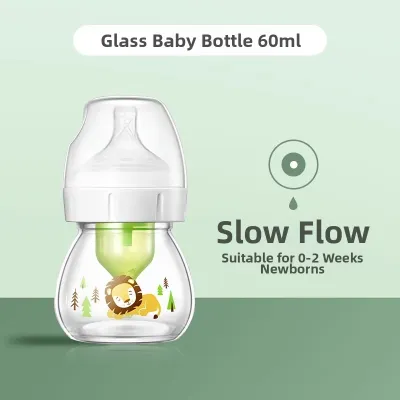
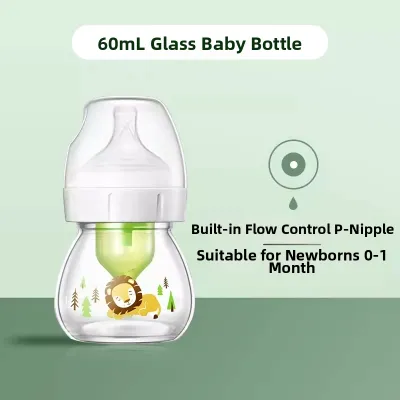
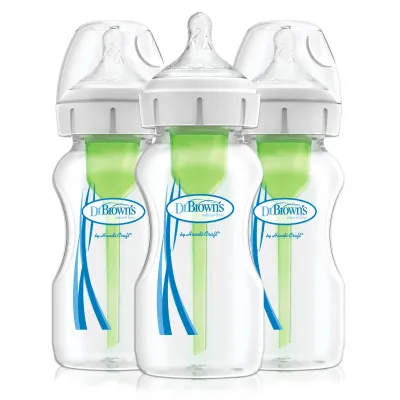
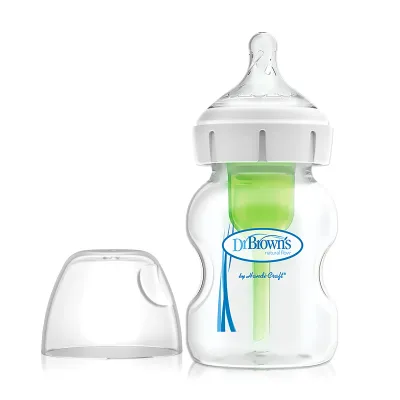
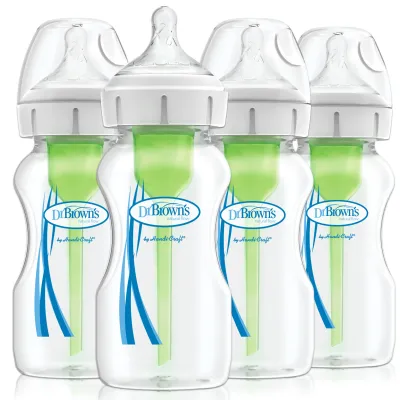
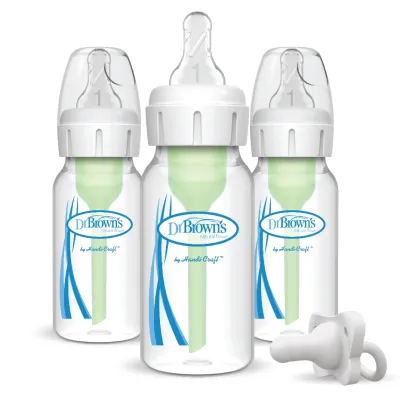
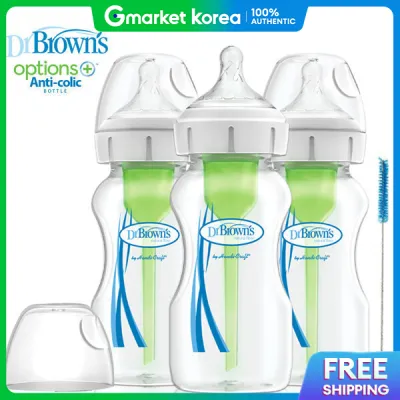
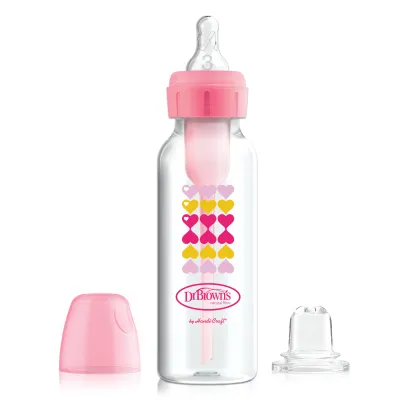
Prices are valid at publication and may change. Please refer to the product page for the latest price.
Plastic bottles are the ideal choice if you prioritize lightweight handling, drop resistance, and on-the-go convenience. They are much easier to pack into a diaper bag for trips to the mall or visits to relatives, and they pose no risk of shattering on hard tile floors. Additionally, as your baby grows and begins to hold their own bottle, the lighter weight of plastic makes self-feeding much more manageable.
Regardless of the material you select, both options are manufactured to be BPA-free and are designed to work with the brand’s anti-colic internal vent systems. When purchasing replacement parts or expanding your collection, remember that compatibility depends on the neck size—either narrow or wide-neck—rather than whether the bottle is made of glass or plastic.
Safety and Health Considerations
When evaluating baby bottles, safety is naturally the top priority for parents. Both glass and plastic Dr. Brown’s bottles are manufactured to meet strict safety standards, meaning they are completely free of Bisphenol A (BPA) and phthalates. This ensures that the base materials do not contain these common chemical compounds, providing peace of mind from the very first feed.

However, the two materials behave differently when exposed to high temperatures during sterilization and daily preparation. Glass is an inert material, meaning it does not react chemically with milk or water, nor does it degrade when subjected to boiling water or high-heat steam sterilizers. This makes glass highly stable over hundreds of heating cycles, eliminating any concerns about chemical leaching over time.
Plastic bottles, while highly durable against physical impacts, require more careful temperature management. Over time, repeated exposure to extreme heat during sterilization or microwaving can cause plastic polymers to break down gradually. To maintain the integrity of plastic bottles, parents must strictly adhere to the manufacturer’s temperature limits and sterilization guidelines, avoiding overheating or using abrasive cleaning tools that can compromise the inner surface.
Physical safety is another crucial trade-off to consider in your daily routine. Glass bottles carry an inherent risk of shattering or chipping if dropped on hard surfaces, such as kitchen tiles or concrete patios. While some glass bottles feature protective silicone sleeves to absorb impacts, they still require careful handling. Plastic bottles will not shatter when dropped, but their softer surface is susceptible to micro-scratches from bottle brushes, which can eventually harbor microscopic milk residue or bacteria if not cleaned thoroughly.
Durability and Daily Practicality
The tropical climate and high humidity of the Philippines introduce unique practical considerations for daily bottle maintenance. High humidity can encourage bacterial growth on damp surfaces, making thorough drying and sterilization essential. Glass bottles dry relatively quickly and do not retain moisture or odors, making them highly hygienic in warm, humid environments. Plastic bottles, because of their porous nature, can sometimes retain a faint milk odor or develop a cloudy film if they remain damp or are not dried in a well-ventilated space.
Weight is a major factor during long feeding sessions, especially during the middle of the night. Glass bottles are significantly heavier than their plastic counterparts, which can lead to mild wrist fatigue for parents during prolonged feeds. This weight difference becomes even more apparent as your baby transitions to self-feeding; a heavy glass bottle is difficult for a young infant to lift and hold safely, whereas a lightweight plastic bottle is easy for tiny hands to grasp.
For families who travel frequently, commute, or send their children to daycare, plastic offers unmatched convenience. Packing multiple glass bottles into a diaper bag adds substantial weight and requires careful wrapping to prevent them from clanking together and cracking. Plastic bottles can be tossed into a bag without a second thought, surviving bumpy car rides, stroller storage compartments, and accidental drops by busy caregivers.
Cleaning routines also differ noticeably between the two materials over months of continuous use. Glass bottles maintain their crystal-clear appearance indefinitely, resisting stains from colorful foods or juices and refusing to absorb strong odors. Plastic bottles tend to become cloudy over time due to mineral buildup from water and repeated washing. They can also absorb odors and stains, requiring more frequent visual inspections and eventual replacement to maintain optimal hygiene.
Cost and Long-Term Value
When planning your baby budget, it is helpful to look at both the upfront purchase price and the long-term cost of ownership. Glass bottles generally carry a higher initial price tag in ₱ compared to plastic options. Parents should check current listings on official brand sites or authorized online marketplaces to compare exact package prices, as starter sets and multi-packs often provide the best value.
While glass requires a larger initial investment, its long-term value can be superior because of its indefinite lifespan. As long as a glass bottle does not chip, crack, or shatter, it can be used continuously for years. This makes glass highly suitable for hand-me-downs for future siblings or for resale in parenting communities, provided the silicone nipples and internal vent parts are replaced for hygiene reasons.
Plastic bottles have a lower upfront cost, making them highly accessible for parents building their initial feeding setup. However, they must be replaced periodically due to physical wear, deep scratches, or persistent cloudiness. Over a year or more of exclusive bottle-feeding, the cost of repeatedly replacing worn-out plastic bottles can eventually equal or exceed the cost of a durable set of glass bottles.
To maximize your investment, consider how long you plan to bottle-feed and whether you intend to save the bottles for future children. If you anticipate a single, short bottle-feeding journey, plastic may be the most economical choice. If you are planning for multiple children or prefer items with high reuse value, investing in glass bottles can save you money and reduce waste over the long run.
Decision Framework: Matching the Bottle to Your Family's Routine
To help you finalize your decision, use this practical framework to match the bottle material to your household’s daily lifestyle, environment, and feeding habits.
Choose Glass if…
- Your feeding is mostly home-based: You do most of your feeding in a carpeted or safely cushioned living space where drops are less likely to cause breakage.
- You prioritize maximum hygiene: You prefer a material that can withstand frequent, high-heat sterilization without clouding, scratching, or retaining odors.
- You want long-term durability: You plan to use the same bottles for future siblings or want a product that does not degrade over time.
- Your budget allows for upfront quality: You are comfortable paying a higher initial price in ₱ and potentially purchasing protective silicone sleeves.
Choose Plastic if…
- You are always on the go: You frequently travel, visit family, or need to pack light diaper bags for outdoor outings in warm weather.
- Your baby is learning to self-feed: Your child is reaching the developmental stage where they want to hold their own bottle during meals.
- Your child attends daycare: The childcare facility has strict policies against glass containers, or you want to avoid the risk of accidental breakage away from home.
- You prefer lightweight handling: You want to minimize wrist strain during long, late-night feeding sessions.
Consider a Mix if…
- You want the best of both worlds: You can use glass bottles for night feeds and morning routines at home, where sterilization is convenient and the environment is controlled.
- You need travel flexibility: You can keep a small stash of plastic bottles specifically for travel, doctor visits, and outdoor trips to keep your diaper bag light and shatterproof.
Frequently Asked Questions (FAQ)
Can I use the same Dr. Brown's nipples and vent systems for both glass and plastic bottles?
Yes, you can share these accessories between materials, but you must verify compatibility by checking the bottle’s neck size rather than its material. Dr. Brown’s bottles come in two primary designs: narrow-neck and wide-neck. A narrow-neck nipple and vent system will only fit a narrow-neck bottle, whether it is made of glass or plastic. Always check the manufacturer’s packaging or official instructions to ensure you are matching the correct accessory size to your specific bottle shape.
How do I know when it is time to replace a plastic Dr. Brown's bottle?
You should inspect your plastic bottles regularly before each use for visible signs of wear and tear. It is time to replace a plastic bottle if you notice persistent cloudiness that does not wash away, deep scratches on the interior surface where bacteria can hide, or lingering sour milk odors. Additionally, if the plastic becomes warped, cracked, or discolored, discard it immediately and consult the manufacturer’s guidelines for recommended replacement intervals.

Community discussion
Share your experience or ask a question. Comments are reviewed before publication.