
Deciding when to transition your baby to a bed with a protective barrier is a major milestone in your home-proofing journey. A baby typically needs a bed gate when they transition from a fully enclosed crib to an open toddler bed, or when they begin sleeping on an elevated mattress where a fall could cause injury. However, determining the exact moment to install one requires a careful look at your child’s physical development, their unique sleep behaviors, and the specific layout of your bedroom.
In many homes across the Philippines, families often navigate unique sleeping arrangements, such as co-sleeping on large family beds or using elevated mattresses in rooms with hard tiled floors. Because a fall onto ceramic tile or polished concrete can be highly dangerous, understanding when and how to use a bed gate safely is essential. By evaluating your baby’s current physical milestones and sleep habits, you can make an informed decision that keeps your little one secure throughout the night.
Developmental Milestones That Signal It Is Time
Your baby’s physical mobility is the primary indicator of whether they require an extra layer of protection on an elevated sleeping surface. The first major milestone to watch for is rolling over consistently in both directions. Once a baby can easily roll from back to tummy and back again, they can travel surprisingly far across a mattress during a single sleep cycle. This rolling often happens silently, meaning a baby can reach the edge of an unprotected bed without waking you up.
Products mentioned in this guide

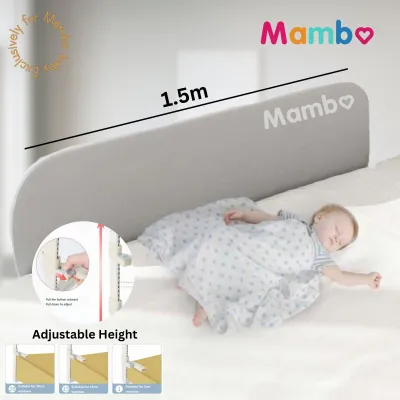
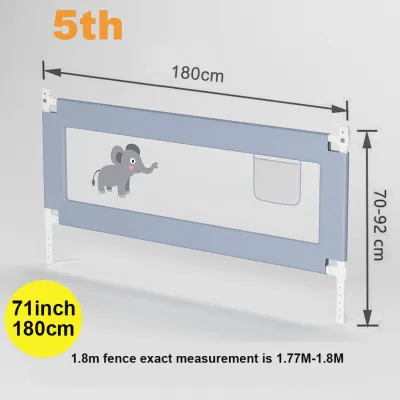
Prices are valid at publication and may change. Please refer to the product page for the latest price.
As your baby grows, they will begin attempting to sit up, crawl, or pull themselves to a standing position. These milestones represent a significant increase in core strength and curiosity. If your child is sleeping on an open bed or a co-sleeping mattress, these active movements during the night or immediately upon waking can quickly lead to a fall. A baby who can pull themselves up can easily tumble over the edge of a bed if there is no secure barrier to stop them.
Another key transition point is when your baby graduates from restrictive sleepwear, such as swaddles, into regular pajamas or sleeping sacks. Swaddling naturally limits a baby’s limb movement, keeping them relatively stationary. Once you transition them to loose clothing or footed onesies to stay comfortable in tropical climates, their freedom of movement increases dramatically. This extra mobility allows them to wiggle, kick, and slide across the bed sheets with ease.
In the warm and humid climate of the Philippines, babies often sleep in very light cotton clothing or simple onesies to stay cool under electric fans or air conditioning. This lightweight clothing reduces friction against the bedsheets, making it even easier for an active baby to slide or roll across the mattress. If your baby is sleeping in minimal clothing and has mastered rolling or crawling, the risk of sliding off an elevated mattress increases significantly.
Sleep Behavior and Environment Risk Factors
Evaluating your baby’s individual sleep habits is just as important as tracking their physical milestones. Some babies are incredibly active sleepers who constantly rotate, kick, and migrate from one side of the mattress to the other. If you regularly find your baby sleeping perpendicular to how you laid them down, or if they frequently wake up pressed against the very edge of the bed, they are a prime candidate for a protective barrier.

The transition from a secure bassinet or an enclosed crib to a toddler bed or an adult mattress is a high-risk period. In a crib, the physical wooden slats provide a clear, unyielding boundary that keeps the baby contained. When moving to an open bed, the child must learn to navigate a sleeping space that has no natural walls. A bed gate acts as a temporary training boundary while they adjust to this new sense of space.
Additionally, you must assess the physical height of your mattress and the type of flooring in your bedroom. Many local homes feature beautiful but unforgiving ceramic tile, marble, or hardwood floors. A fall from a standard adult mattress height—which can range from 50 to 70 centimeters off the ground—onto a hard tile floor can result in serious injury. If your bed frame is particularly high, or if you use a thick spring mattress, the potential impact of a fall is a critical factor that warrants installing a secure barrier.
When a Bed Gate Is Not the Right Safety Solution
While a bed gate can offer peace of mind, there are several scenarios where installing one can actually introduce new, more severe hazards. If your child has reached the age or weight where they can easily climb over or push down the gate, a barrier should not be used. A child who attempts to climb over a bed gate faces a much higher fall risk, as they can tumble from the top of the gate itself, landing from an even greater height.
Another critical hazard is the potential for entrapment gaps. If a bed gate is not perfectly compatible with your mattress or is installed loosely, a dangerous gap can form between the mattress edge and the gate fabric. A baby can easily slide into this gap during the night, leading to a risk of suffocation or limb entrapment. If your mattress is too soft, too light, or does not fit tightly against the gate frame, a bed gate is not a safe solution.
When a bed gate cannot be installed with absolute security, you should explore safer sleep alternatives. One highly effective option is transitioning to a floor bed, where the mattress is placed directly on the floor, perhaps surrounded by soft play mats. This setup virtually eliminates the risk of a dangerous fall. Alternatively, keeping your child in a standard-compliant, fully enclosed crib for as long as possible is often the safest choice until they are developmentally ready for a regular bed.
Key Safety Checks Before Buying and Installing
If you decide that a bed gate is the right choice for your home, you must perform several rigorous safety checks before making a purchase. Always start by checking the manufacturer labels, manuals, and product specifications for explicit age, weight, and developmental limits. Many commercial bed gates are strictly rated for children aged two to five years and are explicitly not certified for infants under 18 or 24 months. Never ignore these manufacturer warnings.
Next, carefully inspect the physical mechanisms of the gate. Ensure that the locking mechanism is robust, child-proof, and cannot be accidentally released by a curious toddler pushing against it. Check that there are no sharp metal edges, exposed hinges, or pinch points that could catch tiny fingers or skin. The mesh or fabric barrier must be highly durable, taut, and securely stitched to the frame to prevent sagging under your baby’s weight.
Compatibility with your specific bed frame design is another crucial factor to verify. Some bed gates require a recessed wooden frame to lock into place, while others rely on long anchor straps that wrap around a box spring or flat wooden slats. Measure your mattress thickness carefully, as a mattress that is too thin or too thick can prevent the gate from sitting flush, creating dangerous gaps. While high-quality, certified safety gates can range from ₱1,500 to ₱4,000, prioritizing structural compatibility over price is essential for your child’s safety.
Finally, remember that no safety device can ever replace active caregiver supervision. Regularly inspect the installed gate to ensure the straps have not loosened and that no gaps have formed over time. If you are ever uncertain about the safety of your child’s sleep environment, or if your baby has specific physical needs, do not hesitate to consult a qualified pediatrician or a certified child safety professional for personalized guidance.
Frequently Asked Questions (FAQ)
Can I use a bed gate for a baby under six months old?
No, you should never use a bed gate or an adult bed guard for a baby under six months old. Young infants lack the head control, neck strength, and motor skills necessary to pull themselves away if they roll into a soft fabric barrier or become wedged in a gap. For babies in this age group, the only safe sleeping environment is a dedicated crib, cradle, or bassinet that meets established infant sleep safety standards, featuring a firm, flat mattress free of loose bedding or soft barriers.
How do I know if the bed gate is installed correctly?
To verify that your bed gate is installed correctly, perform a physical gap check and a stability test. Press your hand firmly against the inside of the gate to ensure there is absolutely no space or gap wider than a few millimeters between the mattress and the barrier where a child’s limb or head could slip through. Next, apply firm, realistic pressure to the top rail of the gate to test its structural stability; the gate should remain locked securely in place without wobbling, sliding, or bowing outward.

Community discussion
Share your experience or ask a question. Comments are reviewed before publication.