
Finding the right large pants diaper for an active baby is a highly individualized process. While EQ, Pampers, and Huggies are household names in the Philippines, no single brand offers a universal solution for every infant. The ideal choice depends heavily on your baby’s unique body shape, their daily activity level, and how their skin reacts to different materials under tropical conditions. As babies transition into the large size range, they typically become much more mobile, making the balance between secure fit and reliable absorption critical to preventing leaks and skin irritation.
When evaluating these three prominent brands, parents must look beyond marketing claims and focus on observable performance. A diaper that works excellently for a slender, highly active crawler might cause leaks or red marks on a rounder, chubby-thighed baby. By understanding the structural differences, absorption mechanics, and fit indicators of each brand, you can make an informed decision that keeps your baby comfortable and dry throughout the day and night.
Core Design Differences in Large Pants Diapers
As babies grow into the large diaper size, their physical development shifts from lying down to crawling, cruising, and walking. This transition requires diaper pants to feature a design that accommodates constant leg movement while maintaining a secure seal around the waist and thighs. Each brand approaches this structural challenge with a distinct design philosophy, affecting how the diaper sits on your baby’s body.
Products mentioned in this guide
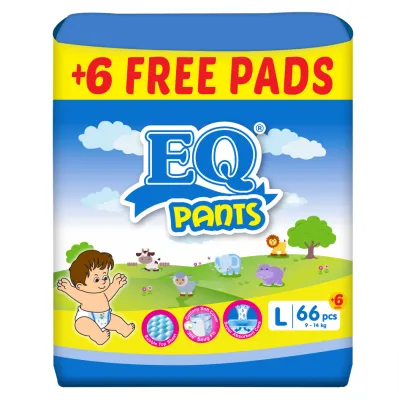
![EQ Pants Large (8-14 kg) - 40 pcs x 6 packs (240 pcs) - Diaper Pants [Case]](https://img.lazcdn.com/g/p/17ae0905fb0086b78f0de7d8a2af1943.jpg_400x400q80.jpg_.webp)

Prices are valid at publication and may change. Please refer to the product page for the latest price.
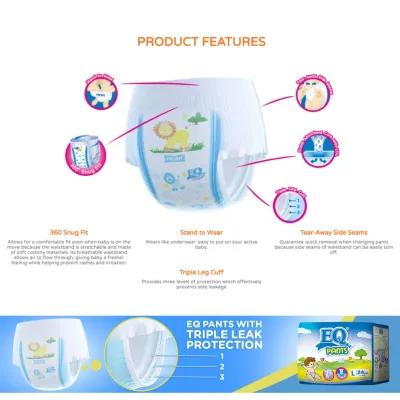
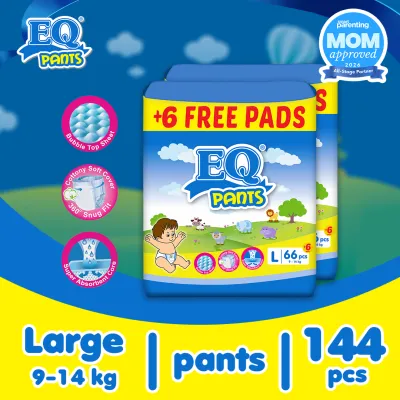
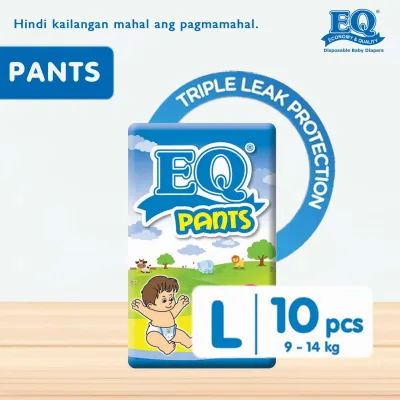
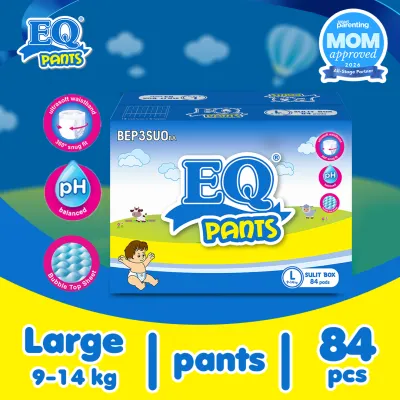
EQ large pants are generally recognized for their generous, accommodating cut. They often feature a wider waistband and a slightly roomier seat, making them a common choice for babies with rounder bellies or thicker thighs. The core design focuses on reliable, everyday utility, utilizing a straightforward absorbent pad layout that provides balanced coverage across the front and back of the diaper.
Pampers large pants typically emphasize a slim, contoured profile. Rather than relying on a bulky absorbent core, they utilize specialized channel technologies designed to distribute liquid rapidly and evenly across the diaper. This design aims to reduce sagging and bulkiness between the legs, allowing highly active babies to move with minimal restriction during daytime play.
Huggies large pants often feature a highly elastic, body-hugging waistband designed to mimic the snug feel of underwear. Their structural design frequently includes a pocketed waistband or specialized back barriers to help contain runny messes during active movement. The leg cuffs are engineered to sit securely in the groin crease, providing a close fit that adapts to twisting, climbing, and stretching.
Evaluating Absorption and Leak Prevention
Absorption capacity and leak prevention are the primary defenses against diaper blowouts and wet clothing. To evaluate how well a diaper performs, parents should observe how quickly moisture is drawn away from the surface and how effectively the core locks that moisture inside, especially under the pressure of a sitting or rolling baby.

You can perform a simple home evaluation of surface dryness by pressing a dry paper towel against the inside of a moderately wet diaper. If the paper towel remains dry, the diaper’s top sheet is successfully locking in moisture. If wetness transfers easily, the baby’s skin is more likely to remain damp, which can contribute to irritation over extended wear times.
Leak guards—the elasticized barriers running along the leg openings—are critical for active babies. When putting on any diaper pants, always ensure these guards are fully flared outward rather than tucked inward. Observe your baby during active play; if the guards gap or slide out of place when they crawl or sit, the fit may be too loose, or the elastic may lack the tension required to contain sudden wetness.
Overnight performance presents a different challenge, as the diaper must absorb multiple wettings over several hours. Look for signs of sagging or clumping when the diaper is full. A diaper that clumps heavily in one spot can pull away from the waist, creating gaps that lead to leaks. While wetness indicators are helpful visual cues, parents should rely on physical checks and the baby’s comfort level to determine when a change is necessary.
Assessing Fit, Comfort, and Skin Health
A diaper can have excellent absorption, but if the fit is poor, it will inevitably cause discomfort or leaks. In the hot and humid climate of the Philippines, a proper fit is also essential for maintaining skin health, as trapped heat and friction can quickly lead to painful rashes.
To evaluate the waistband fit, use the two-finger rule. You should be able to slide two fingers comfortably between the elastic waistband and your baby’s stomach without feeling excessive tension. After removing the diaper, inspect your baby’s skin. Deep, red indentations around the waist or thighs indicate that the elastic is digging in, suggesting it is time to size up or try a brand with a softer, more stretchable band.
Leg cuff tightness requires a delicate balance. The cuffs must be snug enough to prevent liquid from escaping, yet gentle enough to avoid chafing the delicate skin of the inner thighs. If your baby has thick thighs, look for brands that offer wider, more flexible leg bands that distribute pressure evenly rather than thin, tight elastics that can pinch and rub during movement.
Breathability is crucial for preventing heat rash, locally known as bungang-araw. You can assess a diaper’s breathability by feeling the outside of a wet diaper; a slightly damp or cool outer cover often indicates that moisture vapor is escaping through the breathable outer layer. If the diaper feels completely dry on the outside but traps intense heat and sweat on the inside, the material may lack the airflow needed for sensitive skin in warm weather.
Decision Framework: Choosing the Right Brand
Selecting the right large pants diaper involves matching your baby’s physical build and your family’s daily routine with the specific strengths of each brand. Because baby proportions change rapidly, your preferred brand may shift as your baby grows.
Consider choosing EQ large pants if you prefer a roomier, more traditional cut that accommodates babies with rounder bellies. This brand is highly suitable for families prioritizing excellent local availability in supermarkets and neighborhood stores, alongside a practical budget profile in ₱ that delivers reliable daytime protection.
Opt for Pampers large pants if your baby is highly active and you prefer a lightweight, low-profile diaper that fits smoothly under clothing. This option is well-suited for daytime wear when you want to minimize bulk and sagging, or if your baby prefers a softer, cloth-like texture against their skin.
Select Huggies large pants if your baby is constantly climbing, twisting, or transitioning between sitting and standing, requiring a highly secure, underwear-like waistband. This brand is ideal if you need targeted leg guard designs and a snug fit that prevents the diaper from shifting out of place during vigorous physical activity.
Before committing to a bulk purchase of any brand, always verify your baby’s current weight against the manufacturer’s sizing guide on the packaging, as weight ranges can overlap between sizes. If your baby has highly sensitive skin, is prone to eczema, or has an active diaper rash, consult a pediatrician for personalized guidance on skin barriers and care routines.
Frequently Asked Questions (FAQ)
When should I switch from taped diapers to large pants?
The transition to diaper pants is typically driven by your baby’s developmental milestones rather than weight alone. When your baby begins rolling over, crawling, or pulling themselves up to stand, securing the tapes on a traditional diaper can become a daily struggle. If diaper changes feel like a wrestling match, or if your baby constantly pulls at the tape tabs, switching to pants allows for quick, pull-up application while they stand or move. Additionally, if you notice the tape tabs are straining or popping open during active play, it is a clear physical sign that your baby requires the flexible, 360-degree stretch of pants diapers.
How can I test a new diaper brand without wasting money?
To avoid the financial waste of buying a large bulk box that may not fit or could irritate your baby’s skin, look for trial packs or small-count packaging. Many brands offer packs containing only a few diapers, which are widely available in local supermarkets, convenience stores, or official brand stores on online marketplaces. Use these small packs to conduct a two-to-three-day trial, observing how the diaper handles overnight wetness, checking for any signs of skin redness, and monitoring for leaks during active play. If you do purchase bulk packs online, check the seller’s return or exchange policies beforehand to see if they accept unopened packs in case your baby experiences a sudden growth spurt.

Community discussion
Share your experience or ask a question. Comments are reviewed before publication.