
Selecting the right nasal aspirator for your baby is a crucial decision that directly impacts their comfort, sleep, and feeding. In the Philippines, where tropical humidity, seasonal dust, and sudden transitions between outdoor heat and indoor air conditioning can easily trigger nasal congestion, having a reliable tool on hand is essential. Tiny Buds offers several nasal aspirator models designed to address different stages of an infant’s growth. To choose the correct model, you must match the device’s suction mechanism, tip size, and ease of cleaning with your baby’s specific age, developmental stage, and physical tolerance.
Every baby develops at a unique pace, meaning a one-size-fits-all approach to nasal care rarely works. A newborn requires an entirely different level of gentleness compared to an active toddler who can physically resist a nasal cleaning routine. By understanding your child’s physiological needs and carefully checking product labels, you can select a Tiny Buds nasal aspirator that safely and effectively clears their airways without causing discomfort or tissue damage.
Understanding Nasal Care Needs by Age and Stage
During the first few months of life, infants are obligate nasal breathers, meaning they naturally breathe almost exclusively through their noses. This physiological trait makes any form of nasal congestion highly disruptive for newborns aged zero to three months. When a newborn’s narrow nasal passages become blocked with mucus, they cannot easily switch to mouth breathing, which can make feeding, latching, and sleeping incredibly difficult. At this delicate stage, the mucosal lining inside the nostrils is exceptionally thin and sensitive, requiring caregivers to have absolute control over the suction force to prevent swelling or minor bleeding.
Products mentioned in this guide

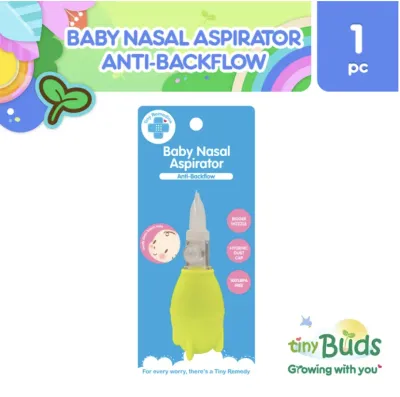
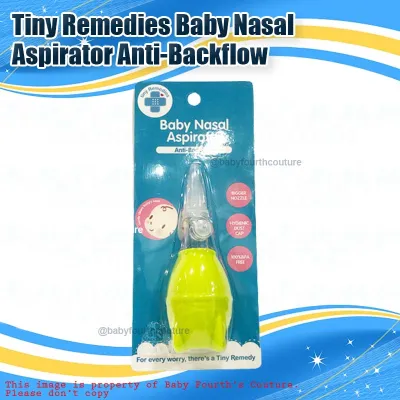
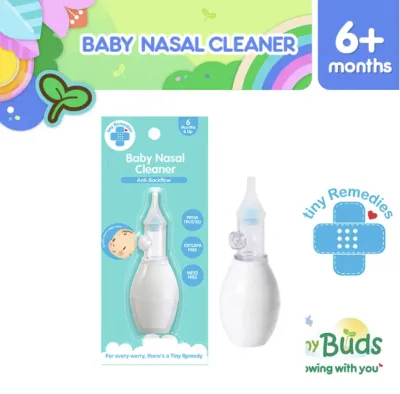
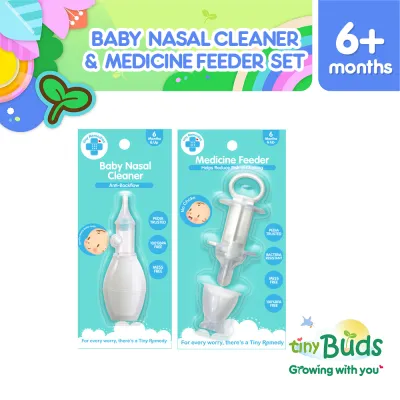
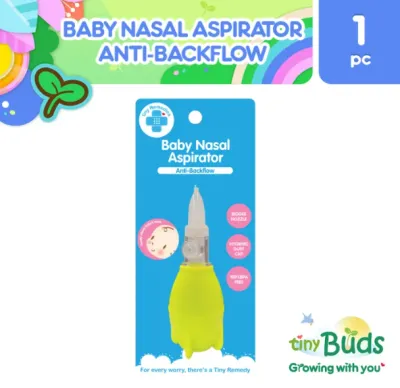
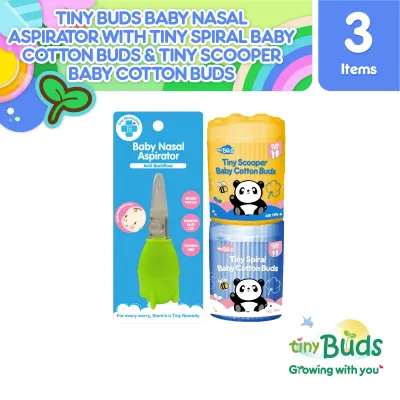
Prices are valid at publication and may change. Please refer to the product page for the latest price.
As babies transition into older infancy and toddlerhood, starting around four months and continuing past their first year, their physical capabilities and nasal structures change significantly. Older infants produce thicker, more stubborn mucus, especially when exposed to environmental dust or dry air-conditioned bedrooms. At the same time, their physical strength and mobility increase. A toddler is highly likely to squirm, turn their head, or actively push your hand away during a nasal clearance routine, making quick and efficient operation a top priority for caregivers.
Recognizing the difference between mild nasal dryness and actual congestion is key to avoiding unnecessary irritation. Observable signs of congestion that warrant mechanical aspiration include audible snorting, visible mucus at the entrance of the nostrils, flared nostrils during breathing, and difficulty sucking during breast or bottle feeding. If your baby is simply making slight breathing noises but is otherwise feeding and sleeping comfortably, simple interventions like using a cool-mist humidifier or applying a few saline drops may be sufficient. Mechanical suction should be reserved for times when mucus physically obstructs the airway and interferes with daily activities.
Key Features to Check on Tiny Buds Product Labels
Before purchasing any Tiny Buds nasal aspirator, it is essential to inspect the product packaging and labels to verify that the specifications match your baby’s current developmental stage. The first feature to examine is the nozzle and tip dimensions. Look for labels that specify the material and size of the suction tip. High-quality models typically feature tips made of medical-grade or food-grade silicone, which is soft and flexible. Ensure the tip is designed to prevent over-insertion; many newborn-specific models feature a bulbous base that naturally stops the tip from entering too deeply into the delicate nasal cavity.

Next, review the suction mechanism details printed on the packaging. Tiny Buds offers different operation types, including manual bulb aspirators, parent-assisted mouth-suction models, and battery-operated devices. The label should clearly state how the suction is generated and whether it can be adjusted. For manual and mouth-suction models, the caregiver directly controls the pressure, while electric models should list adjustable suction levels or settings. Checking these details helps you determine if the device offers the precise level of control required for your child’s age.
Finally, pay close attention to the material and hygiene indicators displayed on the box. Because these devices come into direct contact with bodily fluids, they must be easy to sanitize to prevent the growth of mold and bacteria. Verify that the label displays safety certifications such as “BPA-free” and “phthalate-free.” Look for explicit instructions regarding cleaning compatibility, such as whether the components are dishwasher-safe, sterilizer-safe, or if they require specific replaceable filters. Understanding these maintenance requirements beforehand ensures you can keep the device hygienic over long-term use.
Matching Suction Types to Your Baby's Developmental Stage
For newborns and young infants under three months, gentleness is the absolute priority. At this stage, you should look for Tiny Buds models that utilize manual bulb suction or parent-assisted mouth suction. These designs allow you to apply a very soft, highly modulated vacuum that can be adjusted instantly based on your baby’s comfort. The tips must be ultra-soft and narrow enough to fit comfortably at the entrance of tiny nostrils without stretching the delicate skin. Because newborns cannot communicate their discomfort, having direct, tactile control over the suction pressure is the safest way to clear minor blockages.
As your child grows into an active toddler, your selection criteria should shift toward speed, efficiency, and ease of handling. Toddlers rarely tolerate having their noses cleared and will often struggle during the process. For these older children, a battery-operated nasal aspirator or an ergonomic manual model that can be operated swiftly with one hand is highly beneficial. These models allow you to use your free hand to gently stabilize your child’s head, minimizing the risk of sudden movements that could cause the tip to scrape the inside of the nose. A quiet motor is also a valuable feature to look for, as loud noises can increase a toddler’s anxiety and resistance.
Knowing when to transition between different aspirator models is key to maintaining an effective nasal care routine. If you notice that your current manual bulb aspirator is no longer creating an effective seal because your baby’s nostrils have grown, or if the suction is insufficient to draw out thick, sticky toddler mucus, it is time to upgrade. Transitioning to a model with larger, interchangeable silicone tips or a stronger, more consistent suction mechanism will ensure that you can continue to clear blockages quickly and safely as your child’s physical needs evolve.
Safety Limits and Cleaning Rules for Nasal Aspirators
While nasal aspirators are incredibly helpful tools, they must be used with caution to avoid injuring your baby’s delicate nasal passages. Pediatricians and manufacturers generally recommend limiting mechanical suctioning to three or four times per day. Overusing an aspirator can irritate the sensitive mucosal lining, leading to increased inflammation, swelling, and ironically, more mucus production. To minimize irritation, try to time the suctioning sessions before major activities, such as right before feeding times or before putting your baby down for sleep.
Proper technique and positioning are vital to ensuring a safe and pain-free experience. Always refer to the specific user manual included with your Tiny Buds nasal aspirator for detailed instructions. Generally, you should hold your baby in a semi-upright or slightly reclined position, ensuring their head is well-supported. Gently apply a drop or two of saline solution into each nostril a few minutes before suctioning; this helps loosen dry or stubborn mucus, making it much easier to extract. When inserting the silicone tip, never force it deep into the nostril. It should rest gently at the entrance, forming a secure seal, and should be pointed slightly outward toward the corner of the eye rather than straight up or toward the nasal septum.
There are clear boundaries where you must stop using the device and seek professional medical advice. If you observe any pink-tinged mucus or blood during or after suctioning, cease use immediately to allow the nasal lining to heal. Furthermore, if your baby exhibits signs of severe respiratory distress—such as rapid breathing, grunting, or chest retractions where the skin pulls in tightly around the ribs—do not attempt to clear the airway with a nasal aspirator. These are medical emergencies that require immediate evaluation by a qualified pediatrician.
Maintaining strict hygiene is the final, crucial step in nasal aspirator safety. After every single use, disassemble the device completely according to the manufacturer’s instructions. Wash all removable parts thoroughly in warm, soapy water, using a small cleaning brush to clear any trapped mucus from the nozzle. Rinse the parts well and allow them to air-dry completely on a clean, dry towel before reassembling or storing them. Never store a damp aspirator, as moisture trapped inside the silicone tips or tubes can quickly become a breeding ground for harmful mold and bacteria.
Frequently Asked Questions (FAQ)
Can I use the same Tiny Buds aspirator for a newborn and a toddler?
You can only use the same nasal aspirator for both a newborn and a toddler if the specific model is designed for multi-stage use and includes interchangeable, age-graded silicone tips. A newborn requires a very small, narrow tip to fit their tiny nostrils safely, while a toddler needs a wider, bulbous tip to create an effective seal. Using a toddler-sized tip on a newborn can cause tissue damage, while using a newborn tip on a toddler will not create the vacuum seal necessary to extract thick mucus. Always verify tip compatibility on the product packaging before sharing a device across different age groups.
How do I know if the suction level is too strong for my baby?
You can identify excessive suction by observing your baby’s physical reactions and checking their nasal passages after use. Signs that the suction is too strong include immediate, intense crying, physical pulling away, redness or swelling around the rim of the nostrils, or any traces of blood in the extracted mucus. To prevent discomfort, always start with the lowest possible suction setting or apply very gentle manual pressure, gradually increasing the force only as much as needed to clear the blockage.
What should I do if the aspirator gets clogged with thick mucus?
If the aspirator becomes clogged during use, stop the procedure immediately to prevent air pressure issues. Disassemble the device according to the user manual and flush the clogged components with warm water or a saline solution to dissolve and wash away the thick buildup. Ensure that all parts are completely clean and thoroughly air-dried before reassembling the device. Never insert sharp objects, such as pins or toothpicks, into the silicone tips to clear a clog, as this can easily tear the material and create a safety hazard for your baby.

Community discussion
Share your experience or ask a question. Comments are reviewed before publication.