
When setting up a compact nursery, finding the balance between storage capacity and floor space is a common challenge. The ideal size for a toy rack organizer shelf in a small nursery is a shallow-profile unit with a depth of 25 to 30 centimeters, a width of 60 to 80 centimeters, and a height under 100 centimeters. This specific footprint provides ample storage for early-stage toys while keeping the center of the room open for developmental play, tummy time, and safe movement.
Selecting the right organizer requires looking beyond the product’s listed dimensions. You must evaluate how the unit interacts with your daily caregiving routines, the existing furniture layout, and the physical boundaries of the room. By choosing a unit that maximizes vertical space and utilizes smart design features, you can keep your baby’s room organized, functional, and completely free of clutter.
Assessing Your Nursery's Available Floor Space
Before browsing online catalogs or visiting local furniture showrooms, you must determine the actual usable floor area of your nursery. Many urban homes and condominiums in the Philippines feature compact bedrooms, often measuring around 8 to 10 square meters. In these tight spaces, a few misplaced centimeters can make the room feel cramped and difficult to navigate, especially during late-night feedings.
Products mentioned in this guide
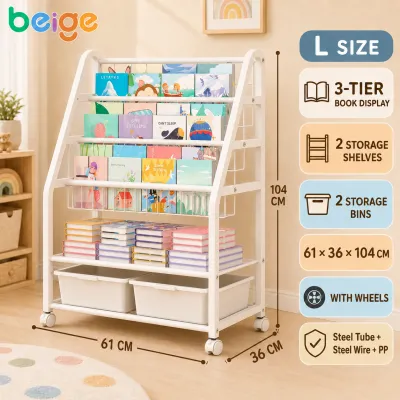
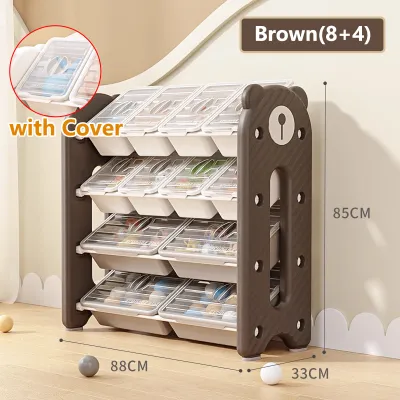
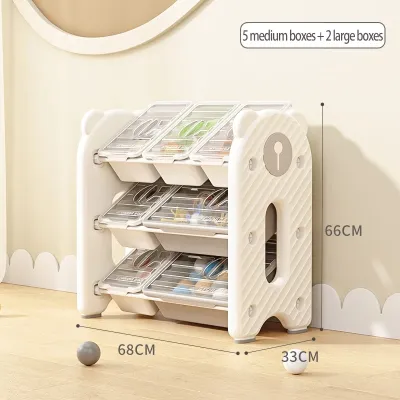
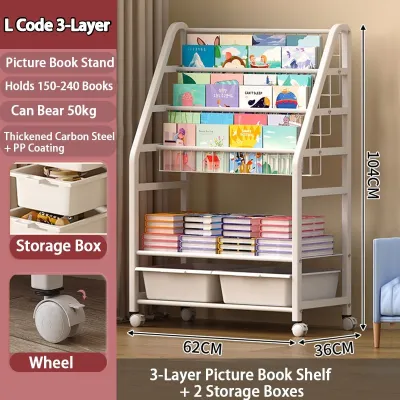
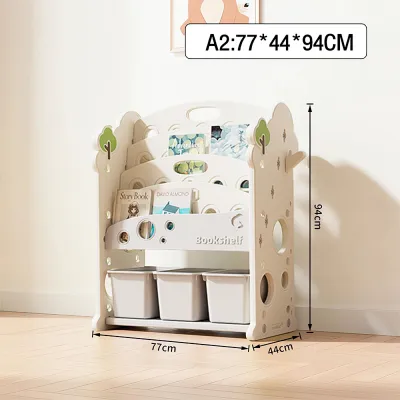
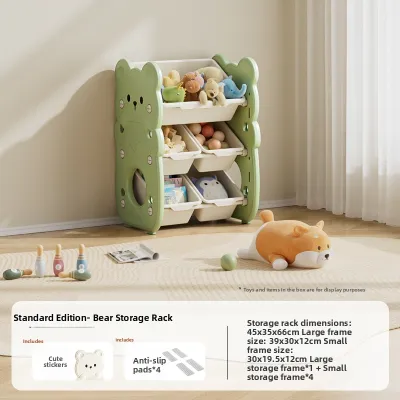
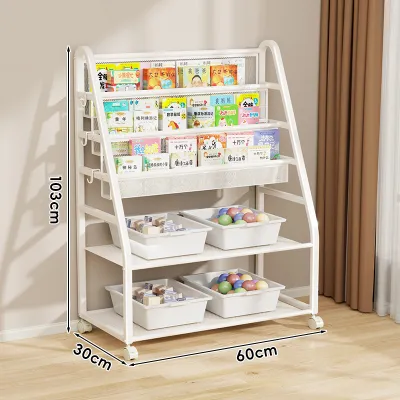
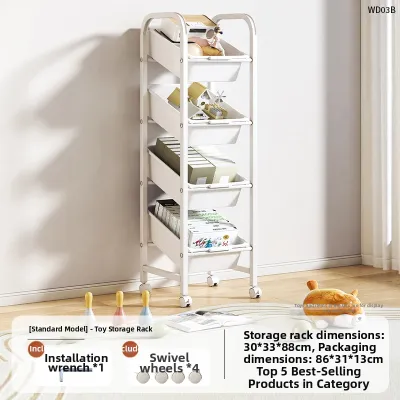
Prices are valid at publication and may change. Please refer to the product page for the latest price.
To find your true available space, start by measuring the total length and width of the room using a standard tape measure. Once you have the total area, subtract the footprint of your non-negotiable nursery furniture. This includes the crib, the changing table or dresser, a comfortable rocking chair or glider, and a diaper pail. What remains is your raw floor space, but not all of it is suitable for a toy organizer.
Next, map out the essential walking paths and clearance zones within the room. Draw a semi-circle on your floor plan to represent the full swing of the nursery door, closet doors, and any dresser drawers when they are fully extended. You need a clear pathway of at least 60 to 75 centimeters to walk comfortably without bumping into furniture. Blocking these zones creates daily frustration and physical hazards when carrying your baby.
Look closely for underutilized or “dead” spaces that might accommodate a slim storage unit. This could be a narrow strip of wall next to the wardrobe, an empty corner behind the door, or the space directly beneath a window sill. Identifying these specific zones allows you to target exact dimensions rather than guessing what might fit.
Finally, sketch a simple floor plan on a sheet of graphing paper or use a free mobile room-planning application. Visualizing the layout from a bird’s-eye view helps you experiment with different placements before purchasing any furniture. This step ensures that your chosen organizer will complement the room’s flow rather than competing with essential baby gear.
Ideal Dimensions for Toy Rack Organizer Shelves in Compact Rooms
Finding a balance between storage capacity and physical size is key to selecting a toy rack organizer shelf that fits your small nursery. The right dimensions will keep toys off the floor without making the room feel visually heavy or physically restricted.

Evaluating Width and Floor Footprint
When determining the width of your toy organizer, aim for a range of 60 to 80 centimeters. This size is wide enough to hold several storage bins side-by-side but narrow enough to fit against short walls or inside small alcoves. Always leave a buffer zone of at least 5 to 10 centimeters on either side of the unit to prevent a crowded, wedged-in appearance.
Be sure to inspect the base design of the shelf before buying. Many modern nursery organizers feature outward-splayed legs or wide wooden bases designed to improve stability. While the upper shelves might measure 70 centimeters wide, the base footprint might require 78 centimeters of floor space. Always use the widest point of the unit as your purchasing guide.
If you anticipate your baby’s toy collection growing rapidly, consider modular or expandable shelving systems. These units allow you to start with a single, narrow column and add matching sections horizontally or vertically as your budget and space allow. This flexibility prevents you from buying a massive unit upfront that dominates the limited space.
Managing Depth and Walkway Protrusion
Depth is perhaps the most critical dimension when choosing furniture for a narrow room. Standard bookshelves are often 35 to 40 centimeters deep, which can severely restrict walkways in a small nursery. For compact spaces, look for slim-profile or shallow units with a depth of 25 to 30 centimeters. This keeps the shelf close to the wall, leaving more open floor space for play mats.
Keep in mind that the listed depth of the shelf frame does not always represent the final footprint. Many popular toy organizers use front-facing plastic bins or fabric baskets that tilt outward for easy toddler access. These bins can protrude an additional 5 to 10 centimeters beyond the front edge of the frame, so calculate this extra clearance when planning your walkways.
If you plan to place the organizer in a narrow hallway, alcove, or behind a door, measure the depth of that specific recess carefully. A shelf that sticks out even slightly past a door frame can catch on clothing, block the door from opening fully, or cause painful bumps during nighttime room checks.
Maximizing Height for Vertical Storage
Utilizing vertical space is an excellent way to increase your nursery’s storage capacity without sacrificing precious floor area. However, a unit that is too tall can make a small room feel dark and claustrophobic. For a balanced look, keep the height of the organizer under 100 centimeters, which aligns roughly with the height of a standard changing table or crib rail.
If you do choose a taller unit, use a smart zoning strategy to organize your baby’s items. Place lightweight, less-frequently used items, extra diapers, or out-of-season clothing on the top shelves. Keep the lower tiers, which are easily accessible to a crawling baby or toddler, stocked with safe, daily toys. This setup encourages independence as your child grows while keeping delicate items out of reach.
Any furniture unit that is tall and narrow presents a potential tipping hazard. As a general rule, if the height of the shelf is more than three times its depth, it must be securely anchored to the wall. Always verify that the manufacturer provides wall-anchoring hardware and that your wall type can support secure installation.
Space-Saving Design Features for Small Nurseries
To get the most out of a small footprint, look for toy organizers that incorporate clever, space-saving design features. These specialized configurations offer high storage volume without requiring extra floor space.
- Tiered or Slanted Shelves: Organizers with angled shelves and removable bins are highly efficient for small nurseries. The slanted design allows you to see and reach the contents of each bin easily, eliminating the need for deep, dark cubbies. Because the bins sit at an angle, the overall depth of the unit can remain incredibly shallow, making it perfect for tight walkways.
- Mobile Units with Lockable Casters: A rolling utility cart or toy rack offers incredible flexibility in a compact home. You can keep the cart tucked away in a closet, behind a door, or in a corner during the day, and roll it out to the center of the room for playtime. When selecting a mobile unit, ensure it features high-quality, lockable casters on at least two wheels. Always engage the locks when the cart is stationary to prevent it from rolling unexpectedly.
- Multi-Functional Furniture: In a small room, every piece of furniture should serve more than one purpose. Consider a low toy storage bench that features cubbies underneath and a padded seat on top, providing a place for you to sit while playing with your baby. Alternatively, look for changing tables that feature integrated lower shelving, allowing you to transition the unit into a dedicated toy rack once your child outgrows diapers.
- Wall-Mounted and Hanging Organizers: If floor space is virtually non-existent, look upward. Wall-mounted shelves, floating book ledges, and hanging fabric pockets keep your floor completely clear for play. When installing wall-mounted storage, always check the manufacturer's weight limits and use appropriate wall anchors. Keep these units entirely out of your baby's reach to prevent pulling hazards.
Safety Clearances and Placement Rules
When arranging furniture in a nursery, safety must always take precedence over storage capacity. Proper placement ensures that your toy organizer does not become a physical hazard as your baby grows and becomes more active.
- Crib Safety Zones: Never place a toy organizer, shelf, or any loose storage bins within arm's reach of the crib. As babies develop motor skills, they will attempt to reach through the crib slats to grab items, which can lead to choking or ingestion hazards. Furthermore, older babies can use the shelves of an adjacent rack as leverage to climb out of the crib, risking serious falls. Maintain a minimum clearance of 90 centimeters between the crib and any nearby furniture.
- Anti-Tip Requirements: Freestanding toy racks, especially those loaded with heavy toys or books, can easily tip over if a child attempts to climb them. It is essential to secure the organizer to the wall using an anti-tip safety kit. In many homes in the Philippines, walls are constructed from concrete or concrete hollow blocks rather than wood studs and drywall. To secure furniture to concrete, you must use a hammer drill, masonry wall plugs (commonly called "tox" in local hardware stores), and heavy-duty screws. Never rely on adhesive strips or simple nails for heavy furniture.
- Window and Blind Cord Clearances: Avoid placing any climbable furniture, including toy racks, directly beneath or next to windows. A curious toddler can easily use the shelves as a ladder to reach window sills, window latches, or hanging blind cords. This creates a severe risk of falls or accidental strangulation. Keep all climbable items far away from windows and ensure blind cords are secured high out of reach.
- Electrical Outlet Access: Do not block electrical outlets with your toy organizer. If a shelf is pushed tightly against an outlet, it can pinch cords, creating a potential fire hazard. Additionally, routing electrical cords around or through a toy shelf to reach a blocked outlet creates dangerous tripping and strangulation hazards for a crawling baby. Keep outlets visible and protected with baby-safe outlet covers, leaving clear space around them.
Common Sizing and Placement Mistakes to Avoid
Avoiding simple planning errors can save you the hassle of returning heavy furniture or dealing with a cramped, dysfunctional nursery.
- Ignoring Usable Space: The most common mistake is buying a toy organizer based on the overall dimensions of an empty room. Always wait until your essential furniture—the crib, wardrobe, and changing table—is placed before measuring for a toy rack. This ensures you are sizing the organizer for the actual remaining space rather than a theoretical layout.
- Overlooking Bin Protrusion: Many parents measure the wooden frame of a shelf but forget to account for the plastic bins that hang off the front. If the bins protrude into a doorway or a main walkway, you will find yourself constantly bumping into them. Always check the maximum depth of the unit with the bins fully installed.
- Improper Material Selection: Due to high relative humidity in the Philippines, fabric bins can sometimes trap moisture and develop musty odors. Opting for easy-to-clean plastic bins, wire baskets, or treated rattan can prevent mold growth and keep your baby's toys hygienic. If you prefer wooden frames, ensure they have a moisture-resistant finish to withstand the tropical climate.
- Improper Weight Distribution: Loading heavy wooden toys, thick board books, or heavy storage boxes onto the top shelves of an organizer is a major safety risk. This raises the unit's center of gravity, making it highly unstable and prone to tipping. Always place your heaviest items on the bottom shelves and reserve the upper tiers for lightweight plush toys, swaddles, or empty baskets.
- Blocking Caregiver Pathways: When placing your toy organizer, walk through the room in complete darkness to simulate a nighttime feeding or diaper change. If the rack is placed along the direct path between the nursery door and the crib, it becomes a major tripping hazard. Keep your primary caregiving pathways completely clear of any low-profile furniture.

Community discussion
Share your experience or ask a question. Comments are reviewed before publication.