
Finding the right baby rocking chair is one of the most important decisions you will make when setting up your nursery or living space. The ideal choice is not determined by aesthetic appeal or popular trends, but by your baby’s specific age, weight, and developmental milestones. Because infants grow and develop at an astonishing rate, a chair that provides safe, soothing comfort for a newborn can quickly become a safety hazard for an active older infant. Understanding how to match the structural design of a rocker to your child’s physical capabilities is essential for preventing injuries and ensuring a peaceful environment for both parent and baby.
To make an informed purchase, caregivers must look beyond marketing labels and carefully evaluate the physical specifications of each product. Every baby develops at their own pace, meaning chronological age is only a rough guideline. By focusing on your baby’s actual physical milestones—such as head control, trunk stability, and mobility—you can select a rocking chair that supports their current stage of growth while keeping them completely secure.
Matching Rocking Chair Types to Your Baby's Developmental Stage
Selecting a baby rocking chair requires a clear understanding of how your child’s physical capabilities change during their first year of life. Manufacturers design these chairs to cater to specific stages of muscular development, particularly neck control and sitting ability. Using a chair that does not align with your baby’s current developmental stage can compromise their safety and comfort.
Products mentioned in this guide
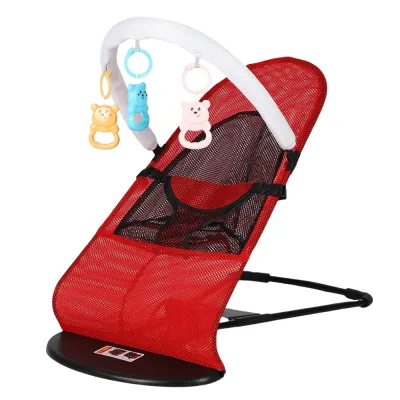
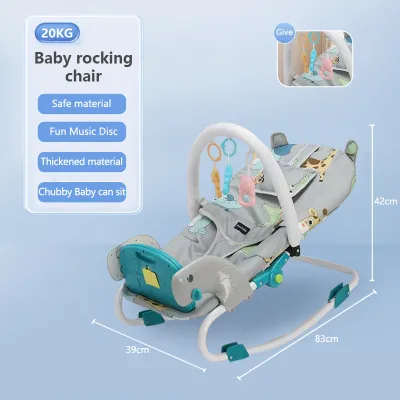
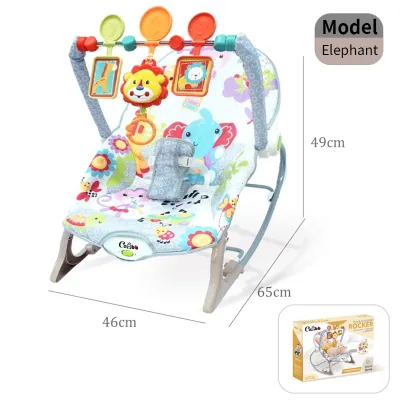
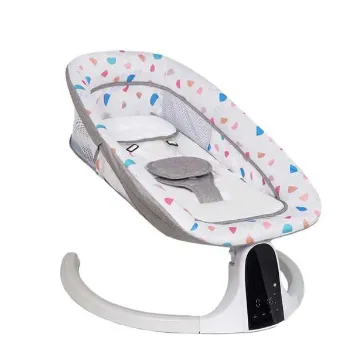
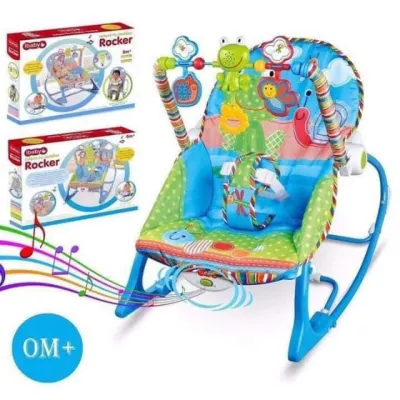
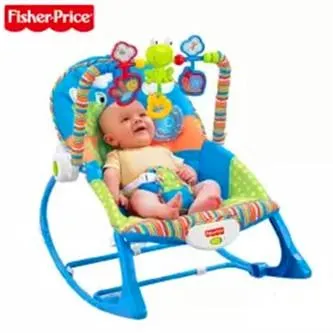
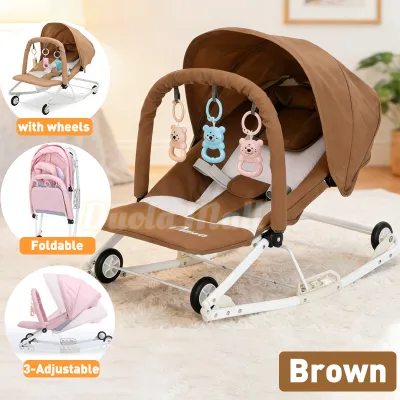
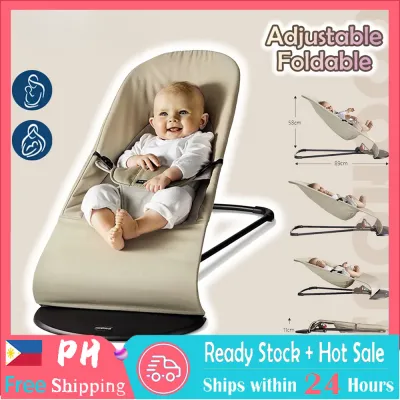
Prices are valid at publication and may change. Please refer to the product page for the latest price.
When a baby is placed in a chair designed for an older, more active child, they may lack the physical strength to maintain a safe posture. Conversely, keeping an older, more mobile infant in a highly reclined newborn rocker can lead to tipping accidents as they attempt to sit up or climb out. By matching the structural category of the chair to your baby’s milestones, you ensure that the support system matches their physical strength.
Newborns and Young Infants: Reclined Support and Gentle Motion
During the first few months of life, newborns lack the muscle strength to support their own head and neck. For this stage, a rocking chair must offer a deep, supportive recline that cradles the baby’s entire body. A flat or semi-reclined angle is critical because it prevents the baby’s head from flopping forward onto their chest, a position that can restrict their narrow airway and lead to positional asphyxiation.
In addition to a secure recline, young infants benefit most from gentle, low-intensity motion. This can be achieved through manual bouncers that respond to the baby’s own subtle movements, or low-intensity automated rocking chairs that sway smoothly. The goal of this motion is to mimic the soothing environment of the womb, helping to calm a fussy infant without overstimulating their developing nervous system.
Before placing your newborn in any rocker, always verify the manufacturer’s minimum weight and age recommendations on the product label. Some models are suitable from birth, while others require the infant to reach a specific weight, often around 3 kilograms, or a certain age before use. Never assume a chair is safe for a newborn simply because it is labeled as a baby product.
Older Infants and Toddlers: Upright Seating and Interactive Play
As babies reach approximately four to six months of age, they begin to develop significant upper body strength, eventually learning to sit unassisted. Once your baby can hold their head up steadily and shows an interest in sitting upright, their seating needs change. They require a chair with adjustable recline settings that allow them to sit at a more upright angle to view their surroundings.
This stage of development also introduces a need for robust harness systems and enhanced structural stability. As babies become more active, they will kick, reach, and wiggle, which exerts force on the chair’s frame. An upright rocker must have a wide, sturdy base to absorb these movements without shifting or tipping over. Adjustable harnesses are essential to accommodate their growing bodies and prevent them from sliding forward.
Many rocking chairs designed for this stage feature removable toy bars or interactive elements. These features encourage motor skill development, such as reaching, grasping, and hand-eye coordination. However, as your child transitions into toddlerhood, you must continuously check the maximum weight capacity of the chair, which often ranges from 9 to 18 kilograms depending on whether the model converts into a stationary toddler seat.
Critical Safety and Comfort Features to Verify on the Label
When shopping for a baby rocking chair, the product label and user manual are your most reliable sources of safety information. Caregivers should systematically verify several non-negotiable safety and comfort specifications before making a purchase. These features ensure the chair remains stable and secure under daily use.

First, evaluate the restraint system. A secure harness is the primary defense against falls. Look for a highly adjustable three-point or five-point harness made of durable, woven webbing. The buckles should be easy for an adult to operate but secure enough that a curious infant cannot release them. Ensure the straps can be tightened to fit snugly against your baby’s body, even over bulky clothing or lightweight tropical wear.
Second, assess the physical stability of the chair’s base. A safe rocking chair should have a low center of gravity and a wide footprint to distribute weight evenly. Inspect the bottom of the frame for robust, anti-slip rubber feet or grips. These grips prevent the chair from sliding across smooth floor surfaces, such as polished wood or ceramic tiles, which are common in many homes. A chair that slides easily can travel across the floor during vigorous rocking, posing a hazard if it nears stairs or furniture.
Finally, look for recognized safety certification marks on the packaging or product tags. While specific standards vary globally, reputable manufacturers will clearly state that their product complies with established juvenile product safety standards. Additionally, read the warning labels carefully. Safe rocking chairs will always feature prominent warnings indicating that the product is not intended for unsupervised sleep and must only be used under direct adult supervision.
Decision Guide: Selecting the Right Rocker for Your Current Needs
Choosing the right baby rocking chair also involves practical considerations tailored to your household, lifestyle, and budget. Parents must decide between manual rockers and electronic or battery-operated models. Manual bouncers and rockers are lightweight, highly portable, and rely on the baby’s natural movements or a gentle push from a caregiver. They require no power source, making them highly reliable and easy to move from room to room.
In contrast, electronic rocking chairs and multi-motion swings offer automated movement, pre-programmed swaying patterns, and built-in sound machines. These models can be highly effective at soothing fussy infants, but they are typically heavier, require a nearby electrical outlet or frequent battery replacements, and occupy a larger footprint. In tropical climates like the Philippines, where high humidity can affect electronic components over time, choosing a model with a well-protected battery compartment or a robust power adapter is an important longevity consideration.
Portability and storage are equally vital for families living in compact spaces or those who travel frequently. If you need to clear floor space daily or transport the chair to a relative’s home, look for models that fold completely flat. A lightweight frame made of sturdy aluminum or high-grade plastic allows for easy carrying without sacrificing structural integrity.
Budget is another practical factor to balance against the expected usable lifespan of the chair. Manual bouncers are generally more budget-friendly, often ranging from ₱1,500 to ₱4,000, whereas advanced electronic swings can exceed ₱10,000. To maximize your investment, consider your baby’s current growth percentile. If your baby is tracking in a higher percentile for weight or height, they may quickly outgrow a basic infant bouncer. In this case, investing in a convertible rocker that transitions from an infant seat to a toddler rocking chair provides much better long-term value.
When to Transition or Stop Using the Baby Rocking Chair
Knowing when to stop using a baby rocking chair is just as important as knowing how to select one. Many parents mistakenly rely solely on age guidelines, but physical milestones are the true indicators of when a chair is no longer safe. Continued use of a rocker past its developmental limit can result in serious fall injuries.
| Developmental Milestone | Action Required | Safety Reason |
|---|---|---|
| Baby attempts to roll over | Discontinue reclined rocker use immediately | Rolling shifts the center of gravity, risking a tip-over |
| Baby pushes up on hands and knees | Stop using bouncers or low-sided rockers | Baby can lean over the side and fall out |
| Baby sits up independently | Transition to upright toddler seat mode (if applicable) | Prevents the baby from straining against the harness or tipping forward |
| Baby reaches manufacturer weight limit | Stop using the chair entirely | Structural integrity of the frame and harness is compromised |
Once your baby exhibits any of these mobility milestones, you must immediately stop using the chair in its infant configuration. If the chair is a convertible model, you may adjust it to the upright toddler setting, provided your child meets the manufacturer’s physical requirements for that mode. If it is a single-stage infant rocker, it must be retired from use immediately.
Always treat the manufacturer’s maximum weight and height limits as absolute stop conditions, regardless of how comfortable your baby seems in the chair. Even if a baby has not yet reached a specific mobility milestone, exceeding the weight limit can stress the frame, joints, and harness straps, leading to sudden structural failure. When your baby transitions out of the rocker, replace it with safe floor-based alternatives, such as a padded playmat or a dedicated playpen, which encourage natural movement and motor skill development under supervision.
Frequently Asked Questions (FAQ)
Is it safe for my baby to sleep in a rocking chair?
No, it is not safe for a baby to sleep in a rocking chair, bouncer, or infant swing. These products are designed strictly for supervised awake time and soothing. When an infant falls asleep in an inclined position, their heavy head can tilt forward onto their chest, potentially compressing their airway and leading to positional asphyxiation. If your baby falls asleep in a rocking chair, always transfer them as soon as possible to a safe, flat, and firm sleep surface, such as a crib or bassinet, in accordance with pediatric safe sleep guidelines.
How do I clean and maintain the fabric and frame of the rocker?
To maintain hygiene and structural integrity, regularly inspect and clean your baby rocking chair. Always check the care label attached to the fabric seat cover before cleaning. Many models feature removable, machine-washable covers, which should be washed on a gentle cycle with mild, baby-safe detergent and air-dried to prevent shrinking. For the frame, wipe down the metal or plastic parts with a damp cloth and mild soap, avoiding harsh chemical cleaners that could degrade the materials or leave harmful residues. In warm, humid climates, ensure the fabric is completely dry before reassembling the chair to prevent the growth of mold or mildew.

Community discussion
Share your experience or ask a question. Comments are reviewed before publication.