
Choosing how to transport formula requires balancing convenience, hygiene, and bag space. The ideal milk powder storage container for travel depends entirely on your destination, the duration of your outing, and how many times your baby needs to feed while you are away. By matching the container design to your specific itinerary, you can prevent messy spills, avoid carrying unnecessary bulk, and ensure your baby’s milk remains dry and safe for consumption.
In tropical climates where high humidity and warm temperatures are common, keeping formula powder perfectly dry is a constant challenge. Moisture exposure can cause powder to clump, making it difficult to measure accurately and potentially encouraging bacterial growth. Selecting a container with a reliable seal and an appropriate capacity for your trip is the first step toward stress-free feeding on the go.
Assessing Your Trip Duration and Feeding Schedule
To select the right container, start by mapping out your itinerary and your baby’s feeding schedule. Calculate the exact number of feeds you will need during the hours you plan to be away from home, then add one extra portion as a safety margin for unexpected travel delays. This calculation prevents you from underpacking while keeping your diaper bag as light and organized as possible.
Products mentioned in this guide
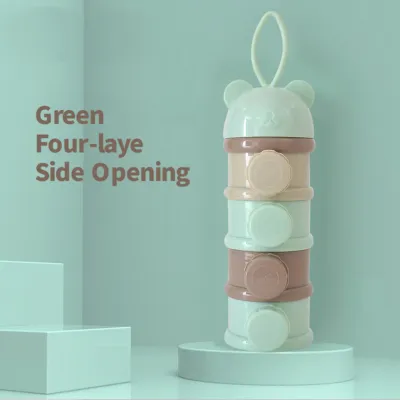
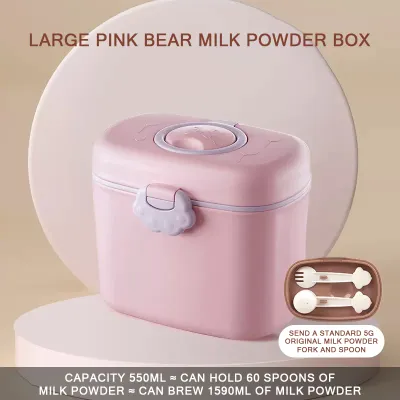
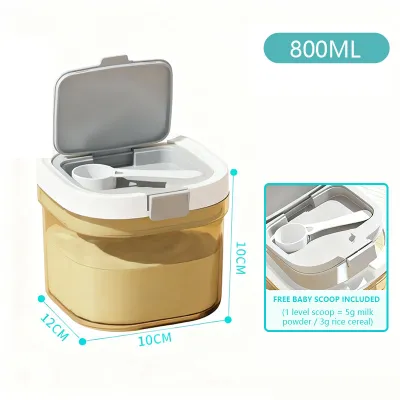
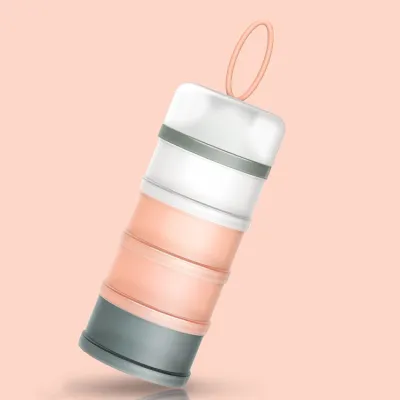
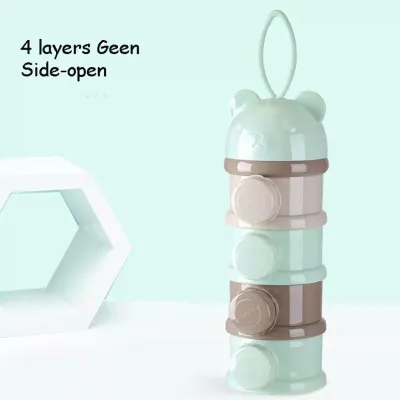
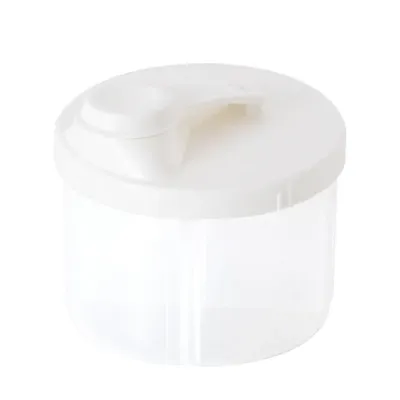
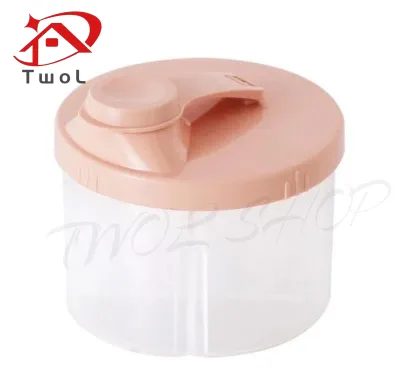
Prices are valid at publication and may change. Please refer to the product page for the latest price.
Next, evaluate the physical space inside your diaper bag or stroller organizer. Heavy, bulky containers can quickly crowd out other essentials like diapers, baby wipes, and a change of clothes. If you are traveling by public transit, walking long distances, or navigating crowded spaces, minimizing weight and bulk is crucial for your comfort.
Consider where you will be preparing the bottles during your journey. Preparing a feed in a crowded shopping mall, a moving vehicle, or a public park requires a container that allows for quick, one-handed dispensing. Conversely, if you are traveling to a relative’s house or a hotel with a dedicated kitchen space, you can prioritize larger capacity over rapid, single-handed access.
Additionally, think about the climate and environment of your destination. If you are spending the day outdoors in a humid coastal area, your formula will be more vulnerable to moisture than if you are staying in an air-conditioned indoor space. This environmental factor should heavily influence whether you choose a container with individual airtight seals or a simpler multi-compartment design.
Single-Serve Holders for Quick Errands and Short Outings
For brief trips, such as a quick doctor’s visit, a walk around the neighborhood, or a short run to the local supermarket, carrying a large multi-tier dispenser is often unnecessary. Single-serve holders, including individual slim cups or specialized sachet organizers, offer a highly streamlined solution. These compact designs are engineered to hold exactly one pre-measured portion of formula powder, fitting easily into a small purse or even a jacket pocket.

Using pre-measured portions significantly reduces the risk of accidental spills when you are out in public. Instead of measuring out scoops of powder from a large tub while balancing a hungry baby, you simply open the single-serve container and pour the contents directly into your prepared bottle of warm water. This speed is incredibly helpful when trying to soothe a crying infant in a busy environment.
Some parents prefer to use pre-packaged single-use formula sachets provided by manufacturers. If you choose this route, a dedicated sachet holder or a hard-shell protective case is highly beneficial. These cases protect the delicate foil packets from being punctured or crushed by keys, toys, or other sharp objects inside your diaper bag, preventing costly and messy powder leaks.
However, these single-serve options have clear capacity limitations. If your outing runs longer than expected or if your baby demands an extra feed, a single-compartment holder leaves you without a backup. For multi-day travel or full-day excursions, relying solely on individual single-serve cups can result in a cluttered diaper bag filled with loose containers, making them less practical than unified multi-feed systems.
Multi-Compartment Dispensers for Extended Trips
When you plan to be away from home for an entire day or are embarking on a longer road trip, multi-compartment dispensers become highly practical. These containers typically feature a stacked, vertical design or a single round tub divided into three or four separate wedge-shaped sections. This layout allows you to organize multiple pre-measured feeds within a single, unified unit, saving you from rummaging through your bag for separate cups.
When evaluating these multi-compartment models, it is essential to check the design of the internal dividers and the rotating lid. A secure seal between the individual compartments is vital; otherwise, fine formula powder can easily shift or leak from one section to another when the container is jostled in your bag. Look for models where the lid snaps tightly over each divider wall, ensuring that each portion remains completely isolated until you rotate the spout to dispense it.
The mechanism of the dispensing spout is another critical detail to inspect. A well-designed spout should align perfectly with each compartment and feature a secure cap that prevents accidental opening. If the spout is too narrow, the powder may bridge and clog during pouring; if it is too wide, it may be difficult to aim into narrow-neck baby bottles without spilling.
While these dispensers offer excellent organization, they do come with physical trade-offs. The multi-tier or wide-tub designs occupy significantly more physical volume in your diaper bag compared to single-serve options. You must weigh this increased bulk against the convenience of having all your feeds consolidated in one place, ensuring the container fits comfortably alongside your water thermos and sterile bottles.
Essential Safety and Design Features to Verify
Regardless of the container style you choose, safety and material integrity must be your top priorities. Because infant formula is highly sensitive to environmental contaminants, you should carefully inspect product labels and manufacturer specifications to verify that the container is made from food-grade, BPA-free plastics. Checking for these material certifications ensures that no harmful chemicals will leach into the dry powder, especially when exposed to warm tropical temperatures.
Moisture is the primary enemy of dry formula powder, making the container’s sealing mechanism a critical feature to inspect. Look for containers equipped with thick silicone sealing rings and robust snap-lock lids or secure screw threads. A high-quality seal prevents humid air and accidental water splashes from entering the container, keeping the powder dry, free-flowing, and safe from microbial spoilage.
Hygiene maintenance requires you to assess how easily the container can be disassembled and cleaned. Complicated designs with deep crevices, narrow spouts, or non-removable parts can trap moisture and formula residue, creating breeding grounds for bacteria. Opt for containers that can be completely taken apart, are safe for sterilization according to the manufacturer’s instructions, and have wide openings that allow for thorough washing and rapid air-drying.
Furthermore, verify the sterilization compatibility of the materials. Some plastics can warp or degrade when exposed to high heat from steam sterilizers or boiling water, while others may not be compatible with UV sterilizers. Always refer to the manufacturer’s cleaning guidelines to ensure you can sanitize the container effectively without damaging its structural integrity or compromising its airtight seals.
On-the-Go Maintenance and Hygiene Practices
Maintaining strict hygiene while traveling is essential to protect your baby’s health. When packing your diaper bag or loading the car, always store your formula containers in cool, dry areas. Avoid leaving them in direct sunlight, near heat sources, or inside a hot vehicle glove compartment, as extreme heat can degrade both the plastic container and the nutritional quality of the formula powder.
When it is time to prepare a bottle, ensure your hands are completely clean and dry before handling the storage container. Introducing even a tiny drop of water from wet hands or a damp spoon into the container can cause the remaining powder to clump and spoil. If you must prepare a feed in a humid outdoor environment, work quickly to minimize the time the container remains open to the air.
If you are staying in a hotel or temporary accommodation, establish a dedicated, clean space for washing and drying your baby gear. Avoid placing sterilized container parts directly on hotel bathroom counters; instead, use a clean, portable drying mat or a freshly laundered towel to let the components air-dry.
Before refilling your travel containers for your next journey, wash every component thoroughly with warm, soapy water. Allow all parts to air-dry completely on a clean rack; filling a container that still holds microscopic traces of moisture will cause the new powder to stick to the walls and clump, making it difficult to dispense accurately and increasing the risk of bacterial growth.
Frequently Asked Questions (FAQ)
Can I store prepared liquid formula in these dry powder containers?
No, dry powder storage containers are not designed to hold liquid formula. These containers typically lack the liquid-tight seals required to prevent leaks, and they do not offer the thermal insulation needed to keep prepared milk at a safe temperature. Storing prepared liquid formula in a non-insulated, non-sterile container can lead to rapid bacterial growth and spoilage; instead, use insulated thermal bottles or prepare the formula fresh using warm water and dry powder stored separately. Always consult the manufacturer’s guidelines for the intended use of your specific container.
How do I prevent formula powder from clumping inside the container during humid trips?
To prevent clumping in humid environments, ensure that every part of the container is completely dry before you pour in the powder. Inspect the silicone seals to confirm they are seated correctly and forming an airtight barrier against the humid air. When dispensing the powder, avoid opening the container near steam from a hot water thermos, and close the lid immediately after pouring to limit exposure to ambient moisture.

Community discussion
Share your experience or ask a question. Comments are reviewed before publication.