
Navigating the milestone of your baby’s first steps is an exciting journey, but choosing the right gear to support this transition can feel overwhelming for first-time parents. With a vast array of options available on online marketplaces and in local baby boutiques, finding a baby walker that balances entertainment, developmental support, and safety requires careful consideration. The decision often comes down to understanding how different designs interact with your child’s natural physical progression and your specific home environment.
In the Philippines, where homes frequently feature hard tiled floors and compact living spaces, selecting the right baby walker involves more than just picking an appealing design. Parents must evaluate structural stability, wheel traction, and safety mechanisms to ensure a secure environment for their little one. By focusing on verifiable safety features, durable materials, and developmental readiness, you can make an informed choice that supports your baby’s growth while protecting your budget.
Understanding Baby Walker Types: Sit-In vs. Push Walkers
To make an informed purchase, it is essential to understand the fundamental differences between the two primary categories of baby walkers: traditional sit-in walkers and push or activity walkers. These designs serve different purposes, position your baby’s body differently, and have distinct impacts on physical development.
Products mentioned in this guide
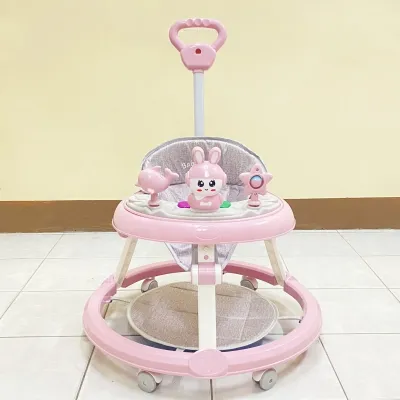
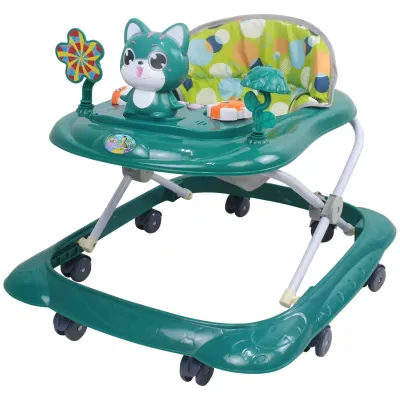
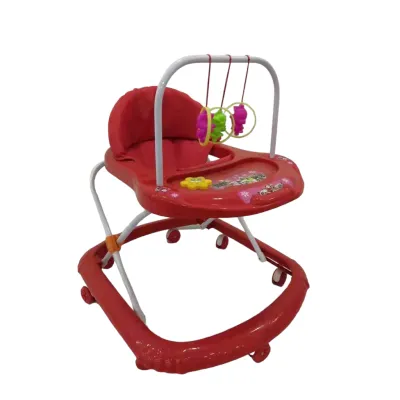
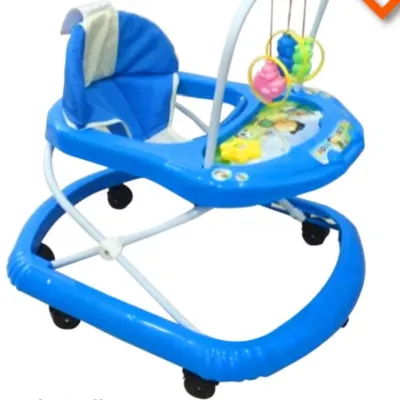
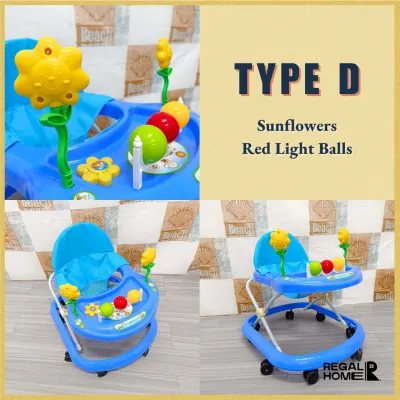
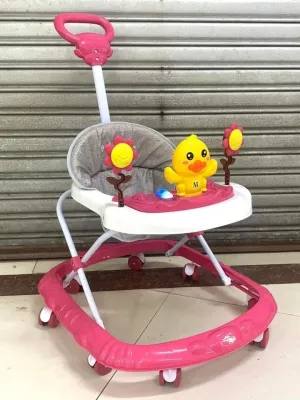
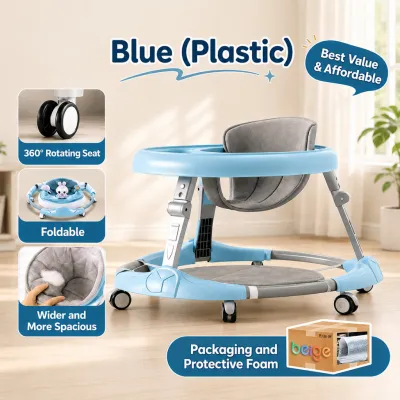
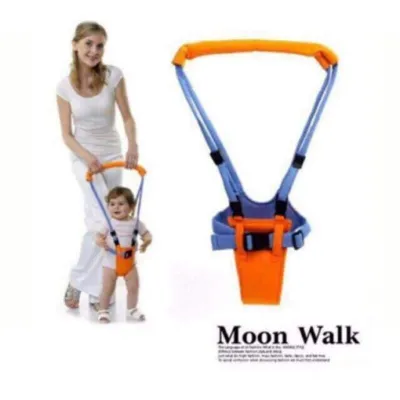
Prices are valid at publication and may change. Please refer to the product page for the latest price.
Traditional sit-in walkers consist of a fabric seat suspended inside a rigid plastic or metal frame equipped with wheels. The baby is placed inside the seat, allowing their feet to touch the floor while the frame supports their body weight. This design allows babies who cannot yet stand on their own to move around the room rapidly. However, because the seat carries the baby’s weight, it does not require them to balance their own torso or actively support their full weight on their feet.
In contrast, push walkers, also known as activity walkers, are designed for babies who are already beginning to stand and pull themselves up. These toys feature a sturdy handle attached to a wheeled frame, often decorated with an interactive toy tray on the front. The baby stands behind the walker, grips the handle, and pushes the toy forward to walk. This design requires the baby to actively engage their core, balance their weight, and take natural steps to move forward.
General pediatric consensus globally raises significant developmental and safety concerns regarding traditional sit-in walkers. Many pediatric experts and health organizations advise against their use because they allow babies to move at speeds and reach heights they are not developmentally prepared for, increasing the risk of accidents. Furthermore, sit-in walkers can encourage unnatural walking patterns, such as toe-walking, and may delay the development of the pelvic and thigh muscles needed for independent walking because the seat does the work of supporting the baby’s weight.
Push walkers, on the other hand, are widely favored by developmental specialists because they align with natural walking milestones. Because the baby must stand independently to use a push walker, the toy supports the natural progression of balance, coordination, and muscle strength. It allows the feet to plant flatly on the ground and encourages the baby to transition their weight from one foot to the other naturally, building the necessary motor skills for unassisted walking.
Essential Safety Features to Verify Before Purchase
Safety must be the primary filter when evaluating any baby walker. Because babies in walkers can move quickly and access areas that are normally out of reach, verifying specific safety mechanisms on the product label and packaging is critical before making a purchase.

For parents considering a sit-in walker, stair-fall prevention mechanisms are non-negotiable. Look for models equipped with large friction strips or rubber grippers on the underside of the base. These safety stoppers are designed to grab the floor and halt the walker instantly if a wheel slips over an edge or a step. Additionally, a wide, flared base that is significantly wider than the top frame helps prevent the walker from tipping over if the baby bumps into furniture or toys on the floor.
When evaluating push walkers, speed control settings and wheel traction are vital. Look for models that feature adjustable tension screws or rubberized friction rings on the wheels. These settings allow you to tighten the wheels to provide resistance, preventing the walker from rolling away too quickly on smooth surfaces like polished tiles or hardwood. A sturdy, textured grip handle positioned at an ergonomic height is also essential to help your baby maintain a secure hold as they push.
Always read the product packaging and manufacturer documentation to verify weight limits, height restrictions, and safety certifications. Look for recognized standards such as ASTM F977 in the United States or EN 1273 in Europe, which indicate that the product has undergone standardized safety testing. Since these certifications can vary, verify them directly with the manufacturer’s official documentation rather than relying solely on retail listings.
Finally, closely inspect the activity tray and overall construction for physical hazards. Check for potential pinch points around folding joints, hinges, and adjustable height mechanisms. Ensure there are no small, easily detachable parts that could pose a choking hazard if placed in the mouth. Because babies frequently touch and mouth their toys, verify that all plastics are BPA-free and that any paint or finishes used are non-toxic and lead-free.
Assessing Durability and Long-Term Value
A baby walker is an investment in your child’s active play, meaning it must withstand daily wear, bumps, and the humid tropical climate of the Philippines. Assessing the build quality and versatility of a walker ensures you get the best value for your money.
Begin by inspecting the frame materials and joint stability. High-quality walkers typically feature thick, impact-resistant plastics and reinforced metal tubing. When examining a physical model or reviewing product specifications, check that the joints do not wobble or flex excessively under pressure. The folding mechanisms should lock securely into place so the walker cannot collapse unexpectedly during use.
Wheel quality is another critical factor for durability and floor protection. In many Philippine homes, flooring consists of smooth ceramic tiles, polished concrete, or hardwood. Hard, cheap plastic wheels can slide without rolling on smooth tiles, offering poor traction and potentially scratching delicate floor surfaces. Look for wheels with rubber tread or soft polyurethane coatings, which provide better grip, roll quietly, and protect your floors from scuffs.
To maximize your budget, look for convertible designs that grow with your child. Some push walkers are designed to transform into stationary activity tables, ride-on toys, or even small scooters as your child develops. This multi-functional capability extends the usable lifespan of the product from a few months to several years, offering much higher long-term value than a single-use walker.
Before purchasing, compare the warranty terms offered by the manufacturer or local distributor. A reliable warranty provides peace of mind regarding manufacturing defects. Additionally, read verified user reviews on online marketplaces, paying close attention to feedback regarding how well the materials hold up over several months of active use and exposure to household humidity.
Building Your Shortlist: A Practical Selection Checklist
Once you understand the types and safety features, you can create a practical shortlist tailored to your home and budget. This step-by-step checklist will help you narrow down your options to the most suitable choice.
First, measure your home’s clearance. Walkers require clear paths to be used safely and effectively. Measure the width of your doorways, hallways, and the spaces between furniture to ensure the walker can maneuver easily without getting stuck. If you have a compact living space, prioritize models that fold flat for easy storage when not in use.
Second, match the walker type to your baby’s current developmental stage. If your baby cannot sit up independently, they are not ready for any type of walker. If they can sit unassisted but cannot yet stand, a sit-in walker may be considered, provided safety guidelines are strictly followed. If your baby is already pulling themselves up to a standing position and taking tentative steps while holding onto furniture, a push walker is the developmentally appropriate choice.
Third, establish a realistic budget in Philippine Pesos (₱). Prices can range from under ₱1,000 for basic models to over ₱5,000 for premium, multi-functional convertible walkers. Allocate your budget toward essential safety features, robust frame construction, and high-quality wheels first, rather than paying extra for elaborate electronic toy trays with lights and sounds that do not contribute to physical development.
Finally, verify the retailer’s return policies and the availability of after-sales support. Ensure you can easily return or exchange the product if it arrives with missing parts or manufacturing defects. Purchasing from authorized local distributors or official brand stores on online platforms often ensures better customer service and access to replacement parts if needed.
Safe Usage Boundaries and Supervision Rules
Even the most highly rated baby walker cannot replace active parental supervision and a safe environment. Establishing strict usage boundaries is essential to prevent accidents and support healthy physical development.
Continuous, direct adult supervision is the absolute golden rule of baby walker safety. A caregiver must remain in the same room and within arm’s reach of the baby at all times while the walker is in use. Walkers allow babies to move remarkably fast, meaning an accident can occur in a split second if the caregiver is distracted.
Before placing your baby in a walker, perform an environmental hazard mapping of the room. Block off all access to stairs, steps, and raised thresholds using secure safety gates. Keep the baby far away from kitchens, cooking appliances, heaters, and outdoor areas like swimming pools or balconies. Ensure that electrical cords, tablecloths, hot liquids, and sharp or fragile objects are completely out of the baby’s reach, as the walker elevates their height and extends their reach.
To prevent postural issues and encourage natural motor development, limit walker sessions to short intervals. Pediatric experts generally recommend restricting walker use to no more than 15 to 20 minutes per session, with a maximum of one or two sessions per day. The majority of your baby’s active time should be spent on the floor practicing crawling, rolling, sitting, and independent standing, which are crucial for building balanced muscle strength.
Know when to stop using the walker entirely. You must discontinue use immediately if your baby reaches the manufacturer’s maximum weight or height limit. For sit-in walkers, stop use if your baby’s feet can plant flat on the floor with bent knees while in the seat, or if they show any ability to climb out of the frame. Transitioning away from the walker at the right time ensures your child continues to develop their walking skills naturally and safely.
Frequently Asked Questions (FAQ)
At what developmental stage is a push walker appropriate?
A push walker is appropriate when your baby is actively pulling themselves up to a standing position independently using furniture for support. This milestone typically indicates that their leg muscles, core, and joints are strong enough to bear their own weight. Caregivers should closely guide early use, staying nearby to assist with steering and to prevent falls as the baby learns to coordinate their steps and balance.
Can traditional sit-in walkers delay independent walking?
Yes, some pediatric studies and clinical observations suggest that traditional sit-in walkers can delay independent walking. Because the seat supports the baby’s weight, they do not practice the balance and trunk control necessary for unassisted walking. Additionally, sit-in walkers can encourage babies to walk on their toes, which can tighten the heel cords and alter natural muscle development. If you have concerns about your baby’s motor development, consult a pediatrician for personalized guidance.
What floor types are suitable for baby walker wheels?
Smooth, flat surfaces like ceramic tiles, polished concrete, and hardwood are highly suitable for baby walker wheels, provided the wheels have rubberized grips to prevent slipping. Thick carpets can make it difficult for babies to push or maneuver the walker, leading to frustration, while highly polished or wet surfaces can cause the wheels to slide. If your home has polished floors, look for walkers with adjustable speed controls or non-slip friction strips to ensure safe traction.

Community discussion
Share your experience or ask a question. Comments are reviewed before publication.