
Starting solids is an exciting milestone for families in the Philippines, marking a transition from exclusive milk feeding to a world of new textures and flavors. To make this transition smooth and manageable, selecting a dedicated baby feeding essentials set is a practical step. These sets typically bundle suction bowls, soft spoons, and easy-to-clean bibs, helping parents minimize mess while keeping mealtime safe. In a warm, humid climate, choosing the right materials is not just about convenience; it is also a matter of hygiene, as damp fabric bibs or poorly designed utensils can quickly become breeding grounds for bacteria and mold.
When preparing for this milestone, caregivers often face an overwhelming array of options on online marketplaces and in local baby boutiques. Navigating these choices requires focusing on structural safety, material integrity, and how well the gear fits into your daily routine. Rather than relying on flashy marketing claims, parents should look for specific design features that support a baby’s physical development and simplify the post-meal cleanup. This guide outlines the essential features to evaluate, safety checks to perform, and practical strategies for choosing a set that will grow with your child.
Core Features to Look for in a Baby Feeding Essentials Set
A reliable suction base is the first line of defense against flying purees and spilled soups. When evaluating a set, inspect the suction cup at the bottom of the bowl or plate. A wider, flatter suction base generally offers better grip on smooth surfaces, such as plastic high chair trays or polished wooden dining tables. It is important to check the manufacturer’s specifications regarding surface compatibility, as suction bases often struggle to stick to textured wood or matte finishes. Additionally, look for a quick-release tab that allows caregivers to lift the bowl easily while remaining out of the baby’s reach. Heat resistance limits are also crucial; verify if the suction base can withstand high temperatures if you plan to warm food directly in the bowl or sanitize it in a steam sterilizer.
Products mentioned in this guide
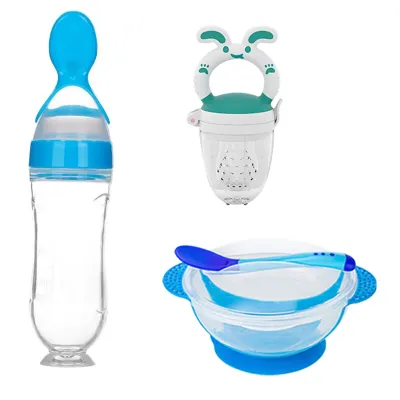
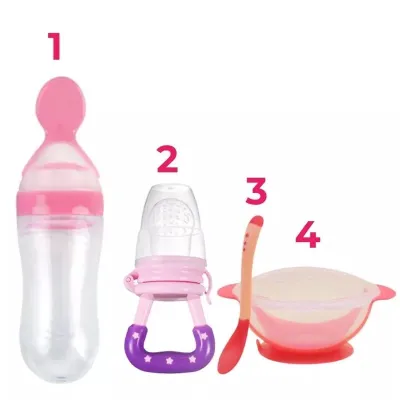
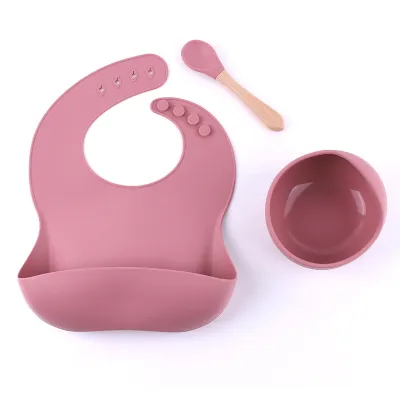
Prices are valid at publication and may change. Please refer to the product page for the latest price.
A baby’s first spoon should be designed with their delicate oral anatomy in mind. Look for spoons made from soft, flexible materials like food-grade silicone, which bend easily and are gentle on tender, teething gums. The spoon’s bowl should be shallow and narrow, allowing a young infant to clear the food easily with their upper lip without gagging. Avoid deep spoon bowls that hold too much food at once, as this can overwhelm a baby who is just learning to swallow solids. The handle design is equally important; a thicker, textured handle is easier for tiny hands to grasp if you are practicing self-feeding, while a longer, ergonomic handle is ideal for parents spoon-feeding from a distance.
Mealtime with a beginner eater is notoriously messy, making a high-quality catch-all bib indispensable. Look for bibs featuring a deep, wide pocket that stays open independently to catch falling crumbs, liquids, and purees before they reach the baby’s clothes or lap. In the Philippines, where high humidity can make laundry dry slowly, a wipe-clean silicone or waterproof plastic bib is highly preferable to traditional fabric options. These materials can be quickly washed with dish soap and wiped dry, ready for the next meal without requiring a trip to the washing machine. Ensure the neck closure is adjustable, soft, and secure, with multiple fastening points that allow the bib to fit comfortably around a growing infant’s neck without chafing or pulling.
Material Safety and Hygiene Checks for First Foods
When purchasing feeding gear, safety must always come first. Caregivers should carefully inspect the product packaging or official manufacturer listings to verify that all components are made from food-grade materials. Look for explicit labels indicating that the products are free from harmful chemicals such as Bisphenol A (BPA), Bisphenol S (BPS), and polyvinyl chloride (PVC). Because these chemical claims are critical for your baby’s health, do not assume a product is safe based on its appearance alone; always look for verified compliance symbols or manufacturer declarations on the packaging.

Proper hygiene is essential to prevent foodborne illnesses, especially in warm tropical environments where bacteria multiply rapidly. Before purchasing a feeding set, check the manufacturer’s instructions regarding cleaning and sterilization compatibility. Verify whether the items are safe for use in dishwashers, microwave sterilizers, UV sterilizers, or boiling water. Some silicone items can withstand extreme heat, while certain plastic components or suction mechanisms may warp or degrade when exposed to high temperatures. Knowing these limits beforehand ensures you can sanitize the gear effectively without compromising its structural integrity.
A thorough physical inspection of the feeding gear can prevent potential safety hazards. Examine the items for any removable parts, small decorative elements, or complex valves that could detach and pose a choking hazard. Furthermore, look closely at the joints, handles, and crevices of bowls and cups. Seamless designs are highly recommended because they lack hidden cracks where food residue, moisture, and mold can accumulate. In humid conditions, any trapped moisture can quickly lead to mold growth, which is difficult to clean and poses health risks to your infant.
Building Your Shortlist: Matching Sets to Your Feeding Routine
Your family’s lifestyle plays a significant role in determining the best feeding set for your needs. If you primarily feed your baby at home, a heavier set with a large suction plate and a matching cup may be ideal. However, if your family frequently travels, visits relatives, or dines out in local restaurants, look for travel-friendly features. Lightweight, collapsible silicone bowls, spoons that come with dedicated travel cases, and bibs that roll up tightly into their own pockets are excellent choices for keeping your diaper bag organized and clean. Lidded bowls are also highly practical for storing leftovers or packing pre-measured snacks for outings.
The feeding method you choose will dictate the shape and style of the tableware you need. For parents introducing solids through traditional purees, deep, rounded bowls are highly efficient, as they allow you to easily scoop up smooth foods with a spoon. Conversely, if you are practicing Baby-Led Weaning (BLW), where the baby feeds themselves soft finger foods from the start, a divided suction plate is more appropriate. Divided plates keep different food groups separated, making it easier for babies to pinch and grab individual pieces of food while preventing the plate from sliding off the high chair tray.
While it can be tempting to buy a basic, low-cost set for the initial weeks of weaning, investing in a versatile, multi-stage set often provides better long-term value. Consider whether the set can adapt as your baby’s skills develop. For example, some sets include spoons with removable training collars that prevent the spoon from going too far into the mouth, which can later be removed as the child gains better control. Bibs with wide ranges of neck adjustments and plates that can transition into toddler snack trays ensure that your initial purchase remains useful well beyond the first few months of solid foods.
Common Mistakes to Avoid When Buying Feeding Gear
One of the most common mistakes is introducing standard metal spoons or rigid plastic utensils too early. A baby’s mouth is highly sensitive, and their emerging teeth and tender gums can easily be bruised by hard materials. Rigid spoons can also trigger a strong gag reflex or cause discomfort, leading the baby to associate mealtime with pain and resist feeding. Always opt for soft, yielding spoon tips during the initial stages of solid food introduction.
Another frequent error is choosing bibs based solely on cute designs without considering comfort. Heavy, stiff silicone bibs or those with thick, scratchy necklines can irritate a young infant’s skin and restrict their movement. If a bib is uncomfortable, the baby may spend the entire meal trying to pull it off rather than focusing on eating. Look for lightweight, flexible silicone or soft waterproof fabrics that drape comfortably over the chest and shoulders.
Caregivers often overlook how difficult a feeding set is to clean until they are faced with washing it multiple times a day. Avoid sets with intricate suction valves, hollow handles, or fabric trims that require hand-washing and long drying times. In a humid climate, fabric-lined bibs or complex plastic parts that cannot be thoroughly dried are highly susceptible to mold. Prioritize simple, single-piece silicone designs that can be washed, dried, and sanitized quickly.
Frequently Asked Questions (FAQ)
When should I introduce a baby feeding essentials set?
Most infants are ready to begin their solid food journey around six months of age, though individual readiness varies. Look for key developmental milestones rather than relying solely on age. Your baby should be able to sit upright with minimal support, maintain good head and neck control, and show active interest in the food you are eating. Another important sign is the disappearance of the tongue-thrust reflex, which automatically pushes solid objects out of the mouth. Before introducing any solid foods or specialized feeding gear, it is highly recommended to consult your pediatrician to ensure your baby is developmentally ready.
Can I use regular household bowls and spoons instead of a dedicated set?
While it is technically possible to use standard household items, dedicated baby feeding sets offer significant safety and practical advantages. Standard adult spoons are typically too wide, deep, and rigid for an infant’s small mouth, increasing the risk of gagging or gum injury. Regular ceramic or glass bowls lack suction bases, making them easy for an active baby to swipe off the table, which can lead to dangerous breakage and messy spills. Furthermore, household plastics may not meet the strict chemical safety standards required for infant products. Investing in a dedicated set ensures the materials are safe, sized correctly, and designed to minimize mealtime frustration.
How do I remove stubborn food stains from silicone feeding gear?
Silicone is highly durable, but it can occasionally absorb pigments from bright foods like carrots, squash, or sweet potatoes. To minimize staining, wash the feeding gear with warm water and mild dish soap immediately after use. Avoid using harsh abrasive pads or bleach, which can damage the silicone surface. For stubborn stains, you can create a paste using baking soda and water, apply it to the stained areas, let it sit for a few hours, and then scrub gently with a soft sponge before rinsing thoroughly. Always check the manufacturer’s care guidelines to ensure any cleaning method you use is safe for your specific product.

Community discussion
Share your experience or ask a question. Comments are reviewed before publication.