
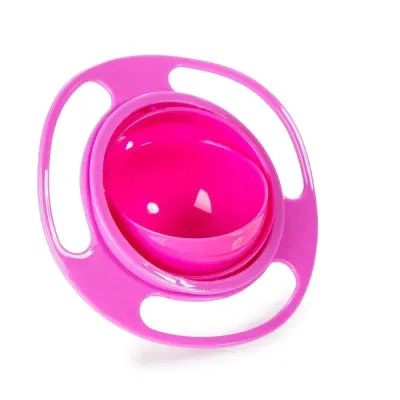
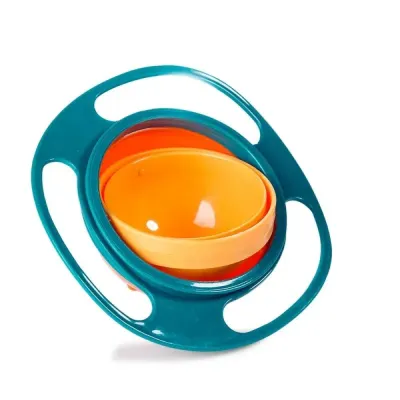
Starting your baby on solid foods is an exciting milestone, but it often comes with an overwhelming amount of cleanup. In the Philippines, where family meals are central, introducing your little one to local staples like mashed kalabasa (squash) or kamote (sweet potato) can quickly turn your dining area into a splash zone. As babies develop motor skills, they naturally want to grab, tilt, and explore their dishes. This is where an anti spill gyro bowl becomes a highly appealing option for parents looking to minimize the daily mess. Designed with an inner bowl suspended inside outer rotating rings, this clever feeding tool uses gyroscopic motion to keep the open end of the bowl facing upward, even when your baby swings, tilts, or turns it.
However, finding the right gyro bowl for your baby’s specific developmental stage requires looking beyond marketing promises of absolute spill prevention. Because these bowls rely on mechanical joints and plastic rings, their performance depends heavily on build quality, material safety, and how easily they can be cleaned in a warm, humid tropical climate. By understanding how these bowls function, what safety standards to verify, and how to navigate local online marketplaces, you can select a durable and safe feeding tool that supports your baby’s transition to solids while keeping mealtime manageable.
Why Consider an Anti-Spill Gyro Bowl for First Solids?
Before adding a gyro bowl to your feeding toolkit, assess whether your baby is developmentally ready for this type of interactive dish. Around six months of age, many babies in the Philippines begin showing signs of readiness for solid foods, such as sitting upright with minimal support, showing curiosity about food, and reaching out to grasp objects. If your baby is actively trying to feed themselves—a common milestone in baby-led weaning—they will naturally want to hold and manipulate their own bowl. A gyro bowl is particularly suited for this stage because it accommodates their still-developing hand-eye coordination, allowing them to explore holding a container without immediately dumping the contents onto the floor.
Products mentioned in this guide
Prices are valid at publication and may change. Please refer to the product page for the latest price.
It is important to distinguish how a gyroscopic bowl differs from a standard suction bowl, as each serves a distinct purpose. A standard suction bowl sticks firmly to a high chair tray or table, preventing the baby from lifting or throwing the dish entirely. While effective, determined babies often figure out how to peel back the suction tab, resulting in a sudden catapult of food. In contrast, a gyro bowl is meant to be picked up, held, and rotated. Instead of restricting your baby’s movement, the gyroscopic design works with their natural urge to turn things upside down. The inner bowl rotates 360 degrees within the outer frame, keeping the food level as the baby carries or tilts the dish.
While these bowls are highly effective at preventing accidental spills from tilting, caregivers must maintain realistic expectations. A gyro bowl is not a magical shield against all messes. It is designed to handle the gentle tilting, carrying, and tipping motions of a learning baby. It cannot, however, prevent a baby from reaching their hands directly into the bowl and flinging the food, nor can it stop spills if the bowl is thrown forcefully or shaken violently. Recognizing these physical limitations helps you view the bowl as a helpful aid to reduce everyday spills rather than a complete replacement for active mealtime cleanup.
Essential Features to Evaluate in a Gyro Bowl
When evaluating different gyro bowls, the smoothness of the rotation mechanism should be your primary consideration. For the gyroscopic action to work effectively, the inner bowl must swing freely within its outer rings without any friction or catching. If the joints are stiff or poorly molded, the bowl will stick when tilted, causing the food to spill just as it would from a regular dish. When inspecting a bowl, gently rotate it in all directions to ensure the movement is fluid and responsive to gravity. The rings should feel secure yet loose enough to allow instantaneous self-leveling.

Material safety is another critical factor that requires careful verification. Because your baby’s food will directly contact the inner surface of the bowl, you must ensure the plastic is entirely safe for food consumption. Look for clear labels on the packaging indicating that the product is made from food-grade plastics, such as high-quality polypropylene (PP), and is completely free from Bisphenol A (BPA), phthalates, and lead. In the tropical climate of the Philippines, where high temperatures and humidity can accelerate the degradation of low-quality plastics, choosing certified food-safe materials is essential for your baby’s long-term health. Avoid any products that lack clear material labeling or safety certifications.
The ease of disassembly and cleaning is a feature that cannot be overlooked, especially given the local climate. The very design that makes a gyro bowl work—multiple overlapping rings and rotating joints—also creates hidden crevices where food particles, purees, and moisture can easily become trapped. If these areas are not thoroughly cleaned and dried, they can quickly become breeding grounds for mold and bacteria. Before purchasing, verify how the bowl comes apart. The most practical designs allow you to snap the rings completely apart for individual washing and then easily click them back together once dry. If a bowl cannot be fully disassembled, it is highly susceptible to hygiene issues over time.
Finally, consider the physical size, weight, and capacity of the bowl in relation to your baby’s current feeding needs. First-solid portions are typically very small, often consisting of just a few spoonfuls of pureed vegetables or soft grains. A bowl that is too large or heavy will be difficult for a six-month-old baby to lift and hold comfortably. Look for a lightweight, compact design with handles that are easy for tiny hands to grip. The inner bowl should have a modest capacity that holds a standard portion of baby food without overflowing, as overloading the bowl can interfere with its ability to rotate smoothly and maintain its balance.
Safety Boundaries and Age Appropriateness
Introducing any new feeding accessory to your baby requires strict adherence to safety guidelines and manufacturer recommendations. Always verify the recommended age range specified on the product packaging before use. Most manufacturers design these bowls for babies who have already achieved key developmental milestones, such as stable head control and the ability to sit unsupported. Introducing a rotating bowl too early, before your baby has developed basic grasping skills, can lead to frustration and unnecessary messes, as they may not yet understand how to interact with the moving parts.
A critical safety check involves inspecting the bowl for potential choking hazards. Because gyro bowls consist of multiple interlocking parts, you must carefully examine the joints, pins, and rings to ensure they are securely attached and cannot easily snap off. If a baby drops the bowl from a high chair onto a hard surface—such as the ceramic tile floors common in many Filipino homes—low-quality plastic joints can crack or break, creating small, sharp pieces or detachable components that pose a severe choking risk. Regularly inspect the bowl before every feeding session, checking for any signs of wear, stress fractures, or loose connections.
You should immediately stop using the gyro bowl if you observe any physical degradation or mechanical issues. If the plastic becomes cloudy, cracked, or sticky, or if the rotating joints become stiff and no longer self-level, the bowl has reached the end of its safe lifespan. Continuing to use a compromised bowl increases the risk of plastic fragments contaminating your baby’s food or the mechanism failing during use. If you suspect the structural integrity of the bowl is compromised, it is always safest to discard it and transition to a standard feeding dish.
Regardless of how ‘spill-proof’ or ‘baby-proof’ a product is marketed to be, active caregiver supervision is absolutely mandatory during every single meal. A gyro bowl is a functional feeding tool, not a toy, and it should never be left with a baby unattended. Your presence is essential not only to assist with feeding and monitor their intake but also to ensure they do not attempt to chew on the outer rings, use the bowl in an unsafe manner, or choke on food. Keeping a watchful eye ensures that mealtime remains a safe, positive, and developmental experience for your growing baby.
Building Your Shortlist on Online Marketplaces
Navigating online marketplaces in the Philippines to find a reliable gyro bowl requires a strategic approach to filter out low-quality imitations. Start by using precise search terms such as ‘BPA-free anti spill gyro bowl,’ ‘food-grade rotating baby bowl,’ or ‘360 rotation baby feeding dish.’ Using specific material keywords helps filter out generic, ultra-cheap listings that may not meet food safety standards. While budget is an important consideration for many Filipino families, be cautious of listings priced suspiciously low, such as those under ₱50, as these often compromise on plastic quality, joint durability, and safety certifications.
When you find a promising listing, cross-reference the seller’s descriptions and product images with official manufacturer specifications. Reliable sellers will provide detailed information about the materials used, the dimensions of the bowl, disassembly instructions, and safety certifications. If a listing contains vague descriptions, lacks clear photos of the packaging, or fails to mention whether the plastic is BPA-free, treat it as a red flag. Do not hesitate to message the seller directly to ask for clarification on the material composition and whether the product comes in its original, labeled packaging.
Evaluating user reviews is one of the most practical ways to gauge the real-world performance of a gyro bowl before making a purchase. Look specifically for feedback from other parents in the Philippines who have used the bowl over several weeks or months. Pay close attention to reviews that mention how well the rotation mechanism holds up after repeated washings, whether the plastic joints crack when dropped on hard floors, and how easy it is to snap the pieces apart for cleaning. Reviews that include photos or videos of the bowl in action can provide valuable insights into its actual size, material thickness, and ease of use.
By combining careful feature evaluation, strict safety checks, and smart online shopping strategies, you can confidently select an anti spill gyro bowl that fits your budget and meets your high standards for safety and hygiene. This practical tool can help ease the transition to solid foods, allowing your baby to explore self-feeding with confidence while keeping your floors and high chairs just a little bit cleaner.
Frequently Asked Questions (FAQ)
Can I put a gyro bowl in the dishwasher or microwave?
You must always consult the specific manufacturer’s instruction manual before exposing a gyro bowl to high heat, such as in a dishwasher or microwave. Many gyro bowls are made from plastics that can warp or degrade when subjected to the intense heat of a microwave or the sanitizing cycle of a dishwasher. If the plastic rings warp even slightly, the alignment of the gyroscopic joints will be ruined, preventing the bowl from rotating smoothly. Additionally, heating low-quality plastics can cause chemical leaching. If you observe any signs of warping, cloudiness, or a change in the texture of the plastic after washing or heating, stop using the bowl immediately. For most gyro bowls, hand-washing with mild baby-safe dish soap and warm water is the safest method to preserve both material safety and mechanical function.
Will a gyro bowl completely prevent all food spills?
No, a gyro bowl will not completely prevent all food spills, as its design has clear physical and mechanical limitations. The gyroscopic mechanism is engineered to counteract gradual tilting and carrying motions, keeping the bowl upright when a baby holds it at an angle. However, it cannot overcome rapid, forceful movements. If a baby violently shakes the bowl up and down, throws it onto the floor, or flips it over with high speed, gravity will not have enough time to adjust the inner bowl, resulting in spills. Furthermore, the consistency of the food plays a major role. The bowl is highly effective for dry snacks like puffs, cereal, or biscuits, and works reasonably well with thick purees. It is not suitable for thin liquids, soups, or local broths like sabaw, as the rapid movement of liquid will easily slosh over the edges of the inner bowl during rotation.

Community discussion
Share your experience or ask a question. Comments are reviewed before publication.