
Choosing the best milk dispenser for weaning babies in the Philippines means finding a solution that offers a highly secure, humidity-resistant seal to combat tropical moisture, uses certified food-grade materials like Polypropylene (PP) or Polyphenylsulfone (PPSU), and perfectly fits your family’s daily travel routine. During the weaning transition, balancing solid foods with milk feeds requires a portable, hygienic way to prepare bottles on the go. The ideal dispenser eliminates the stress of measuring powder in busy public environments while keeping your baby’s formula dry, safe, and clump-free.
Why a Milk Dispenser Matters During the Weaning Transition
The weaning phase is a major milestone, marking the gradual transition from an exclusive milk diet to solid foods. Around the age of six months, infants in the Philippines are typically introduced to their first solid bites, which often include local favorites like mashed squash (kalabasa), sweet potato (kamote), or soft rice porridge (lugaw). While this transition is exciting, it also introduces a new layer of complexity to your daily schedule. Milk remains a vital source of nutrition for your baby during this period, meaning you must balance solid food preparation with regular formula feeds, often while managing busy routines outside the home.
As your baby becomes more active and curious about the world, family outings to local parks, shopping malls, or weekend trips to visit relatives become more frequent. Preparing formula on the go in a warm, tropical climate presents unique challenges. Carrying a large, bulky commercial formula tin in your diaper bag is highly impractical, taking up valuable space needed for diapers, spare clothes, and baby wipes. Moreover, opening a large tin of formula in public spaces increases the risk of exposing the powder to environmental contaminants, dust, and insects.
Products mentioned in this guide
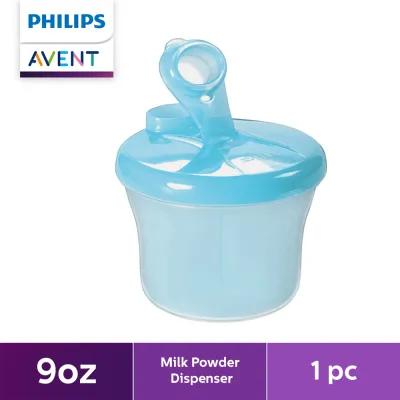
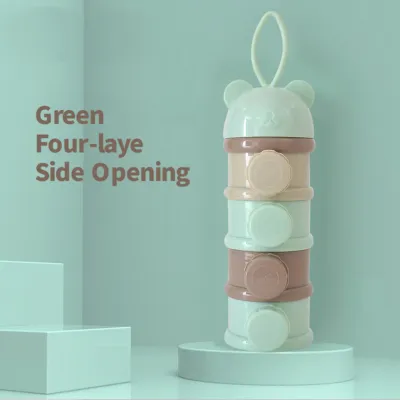
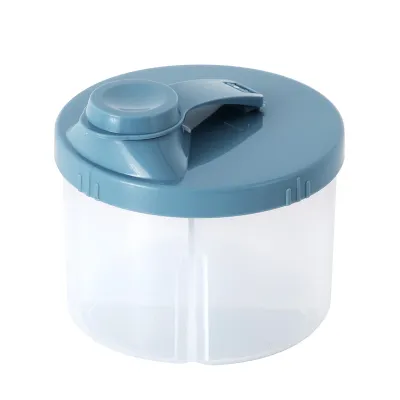
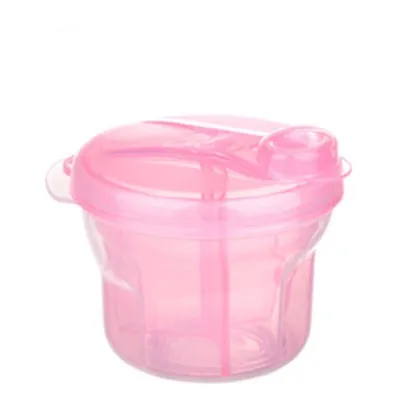
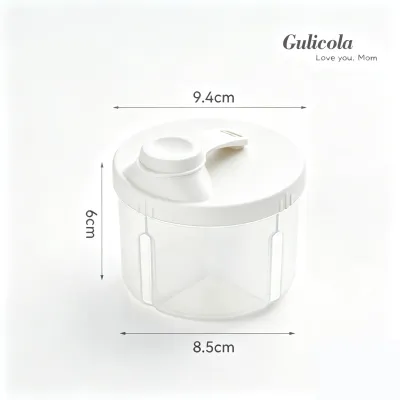
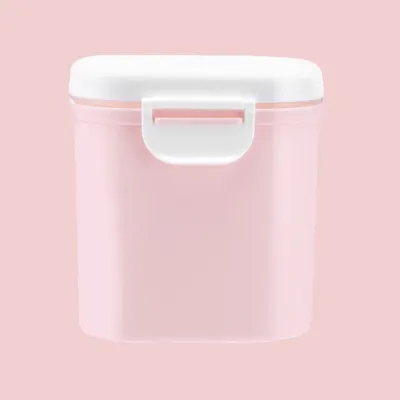
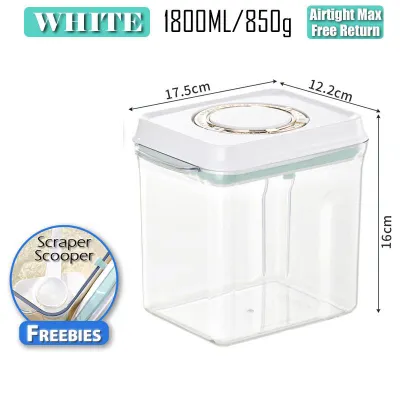
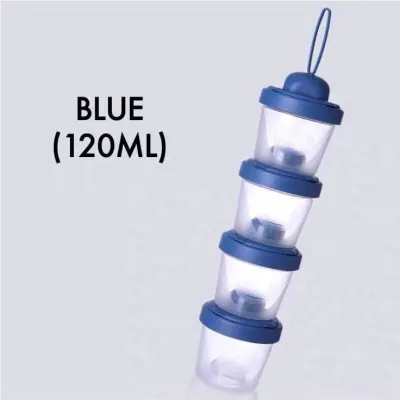
Prices are valid at publication and may change. Please refer to the product page for the latest price.
This is where a dedicated milk dispenser becomes an indispensable tool for parents. A milk dispenser allows you to pre-portion the exact amount of formula powder needed for individual feeds before you leave the house. By measuring out the precise number of scoops in a clean, controlled home environment, you eliminate the stress of counting scoops while holding a hungry, crying baby in a busy public setting. This pre-portioning saves critical time, allowing you to prepare a bottle in seconds by simply pouring the pre-measured powder into warm water.
In the Philippines, the high relative humidity—which frequently exceeds 80%—poses a constant threat to dry formula powder. When formula is exposed to humid air, it absorbs moisture rapidly, leading to clumping. Clumped formula is difficult to dissolve, can clog bottle nipples, and may result in an unevenly mixed feed that causes digestive discomfort or colic for your little one. A high-quality milk dispenser with an airtight seal protects the powder from the humid tropical air, ensuring it remains dry, free-flowing, and safe for consumption until the moment of mixing.
Furthermore, the weaning transition often involves adjusting daily milk volumes as your baby consumes more solid foods. Your baby might transition from large, frequent bottles to smaller, supplementary feeds throughout the day. A milk dispenser provides the flexibility to organize these changing portions systematically. Whether you are navigating Metro Manila traffic, spending an afternoon at the mall, or preparing a quick feed in the middle of the night, having pre-measured formula ready to pour reduces caregiver stress and ensures your baby’s nutritional needs are met smoothly and hygienically.
Core Features to Evaluate Before Buying
Selecting the right milk dispenser requires looking beyond attractive designs or popular brand names. Because this container directly holds your baby’s food, safety, durability, and practical usability must be your primary considerations. By evaluating specific material properties and structural designs, you can select a dispenser that keeps formula safe and makes preparation seamless.

Material Safety and Certification
Your first step when evaluating any milk dispenser is to physically inspect the product packaging, labels, or manufacturer documentation for clear material markings and safety certifications. Do not rely solely on online product titles, which can sometimes use generic or misleading terms. Look for explicit “BPA-free” labels, indicating that the plastic does not contain Bisphenol A, a chemical associated with potential health risks in infants.
The most common and food-safe materials used for milk dispensers include:
- Polypropylene (PP): This is a widely used, lightweight, and highly affordable plastic. It is generally safe, durable, and has a heat resistance of up to 110°C to 120°C, making it suitable for standard washing and mild sterilization.
- Polyphenylsulfone (PPSU): This is a premium, medical-grade plastic easily recognizable by its natural, warm honey-colored tint. PPSU is exceptionally durable, highly scratch-resistant, and can withstand extreme temperatures up to 180°C. It is ideal for parents who plan to sterilize the dispenser frequently using high-heat steam or UV sterilizers.
- Food-Grade Silicone: Often used for sealing rings, gaskets, and flexible spouts, food-grade silicone is highly heat-resistant, flexible, and completely non-toxic.
Spill-Proof and Leak-Proof Design
A poorly sealed milk dispenser can quickly turn a quick trip into a stressful cleanup. If formula powder leaks out of its compartment, it can coat the inside of your diaper bag, ruining spare clothes, diapers, and personal items. When evaluating a dispenser, examine the sealing mechanism closely.
Look for dispensers that utilize deep, secure screw-on threads rather than simple snap-on lids. Screw-on compartments provide a mechanical lock that is highly resistant to being accidentally knocked open inside a crowded bag. Additionally, check for the presence of food-grade silicone gaskets or sealing rings inside the lids. These gaskets compress when the lid is tightened, creating an airtight and moisture-proof barrier that prevents powder migration between compartments and keeps tropical humidity out.
Pouring Ease and Spout Design
When your baby is hungry, every second counts, and a crying baby adds pressure to the preparation process. The design of the pouring spout is critical to ensuring a smooth, mess-free transfer of powder from the dispenser to the baby bottle. If the spout is too narrow, the formula powder can “bridge” or clog the opening, requiring you to shake the dispenser vigorously, which often leads to powder spilling over the sides of the bottle.
Look for a dispenser with a wide, funnel-shaped spout that tapers gradually. The opening of the spout should comfortably fit inside the neck of both standard and wide-neck baby bottles. An anti-scatter lip or a smooth, polished inner surface on the spout helps guide the powder cleanly into the bottle without leaving sticky residue behind. This ensures that the entire measured portion actually makes it into the bottle, preserving the precise nutritional ratio of the feed.
Capacity and Scalability
During the weaning phase, your baby’s milk intake will fluctuate as they explore solid foods. A dispenser must be able to accommodate these changing needs. Some feeds might require a full 8-ounce portion (typically 4 scoops of formula), while other supplementary feeds might only require a 4-ounce portion (2 scoops).
Before purchasing, verify the maximum scoop capacity of each compartment. Ensure that the compartments are spacious enough to hold your maximum required scoop count comfortably without compressing the powder. Compressing or packing the powder makes it highly difficult to pour smoothly and can cause it to stick to the bottom of the container. Opting for a modular or highly scalable dispenser design allows you to adjust the number of compartments you carry based on the length of your outing.
Types of Milk Dispensers Based on Your Routine
To find the best milk dispenser for your family, it is helpful to understand the different structural designs available on the market. Because daily routines vary—from quick walks around the neighborhood to long road trips or daily stays at a caregiver’s house—matching the dispenser type to your lifestyle will ensure maximum convenience.
Stacked/Tower Dispensers
Stacked or tower dispensers consist of multiple individual compartments that screw vertically into one another, forming a compact cylinder. A single, funnel-shaped pouring lid is typically placed on the topmost compartment, and this lid can be moved to whichever section you wish to empty.
- Pros: The vertical design is highly space-efficient, making it incredibly easy to slip into the tall, insulated side pockets of diaper bags or stroller cup holders. Because each compartment is physically separated by a solid plastic bottom, there is absolutely zero risk of formula powder migrating or mixing between sections. This modularity also means you can stack only the number of compartments you need for a specific trip, reducing unnecessary bulk.
- Cons: Because they are tall and narrow, fully stacked towers can be top-heavy and prone to tipping over when placed on flat surfaces like restaurant tables or car dashboards. Additionally, unscrewing and reassembling the vertical sections to access the lower compartments can be difficult to manage with one hand while holding a baby.
Multi-Grid/Box Dispensers
Multi-grid or box dispensers feature a single, flat container divided internally into three or four fixed compartments. They usually come with a rotating lid that features a single pouring spout. To dispense the powder, you simply rotate the outer lid until the spout aligns with the desired compartment.
- Pros: These dispensers have a flat, low-profile shape that slides easily into the main compartment of a diaper bag, a purse, or a backpack. The rotating lid mechanism is highly convenient, allowing you to switch between compartments quickly without having to unscrew or disassemble multiple parts. This makes them excellent for rapid, successive feeds during long outings.
- Cons: If the internal dividers do not fit perfectly flush against the underside of the lid, fine formula powder can migrate between compartments when the dispenser is shaken or carried upside down. This can result in inaccurate portions for individual feeds. Additionally, the fixed internal dividers create sharp corners and deep crevices that require careful cleaning to remove stuck powder.
Single Large Containers with Scoop Levelers
Designed primarily for high-capacity storage, these containers are essentially miniature, highly portable formula tubs. They feature a single, open compartment that can hold a large volume of formula powder (typically between 300g and 500g). They usually include a dedicated slot to store the scoop hygienically away from the powder, along with a built-in metal or plastic scraping bar to level off each scoop.
- Pros: These containers are perfect for extended travel, weekend out-of-town trips, or for leaving at a grandparent's house or daycare center. They eliminate the need to carry heavy, sharp-edged commercial metal tins. The built-in leveler ensures that you can measure highly accurate scoops anywhere, and the wide-open design makes them incredibly easy to clean and dry.
- Cons: Unlike stacked or multi-grid designs, these containers do not pre-portion your formula. You must still manually scoop, count, and level the powder at the moment of preparation. This makes them less suitable for quick, on-the-fly bottle preparation in moving vehicles or dark rooms during midnight feeds.
Comparison of Milk Dispenser Types
To help you decide which format best aligns with your weaning routine, the table below compares these three primary types across key practical dimensions.
| Dispenser Type | Portability | Capacity Flexibility | Ease of Cleaning | Best Use Case | Average Price Band (PHP) |
|---|---|---|---|---|---|
| Stacked/Tower | High (fits vertical pockets) | Medium (modular sections) | High (individual wide openings) | Day trips, mall visits, and single-bottle outings | ₱150 – ₱400 |
| Multi-Grid/Box | Medium (flat but wider footprint) | High (multiple pre-set sections) | Medium (more internal corners) | Full-day travel with multiple planned feeds | ₱200 – ₱500 |
| Single Large Container | Low to Medium (bulky for small bags) | High (dispense any amount needed) | High (large open tub design) | Overnight stays, home kitchen use, and long road trips | ₱350 – ₱800 |
Safety, Cleaning, and Maintenance Guidelines
Maintaining the highest standards of hygiene when cleaning and storing your baby’s milk dispenser is critical to protecting their developing immune system. Formula powder is rich in nutrients, meaning that even tiny traces of moisture or residue can quickly become breeding grounds for harmful bacteria. Implementing a disciplined cleaning and maintenance routine ensures your dispenser remains safe and functional throughout the weaning transition.
Daily Cleaning Steps
After every use, disassemble the milk dispenser completely. Separate all lids, compartments, pouring spouts, and silicone sealing rings. Wash all parts thoroughly in warm water mixed with a mild, baby-safe dishwashing liquid.
Pay close attention to the screw threads, inner corners, and the narrow tip of the pouring spout, as formula powder frequently accumulates in these areas. Use a small, soft-bristled detail brush (such as a nipple brush) to gently scrub these hard-to-reach crevices. Avoid using abrasive scrubbing pads, steel wool, or harsh chemical cleaners, as these can scratch the plastic surfaces. Scratches create microscopic grooves where bacteria and old formula residue can hide, making subsequent cleanings less effective.
Sterilization Boundaries
While sterilizing baby feeding gear is a standard practice, you must verify the specific heat tolerance of your dispenser before exposing it to high temperatures. Plastics and silicone components behave differently under heat, and exceeding their limits can cause warping, melting, or chemical degradation.
Always physically check the product label, packaging, or manufacturer manual for the maximum temperature limit.
- PP plastics are generally safe for standard steam sterilizers or brief boiling (typically up to 3 minutes), but they can warp if exposed to prolonged high heat.
- PPSU dispensers can safely withstand temperatures up to 180°C, making them highly compatible with intensive steam, boiling, and UV sterilization cycles.
- Silicone seals can become brittle, lose their elasticity, or crack if subjected to excessive sterilization over time, which compromises the dispenser's leak-proof capability.
If the manufacturer’s instructions are unavailable or if the material’s heat tolerance is unverified, avoid boiling or high-heat steaming. Instead, wash thoroughly with warm soapy water and air-dry.
Drying and Storage in Tropical Climates
In the tropical climate of the Philippines, high humidity levels can significantly delay drying times and encourage mold growth. Putting formula powder into a dispenser that is even slightly damp will cause the powder to clump instantly, rendering it difficult to pour and prone to rapid spoilage. More importantly, moisture combined with formula residue creates an environment where harmful pathogens, such as Cronobacter sakazakii, can multiply.
After washing and sterilizing, place all disassembled components on a clean, elevated drying rack in a well-ventilated area. Allow all parts to air-dry completely. Avoid using kitchen towels or paper towels to dry the inside of the compartments, as they can transfer lint, dust, and bacteria onto the clean surfaces. Ensure that every thread, seal, and corner is bone-dry before reassembling the dispenser or adding formula powder. Store the empty, dry dispenser in a clean, dust-free cabinet away from direct sunlight and high-heat sources.
Pre-Purchase Checklist for Parents
Before finalizing your purchase of a milk dispenser on any e-commerce platform or at a local baby boutique, use this practical checklist to ensure the product meets your safety standards and daily operational needs:
- Verify Scoop Compatibility: Measure the physical size of your formula brand's scoop. Ensure the dispenser's compartments can easily accommodate the maximum number of scoops your baby currently requires without needing to pack or compress the powder.
- Confirm Material Safety: Look for physical stamps on the product (such as the recycling symbol "5" for PP or "PPSU") and explicit "BPA-free" certifications on the packaging. Avoid products that lack clear material declarations.
- Check Physical Dimensions: Measure the bottle pockets of your diaper bag or stroller organizer. Verify that the dispenser's height and diameter will fit securely into these pockets to prevent tipping or sliding during transit.
- Inspect the Sealing Gaskets: Ensure the dispenser features high-quality, food-grade silicone sealing rings or deep, well-aligned screw threads to protect the powder from tropical humidity and prevent leaks.
- Assess Cleaning Accessibility: Look for rounded internal corners and easily removable seals. Avoid complex designs with deep, narrow crevices that are difficult to reach with a standard cleaning brush.
- Ensure Traceability: Confirm that the product packaging displays clear manufacturer contact details, batch numbers, or official distributor labels, ensuring you can reach out in case of quality issues or product recalls.
Frequently Asked Questions (FAQ)
Can I use a milk dispenser to store baby food purees during weaning?
While many milk dispensers are manufactured using safe, food-grade plastics like PP or PPSU, those designed specifically for formula powder are generally not suitable for storing wet baby food purees. Dry formula dispensers often lack the heavy-duty, liquid-tight seals required to contain wet foods, which can easily lead to messy leaks inside your diaper bag.
Furthermore, wet purees spoil rapidly when exposed to air and warm temperatures, especially in the tropical climate of the Philippines. Because formula dispensers are not insulated or completely airtight against liquid oxidation, storing purees in them can lead to rapid bacterial growth and food spoilage. Always consult the manufacturer’s guidelines; unless the dispenser is explicitly rated for wet food and liquid storage, you should use dedicated, leak-proof glass jars or silicone baby food containers designed specifically for purees.
How often should I replace a plastic formula dispenser?
There is no universal calendar timeline for replacing a plastic milk dispenser, as its lifespan depends on the material quality, how frequently it is used, and how it is cleaned. Instead of relying on a strict timeline, parents should regularly inspect the dispenser under good lighting for physical and visual signs of wear.
Replace the dispenser immediately if you notice any cloudiness, persistent discoloration, or a lingering sour odor that does not go away after thorough washing. You must also replace it if you detect physical damage, such as deep scratches, hairline cracks, or warped screw threads. Deep scratches are highly hazardous because they can harbor microscopic formula residue and bacteria that regular washing cannot remove. If the silicone sealing rings become stretched, cracked, or lose their elasticity, the dispenser will no longer keep moisture out, and it should be replaced to ensure formula safety. For standard PP dispensers, replacing them every 4 to 6 months of daily use is a practical guideline, while high-grade PPSU dispensers can safely last up to a year or more if properly maintained.

Community discussion
Share your experience or ask a question. Comments are reviewed before publication.