
When selecting a toothbrush for a 1-year-old girl in the Philippines, the ideal approach involves using two distinct tools: a short-handled training brush with a built-in choke guard for her to hold, and a long-handled, ultra-soft nylon brush for parent-assisted cleaning. At twelve months old, a baby’s mouth is highly sensitive, and their coordination is still developing. Selecting a brush with extra-soft bristles, a compact head, and verified non-toxic materials ensures that early oral hygiene is both safe and comfortable. This guide helps you navigate the essential features, safety standards, and daily care routines to keep your little one’s emerging teeth clean and healthy.
Essential Features for a 1-Year-Old's Toothbrush
Protecting a toddler’s delicate oral cavity requires a toothbrush designed specifically for their developmental stage. The most critical feature of any baby toothbrush is the softness of the bristles. At one year old, a baby’s gums are often tender from teething, and their tooth enamel is much thinner than that of an adult. Look for brushes labeled “extra soft” or “ultra soft” made from high-quality nylon. While silicone bristles are incredibly gentle and excellent for soothing sore gums, they are less effective at sweeping away plaque once multiple teeth have erupted.
The dimensions of the brush head must be carefully scaled to fit a small mouth. A brush head that is too large will cause discomfort, trigger the gag reflex, and make it difficult to reach the back molars. Ideally, the brush head should measure no more than 1 to 1.5 centimeters in length. A rounded, rubberized brush head is also highly beneficial, as it cushions accidental bumps against the gums and cheeks during brushing sessions.
Products mentioned in this guide
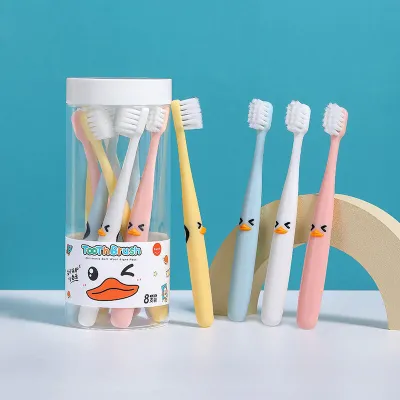
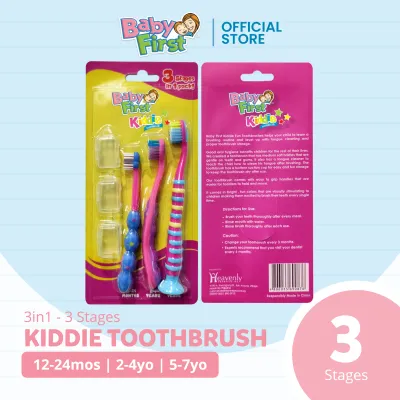
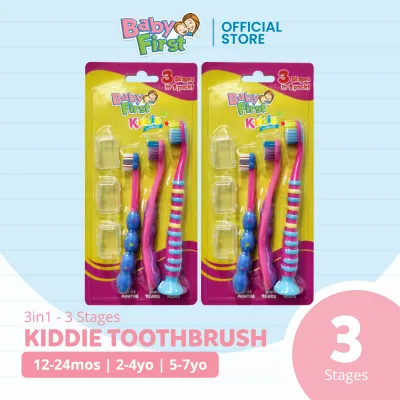
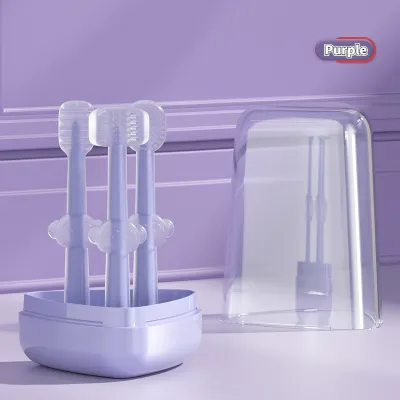
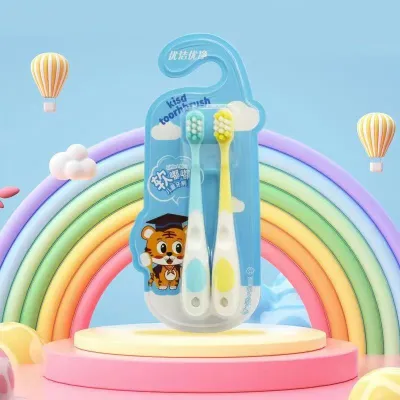
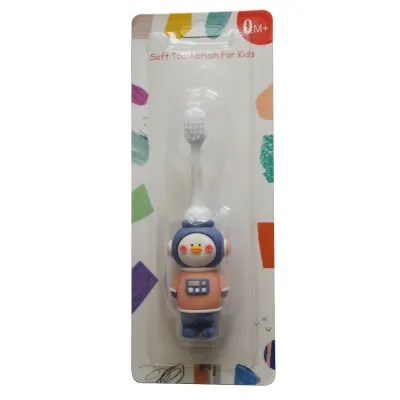
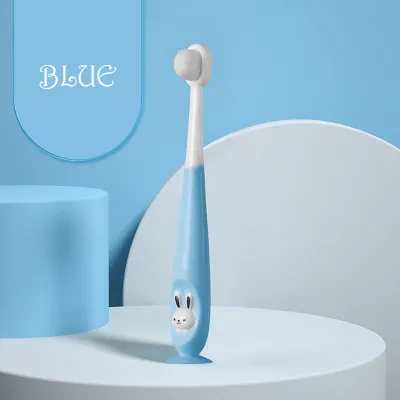
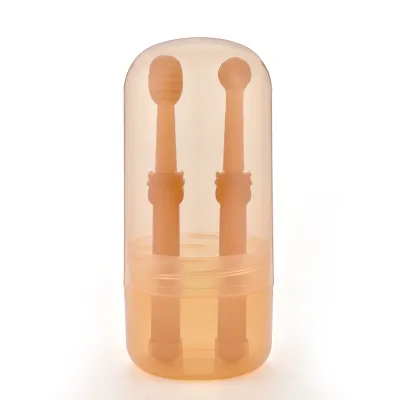
Prices are valid at publication and may change. Please refer to the product page for the latest price.
Handle design must accommodate two very different users: the parent and the baby. For the baby, the handle should be short, thick, and textured to suit a primitive palmar grasp. This allows your little one to practice holding the brush and mimicking your movements. For the parent, a longer, ergonomically designed handle is necessary to provide the control and precision needed to clean every tooth surface thoroughly without slipping.
Safety features are paramount when a baby is allowed to handle a toothbrush. A built-in physical stop or a wide, detachable choke guard is an essential safety component. This shield prevents the toothbrush from sliding too far into the baby’s mouth, reducing the risk of throat injury or choking if the baby makes a sudden movement or loses her balance while holding the brush.
Types of Toothbrushes Suitable for 1-Year-Olds
Silicone finger brushes are often a parent’s first introduction to baby oral care. These slip-on brushes fit snugly over an adult’s index finger, allowing you to gently massage sore gums and clean the very first incisors. They offer excellent tactile feedback, letting you feel exactly where you are cleaning. However, as more teeth erupt and the baby’s bite becomes stronger, finger brushes offer less protection for your finger and less cleaning power for the teeth.

Short-handled training brushes are designed for babies who are eager to participate in their daily routine. These brushes often feature a circular or ring-shaped handle that is easy for tiny hands to clutch. They typically include a wide silicone shield that acts as a choke guard. These brushes are excellent for fostering independence and desensitizing the baby to the sensation of bristles in her mouth, though they are not meant for deep cleaning.
Longer-handled baby brushes are the primary tools for effective plaque removal. These brushes feature a small, tapered head with ultra-soft nylon bristles and a long handle designed for adult hands. Because a one-year-old lacks the manual dexterity to clean her own teeth, parents must use this type of brush to perform the actual cleaning, ensuring that all surfaces of the teeth are reached.
Transitioning between these types depends on your baby’s dental development. Finger brushes are ideal for the first few teeth, but once the first molars begin to emerge, transitioning to a combination of a short-handled training brush for the baby and a long-handled nylon brush for the parent provides the best balance of safety, skill development, and hygiene.
Matching the Toothbrush to Your Baby's Developmental Stage
Selecting the right toothbrush requires assessing your baby’s current teething progress. If your one-year-old only has a few front incisors, soft silicone bristles or a finger brush may still suffice for gentle cleaning. However, as the first molars begin to emerge, transitioning to ultra-soft nylon bristles is necessary to clean the grooves and pits where food particles easily accumulate.
Evaluate your baby’s grasping ability and interest in self-care. If your daughter constantly reaches for your toothbrush or tries to grab her own, she is showing signs of readiness for a training brush. Providing her with a safe, short-handled brush of her own satisfies this developmental milestone and helps prevent power struggles during brushing time.
Implementing a two-brush strategy is a highly effective way to manage cooperative brushing. Give your baby a short-handled training brush to hold, chew on, and explore. While her hands and mouth are occupied with her brush, you can use a second, long-handled brush to gently and systematically clean her teeth. This keeps the experience positive while ensuring a thorough clean.
Watch for observable signs that indicate it is time to transition to a more advanced brush design. If your baby has successfully adapted to the sensation of brushing and has several erupted teeth, you can gradually phase out the silicone training brushes and rely more on the ultra-soft nylon bristle brushes, always under strict adult supervision.
Safety Verification and Buying Checklist
When shopping for baby toothbrushes in local pharmacies, baby boutiques, or online marketplaces in the Philippines, safety verification should be your top priority. Always check the packaging for explicit age-grade labels, such as “0-2 years” or “12+ months.” Avoid using brushes designed for older children, as their heads are too large and their bristles are too stiff for a toddler’s mouth.
Verify the material safety claims on the product packaging. Look for clear indicators that the toothbrush is BPA-free, phthalate-free, and made from food-grade silicone or non-toxic plastics. Since babies naturally chew on their toothbrushes, ensuring that the materials are free from harmful chemicals is critical for their long-term health.
Inspect the packaging carefully for tamper-evidence. The toothbrush should be completely sealed in its original blister pack or box. Avoid purchasing unbranded, poorly labeled, or suspiciously cheap items priced at only a few ₱, as these products may not comply with safety standards and could feature low-quality bristles that shed or scratch the gums.
When ordering from digital storefronts, pay close attention to seller credentials and customer reviews. Look for official brand stores or authorized distributors to ensure product authenticity. Read through customer feedback and look for uploaded photos of the packaging to verify that the product matches the description and contains proper English instructions and safety warnings.
Daily Brushing Routine and Toothbrush Care
Establishing a consistent daily brushing routine is essential for preventing early childhood caries. For children under three years old, pediatric dental guidelines recommend using a tiny smear of fluoride toothpaste, roughly the size of a single grain of rice. This small amount is safe if swallowed, which is inevitable since one-year-olds cannot spit out toothpaste yet.
Positioning is key to a safe and effective brushing session. Never leave a one-year-old alone with a toothbrush. Use the lap-to-lap method or cradle your baby’s head in your lap while sitting on the floor or bed. This position provides excellent visibility and stabilizes her head, making it much easier to brush gently and thoroughly while preventing sudden movements that could cause choking.
The tropical climate and high humidity in the Philippines create an ideal environment for mold and bacterial growth on damp surfaces. After each use, rinse the toothbrush thoroughly under running water to remove all food particles and toothpaste residue. Shake off excess moisture and store the brush upright in an open cup or holder to air-dry completely. Avoid using closed covers or travel caps, which trap moisture and encourage mold.
Replace your baby’s toothbrush every two to three months, or sooner if you notice visual signs of wear. Because toddlers frequently bite and chew on the bristles, the brush head may wear out much faster than an adult’s. Splayed or frayed bristles can scrape sensitive gums and lose their cleaning effectiveness. Additionally, always discard and replace the toothbrush immediately after your baby recovers from an illness, such as a cold or viral infection, to prevent re-infection.
Frequently Asked Questions (FAQ)
Can a 1-year-old safely use an electric toothbrush?
While some low-vibration, battery-powered brushes are marketed for toddlers, they are generally not necessary for a one-year-old. If you choose to use one, ensure it is specifically rated for ages 0-2, features extremely soft bristles, and is controlled entirely by the parent. Never let a baby chew on or hold an active electric toothbrush unsupervised, as the vibrations can be overwhelming and the heavy handle poses a physical hazard if dropped.
How often should I replace my 1-year-old's toothbrush?
A baby’s toothbrush should be replaced every two to three months under normal conditions. However, because one-year-olds frequently bite and chew on the bristles, the brush head may wear out much faster than an adult’s. Inspect the brush weekly; if the bristles are splayed, bent, or falling out, replace it immediately. You must also replace the brush after any illness to keep bacteria from lingering on the damp bristles.
Is it safe to let a 1-year-old use a regular baby toothbrush without a choke guard?
No, it is not safe to let a one-year-old handle a toothbrush without a choke guard on their own. Toddlers have developing motor skills and are prone to sudden movements, tripping, or falling. If they fall while holding a standard long-handled brush, it can easily push deep into their throat, causing severe gagging, choking, or internal injury. Standard brushes without guards should only be held and operated by an adult.

Community discussion
Share your experience or ask a question. Comments are reviewed before publication.