
Choosing the right spoon and fork set for your little boy during the weaning transition is a major milestone in his developmental journey. As your baby transitions from milk to solid foods, the utensils he uses play a critical role in building his confidence, coordination, and fine motor skills. The ideal cutlery set must balance safety, ergonomic design, and durability, allowing your child to explore textures and tastes without frustration. By focusing on age-appropriate designs, certified food-safe materials, and practical features, you can make mealtime an engaging and successful learning experience.
In the Philippines, where family meals are a central part of daily life, finding the right weaning tools also means considering local factors like tropical humidity and typical household sterilization routines. High humidity can affect how certain materials dry and store, making material selection and maintenance even more critical. Whether you are practicing baby-led weaning or traditional spoon-feeding, the right utensils will help your boy transition smoothly from being fed to feeding himself.
Essential Design Features for Developing Motor Skills
When selecting a spoon and fork set for a growing toddler, the physical design of the utensils directly impacts how quickly and comfortably he learns to self-feed. During the early stages of weaning, a child’s hand muscles are still developing, and their grip transitions from a primitive palmar grasp—where they hold objects with their entire fist—to a more refined pincer grasp using their fingers. Utensils with thick, contoured handles are much easier for small hands to clasp securely, reducing the frustration of dropped cutlery and spilled food.
Products mentioned in this guide
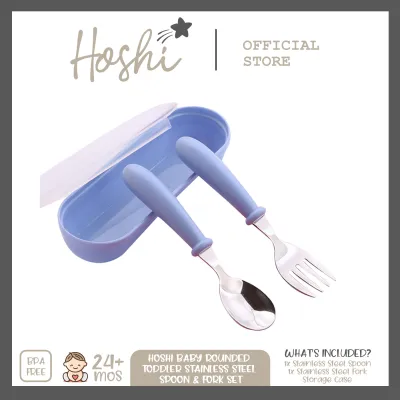
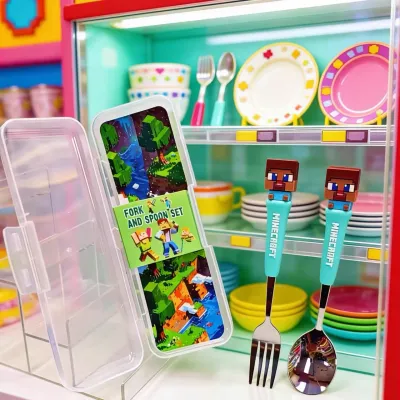
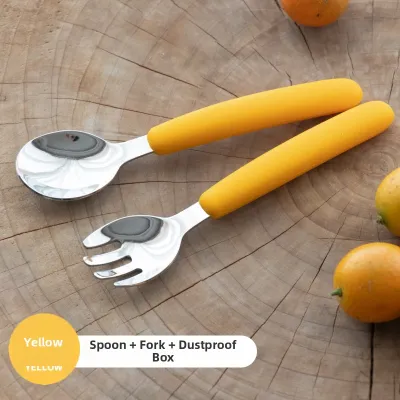
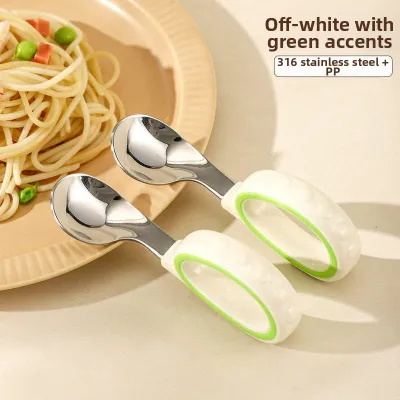
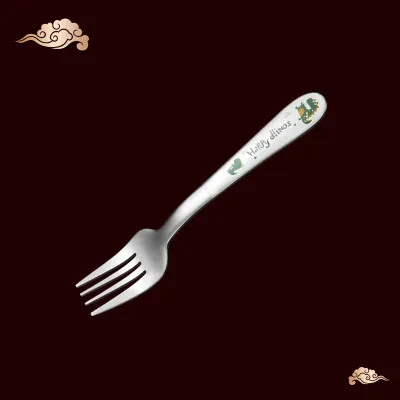
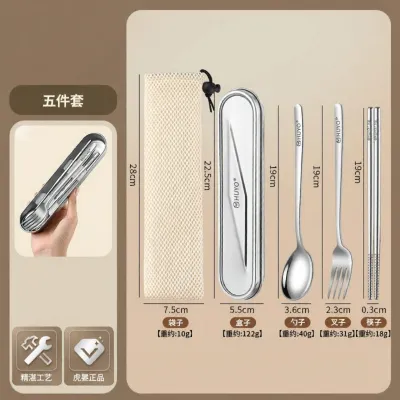

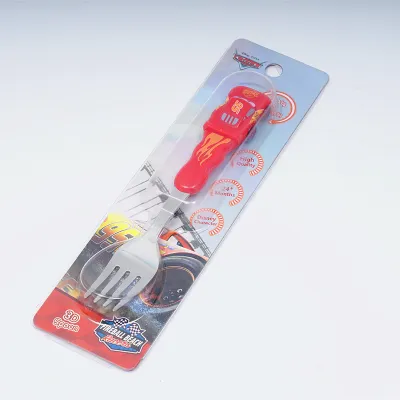
Prices are valid at publication and may change. Please refer to the product page for the latest price.
Texture is another vital element of handle design. Smooth, glossy plastics can easily slip out of soapy or food-covered fingers, whereas textured surfaces, raised ridges, or silicone sleeves provide the friction needed for a stable hold. Look for handles that are ergonomically curved to match the natural bend of a toddler’s hand, which helps them guide the food toward their mouth with less wrist rotation.
The design of the utensil heads requires equal attention to ensure both safety and functionality. For the spoon, the bowl should be shallow enough to allow your boy to clear the food easily with his upper lip, yet deep enough to hold purees or soft grains without immediate spilling. A spoon bowl that is too deep can cause frustration, as the child may struggle to reach the food at the bottom, while a flat spoon will fail to hold any liquids.
For the fork, safety is the primary concern. The tines must be blunt and rounded to prevent any accidental pokes to your child’s delicate gums, tongue, or cheeks. However, they must still possess enough structural definition to pierce soft foods like steamed sweet potatoes, carrots, or bananas. Avoid forks with sharp, needle-like tips, and instead opt for designs where the tines are thick, smooth, and slightly curved to scoop rather than stab.
Weight distribution plays a subtle but significant role in how a child manipulates cutlery. Utensils that are too heavy can tire out a toddler’s forearm muscles quickly, leading them to abandon the tools in favor of their hands. Conversely, extremely lightweight plastic utensils can feel flimsy and fail to provide the sensory feedback your child needs to understand where the spoon is in relation to his mouth. A balanced utensil with a slightly weighted handle helps ground the hand and encourages more deliberate, controlled movements.
Verifying Material Safety and Food-Grade Standards
Navigating the product descriptions on online marketplaces requires a critical eye, as generic marketing terms can sometimes obscure the actual safety standards of the materials used. When shopping for your boy’s cutlery, always look for explicit, manufacturer-backed declarations stating that the products are free from Bisphenol A (BPA), polyvinyl chloride (PVC), and phthalates. These chemical compounds, often found in lower-grade plastics, can leach into food, especially when exposed to high temperatures during heating or sterilization.

Food-grade silicone has become a highly popular material for early weaning due to its soft, flexible nature. It is gentle on tender, teething gums and highly resistant to breaking or cracking if dropped from a high chair. However, because silicone is highly flexible, it may not provide enough structural rigidity for older toddlers who are trying to pierce denser foods. When evaluating silicone utensils, check the manufacturer’s specifications to ensure they use 100% food-grade silicone without cheap plastic fillers, which can be verified by twisting the silicone; if white stress marks appear, fillers may be present.
Stainless steel is an excellent, highly durable option for older babies and toddlers who have mastered basic scooping. It is naturally hygienic, easy to clean, and does not retain food odors or stains. When choosing stainless steel, ensure the product label specifies “food-grade” or “18/8 stainless steel” to guarantee resistance to rust and corrosion. Many high-quality toddler sets combine a stainless steel head with a thick silicone or plastic handle, offering the durability of metal alongside a comfortable, slip-resistant grip.
Bamboo and other natural wood options offer an eco-friendly aesthetic, but they require careful consideration in tropical climates like the Philippines. High humidity can trap moisture in organic fibers, making bamboo utensils susceptible to mold and bacterial growth if they are not dried thoroughly after every wash. If you choose bamboo, verify that the utensils are finished with a food-safe, non-toxic varnish and be prepared to hand-wash and air-dry them in a well-ventilated area.
Always check the packaging or product manual for explicit age-appropriate labeling and choking hazard warnings. Some cutlery sets feature detachable parts, decorative toppers, or small animal figures on the handles. While these designs may look appealing to kids, they can pose a severe choking hazard if they become loose. Ensure that the spoon and fork are constructed as single, solid pieces or have securely bonded components that cannot be pulled apart by a determined toddler.
Matching Utensils to Your Boy's Weaning Stages
A child’s weaning journey is not a single event but a series of developmental milestones, and the utensils they use should evolve alongside their motor skills. In Stage 1, often referred to as the pre-loading phase, babies around six months old are just beginning to explore solids. At this stage, they do not yet possess the coordination to scoop food themselves. Utensils designed for this phase often feature flat, textured heads with open channels or dimples that hold purees when dipped, allowing parents to pre-load the spoon and hand it to the baby to bring to his mouth.
As your boy enters Stage 2, typically around nine to twelve months, he will begin making active, independent scooping attempts. This phase is characterized by uncoordinated movements and a strong palmar grasp. Cutlery for Stage 2 should feature very short, chunky handles that fit snugly inside a closed fist. The short length is crucial because it reduces the distance between the child’s hand and his mouth, making it much easier for him to aim accurately and reducing the likelihood of poking himself in the eye or cheek.
During Stage 3, which usually begins around fifteen to eighteen months, your toddler will start developing better wrist rotation and a more refined pincer grasp. He will transition from grabbing the handle with his whole fist to holding it more like an adult, using his fingers. At this point, you can introduce utensils with longer, slimmer handles that mimic adult cutlery but are still scaled down for toddler hands. The spoon bowl can be slightly deeper, and the fork tines can transition from soft silicone to rounded stainless steel to accommodate a wider variety of family foods.
By matching the utensil design to your boy’s current stage, you prevent the frustration that often leads to mealtime tantrums. Introducing a long, metal fork too early can result in accidental injury or discouragement, while keeping a toddler on soft, flat pre-loaders for too long can stall his progress. Observe how your child holds his toys and feeds himself finger foods to determine when he is ready to graduate to the next stage of cutlery.
Building Your Shortlist: Pre-Purchase Verification
Before finalizing your purchase on an e-commerce platform or at a local baby boutique, it is wise to establish a practical verification checklist to ensure you are getting the best value for your money. In the Philippines, high-quality toddler spoon and fork sets typically range from ₱300 to ₱800, depending on the materials and brand reputation. While it may be tempting to opt for cheaper, unbranded sets, investing in durable, certified materials ensures the utensils will survive daily drops, washings, and sterilizations without degrading.
Always verify the cleaning and sterilization limits of the cutlery directly from the manufacturer’s product manual or official listing. In tropical environments, keeping baby items sterile is a priority for many parents. Check whether the utensils are dishwasher-safe, microwave-safe, and compatible with steam or UV sterilizers. Some materials, particularly certain plastics and bamboo, can warp, melt, or release harmful fumes when exposed to the high heat of a steam sterilizer or the intense rays of a UV cabinet.
Practical design additions can significantly improve your daily mealtime routine. Look for spoon and fork sets that feature built-in utensil rests—small protrusions on the underside of the handle that keep the dirty head of the spoon or fork elevated off the table surface. This keeps your dining table clean and prevents the utensils from picking up dust or hair from the surface.
A travel case is another highly valuable accessory to look for when building your shortlist. Whether you are visiting relatives, dining out at a local restaurant, or traveling, having a dedicated, hygienic case allows you to pack dirty utensils after a meal without staining your diaper bag. Ensure the travel case itself is easy to open, wash, and sterilize, as it will frequently come into contact with food residue.
Cleaning, Maintenance, and Replacement Signals
Maintaining proper hygiene and regularly inspecting your child’s cutlery is essential for preventing bacterial growth and ensuring physical safety. For daily cleaning, use a mild, baby-safe dishwashing liquid and a soft sponge. Avoid using harsh abrasive scrubbers, steel wool, or highly concentrated chemical cleaners, as these can create microscopic scratches on plastic and silicone surfaces. These tiny crevices can trap food particles, moisture, and bacteria, making the utensils difficult to sanitize fully.
Regularly inspect each spoon and fork under good lighting for signs of physical wear and tear. Toddlers often use their utensils as teething toys, biting down hard on the soft silicone or plastic heads. Look closely for micro-tears, deep bite marks, or peeling material, especially around the edges of the spoon bowl and the tips of the fork tines. If a piece of silicone or plastic becomes partially detached, it can easily break off during a meal and pose a serious choking hazard.
Pay close attention to any multi-material utensils, such as those with a stainless steel head bonded to a silicone handle. Check the joint where the two materials meet to ensure there is no separation, cracking, or trapped food residue that cannot be cleaned out. If you notice any structural compromise, loose parts, or persistent mold spots that do not wash away, stop using the utensil set immediately and consult the manufacturer for guidance or replace the set entirely.
Frequently Asked Questions (FAQ)
Can I use regular metal spoons for early weaning?
Using standard adult metal spoons for early weaning is generally not recommended due to safety and developmental concerns. Regular metal spoons have hard, relatively sharp edges that can easily bruise or irritate a baby’s sensitive, teething gums and emerging front teeth. Additionally, adult spoons are typically too heavy and have long, thin handles that do not accommodate a toddler’s primitive palmar grasp, making self-feeding highly frustrating. You can safely transition your child to standard family cutlery once they have developed reliable wrist control, can feed themselves without poking their gums, and have a full set of primary teeth to manage firmer foods.
How many spoon and fork sets should I buy for weaning?
For most families, starting with two to three high-quality spoon and fork sets is a practical baseline. Having multiple sets ensures you always have a clean utensil available during busy meal prep times, especially if you do not run your dishwasher or sterilizer after every single meal. If your child attends daycare or frequently visits grandparents, keeping a dedicated set in their diaper bag or at the alternative location prevents the hassle of packing and unpacking. It is best to avoid buying cutlery in bulk initially, as your boy may show a strong preference for a specific handle shape or material as his motor skills develop.

Community discussion
Share your experience or ask a question. Comments are reviewed before publication.