
Choosing the right spoon and fork for kids learning to self-feed is a crucial step in supporting their developmental independence and motor skill progression. During the weaning journey, a baby’s ability to grasp, hold, and navigate utensils changes rapidly. Introducing tools that match their physical capabilities not only reduces mealtime frustration but also encourages healthy oral development and coordination. Rather than searching for a single universal utensil, parents should focus on selecting design features—such as handle thickness, bowl depth, and material flexibility—that align with their child’s current stage of independent eating.
Identifying Your Baby's Self-Feeding Stage and Motor Skills
Introducing utensils begins with understanding your baby’s physical readiness and grasp patterns. Around six months of age, when many families start introducing solid foods, babies primarily use a palmar grasp. This means they hold objects with their entire fist, using their whole hand to clamp down on the handle. At this early weaning stage, utensils with short, thick, and rounded handles are ideal because they fit easily into a tiny fist without requiring complex finger coordination. Spoons used during this phase should have shallow, soft bowls to protect sensitive gums and accommodate limited mouth capacity.
As babies reach eight to ten months of age, you will likely observe the development of the pincer grasp, where they begin using their thumb and index finger to pick up smaller items. This transition in fine motor skills allows them to manipulate slightly longer and more slender handles. This is also an excellent time to introduce beginner forks with blunt, rounded tines. These forks help babies practice the stabbing motion on soft solids, such as steamed sweet potato cubes or ripe banana slices, without the risk of hurting their mouths.
Products mentioned in this guide
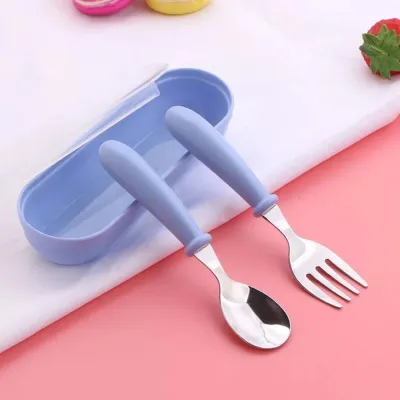
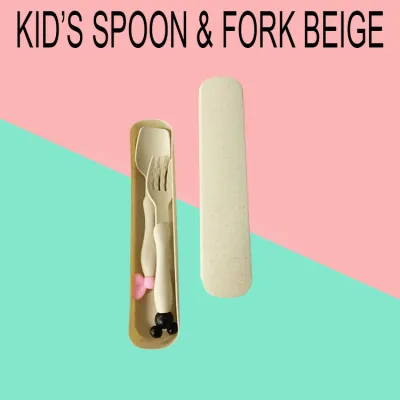
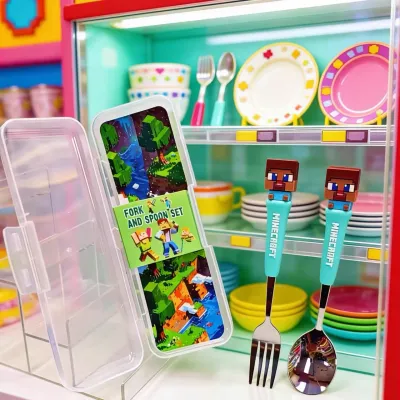
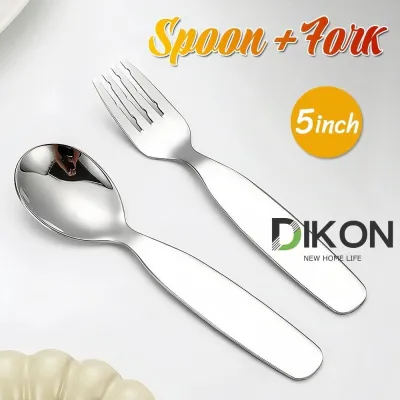
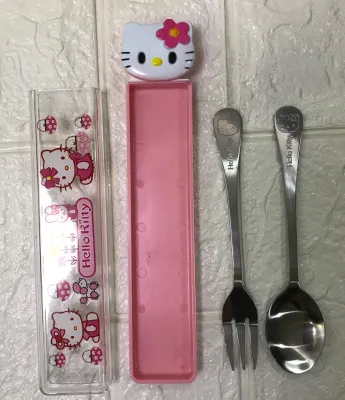
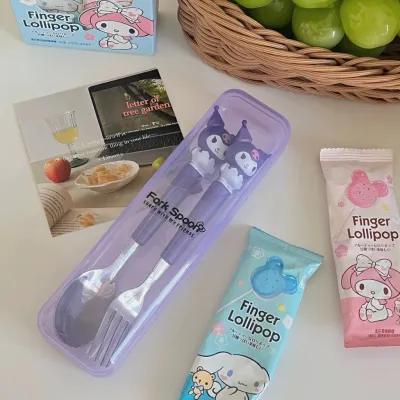
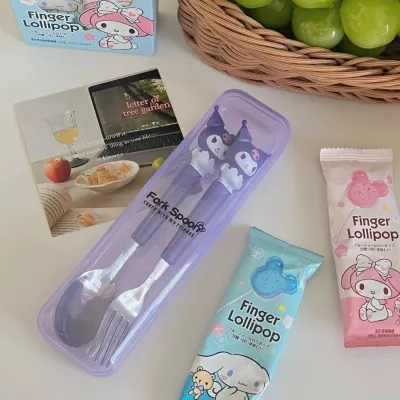
Prices are valid at publication and may change. Please refer to the product page for the latest price.
By the toddler stage, typically around twelve months and beyond, children develop a more refined grip and improved wrist rotation. They can start transitioning to standard kids’ utensils that feature longer handles and firmer materials. Toddlers at this stage are learning to scoop and pierce food with greater control, making slightly deeper spoon bowls and firmer fork tines more effective. Their increased coordination allows them to handle utensils that closely resemble adult cutlery but are scaled down to fit their hands.
It is important to remember that developmental milestones vary significantly from one child to another. While age brackets offer a helpful general guideline, you should always base your utensil choices on your baby’s actual grip, coordination, and interest in self-feeding. If your baby is still struggling to bring their hands to their mouth consistently, continuing with soft, easy-to-grip beginner spoons is highly recommended, regardless of their age.
Key Design Features to Look for in Spoons and Forks for Kids
When shopping for a spoon and fork for kids, evaluating specific physical attributes ensures the tools actively support independent eating. The handle shape and grip are among the most critical features to consider. Look for chunky, textured, or ergonomically angled handles that accommodate a baby’s limited wrist rotation. Textured surfaces, such as raised ridges or silicone patterns, prevent the utensil from slipping out of wet or greasy hands. You can verify the comfort and suitability of a handle by observing how naturally your baby holds it during mealtime practice.

The depth and shape of the spoon bowl also play a significant role in how easily a baby can eat. Choose shallow, narrow spoon bowls that fit comfortably inside small mouths without triggering the gag reflex. A spoon bowl with a flat or slightly curved edge is particularly helpful, as it allows the baby to scrape food off plates and bowls more efficiently. Deep spoon bowls can make it difficult for early learners to clear all the food with their lips, leading to frustration and unnecessary spills.
Fork tine design requires careful inspection to balance functionality with safety. Select beginner forks that feature blunt, rounded tines designed to pierce soft foods while minimizing the risk of accidental punctures to the gums, tongue, or cheeks. Avoid forks with sharp, long, or metal tines during the initial learning phases. The goal of a beginner fork is to teach the concept of piercing food, so the tines only need to be firm enough to hold soft, steamed vegetables or soft fruits.
Material composition and flexibility are vital for safety and comfort, especially during the early stages of weaning. Prioritize food-grade silicone or soft, BPA-free plastics that offer some flexibility to protect developing teeth and gums from accidental bumps. As your child grows and gains better control, you can transition to firmer plastics or lightweight stainless steel. Always verify safety labels, age recommendations, and material certifications on the product packaging before purchasing to ensure the utensils are free from harmful chemicals.
Step-by-Step Guide to Introducing Utensils
Teaching your baby to use a spoon and fork is a gradual process that requires patience and structured guidance. A highly effective starting method is pre-loading the spoon for your baby. Instead of expecting them to scoop food from the plate, you can load the spoon with a thick puree or mashed food and hand the pre-loaded utensil directly to them. This allows the baby to focus entirely on the hand-to-mouth transport motion, building confidence and muscle memory before they have to master the complex coordination required for scooping.
As your baby becomes comfortable holding the utensil, you can introduce gentle hand-over-hand guidance. Place your hand softly over theirs while they hold the spoon or fork, and guide the tool from the plate to their mouth. This physical guidance helps them understand the trajectory and angle needed to keep food on the utensil. Be careful not to take over the feeding process entirely or force their hand, as this can cause frustration; keep the guidance light, playful, and responsive to their movements.
Managing the environment is essential to support messy practice sessions without causing undue stress for caregivers. Set up the high chair area with suction plates or bowls that stick firmly to the tray, preventing the baby from knocking the entire dish onto the floor. Using easy-to-clean silicone mats under the high chair and choosing waterproof, pocketed bibs can make cleanup much easier. In warm, humid climates like the Philippines, prompt cleanup of food spills is especially important to maintain hygiene and prevent mold or pests.
Throughout this learning journey, pay close attention to your baby’s frustration signals. Learning to self-feed is hard work, and babies can tire quickly during a meal. If your baby begins throwing the utensils, crying, or refusing to try, it is a clear sign to pause the practice. Switch back to finger foods or offer direct help by spoon-feeding them for the remainder of the meal, ensuring that mealtime remains a positive and stress-free experience.
Safety Checks, Cleaning, and When to Replace Utensils
Maintaining the hygiene and structural integrity of your child’s utensils is critical for their health and safety. Daily cleaning and sterilization should always follow the manufacturer’s specific instructions. Some materials, like certain plastics or silicone, may have specific temperature limits for boiling, steam sterilization, or dishwasher use. Always check the packaging to confirm whether the utensils are dishwasher-safe or if they require gentle hand-washing with mild, baby-safe dish soap to prevent material degradation.
Regularly inspecting utensils for wear and tear is a vital safety habit. Before every meal, check the spoon and fork for deep bite marks, tears in the silicone, cracks in the plastic, or any loose parts. Babies who are teething can easily damage soft materials with their new teeth, creating small crevices where bacteria can accumulate, or tearing off small pieces that pose a choking hazard. Discard and replace any damaged or worn-out utensils immediately.
Active adult supervision is mandatory during all meals, regardless of how independent your baby seems. Never leave a baby unattended with utensils, as they can easily trip, fall, or poke themselves if they move around while holding them. Keep a close eye on their chewing and swallowing, and stop using the utensils immediately if the baby shows signs of distress, gagging, or swallowing difficulties.
Knowing when to upgrade your child’s utensils is just as important as knowing when to replace damaged ones. If you notice that the current utensil size, weight, or flexibility is hindering your baby’s progress—such as a soft silicone spoon bending too much under the weight of thicker foods, or a short handle disappearing into a toddler’s growing hand—it is time to transition to the next stage. Upgrading to slightly larger, firmer, or longer utensils will support their advancing motor skills and keep them moving forward on their self-feeding journey.
Frequently Asked Questions (FAQ)
Can I use regular metal spoons for a baby learning to self-feed?
Using regular metal spoons is generally not recommended for babies who are in the early stages of learning to self-feed. Hard metal can easily hurt developing gums, sensitive teeth, or the roof of the mouth if the baby bites down too hard or accidentally bumps their mouth due to uncoordinated movements. It is best to wait until the toddler stage, when your child has developed better motor control, wrist rotation, and a gentler hand-to-mouth motion, before introducing standard metal cutlery. When you do transition, look for child-sized stainless steel utensils with rounded, smooth edges.
Are angled or curved spoons better than straight ones?
Angled or curved spoons can offer ergonomic benefits for babies who are struggling with limited wrist rotation, as the curved design helps them bring food directly to their mouths without needing to twist their wrists. However, they are not universally superior to straight spoons. Many babies learn to self-feed perfectly well using straight utensils, which also help them practice the natural wrist movements they will use later in life. It is best to observe your baby’s natural arm and hand movements during meals; if they consistently struggle to align a straight spoon with their mouth, trying an angled design may help reduce frustration.
Community discussion
Share your experience or ask a question. Comments are reviewed before publication.