
Finding the right sleeping and lounging environment for your newborn is one of the most critical decisions you will make as a parent. In the Philippines, where tropical heat and high humidity are daily realities, choosing a box type crib nest requires a careful balance of comfort, breathability, and uncompromising safety. While these structured loungers offer a cozy, defined space that mimics the security of the womb, parents must navigate a crowded market of local and imported options to find a product that truly protects their infant.
To find the best box type crib nest for your newborn, you must look beyond aesthetic designs and focus on structural integrity, fabric breathability, and verified safety certifications. A safe crib nest must feature a firm, flat mattress base and rigid, breathable side walls that prevent any risk of suffocation or trapped air. Because infant sleep safety guidelines are exceptionally strict, understanding how to evaluate these products physically and how to use them under proper supervision is essential for your peace of mind.
Understanding Box Type Crib Nests and Sleep Safety Basics
A box type crib nest is a specialized infant lounger characterized by its raised, structured borders that form a protective rectangular or oval boundary around the baby. Unlike traditional soft crib bumpers—which tie to the inside of crib slats and are widely discouraged due to suffocation risks—a box type nest is a self-contained, portable unit. The primary purpose of this design is to provide a snug, secure lounging area that keeps a newborn positioned on their back, preventing them from rolling onto uneven surfaces during supervised rest.
Products mentioned in this guide
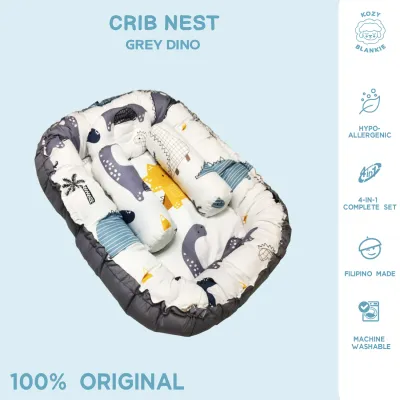
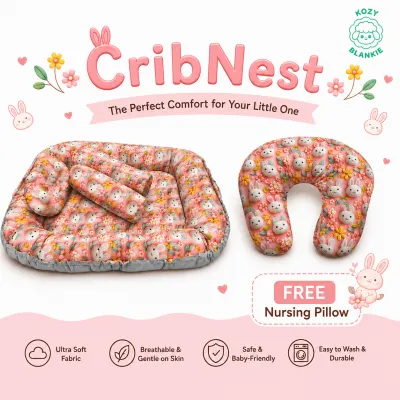
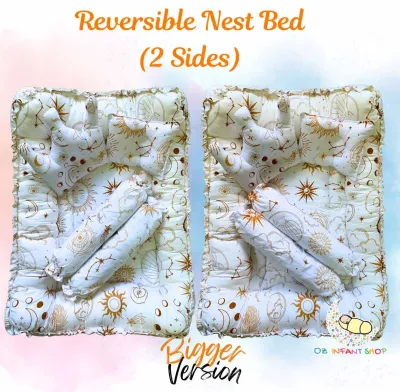
![[Free Shipping+Ready Stock]Baby Nest Multifunctional Travel Crib Cartoon Printing Newborn Mattress Bionic Bed Detachable Washable Portable Baby Upgrade Bed](https://img.lazcdn.com/g/p/c5e7e952015332cfc2505b928b750d0f.png_400x400q80.png_.webp)
Prices are valid at publication and may change. Please refer to the product page for the latest price.
When evaluating these products, it is vital to align your choices with core newborn sleep safety guidelines. Pediatric health authorities worldwide emphasize that newborns must always sleep on a firm, flat, and completely clear surface. Soft, plush mattresses or loose bedding can easily conform to a baby’s face, creating a barrier to breathing. Therefore, any crib nest you consider must feature a mattress pad that does not indent easily under the weight of your baby’s head.
In the warm and humid climate of the Philippines, air circulation is a critical safety factor. When a baby is enclosed within the raised walls of a crib nest, stagnant air can accumulate, leading to carbon dioxide rebreathing or rapid overheating. Overheating is a documented risk factor for infant sleep complications. To mitigate this, the side walls of a box type crib nest must be constructed from highly breathable materials, such as 3D mesh or lightweight, porous cotton, allowing continuous airflow even if the baby’s face comes into contact with the border.
Essential Features to Evaluate When Comparing Options
When browsing local baby boutiques or online marketplaces, parents are often overwhelmed by the variety of crib nests available. To make an informed decision, you should use a structured evaluation checklist that focuses on physical construction rather than marketing claims.

Material and Breathability
The fabrics used in the construction of the crib nest dictate both safety and comfort in tropical weather. Look for nests that utilize 3D mesh technology or open-weave fabrics along the interior walls. These materials allow air to pass through freely, reducing sweat buildup and keeping the baby cool during warm afternoons. Avoid heavy polyester fills or dense, non-porous synthetic fabrics that trap body heat and moisture, as these can quickly cause heat rashes and discomfort for your newborn.
Firmness and Structural Integrity
A safe crib nest must maintain its shape under pressure. You can perform a simple physical check by pressing your hand firmly against the side walls and the mattress base. The mattress should feel solid and resilient, quickly springing back into shape without leaving a deep depression. The side walls must be rigid enough to resist collapsing inward if the baby wiggles against them, yet soft enough to prevent injury. If the borders are excessively soft, plush, or pillow-like, they pose a significant suffocation hazard.
Size and Fit
If you plan to place the box type crib nest inside a wooden crib or a portable playard, you must measure the dimensions precisely. The nest must fit securely within the primary sleep space without leaving dangerous gaps along the sides. Gaps wider than two fingers (approximately three centimeters) create a entrapment hazard where a baby could slip down and become wedged between the nest and the crib frame. Conversely, the nest should not be so large that its sides buckle or fold inward when placed inside the crib.
Hygiene and Maintenance
Newborns are prone to spit-ups, drool, and diaper leaks, making hygiene a daily priority. In the humid Philippine climate, damp fabrics can quickly become breeding grounds for mold, mildew, and dust mites. Ensure the crib nest features a fully removable, machine-washable cover with a durable, child-safe zipper. Nests that require spot-cleaning only or take days to air-dry are impractical for daily use. Quick-drying mesh fabrics are highly advantageous, especially during the rainy season when outdoor drying is limited.
How to Verify Safety Standards and Manufacturer Claims
The Philippine market features a wide array of baby products, ranging from premium international brands to unbranded imports sold on e-commerce platforms. Because regulatory oversight can vary, parents must take an active role in verifying safety claims rather than accepting product descriptions at face value.
First, inspect the product packaging, labels, and the manufacturer’s official website for recognized safety certifications. Look for standards such as the OEKO-TEX Standard 100, which certifies that the fabrics are free from harmful chemicals and fire retardants, or CertiPUR-US, which ensures any foam used is manufactured without heavy metals or formaldehyde. While these certifications are common on high-quality imported nests, local brands should also provide clear documentation regarding the safety and non-toxicity of their materials.
Second, read the manufacturer’s instruction manual and warning labels thoroughly. Reliable manufacturers will clearly state the maximum weight capacity, recommended age limits (typically from birth up to four or six months), and explicit instructions for use. Be wary of products that lack clear safety warnings or fail to provide contact information for customer support. A reputable brand will always emphasize that the product is intended for supervised use and will outline clear boundaries for safe operation.
Third, learn to identify red flags in online product listings. Be highly skeptical of terms like “100% safe for unsupervised night sleep” or “guaranteed anti-suffocation.” No product can guarantee absolute safety, and pediatric guidelines consistently state that nests and loungers should not be used for unsupervised overnight sleep. If a listing uses exaggerated marketing language, lacks a physical brand address, or does not provide clear care and assembly instructions, it is best to choose a different option.
Finally, cross-reference any product claims with local health guidelines. You can consult resources from the Philippine Pediatric Society (PPS) or the Department of Health (DOH) regarding safe infant sleep environments. These organizations consistently reinforce that a bare, flat mattress free of any accessories remains the safest place for an infant to sleep unsupervised. Using a crib nest should always be viewed as a secondary, supervised lounging solution rather than a replacement for a standard crib mattress.
Safe Setup, Supervision, and Transition Signals
Even the highest-quality box type crib nest can become hazardous if installed incorrectly or used beyond the baby’s developmental capabilities. Proper setup and vigilant supervision are the cornerstones of safe usage.
When setting up the crib nest, always place it on a completely flat, stable, and low-to-the-ground surface. If you are placing it inside a crib, ensure it lies flat against the mattress and does not tilt. Never place a crib nest on elevated surfaces such as sofas, beds, countertops, or tables while the baby is inside. A newborn’s sudden movements can cause the nest to slide or tilt, leading to a dangerous fall.
Constant adult supervision is mandatory whenever your baby is resting in the nest. Do not leave the room or fall asleep while your baby is in the lounger. Keep the nest within your direct line of sight so you can immediately intervene if the baby shifts position, presses their face against the side walls, or shows signs of distress. If you need to sleep or leave the room, transition your baby to a standard, empty crib or playard.
Parents must also remain highly attentive to developmental milestones that indicate it is time to stop using the crib nest. The primary transition signal is when your baby shows early signs of rolling over, wiggling excessively, or pushing up on their hands and knees. This milestone typically occurs between two and four months of age, though every baby develops at their own pace. Once a baby can roll, the protective side walls of the nest become a hazard, as the infant can roll face-first into the border and lack the motor skills to roll back.
Lastly, maintain a strict “bare is best” policy within the crib nest itself. Do not place additional pillows, blankets, bolsters, or plush toys inside the nest with your baby. These items can easily accumulate in the confined space, increasing the risk of suffocation or overheating. If your baby needs warmth, opt for a wearable sleep sack or a lightweight swaddle rather than loose blankets, ensuring their face remains completely unobstructed at all times.
Frequently Asked Questions (FAQ)
Can a box type crib nest be used for co-sleeping in an adult bed?
Using a box type crib nest for co-sleeping in an adult bed is not recommended by pediatric safety experts. Adult mattresses are significantly softer than crib mattresses, which can cause the crib nest to tilt or sink unevenly when an adult sits or lies nearby. This tilting can roll the baby into a dangerous position against the side walls of the nest. Additionally, heavy adult blankets, pillows, and sheets pose a severe risk of falling over the nest and suffocating the infant. For safe co-sleeping, place the baby in a separate, safety-approved bassinet or co-sleeper that attaches securely to the side of your bed, ensuring they have their own dedicated, flat sleep surface.
At what developmental stage should I transition away from the crib nest?
You must stop using the box type crib nest the moment your baby shows any signs of rolling over, pushing up on their hands and knees, or turning their body sideways. These physical milestones indicate that the baby has gained enough mobility to potentially trap their face against the padded borders of the nest. Additionally, you must strictly adhere to the manufacturer’s specified weight and length limits, which are typically printed on the product label. If your baby’s head or feet reach the top or bottom borders of the nest, they have outgrown the product and must be transitioned to a standard, unobstructed crib mattress for all sleep and lounging activities.

Community discussion
Share your experience or ask a question. Comments are reviewed before publication.