
Choosing a baby walker is a significant milestone for many parents, representing a transition toward greater mobility and independence for your little one. However, selecting the right walker is not as simple as picking a colorful design from an online marketplace. It requires a careful assessment of your child’s physical readiness, an understanding of different walker designs, and a strict commitment to safety. By matching the equipment to your baby’s specific developmental stage, you can support their natural progression while minimizing the risks associated with early mobility devices.
Every baby develops at their own pace, meaning chronological age is often an unreliable guide on its own. Instead of relying solely on the age recommendation on the packaging, parents must look for specific physical indicators that show a baby is structurally ready to use a walker. This guide will help you navigate the essential developmental milestones, safety features, and environmental adjustments needed to make an informed decision for your family.
When Is Your Baby Ready for a Walker?
Determining readiness for a baby walker requires looking closely at your child’s physical milestones rather than relying strictly on the age printed on the box. The most critical prerequisite is strong core strength and independent neck control. Your baby must be able to sit upright completely unassisted for extended periods before you introduce any device that supports their upright posture. If a baby cannot maintain a stable trunk while sitting on the floor, their spine and hips are not yet ready to handle the vertical forces of a walker.
Products mentioned in this guide
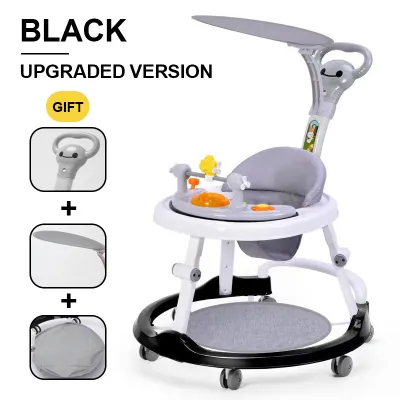
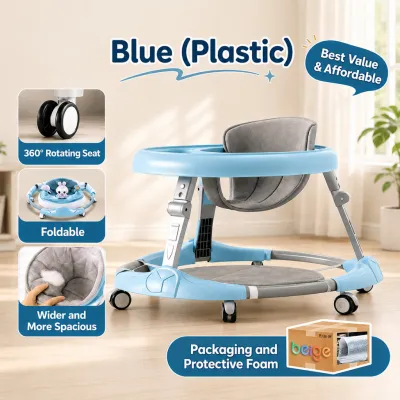
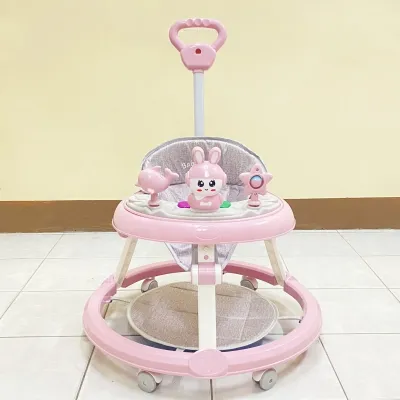
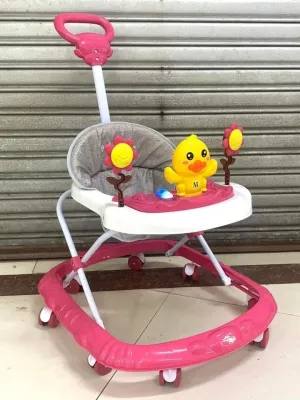
Prices are valid at publication and may change. Please refer to the product page for the latest price.
In addition to core stability, observe how your baby interacts with their environment when placed on the floor. A baby who is ready for a walker will typically show a strong desire to move, often rolling, scooting, or pushing themselves up on their hands and knees. They should also demonstrate the ability to hold their head steady without tilting or tiring when their body moves. If your baby still slumps forward or to the side when placed in a sitting position, they need more time to develop their abdominal and back muscles through natural floor play.
Before purchasing or assembling any walker, always locate and read the manufacturer’s specifications regarding minimum age, weight, and height limits. These limits are calculated based on structural testing and are designed to ensure the baby’s center of gravity remains safe within the device. Placing a baby who is too small or too young into a walker can lead to poor posture, physical strain, or accidental slips through the leg openings. Conversely, exceeding the weight limit can compromise the frame’s integrity and increase the risk of structural failure.
If you are ever uncertain about your baby’s developmental progress or whether they are physically prepared for a walker, consult your pediatrician. A qualified healthcare professional can assess your child’s muscle tone, joint alignment, and overall motor skills to provide personalized guidance. This is especially important if your baby has experienced developmental delays or if you notice any unusual leg posturing, such as persistent toe-pointing or stiffness, when they attempt to bear weight.
Essential Safety Features to Check Before Buying
When evaluating different walker models, safety must be your primary consideration. A well-designed walker should feature a wide, stable base that extends significantly beyond the perimeter of the upper tray. This wide footprint lowers the overall center of gravity and prevents the walker from tipping over if your baby bumps into furniture, transitions between different flooring materials, or leans heavily to one side. Look for models where the base is noticeably wider than the top frame to ensure maximum stability during sudden movements.

Stair-fall prevention is another critical safety mechanism to verify on any sit-in walker. Many modern models are equipped with friction pads, grip strips, or automatic stoppers on the underside of the base. These safety features are designed to immediately grab the floor surface and halt the walker’s forward momentum if one of the wheels loses contact with the ground, such as at the edge of a step or threshold. When shopping, inspect the bottom of the walker to ensure these rubberized pads are present, securely attached, and made of high-friction materials.
The harness and seating system must be robust, adjustable, and constructed from durable, washable fabric. A secure multi-point harness helps keep your baby centered in the seat and prevents them from sliding down or attempting to climb out of the frame. Additionally, check the wheels for locking mechanisms; the ability to lock the wheels allows you to convert the walker into a stationary play station when you need your baby to remain in one spot. Ensure that all folding joints, height-adjustment latches, and moving parts are designed without pinch points that could trap or injure small fingers.
Finally, inspect the overall build quality and materials used in the walker’s construction. The plastic components should be thick and resilient, showing no signs of flexing under pressure, while the metal frame should be securely bolted together. In tropical climates like the Philippines, where high humidity can affect materials over time, ensure that metal parts are rust-resistant and that fabric elements are highly breathable to prevent heat buildup and skin irritation. Taking the time to verify these mechanical details on the product packaging or manual before buying is a vital step in protecting your child.
Comparing Walker Types for Different Developmental Stages
Understanding the differences between sit-in walkers and push walkers is essential for matching the right gear to your baby’s current mobility phase. Sit-in walkers feature a fabric seat suspended inside a wheeled frame, allowing the baby’s feet to touch the floor while their body weight is supported. This design is generally intended for babies who can sit up independently but are not yet strong enough to stand or balance on their own. It allows them to practice leg movements and explore their surroundings from an upright perspective while remaining securely contained.
Push walkers, on the other hand, are designed for babies who are already pulling themselves up to stand and are beginning to take tentative steps. These devices consist of a sturdy frame with wheels and a handle that the baby holds onto while walking behind it. Unlike sit-in models, push walkers do not support the baby’s weight; instead, they act as a mobile support system that helps the baby maintain balance as they push the toy forward. This encourages the development of natural walking posture, balance, and coordination, as the baby must actively engage their core and leg muscles to stay upright.
Some manufacturers offer convertible models that transition from a sit-in walker to a push walker as your child grows. While these multi-functional designs can offer excellent value, you must carefully verify that your child meets the specific physical criteria required for each mode before making the transition. Do not convert the walker to push mode until your baby can stand steadily while holding onto furniture and shows the coordination necessary to take steps without falling forward immediately. Transitioning too early can lead to falls and frustration, undermining your baby’s confidence.
When choosing between these types, consider your home’s layout and flooring. Sit-in walkers require flat, smooth surfaces to glide easily, making them well-suited for tiled or polished concrete floors common in many local homes. However, they can gain speed quickly on these surfaces, requiring extra vigilance. Push walkers often perform well on both smooth floors and low-pile rugs, but you should look for models with adjustable wheel tension or speed control to prevent the walker from rolling away from your baby before they can keep up with it.
Setting Up a Safe Environment for Walker Use
Creating a secure environment is just as important as choosing a high-quality walker. Before placing your baby in any mobile device, you must thoroughly baby-proof the entire area where the walker will be used. Start by identifying and blocking access to all major hazards, particularly stairs, steps leading to split-level rooms, and outdoor areas like dirty kitchens or patios. Use sturdy, securely mounted safety gates to block off doorways and stairwells, ensuring the gates are locked and cannot be pushed open by the force of a moving walker.
Beyond stairs, look for potential hazards at your baby’s eye level, which changes significantly once they are upright in a walker. Keep hot surfaces, heaters, electrical outlets, and dangling cords from appliances or window blinds completely out of reach. Remember that a walker allows your baby to move much faster and reach much higher than they can when crawling. Items on low tables, such as hot coffee mugs, heavy books, or decorative objects, must be moved to higher shelves to prevent your baby from pulling them down onto themselves.
Establishing clear rules for daily walker use is essential for your baby’s physical development and safety. Limit walker sessions to short intervals, such as 15 to 20 minutes at a time, with a maximum of 30 to 40 minutes per day. Prolonged use of sit-in walkers can lead to overexertion, muscle fatigue, and a reliance on unnatural walking patterns, such as toe-walking. Balancing walker time with plenty of unrestricted floor play—such as tummy time, crawling, and sitting—ensures your baby develops the full range of muscles needed for independent walking.
Most importantly, a baby walker must never be used as a substitute for adult supervision. Continuous, direct, and active supervision by a caregiver is an absolute requirement whenever your baby is in a walker. You must remain in the same room and keep your eyes on your baby at all times, as accidents can happen in a fraction of a second. A baby in a walker can cover ground surprisingly fast, making it impossible to react in time if you are distracted by a phone, chores, or other tasks in another part of the house.
Signs It Is Time to Stop Using the Walker
As your baby continues to grow and develop, there will come a point when they must transition away from using a walker entirely. The most straightforward indicator is when your baby reaches the manufacturer’s maximum weight or height limits specified on the product label. Continuing to use a walker beyond these limits compromises its structural stability and safety features, increasing the risk of the frame collapsing or tipping over. Regularly check your baby’s weight and height against the product specifications to ensure they remain within the safe operating range.
Behavioral cues also play a major role in determining when to retire the walker. If your baby has learned to walk independently without assistance, they no longer benefit from the support of a walker and may find it restrictive. Additionally, if your baby has become so strong and active that they can move the walker at high speeds, maneuver it aggressively, or attempt to climb out of the seat, the device is no longer safe for them. These actions indicate that their physical capabilities have outgrown the protective boundaries of the equipment.
Once your baby shows these signs, transition them fully to free play and natural walking practice. Encourage them to navigate your home’s safe spaces on foot, using sturdy furniture for cruising if they still need occasional balance support. Providing a safe, open floor area allows them to refine their balance, spatial awareness, and motor planning skills naturally. This transition marks an exciting new chapter in your child’s development, moving them closer to confident, independent exploration.
Frequently Asked Questions (FAQ)
Do baby walkers delay independent walking?
While baby walkers are popular for entertainment, relying on them excessively can alter the natural progression of motor skills. In a sit-in walker, babies are supported in an upright position before their muscles are fully ready, which can encourage them to walk on their toes and rely on the frame for balance rather than engaging their core and hip stabilizers. To support natural walking development, prioritize unrestricted floor play, crawling, and pulling up on furniture, which build the essential muscle groups and coordination needed for independent steps. If you have concerns about your baby’s walking milestones, consult your pediatrician for a personalized assessment.
Are push walkers safer than traditional sit-in walkers?
Push walkers and traditional sit-in walkers have different safety profiles and structural designs that suit different stages of development. Push walkers generally carry a lower risk of certain injuries because they do not suspend the baby in a seat, allowing for a more natural walking posture and encouraging active balance control. However, because push walkers can roll forward quickly, they still require close supervision to prevent falls, especially on smooth or sloped surfaces. When choosing any walker, look for adjustable wheel speed controls, verify relevant safety certifications on the packaging, and always match the device to your baby’s current ability to stand and bear weight.

Community discussion
Share your experience or ask a question. Comments are reviewed before publication.