
The best maternity pillow shape depends entirely on your primary sleeping position, how much you toss and turn, and your available bed space. Side sleeping is widely recommended during pregnancy, but maintaining this position comfortably requires targeted support for your growing belly, hips, and spine. By matching your sleep style to a C-shaped, U-shaped, or wedge pillow, you can address specific pressure points and enjoy more restful nights.
In the tropical climate of the Philippines, where warm nights and high humidity can make sleep challenging, choosing a pillow that balances physical support with heat regulation is essential. Standard pillows often shift or trap heat, leaving you tossing and turning. Understanding how each shape interacts with your body and your mattress size is the first step toward a more comfortable pregnancy.
Why Your Sleeping Position Dictates Your Pillow Choice
As your pregnancy progresses, your body undergoes rapid anatomical changes that alter your center of gravity. Healthcare professionals generally advise pregnant individuals to sleep on their side, particularly the left side, to optimize blood flow. However, maintaining a side-sleeping posture for hours can place significant strain on your musculoskeletal system if your body is not properly aligned.
Products mentioned in this guide


Prices are valid at publication and may change. Please refer to the product page for the latest price.
Without adequate support, your upper leg can slide forward when you lie on your side, twisting your pelvis and pulling your lower back out of alignment. This misalignment often leads to persistent hip pain, lower back aches, and a pulling sensation in your abdomen as your belly grows. Standard household pillows are rarely designed to bridge these specific gaps simultaneously, often flattening under the weight or sliding away during the night.
To choose the right maternity pillow, observe your natural sleep behavior. If you stay in one position all night, your structural needs differ significantly from an active sleeper who constantly shifts. Matching your pillow’s geometry to these movements is key to uninterrupted rest.
Comparing C-Shaped, U-Shaped, and Wedge Pregnancy Pillows
Maternity pillows generally fall into three primary categories: C-shaped, U-shaped, and wedge designs. Each shape offers a distinct approach to body alignment, targeting different combinations of the head, neck, belly, back, knees, and ankles. While some designs offer total-body cradling, others focus strictly on localized relief, meaning there is no single “perfect” shape for every expectant mother.

A major factor in this decision is the physical footprint of the pillow. Full-body options provide comprehensive support but can easily overwhelm a standard double or queen-sized mattress, leaving little room for a partner. Conversely, compact designs preserve bed space and are highly portable, but they require you to use your existing household pillows to support your head and limbs.
Because physical comfort is deeply subjective, a pillow that feels supportive in the second trimester might feel restrictive in the third. When shopping on local online marketplaces or baby specialty stores, check the retailer’s return or exchange policies. Having the flexibility to test the pillow’s firmness at home ensures you find a suitable option.
C-Shaped Pillows: Targeted Side-Sleep Support
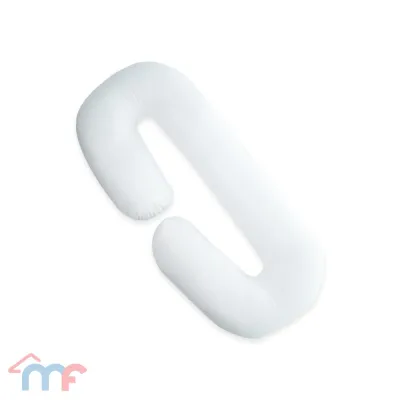
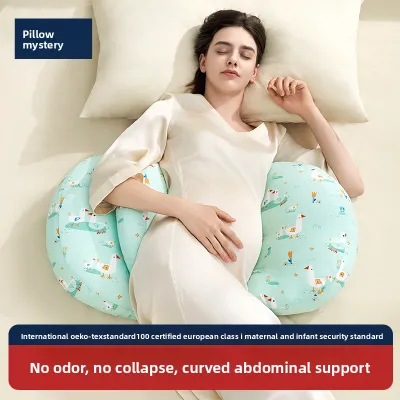
The C-shaped maternity pillow is engineered as a single, continuous curve that wraps around the front or back of your body. When positioned along your front, the top curve supports your head and neck, the middle section cradles your growing belly, and the bottom curve tucks between your knees to align your hips. Alternatively, placing the curve along your spine provides firm back support, helping to prevent you from accidentally rolling onto your back during deep sleep.
This design is particularly advantageous for shared beds because it has a smaller footprint than a U-shaped alternative. It allows you to enjoy full-body alignment without completely crowding out your partner. For homes with standard-sized beds, the C-shape offers an excellent balance of support and space efficiency.
However, the asymmetrical nature of the C-shape presents a clear limitation for active sleepers. If you switch sides during the night, you must physically drag and flip the entire pillow to face the opposite direction. This manual adjustment can disrupt your sleep cycle, especially in later stages of pregnancy.
U-Shaped Pillows: Full-Body Enclosure
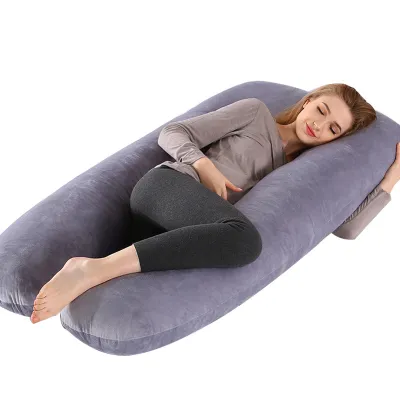
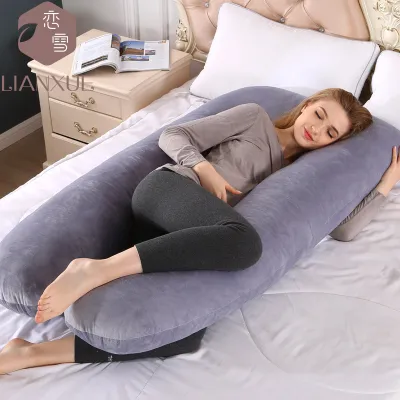
For those who toss and turn frequently, the U-shaped maternity pillow provides a symmetrical, double-sided enclosure. This design features two long parallel arms connected by a curved top section for your head. Because both sides of your body are cradled simultaneously, you can turn from left to right throughout the night without ever having to adjust or reposition the pillow.
This dual-sided support is highly effective at keeping your spine aligned and preventing back-rolling. The back arm offers continuous lumbar support, while the front arm cushions your belly and keeps your knees separated. This makes it an ideal option for individuals experiencing pelvic girdle pain or those who find themselves waking up flat on their back.
The primary drawback of the U-shape is its massive size. These pillows take up a substantial portion of the bed, which can make your sleeping area feel cramped and potentially disrupt your partner’s sleep. Before purchasing, check the exact dimensions on the product label to ensure it fits your mattress size.
Wedge Pillows: Compact and Versatile
The wedge maternity pillow is a compact, angled cushion designed for highly targeted support. Unlike full-body options, the wedge does not attempt to cradle your entire frame; instead, it slides directly under specific areas that need relief. You can place it under your belly to take the strain off your lower back, or wedge it behind your spine to prevent rolling over while you sleep.
This minimalist design is incredibly versatile and adapts easily as your body changes. It is also highly portable, making it easy to pack for travel or move from the bed to a living room sofa or office chair. Additionally, wedge pillows generally come at a much lower price point, often costing under ₱1,000, making them an accessible entry point for budget-conscious parents.
The main limitation of a wedge pillow is its lack of integrated head, neck, or knee support. To achieve proper spinal alignment, you will need to pair the wedge with your existing household pillows to cushion your head and keep your knees separated. If you prefer a single, unified sleep solution, the wedge may feel incomplete on its own.
How to Match the Right Shape to Your Sleep Style
To simplify your decision, you can match your primary sleep habits and living situation directly to the characteristics of each pillow shape.
Choose a C-shaped pillow if you are a dedicated side sleeper who rarely changes positions during the night, share a standard-sized bed, and want integrated head-to-knee support without overwhelming your sleeping space.
Choose a U-shaped pillow if you are an active sleeper who frequently turns from side to side, have a larger mattress (such as a queen or king size), and require simultaneous back and belly support to prevent rolling onto your back.
Choose a wedge pillow if you have limited bed space, travel frequently, prefer to use your own familiar head pillow, or want an affordable and targeted way to support your belly or lower back.
Verify first with your obstetrician or physical therapist if you are experiencing severe gestational conditions, such as symphysis pubis dysfunction (SPD) or chronic sciatica. In these cases, your healthcare provider may recommend a specific sleeping posture or a precise pillow placement that overrides general guidelines.
If you are on a budget or unsure about committing to a bulky full-body pillow, consider combining a compact wedge pillow with your existing standard pillows. Placing a standard pillow between your knees, another behind your back, and the wedge under your belly creates a highly customizable, modular support system that you can adjust easily without a major financial investment.
What to Check on the Label Before Buying
Because you will be using your maternity pillow daily for several months, verifying the product specifications on the label is crucial for long-term comfort and hygiene. First, check the care label to ensure the pillow features a removable, machine-washable cover. In the warm, humid climate of the Philippines, sweat and skin oils accumulate quickly, making an easily washable cover essential for preventing skin irritation and maintaining freshness.
Next, examine the filling material listed on the packaging. Polyester fiberfill is lightweight, highly breathable, and easy to fluff, making it a popular choice for hot sleepers, though it may flatten over time. Memory foam—whether solid or shredded—offers dense, contouring support that holds its shape well, but it tends to retain body heat. If you choose memory foam, look for labels indicating shredded foam or cooling gel infusions to help manage heat retention.
Do not rely solely on vague marketing terms like “hypoallergenic” or “organic” without verifying standard textile certifications on the packaging. Look for recognized certifications such as OEKO-TEX Standard 100, which indicates that the fabric has been tested for harmful substances. Ensuring these standards are met provides peace of mind for both your skin health and your developing baby.
Finally, double-check the retailer’s return and exchange policies before completing your purchase. A pillow’s firmness and loft can feel very different in your own bed compared to how it looks online or in a showroom. Knowing you can exchange the pillow if it does not provide the right level of physical support will protect your investment and help you find the best possible match for your sleep needs.
Frequently Asked Questions (FAQ)
Can I use a regular pillow instead of a maternity pillow?
Yes, you can absolutely use standard household pillows to support your body during pregnancy. By placing one pillow under your head, another between your knees to align your hips, and a third tucked behind your back, you can replicate much of the support offered by a specialized maternity pillow. This is a highly cost-effective approach that utilizes items you already own.
However, the primary drawback of this method is the lack of stability. Multiple loose pillows tend to shift, slide, or fall out of the bed as you move, requiring you to constantly readjust them throughout the night. A purpose-built maternity pillow provides a unified, stable structure that stays in place, offering continuous support without the hassle of managing a crowded bed.
When should I start using a pregnancy pillow?
There is no strict medical timeline for when you must begin using a maternity pillow; the decision depends entirely on your personal comfort and physical changes. Many expectant mothers find they transition to a pregnancy pillow during the second trimester, typically between weeks 16 and 20, as the growing belly begins to alter their posture and cause mild discomfort.
You should consider introducing a supportive pillow as soon as you experience sleep disruptions, such as hip pain, lower back strain, or difficulty staying on your side. Starting early can help you adjust to side sleeping before your belly reaches its full size, making the transition smoother and helping you maintain better sleep quality throughout your pregnancy.

Community discussion
Share your experience or ask a question. Comments are reviewed before publication.