
Direct Answer: Which Formula Is Right for Your 0-6 Month Old?
When researching options like bonna milk 0 to 6 months, parents frequently encounter comparisons with other popular brands on store shelves, specifically Nestlé’s NAN and Nido. However, a crucial safety distinction must be made immediately: for infants aged 0 to 6 months, the choice is strictly between Bonna Infant and NAN Optipro 1. Nido is formulated for toddlers aged one year and older, making it entirely inappropriate and physically unsafe for newborns.
The primary difference between the two appropriate choices lies in their formulation and price point. Bonna Infant is an accessible, budget-friendly standard formula that provides the essential nutrients required for early development. In contrast, NAN Optipro 1 is a premium, science-backed formula designed with advanced protein processing and added digestive support ingredients like probiotics. Because every infant’s digestive system and nutritional needs are unique, you must consult your pediatrician before introducing, changing, or mixing any infant formula.
Brand Breakdown: Age Suitability and Safety Warnings
To make an informed decision, caregivers must understand the specific product lines, target age groups, and safety parameters of each brand. Feeding an infant the wrong type of milk can lead to severe health complications, so verifying the manufacturer’s age indications on the product packaging is an absolute necessity.
Products mentioned in this guide
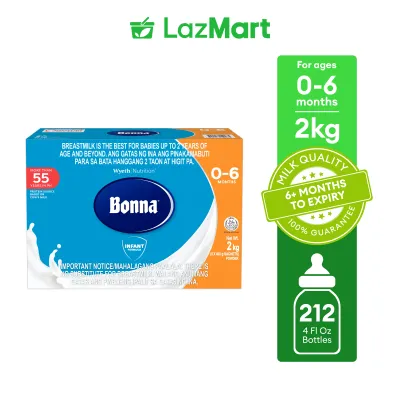
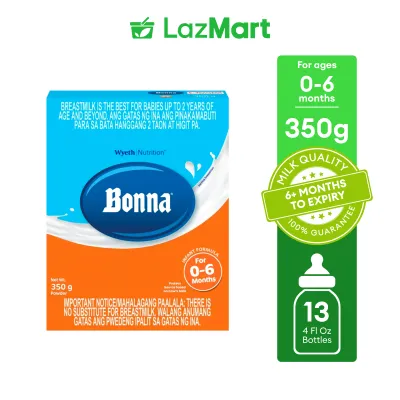
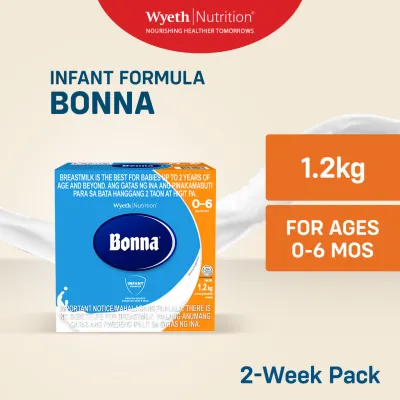
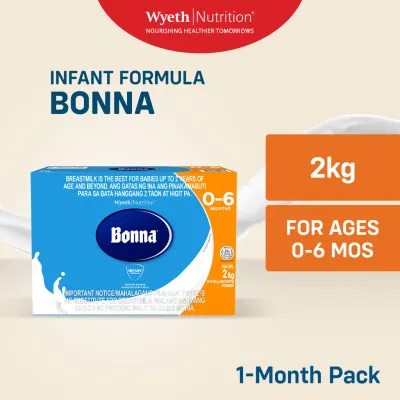
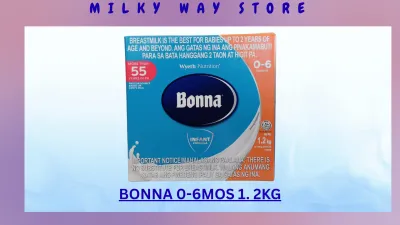
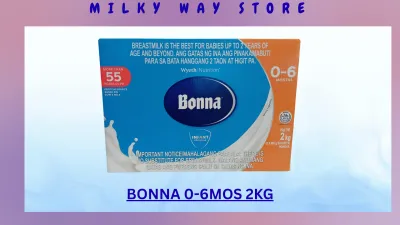
Prices are valid at publication and may change. Please refer to the product page for the latest price.

Bonna Infant (0-6 Months): Bonna has been a household staple in the Philippines for generations. Positioned as an affordable and reliable standard infant formula, it is designed to meet the basic nutritional requirements of infants from birth up to six months. It provides the foundational vitamins, minerals, and macronutrients required for early growth, making it a highly popular choice for families seeking cost-effective nutrition without compromising on essential dietary needs.
NAN Optipro 1 (0-6 Months): NAN Optipro 1 is Nestlé’s premium infant formula designed for the first six months of life. This formula focuses heavily on gut health, immune system support, and optimized protein quality. The “Optipro” designation refers to the brand’s proprietary process of modifying the protein profile to make it easier for a newborn’s delicate digestive tract to break down. It also incorporates specific active cultures and prebiotic fibers that mimic some of the digestive benefits found in breast milk.
Nido (Not for 0-6 Months): Nido products, such as Nido 1+ or Nido 3+, are strictly toddler milks and school-age milk drinks. They are never to be given to infants under 12 months old. The physiological reasons for this are critical: a newborn’s kidneys and digestive organs are highly immature. Toddler milks contain significantly higher concentrations of proteins and minerals like sodium, calcium, and phosphorus. Feeding these to a 0-6 month old can cause severe kidney strain, dehydration, and gastrointestinal bleeding. Furthermore, Nido lacks the precise, highly regulated levels of vitamins, essential fatty acids (like DHA and ARA), and easily digestible whey proteins that a newborn requires to sustain rapid brain and organ development. Always check the front of the packaging for the age indicator to ensure you are buying an infant-appropriate formula.
Comparing the Viable Options: Bonna Infant vs. NAN Optipro 1
Nutritional Profile and Brain Development
The first six months of life represent a period of rapid brain growth and visual development. When comparing Bonna Infant and NAN Optipro 1, parents should look closely at the nutritional panel on the back of the tin to verify the specific levels of Docosahexaenoic Acid (DHA) and Arachidonic Acid (ARA). These long-chain polyunsaturated fatty acids are crucial building blocks for the infant brain and retina.
While both formulas contain these essential fatty acids, premium formulas like NAN Optipro 1 typically highlight structured ratios and higher concentrations of DHA and ARA to support cognitive development. However, Bonna Infant also includes foundational levels of these lipids alongside other brain-supporting nutrients like choline and iron. Parents should avoid relying solely on front-of-pack marketing claims and instead practice reading the ingredient list to confirm the presence and source of these nutrients.
Another critical factor is the protein source and the whey-to-casein ratio. Human breast milk is highly whey-dominant, particularly in the early stages of lactation, because whey proteins remain liquid in the stomach and are much easier for a newborn to digest. Casein, on the other hand, forms a firmer curd in the stomach which takes longer to break down. Premium formulas like NAN Optipro 1 utilize advanced manufacturing techniques to optimize the whey-to-casein ratio, bringing it closer to the profile of early breast milk. Bonna Infant utilizes a more standard protein structure, which is perfectly suitable for healthy infants but may require a bit more digestive effort from babies with sensitive tummies.
Digestive Support and Gut Health
A newborn’s gut microbiome is highly sensitive and undergoes rapid colonization during the first few months of life. This development can directly impact common infant issues such as colic, gas, constipation, and spit-up. The inclusion of biotic ingredients is one of the most significant differentiators between Bonna Infant and NAN Optipro 1.
NAN Optipro 1 is formulated with active probiotics (such as Bifidobacterium lactis) and prebiotic fibers like Galacto-oligosaccharides (GOS) and Fructo-oligosaccharides (FOS). Prebiotics act as food for beneficial gut bacteria, while probiotics introduce live, helpful microorganisms directly into the digestive tract. This combination helps support a healthy gut barrier, encourages softer and more regular stools, and can significantly reduce the severity of colic symptoms. Bonna Infant, as a standard formula, generally does not contain these advanced probiotic and prebiotic blends, relying instead on a traditional nutrient delivery system.
For infants who experience persistent digestive distress, both brands offer specialized variants, though NAN has a wider array of options. For instance, Nestlé produces partially hydrolyzed formulas (such as NAN HW or NAN Sensitive) designed for infants at risk of allergies or those with highly sensitive stomachs. If your baby experiences severe gas, chronic constipation, or skin rashes, do not switch formulas on your own. Consult your pediatrician, who can evaluate whether a specialized hypoallergenic or lactose-reduced variant is medically necessary.
Preparation and Daily Usage Experience
The daily routine of preparing infant formula requires precision, patience, and strict adherence to hygiene standards, particularly in a warm and humid environment like the Philippines. The physical characteristics of the formula powder can affect this daily experience.
Parents often note that premium powders like NAN Optipro 1 exhibit high solubility, dissolving quickly in lukewarm water with minimal clumping. Bonna Infant, while highly soluble, may occasionally require more vigorous shaking or swirling to ensure the powder is fully dissolved. When preparing either formula, always use the specific scoop provided in that exact tin, as scoop sizes and densities vary between brands and even between different stages of the same brand. Never swap scoops.
To ensure infant safety and prevent serious bacterial infections, caregivers must strictly follow the preparation guidelines established by the World Health Organization (WHO) and local health authorities. Always wash your hands thoroughly with soap and water before handling feeding equipment. Sterilize all bottles, nipples, caps, and utensils by boiling them for at least five minutes or using a steam sterilizer. Boil clean drinking water and allow it to cool to no lower than 70°C before mixing, or follow the specific temperature instructions on the product label. Never over-dilute the formula to stretch your budget, and never over-concentrate it to make it “richer.” Incorrect dilution can lead to severe nutritional deficiencies, electrolyte imbalances, and life-threatening water intoxication. Always check the manufacturer’s feeding table on the label for the exact water-to-powder ratio.
Price, Availability, and Value in the Philippines
In the Philippines, the financial commitment of formula feeding is a major consideration for growing families. The stark contrast in pricing between Bonna Infant and NAN Optipro 1 reflects their different market positions.
Bonna Infant is widely recognized as an exceptionally cost-effective option. It is priced to be highly accessible to a broad range of Filipino households, making it an attractive choice for families who need to manage their monthly expenses carefully. NAN Optipro 1, as a premium import, sits at a much higher price point, often costing double or triple the price of Bonna for a similar volume. For families on a tight budget, the lower cost of Bonna can free up resources for other essential infant needs, such as healthcare, vaccinations, and diapers.
Both brands enjoy excellent availability across the Philippines. You can easily find them on the shelves of major supermarkets like SM, Robinsons, Puregold, and Landers, as well as leading physical pharmacies such as Mercury Drug and Watsons. They are also sold through official flagship stores on major e-commerce platforms. However, parents must exercise extreme caution when shopping online. Avoid purchasing infant formula from unauthorized third-party sellers, even if they offer steep discounts. In a tropical climate, improper storage in non-temperature-controlled warehouses can degrade the nutritional value of the milk and promote bacterial growth. Furthermore, there is a serious risk of counterfeit or repackaged products that do not meet safety standards. Only buy from verified official malls or established physical retailers.
When evaluating the true cost of formula, do not look only at the upfront price of a single tin. Instead, calculate the monthly cost based on your baby’s age and consumption. A newborn may only consume a small amount per feeding, but by three to six months, their daily intake increases significantly. Refer to the feeding chart on the product packaging to estimate how many grams your baby will consume daily, then calculate how many tins of a specific size (such as 400g, 800g, or 1.2kg) you will need each month. This will give you a realistic projection of your ongoing financial commitment.
Decision Framework: Which Formula Should You Choose?
Choosing between Bonna Infant and NAN Optipro 1 comes down to balancing your baby’s digestive tolerance, your financial budget, and your pediatrician’s specific advice. Use the following framework to guide your decision-making process.
Choose Bonna Infant if:
- Your baby is generally healthy, has a strong digestive system, and does not suffer from frequent gas, colic, or constipation.
- You need a highly accessible, budget-friendly formula that fulfills all essential infant nutritional requirements without straining your household finances.
- You prefer a brand that is widely available in almost every local grocery store and pharmacy across the country.
Choose NAN Optipro 1 if:
- Your baby has a sensitive stomach, experiences mild digestive discomfort, or would benefit from the added support of active probiotics and prebiotics.
- You have a flexible budget that comfortably accommodates a premium, higher-priced formula over the first six months of your baby's life.
- Your pediatrician has specifically recommended an optimized protein formula or one of NAN's specialized variants to address minor digestive sensitivities.
Neither option may fit if:
- Your baby exhibits signs of a cow's milk protein allergy (CMPA), severe lactose intolerance, or chronic gastrointestinal reflux. Standard cow's milk-based formulas like Bonna and standard NAN will exacerbate these conditions. If your baby shows symptoms such as blood or mucus in the stool, persistent projectile vomiting, severe skin rashes (eczema), or extreme inconsolable crying after every feed, seek immediate medical attention. Your pediatrician will need to prescribe a specialized hypoallergenic, extensively hydrolyzed, or amino acid-based formula.
Regardless of the brand you choose, always monitor your baby’s physical response. Track their weight gain during regular pediatric checkups, observe their daily diaper output (aiming for at least six wet diapers and regular, soft stools), and pay attention to their overall comfort and sleep patterns. If you observe any unusual symptoms or if your baby is not gaining weight adequately, consult a healthcare professional immediately.
Frequently Asked Questions (FAQ)
Can I mix Bonna and NAN in the same bottle?
No, you should never mix different formula brands, types, or stages together in the same bottle. Each formula is scientifically calibrated with a precise balance of nutrients, minerals, and water content. Mixing them alters this delicate balance and changes the osmolarity of the liquid, which can put dangerous strain on your newborn’s immature kidneys and cause severe digestive upset. If you need to transition your baby from one formula to another, do so gradually by replacing one full feeding bottle at a time over several days, and always consult your pediatrician before initiating the switch.
How do I know if my baby needs to switch formulas?
Your baby will show clear physical signs if their current formula is not agreeing with them. Watch for persistent, forceful vomiting (not just typical mild spit-up), chronic diarrhea, hard or painful stools, blood or excessive mucus in the diaper, severe skin rashes, or extreme, inconsolable fussiness during or immediately after feeding. A failure to gain weight at a healthy rate is also a critical indicator. If you observe any of these signs, do not experiment with different brands on your own. Schedule a consultation with your pediatrician to diagnose the underlying issue and get a professional recommendation.
Is it safe to buy infant formula from online marketplaces?
It is only safe if you purchase directly from the official, verified flagship stores of the manufacturers or authorized major pharmacy chains on these platforms. Avoid buying from individual, unauthorized third-party sellers. Infant formula requires strict temperature and humidity controls during storage and transport. In the tropical climate of the Philippines, exposure to high heat can degrade critical nutrients, spoil the powder, and create a breeding ground for harmful bacteria. Additionally, buying from unverified sources exposes your infant to the severe risks of counterfeit, expired, or tampered products. Always double-check the seller’s credentials and verify the packaging integrity upon delivery.

Community discussion
Share your experience or ask a question. Comments are reviewed before publication.