
Choosing the right preschool milk for your three-to-five-year-old child often feels like navigating a maze of bright packaging and complex nutritional claims. In the Philippines, where active young children require steady energy to support their daily play and learning, parents frequently weigh the benefits of popular options like Bonakid and Enfagrow. There is no single, universally superior preschool milk that fits every child perfectly. The right choice depends on your child’s specific nutritional gaps, their taste preferences, and your family’s monthly budget. By shifting your focus from front-of-pack marketing to the actual nutrition labels, you can make an informed decision that complements your child’s daily meals.
Understanding the Core Nutritional Focus of Each Brand
Every milk brand designs its formulation around specific developmental milestones, which they highlight prominently on their packaging. Bonakid is widely recognized for its marketing focus on physical growth, strength, and active play, often positioning its formulation as a partner for energetic, growing children. On the other hand, Enfagrow typically emphasizes cognitive development, brain support, and immune system defense as its primary developmental pillars. These distinct marketing angles reflect the general formulation philosophies of each manufacturer, aiming to address different aspects of a preschooler’s growth.
However, it is crucial for parents to view these branding focuses as general starting points rather than guaranteed medical or developmental outcomes. The claims printed on the front of a tin are designed to capture attention, but they do not replace the detailed information found on the back. Every child’s body processes nutrients differently, and no single milk drink can single-handedly guarantee advanced cognitive skills or rapid physical growth.
Products mentioned in this guide
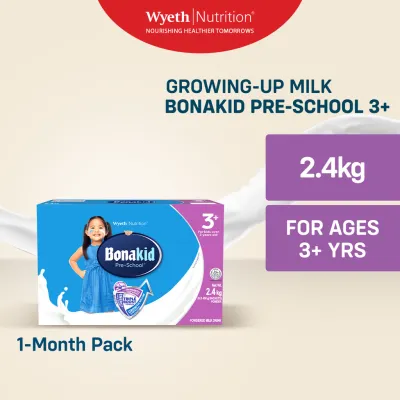
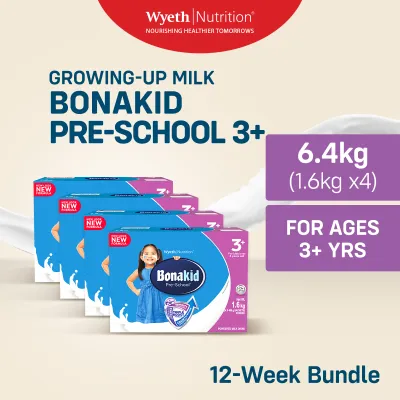
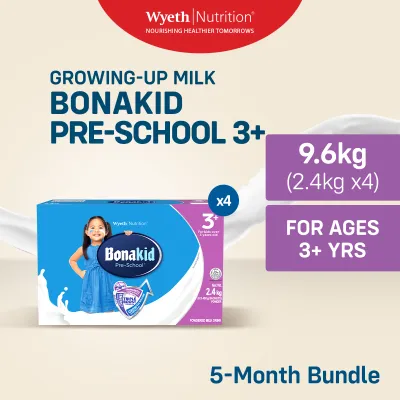
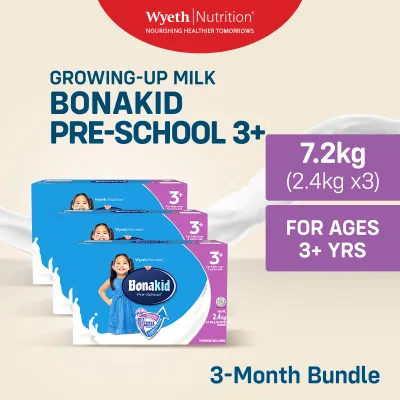
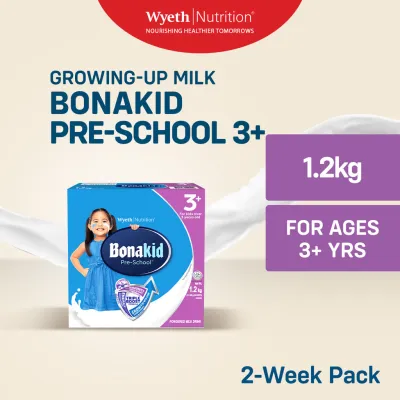
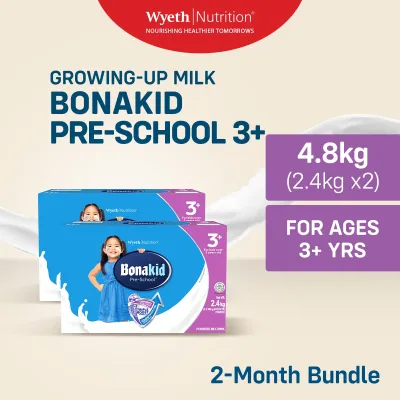
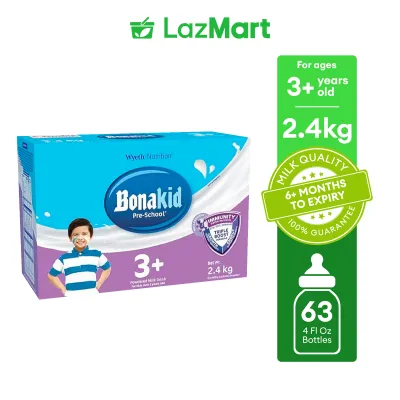

Prices are valid at publication and may change. Please refer to the product page for the latest price.
Furthermore, preschool milk is classified as a nutritional supplement rather than a complete meal replacement. For children aged three to five years, a balanced diet consisting of diverse solid foods—such as local vegetables, fruits, grains, and proteins—remains the primary source of essential nutrients. Milk should serve as a supportive addition to their daily diet, filling in potential gaps rather than acting as the main source of nourishment.
Comparing Key Ingredients on the Nutrition Label
To make an objective comparison between these two brands, you must look past the colorful illustrations and examine the physical product labels. The Nutrition Facts panel and the ingredient list, typically located on the back or side of the tin, provide the exact data you need to evaluate what your child is actually consuming.

When comparing Bonakid and Enfagrow, focus on the specific quantities of nutrients provided per serving, which are usually listed in milligrams (mg), micrograms (mcg), or International Units (IU). Relying on front-of-pack slogans can be misleading, as a product claiming to have high levels of a specific nutrient might have similar or even lower levels compared to a competitor that does not feature those terms as prominently.
Brain and Cognitive Development Claims
When evaluating brain development support, look closely at the label for key nutrients such as Docosahexaenoic Acid (DHA), Arachidonic Acid (ARA), Choline, and Iron. These components are widely recognized for supporting neurological pathways and cognitive functions during early childhood. Compare the exact milligram values of DHA and Choline per serving on both tins to see which brand offers a higher concentration of these specific ingredients.
While these nutrients are beneficial, your child’s actual daily requirement depends heavily on their overall dietary intake and individual health profile. A child who regularly eats fatty fish, eggs, and leafy greens may already receive adequate brain-supporting nutrients, making a highly fortified milk less critical. Always consult your pediatrician to determine if your child requires specific levels of these nutrients.
Additionally, pay close attention to the ingredient list for any added sugars, corn syrup solids, or artificial flavorings that may be used to enhance the taste of these formulations. High sugar content can contribute to dental issues and unhealthy weight gain, so choosing a formulation with minimal added sugars is generally preferable for long-term health.
Immune Support and Bone Health
Physical growth and immune defense are top priorities for parents of active preschoolers, especially in tropical climates where seasonal changes can bring common colds. To assess these areas, compare the levels of Calcium, Vitamin D, Zinc, and Vitamin C per serving on each label. Calcium and Vitamin D work together to support strong bones and teeth, while Zinc and Vitamin C are essential for maintaining a robust immune response.
You should also check the ingredient list for the presence of prebiotics or probiotics, such as Galacto-oligosaccharides (GOS) and Fructo-oligosaccharides (FOS). These dietary fibers support gut health, which plays a major role in overall immune function and nutrient absorption. Note whether these digestive aids are present in both brands and compare their positions on the ingredient list to gauge their relative abundance.
Remember to verify the recommended serving size and the exact powder-to-water ratio specified by each manufacturer. A brand might appear to have higher nutrient levels on paper, but if it requires a much larger scoop or more scoops per serving, the actual nutrient density per milliliter of prepared milk may differ. Altering the recommended ratio can dilute the nutrients or strain your child’s digestive system, so always compare the values based on standard preparation instructions.
Taste, Mixability, and Toddler Acceptance
Even the most nutritionally advanced preschool milk is only beneficial if your child is willing to drink it. Children in the three-to-five age range are developing distinct taste preferences and can be highly sensitive to changes in flavor and texture. Bonakid and Enfagrow offer different flavor profiles, ranging from plain and vanilla to chocolate or honey, which can significantly influence your child’s acceptance.
When selecting a flavor, check the ingredient list to identify the sources of sweetness. Formulations that rely on natural milk sugars (lactose) are generally gentler on developing teeth than those containing sucrose, corn syrup, or artificial sweeteners. If you decide to transition your child from one brand or flavor to another, do so gradually over several days by mixing small amounts of the new milk with the familiar one to help them adjust to the new taste.
Mixability is another practical factor that affects daily preparation, especially in humid environments. Powdered milk can sometimes clump or resist dissolving when mixed with water, which can frustrate busy parents and lead to an uneven texture that children might reject. Look for powders that dissolve smoothly in lukewarm or cool water without leaving heavy residue or clumps at the bottom of the cup.
To avoid wasting money on a large tin that your child might refuse to drink, always start by purchasing the smallest available size. Many local supermarkets and pharmacies offer small boxes, trial-size pouches, or single-serve sachets. Testing these smaller options first allows you to observe your child’s reaction to the taste and check for any immediate digestive changes before committing to a larger, more expensive container.
Evaluating Cost per Serving and Availability
Managing household expenses is a key consideration for families, and the cost of preschool milk can add up significantly over time. To understand the true financial impact of each brand, you should calculate the cost per serving rather than simply comparing the retail price of the tins. A larger, more expensive tin might actually be more economical if it yields more servings due to a smaller scoop size.
To calculate the cost per serving, use this simple formula: divide the retail price of the tin (₱) by the total number of servings indicated on the nutrition label. By dividing the price of the container by the number of servings it yields, you will get the exact cost per serving. Compare this figure across both brands to determine which option fits better within your monthly budget, keeping in mind the recommended daily intake specified by your pediatrician.
Availability is equally important for maintaining a consistent feeding routine. A milk brand is only practical if you can easily purchase it when your current supply runs low. Assess how readily available each brand is in your local neighborhood supermarkets, community pharmacies, and trusted online marketplaces. Relying on a brand that is frequently out of stock can force sudden, unplanned transitions that might upset your child’s stomach.
While buying in bulk or purchasing massive tins can sometimes offer a lower cost per serving, avoid doing this until you are absolutely certain of your child’s long-term tolerance and acceptance. Storing large quantities of milk powder in a hot, humid environment can also lead to spoilage or insect infestation if the containers are not sealed perfectly. Keep your initial purchases modest until the milk becomes a stable part of your child’s routine.
Decision Framework: Which Milk Fits Your Child Best?
To help you make the final choice between Bonakid and Enfagrow, use this structured decision framework based on your child’s specific needs and your household circumstances.
You may want to choose Bonakid if:
- Your child prefers its specific flavor profile and drinks it willingly without resistance.
- Your household budget aligns better with its calculated cost per serving for daily, long-term use.
- The nutrient values on its label meet the specific growth and physical activity targets recommended by your child's pediatrician.
You may want to choose Enfagrow if:
- Your child shows a clear preference for its taste and texture over other options.
- The specific nutrient formulation, including its cognitive and digestive support ingredients, aligns with your child's developmental needs.
- The brand is consistently stocked and easily accessible in your local stores or preferred online marketplaces.
Neither brand may be suitable if your child exhibits signs of lactose intolerance, a milk protein allergy, or persistent digestive discomfort such as bloating, gas, diarrhea, or skin rashes. If you observe any of these symptoms, stop using the product immediately and consult a qualified pediatrician for alternative options, such as soy-based or hypoallergenic formulas.
Always verify the suitability of either milk with a healthcare professional first if your child has underlying health conditions, specific dietary restrictions, or is already taking other vitamin supplements. Over-supplementation of certain vitamins and minerals can place unnecessary strain on a young child’s organs, making professional guidance essential before introducing any highly fortified milk drink.
Frequently Asked Questions (FAQ)
Can I mix Bonakid and Enfagrow in the same bottle?
Mixing Bonakid and Enfagrow powders together in the same bottle or cup is generally not recommended. Each brand is formulated with a specific scoop size, powder-to-water ratio, and nutrient density designed to be prepared exactly as instructed on the tin. Mixing them can lead to incorrect dilution, resulting in a drink that is either too concentrated, which strains your child’s kidneys and digestive system, or too diluted, which deprives them of necessary nutrients. If you are transitioning your child from one brand to another, it is safer to alternate the brands by meal or by day rather than mixing the dry powders together.
When should I transition my child from toddler milk to preschool milk?
Preschool milk formulations are typically designed for children between the ages of three and five years, as their nutritional needs shift toward supporting active physical play and early cognitive learning. However, you must always verify the recommended age range printed on the specific product packaging, as formulations can vary. Before making the switch, consult your pediatrician to ensure your child is ready for the transition, especially if they have unique growth patterns or dietary gaps. Introduce the new preschool milk gradually over a period of one to two weeks, monitoring your child closely for any digestive changes, skin reactions, or taste rejection.

Community discussion
Share your experience or ask a question. Comments are reviewed before publication.