
When setting up a nursery in a compact home, managing limited floor space is one of the most common challenges parents face. A carefully selected toy shelf organizer is essential for keeping clutter at bay while ensuring your baby’s room remains safe, functional, and visually peaceful. The ideal storage solution must balance a minimal floor footprint with maximum vertical utility, all while resisting the high humidity characteristic of the tropical climate.
By choosing the right organizer, you create a structured environment that supports your child’s developmental milestones and simplifies your daily cleanup routine. Rather than buying the first attractive shelf you see, taking the time to evaluate specific space-saving designs, material durability, and childproofing features will ensure a safer, more organized space for your growing family.
What to Look for in a Small-Space Toy Shelf
Before purchasing any nursery furniture, measure your available floor space and wall clearance carefully. In small rooms, every centimeter counts, and an ill-fitting shelf can quickly make a compact room feel cramped and difficult to navigate. A narrow, tall shelf utilizes vertical space effectively, but it requires careful placement to avoid blocking walkways, light switches, or natural ventilation.
Products mentioned in this guide
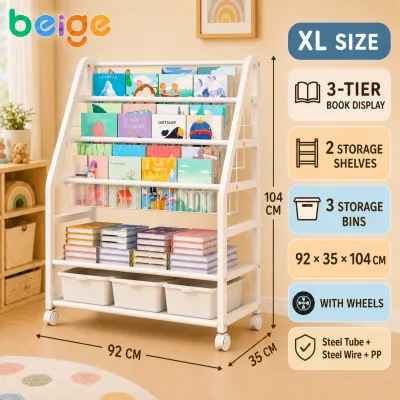
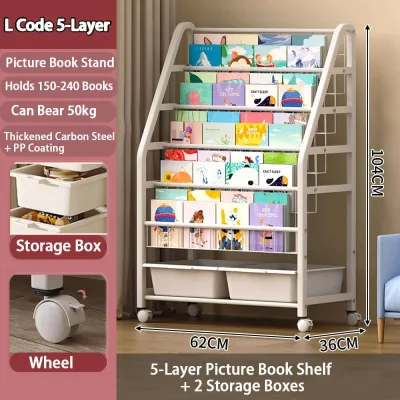
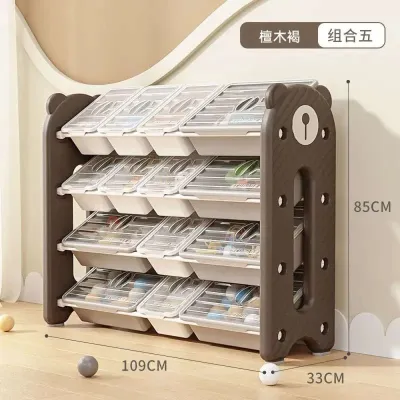
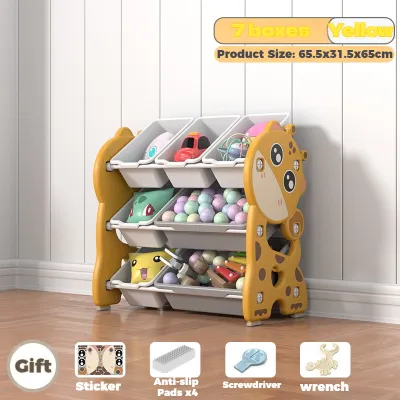
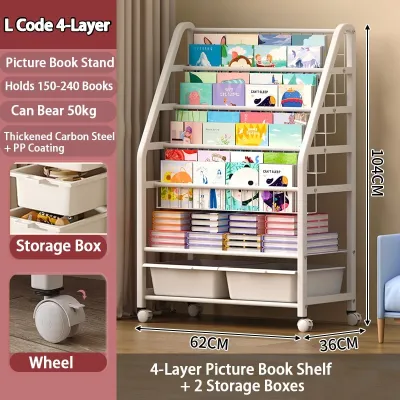
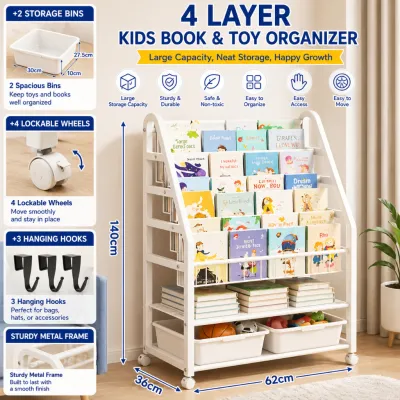
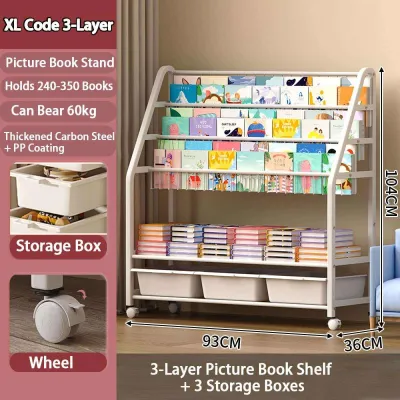
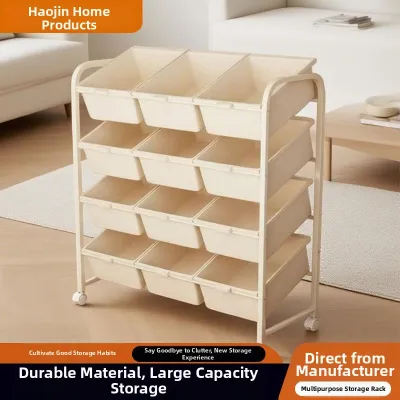
Prices are valid at publication and may change. Please refer to the product page for the latest price.
Consider the swing radius of doors, wardrobe panels, and crib gates when planning your layout. A footprint of no more than 30 to 40 centimeters in depth is generally ideal for tight nursery layouts, allowing easy passage even in rooms under 10 square meters. Be sure to measure the height of your baseboards as well, as thick baseboards can prevent a shelf from sitting completely flush against the wall, which affects how you secure the unit.
Safety is the absolute priority in any baby environment. Freestanding shelves must be anchored securely to the wall to prevent tip-over accidents as your baby grows, rolls, crawls, and eventually begins to pull themselves up to stand. Look for organizers that include dedicated anti-tip hardware or have pre-drilled anchoring points built into the frame.
Additionally, ensure the unit features rounded corners or smooth, beveled edges to protect toddlers from painful bumps and scrapes. Check that all finishes, paints, and sealants are certified non-toxic and lead-free by verifying the manufacturer’s product specifications. If a product does not explicitly state its safety certifications, contact the manufacturer directly before placing it in your baby’s room.
The tropical climate presents unique challenges for nursery furniture. High relative humidity can cause untreated wood to warp, swell, or harbor mold and mildew. When browsing materials, do not assume a wooden shelf is naturally moisture-resistant; instead, check the product label for sealed finishes, water-resistant melamine laminates, or moisture-treated engineered wood.
If you prefer natural wood, look for solid timbers treated with baby-safe protective sealants that prevent moisture absorption. For fabric bins, select breathable, synthetic materials like non-woven polyester that resist mildew and are easy to wipe clean. Avoid heavy, unventilated wooden drawers in highly humid areas, as they can trap moisture and ruin stored toys or baby clothes.
Best Toy Shelf Organizer Types for Compact Nurseries
Choosing the right style of organizer depends on your storage needs, your child’s age, and the specific layout of your nursery. Here are three distinct, space-saving organizational solutions that work exceptionally well in compact spaces.

Cube Storage Organizers with Fabric Bins
Cube organizers offer exceptional modularity, making them a highly flexible choice for mixed toy sizes, building blocks, rattle sets, and baby clothes. You can group small items into removable, interchangeable fabric bins to keep the room looking neat and visually uncluttered.
These units can be configured horizontally to serve as a low shelf that double-functions as a play surface, or stacked vertically to fit narrow wall sections. This adaptability makes them highly efficient for awkward corners, under-window spaces, or tight areas adjacent to the crib.
Always verify the structural weight limit per cube before loading them with heavy books or wooden toys. Choose breathable fabric bins over heavy, solid wood drawers to keep the unit lightweight and to prevent mold development in humid conditions. Check the manufacturer’s care instructions to see if the fabric bins are machine washable or spot-clean only.
For a standard nursery, a modular 4-cube organizer (approximately 77 cm x 77 cm x 39 cm) made of particleboard with a protective melamine foil finish is a reliable option. These units typically fall into a broad price tier of ₱1,500 to ₱3,500 in local home stores. Another popular option is a 6-cube asymmetrical step organizer, which offers varied shelf heights and fits comfortably under sloped ceilings, usually priced between ₱2,500 and ₱4,500.
Wall-Mounted Floating Shelves and Ledges
Wall-mounted floating shelves have a zero-floor footprint, completely freeing up floor space for playmats, tummy time, and active movement. They allow you to utilize unused wall areas above changing tables or low dressers, keeping essential items within your reach but safely out of your baby’s hands.
These shelves are ideal for displaying favorite storybooks, lightweight plush toys, and decorative nursery keepsakes. By keeping toys off the floor, you create a more open, airy feel in a small room.
These shelves must be anchored directly into wall studs or secured with heavy-duty anchors suitable for your specific wall material. In many local homes, walls are constructed from concrete or hollow blocks, which require masonry drill bits and plastic expansion plugs rather than standard drywall anchors. Strictly reserve wall-mounted ledges for lightweight items to prevent falling hazards, and never hang them directly over a crib or changing table. If you are unsure of your wall’s composition or weight capacity, consult a professional installer.
A set of solid pine wood picture ledges (approximately 60 cm to 115 cm in length, 12 cm deep) with a front lip to prevent books from sliding off is a classic choice. These typically cost between ₱400 and ₱1,200 per set depending on the wood type and finish. Alternatively, heavy-duty steel wire wall baskets offer excellent ventilation and visibility, generally priced around ₱600 to ₱1,500.
Front-Facing Tiered Book and Toy Racks
Front-facing tiered racks feature an ultra-slim profile, often measuring less than 25 centimeters in depth. This makes them perfect for narrow hallways, behind doors, or along tight walkways where standard shelving would block traffic.
These racks are excellent for toddlers who need to see the covers of books or the fronts of their toys to make independent choices. This design supports a Montessori-inspired nursery setup, encouraging early literacy and independent play.
Front-facing tiered racks generally have a lower overall storage capacity than deep cube shelves. Because they can become front-heavy when loaded with books, you must verify the unit’s weight distribution design. Check the maximum recommended height to ensure the shelf remains stable and easily accessible as your child grows.
A 4-tier wooden sling bookcase (approximately 62 cm x 25 cm x 65 cm) featuring durable, washable canvas pockets is a popular, space-saving solution. These are typically priced between ₱1,200 and ₱2,500. Another excellent option is a multi-bin tiered plastic organizer (approximately 80 cm wide) with removable, angled plastic bins, allowing easy cleanup and sorting, generally retailing in the ₱1,800 to ₱3,200 range.
Essential Safety and Maintenance Rules for Nursery Shelves
Securing your nursery furniture is a non-negotiable step in childproofing. Always inspect the wall material before mounting or anchoring any shelf. For concrete or masonry walls, use a hammer drill, concrete drill bits, and high-quality plastic wall plugs with matching screws. If you are mounting to drywall or gypsum board, locate the wooden studs behind the wall or use heavy-duty toggle bolts.
Always follow the manufacturer’s specific installation guide and use the provided anti-tip hardware. If the provided hardware feels flimsy, or if you are unsure of your wall type, stop immediately and consult a qualified professional handyman. Never skip this step, as even low shelves can tip over if a child attempts to climb them.
Proper weight distribution is key to maintaining stability over time. Always place the heaviest items, such as large wooden blocks, heavy board books, or toy trucks, on the lowest shelves or in the bottom bins. This lowers the center of gravity of the entire unit, making it significantly harder to tip over.
Keep lighter items, like stuffed animals, light plastic rattles, or fabric toys, on the upper shelves. Never overload a shelf past the manufacturer’s stated weight capacity, as this can cause the shelves to sag, warp, or pull away from the wall anchors.
Conduct a thorough inspection of all nursery storage units at least once a month. Check for loose screws, wobbling joints, or signs of structural sagging. In humid environments, carefully inspect the back panels of wooden shelves and the undersides of fabric bins for any signs of mold, mildew, or moisture damage.
Examine plastic organizers for stress fractures or signs of brittleness, particularly if they are positioned near windows with direct sunlight exposure. If you notice any structural compromise, remove the shelf from the nursery immediately until it can be repaired or replaced.
Keep your child’s storage clean using gentle, baby-safe methods. Wipe down shelves with a soft, damp microfiber cloth and a mild, diluted baby-safe dish soap or a specialized baby-bottle cleanser. Avoid using harsh chemical cleaners, bleach, or abrasive scrubbing pads, as these can strip away protective sealants, damage painted finishes, or leave behind harmful chemical residues.
After cleaning, dry all surfaces thoroughly with a clean towel to prevent moisture from seeping into the joints of the furniture. For fabric bins, vacuum them regularly with a brush attachment and spot-clean stains immediately with a damp cloth and mild soap, ensuring they dry completely in a well-ventilated area before returning them to the shelf.
Frequently Asked Questions (FAQ)
How high should a toy shelf be for a toddler?
For toddlers, a toy shelf should ideally stand between 30 and 40 inches (approximately 76 to 101 centimeters) high. This height aligns with a young child’s natural reach and eye level, allowing them to select and return toys independently without stretching or climbing. Any shelving placed above this height should be reserved strictly for adult-controlled storage, such as decorative items, spare diapers, or toys that require close supervision. Ensure that upper shelves are completely out of your child’s climbing reach and are anchored securely to the wall to eliminate any risk of tipping.
Are plastic or wooden shelves better for humid rooms?
Both materials have distinct advantages and drawbacks in high-humidity environments, so you should always check the manufacturer’s specific material ratings. High-quality, food-grade plastic shelves resist moisture completely, will not rot or warp, and are incredibly easy to sanitize, making them highly practical for humid tropical climates; however, low-grade plastics can become brittle and crack if exposed to direct sunlight over time. Engineered wood shelves, such as MDF or particleboard, are highly affordable and aesthetically pleasing but can swell, warp, or harbor mold if they lack a proper water-resistant laminate or sealed melamine finish. If choosing wood, verify that the product has a fully sealed finish on all sides, including the rear panel, to block moisture absorption.

Community discussion
Share your experience or ask a question. Comments are reviewed before publication.